
spec sheet6 rows
Sodium thiosulfate is an inorganic sulfur donor given intravenously as a cyanide antidote, and used off label for calciphylaxis in dialysis patients and to protect hearing during cisplatin chemotherapy.
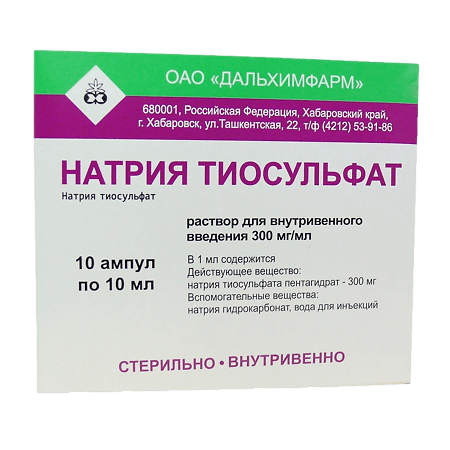
- Sodium thiosulfate has been a cyanide antidote for decades, but was FDA-approved as Pedmark in September 2022 to reduce the risk of cisplatin-induced ototoxicity in patients aged 1 month and older with localised, non-metastatic solid tumours.
- SIOPEL 6 was the pivotal trial: in standard-risk hepatoblastoma, hearing loss of Brock grade 1 or higher occurred in 18 of 55 children (33%) receiving cisplatin plus sodium thiosulfate versus 29 of 46 (63%) with cisplatin alone, a 48% relative reduction (relative risk 0.52, 95% CI 0.33 to 0.81, p=0.002) [1].
- SIOPEL 6 also showed no oncological penalty: 3-year event-free survival was 82% versus 79% and 3-year overall survival 98% versus 92% [1].
- ACCL0431 independently confirmed otoprotection in a broader paediatric population and reported no serious adverse events attributable to sodium thiosulfate [2].
- The 6-hour delay after cisplatin is not arbitrary: it is designed to allow cisplatin to reach the tumour before thiosulfate inactivates circulating drug, which is why the agent is restricted to localised non-metastatic disease.
- Use in calciphylaxis remains off-label and rests on observational series rather than randomized evidence [6].
Mechanism
The enzyme rhodanese transfers sulfur from thiosulfate onto cyanide to make thiocyanate, which the kidney can excrete. Its calciphylaxis and otoprotective uses are attributed to calcium chelation and to sulfane sulfur antioxidant chemistry rather than to one proven mechanism.
receptor fingerprint
Cisplatin (direct chemical inactivation)The thiosulfate anion is a strong nucleophile that reacts covalently with platinum, forming an inactive platinum-thiosulfate complex in plasma and cochlear perilymph
Rhodanese (thiosulfate sulfurtransferase, TST) in liver and kidney mitochondriaServes as the sulfur donor substrate that rhodanese uses to convert cyanide to thiocyanate for renal excretion
Intracellular glutathione and cysteine poolsIncreases available reduced thiols, buffering reactive oxygen species generated by cisplatin in cochlear hair cells
Calcium deposition in vascular media (calciphylaxis lesions)Proposed chelation of calcium to form soluble calcium thiosulfate, plus antioxidant and vasodilatory effects; the mechanism remains contested
Safetyrisks and cautions, not medical advice
an intravenous emergency antidote; it is given by a clinician during cyanide poisoning or dialysis, and self-administering a 300 mg/ml injectable at home has no safe use case
Subjective profileweighing the evidence above
Genuinely useful and genuinely unsuited to a shelf at home: this is what a hospital pushes into a vein during cyanide poisoning, and by definition nobody self-administers a cyanide antidote in time. The calciphylaxis and cisplatin otoprotection uses are real and interesting, but both happen inside a dialysis unit or an oncology service, where the timing relative to chemotherapy is the entire point. A concentrated injectable vial has no home use case at all, which is why the sourcing question here goes unanswered.
Resources
No suppliers are provided for compounds like this. This entry is here for reference.
Research
- 2016first citedEffects of sodium thiosulfate versus observation on development of cisplatin-induced hearing lo…
- 2018controlled trialSodium Thiosulfate for Protection from Cisplatin-Induced Hearing Loss
- 2024most recentOtoprotective Effects of Sodium Thiosulfate by Demographic and Clinical Characteristics: A Repo…
- 1.Sodium Thiosulfate for Protection from Cisplatin-Induced Hearing Loss
- 2.Effects of sodium thiosulfate versus observation on development of cisplatin-induced hearing loss in children with cancer (ACCL0431): a multicentre, randomised, controlled, open-label, phase 3 trial
- 3.Otoprotective Effects of Sodium Thiosulfate by Demographic and Clinical Characteristics: A Report From Children's Oncology Group Study ACCL0431
- 4.Prevention of cisplatin-induced ototoxicity in children and adolescents with cancer: a clinical practice guideline
- 5.Interventions for cisplatin-induced hearing loss in children and adolescents with cancer
- 6.Calciphylaxis and Kidney Disease: A Review
6 listed here; entry last updated August 2026
Reviews
My notesprivate to this device
Notes and cautions
- The main labelled risks with Pedmark are hypernatremia and hypokalaemia, which can be severe; sodium and potassium must be checked before each dose and corrected before administration, and the sodium load is substantial in children and in anyone with heart failure or hypertension.
- Hypersensitivity reactions including anaphylaxis have been reported, so patients should be monitored during and for at least an hour after infusion.
- Nausea and vomiting are common and infusion-rate-related.
- The critical prescribing constraint is oncological rather than toxicological: because sodium thiosulfate chemically inactivates cisplatin, it must be given exactly 6 hours after the cisplatin infusion ends and must not be used in patients with metastatic disease, where systemic cisplatin exposure is the point of treatment.