
spec sheet13 rows
Zinc bisglycinate is elemental zinc chelated to two molecules of the amino acid glycine. The chelate structure is small, stable across stomach pH, and tends to be better absorbed and gentler on the gut than cheaper salts like zinc gluconate or sulfate. Zinc itself is an essential trace mineral and a cofactor for hundreds of enzymes tied to immunity, skin, wound healing, taste and smell, and reproductive hormones.
- About 43% better absorbed than zinc gluconate in humans
- Gentler on an empty stomach than sulfate or gluconate
- Cofactor for hundreds of enzymes tied to immunity and skin
- Correcting a real deficiency can lift testosterone back up
- Supports wound healing, taste and smell
- Stable chelate that shrugs off stomach pH swings
- Nausea or stomach upset, especially on an empty stomach (less than harsher salts but still possible)
- Copper depletion with chronic high-dose use (above ~40 mg elemental/day)
- Reduced absorption of some antibiotics if taken together
Overview
Zinc bisglycinate (also spelled biglycinate) is a form of the essential trace mineral zinc bound to two molecules of the amino acid glycine, forming a stable ring-shaped amino acid chelate. Its low molecular weight (under 1000 Daltons) and stability across the acidic-to-neutral pH range of the digestive tract are thought to protect the zinc from binding dietary inhibitors like phytates, so a larger fraction reaches absorption. In a randomized crossover study in twelve healthy women, a single 15 mg dose of zinc as bisglycinate produced a relative bioavailability roughly 43% higher than an equivalent dose of zinc gluconate, with higher peak serum zinc and good tolerability [1]. A 2024 narrative review of the various chemical forms of zinc likewise grouped zinc glycinate and gluconate among the better-absorbed forms compared with inorganic salts, while noting that head-to-head human data remain limited [2].
Zinc's biological importance is independent of the delivery form: it acts as a structural and catalytic cofactor in hundreds of metalloenzymes and transcription factors. In immunity, zinc is required for thymulin activity, T-helper cell balance, and natural killer cell function; controlled human depletion studies show that even mild deficiency shifts cytokine production and impairs T-cell mediated responses, which are restored with repletion [3]. This underpins zinc's most-studied clinical use: a systematic review and meta-analysis of randomized trials concluded that oral zinc may shorten the duration of common cold symptoms, though bad taste and nausea were more frequent than with placebo [4]. A later meta-analysis of zinc lozenge trials found colds shortened by roughly a third, with acetate and gluconate salts performing similarly at adequate doses [5]; these cold effects are specific to lozenge formats that expose the throat and nasal passages, not to swallowed capsules taken for general nutrition.
Beyond immunity, zinc influences skin and reproductive physiology. A systematic review and meta-analysis reported that people with acne tend to have lower serum zinc than controls, and that zinc supplementation modestly reduced inflammatory papule counts as monotherapy or add-on treatment [6]. In men, the relationship between zinc and testosterone is real but conditional: experimental dietary zinc restriction lowered serum testosterone in young men and repletion raised it, and correcting a genuine deficiency can restore androgen levels [7]. However, randomized trials in men who are already zinc-sufficient generally show little to no testosterone benefit, so the effect is best understood as fixing a deficit rather than boosting a normal baseline.
Zinc is homeostatically regulated rather than cleared on a fixed timeline; there is no clean elimination half-life, as the body adjusts absorption and gut losses to defend a relatively stable plasma pool. Serum zinc rises within hours of an oral dose, but whole-body status changes slowly over weeks. The main practical caution with any chronic zinc supplement is copper depletion, because sustained higher intakes compete with copper absorption; the tolerable upper intake level for adults is 40 mg of elemental zinc per day from all sources. Because chelated forms deliver more zinc per milligram of elemental content, honest label reading matters more than the marketing hierarchy between salts.

- The "bisglycinate" name just means one zinc ion held by two (bis) glycine molecules; glycine is the smallest amino acid, which is part of why the finished chelate stays under 1000 Daltons and absorbs well.
- Zinc is the second most abundant trace metal in the human body after iron, and roughly 10% of all human proteins are predicted to bind zinc.
- The cold-shortening effect people quote for zinc comes from lozenges dissolved in the mouth, not swallowed capsules; the local throat and nasal contact matters, so a bisglycinate cap won't do the same thing.
- Zinc deficiency blunts taste and smell because the enzyme gustin/carbonic-anhydrase-VI in saliva is zinc-dependent; loss of taste is a classic early deficiency sign.
- Because chelates are weighed as the whole zinc-glycine complex, a big number on the front of the bottle usually contains a much smaller elemental zinc dose printed in the fine print.
Mechanism
zinc is an essential trace mineral that works as a structural and catalytic cofactor in hundreds of metalloenzymes and zinc-finger transcription factors; it's not a drug that hits one receptor. it's required for carbonic anhydrase, alkaline phosphatase, copper-zinc superoxide dismutase (antioxidant defense), DNA/RNA polymerases, and the thymic hormone thymulin, among many others. the "bisglycinate" part is just delivery: two glycine molecules chelate the zinc ion into a small, neutral, pH-stable ring that resists binding phytate and other dietary inhibitors, so more zinc survives to be absorbed in the small intestine, and it can also cross partly via amino-acid/ transport rather than only ionic zinc channels. once absorbed, zinc is bound to albumin and metallothionein and distributed under tight homeostatic control.
receptor fingerprint
Metalloenzymes (carbonic anhydrase, alkaline phosphatase, DNA/RNA polymerases)Catalytic and structural cofactor
Thymulin / T-helper and NK cellsRequired cofactor for immune cell activity
Copper-zinc superoxide dismutase (Cu/Zn-SOD)Structural cofactor
Zinc-finger transcription factorsStructural zinc binding
Testosterone / androgen pathwayCofactor; restored when deficiency is corrected
Sebaceous / inflammatory skin pathwaysAnti-inflammatory modulation
Rhinovirus replication / ICAM-1 (lozenge route only)Ionic zinc interference in the throat and nasal mucosa
Dosingtypical ranges, not medical advice
interested in protocols and clinical dosages? make an account to see them! ^_^
Safetyrisks and cautions, not medical advice
at nutritional doses (15-30 mg elemental/day) zinc is well tolerated; the most common issue with any form on an empty stomach is nausea, and bisglycinate is chosen partly because it's gentler here. the real risk is chronic overdose: intakes above ~40 mg/day for weeks to months compete with copper absorption and can cause copper-deficiency anemia and neurological problems, so long-term high-dose users should co-supplement copper. very high acute doses cause vomiting and GI cramping. zinc can reduce absorption of certain antibiotics (tetracyclines, fluoroquinolones) and vice versa, so separate them by a couple hours. intranasal zinc products (not this) have been linked to loss of smell and should be avoided. as always, this is general information, not medical advice; check with your clinician if you're on medication, pregnant, or managing a health condition.
Where to buy
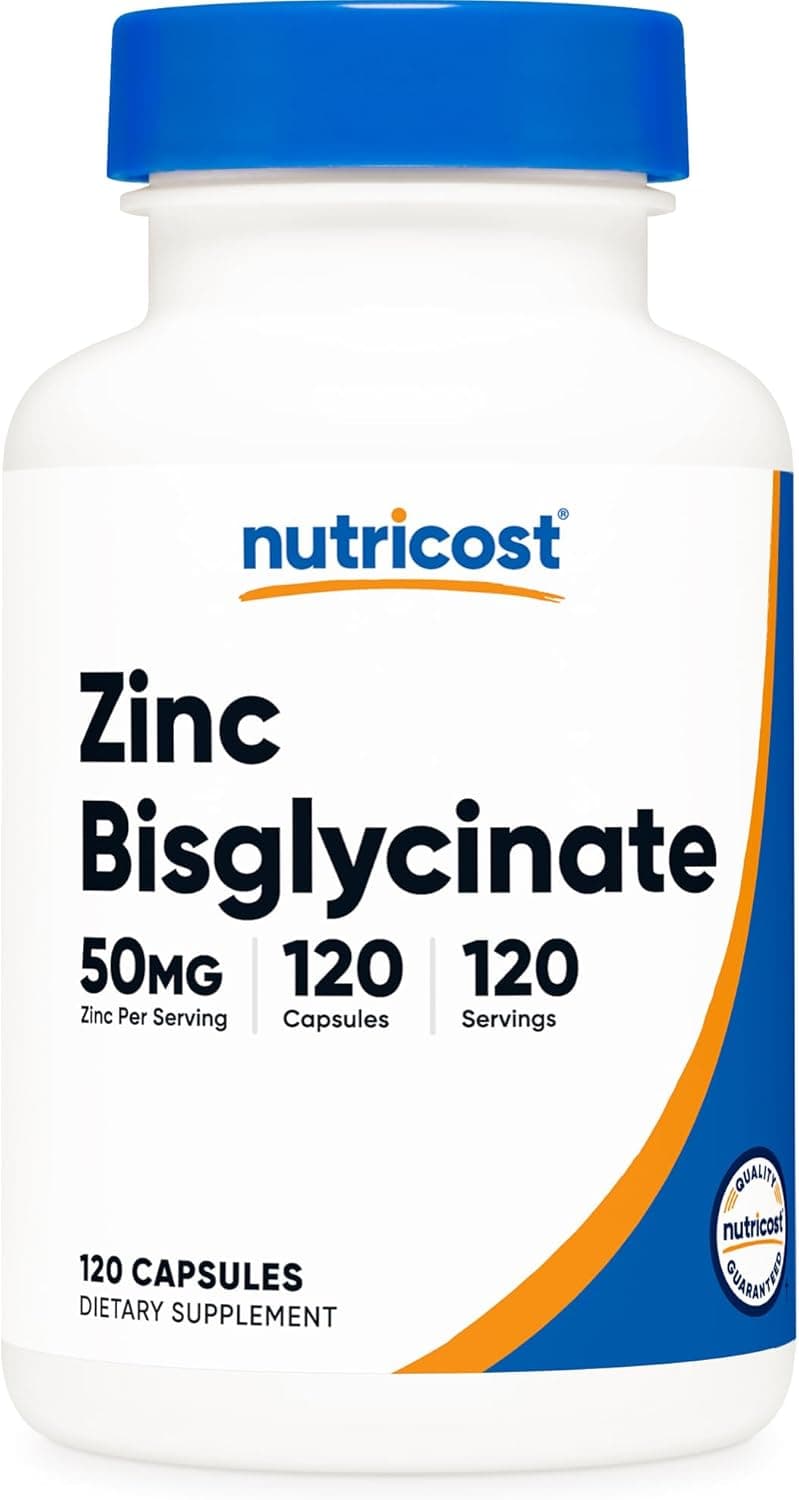
Suppliers
Vendors carrying Zinc Bisglycinate, with live product details and codes. Links are affiliate links that support the wiki at no cost to you.
Amazon
Zinc Bisglycinate
Research
- 1996first citedZinc status and serum testosterone levels of healthy adults
- 2012meta-analysisZinc for the treatment of the common cold: a systematic review and meta-analysis of randomized…
- 2024most recentComparative Absorption and Bioavailability of Various Chemical Forms of Zinc in Humans: A Narra…
- 1.A bioavailability study comparing two oral formulations containing zinc (Zn bis-glycinate vs. Zn gluconate) after a single administration to twelve healthy female volunteers
- 2.Comparative Absorption and Bioavailability of Various Chemical Forms of Zinc in Humans: A Narrative Review
- 3.Zinc in human health: effect of zinc on immune cells
- 4.Zinc for the treatment of the common cold: a systematic review and meta-analysis of randomized controlled trials
- 5.Zinc lozenges and the common cold: a meta-analysis comparing zinc acetate and zinc gluconate, and the role of zinc dosage
- 6.Serum zinc levels and efficacy of zinc treatment in acne vulgaris: A systematic review and meta-analysis
- 7.Zinc status and serum testosterone levels of healthy adults
7 listed here; entry last updated August 2026
Reviews
My notesprivate to this device
FAQ
Is zinc bisglycinate better than zinc gluconate or picolinate?
For absorption and stomach comfort, the chelated forms (bisglycinate, picolinate) generally edge out gluconate and sulfate. A small human crossover found bisglycinate about 43% more bioavailable than gluconate. The difference is real but modest; the bigger mistake is dosing wrong or taking it with coffee. Any decent form corrects a deficiency.
How much should I take?
15-30 mg of elemental zinc per day for most people. Watch the label: the chelate weight (e.g. 100 mg zinc bisglycinate) is not the elemental dose. Stay under 40 mg elemental/day total from all sources unless a clinician directs otherwise.
Will it raise my testosterone?
Only if you're actually zinc-deficient. Experimental depletion lowers testosterone and repletion restores it, but in men who already have enough zinc, extra zinc does little for testosterone. It's a deficiency fix, not a booster.
Does it help with colds?
The cold-shortening evidence is for zinc LOZENGES dissolved in the mouth, not swallowed capsules. A bisglycinate cap supports general immune nutrition but won't reproduce the lozenge effect on cold duration.
Can I take it long-term?
Yes at nutritional doses, but chronic higher intakes deplete copper. If you run more than ~25-40 mg/day for weeks, add about 1-2 mg of copper, or use a formula that already includes it.
With or without food?
Empty stomach gives slightly better absorption but more nausea risk. If your gut is sensitive, take it with a small amount of food; the tradeoff is minor. Keep it away from calcium, iron, coffee, and tea.
Adverse effects
- Nausea or stomach upset, especially on an empty stomach (less than harsher salts but still possible)
- Copper depletion with chronic high-dose use (above ~40 mg elemental/day)
- Reduced absorption of some antibiotics if taken together
- Vomiting and cramping at very high acute doses
Notes and cautions
- Metallic taste