
spec sheet6 rows
Calcium chloride injection is a concentrated intravenous electrolyte used in hospital for severe symptomatic hypocalcaemia, for hyperkalaemia with ECG changes, and as an antidote in calcium channel blocker and magnesium overdose.
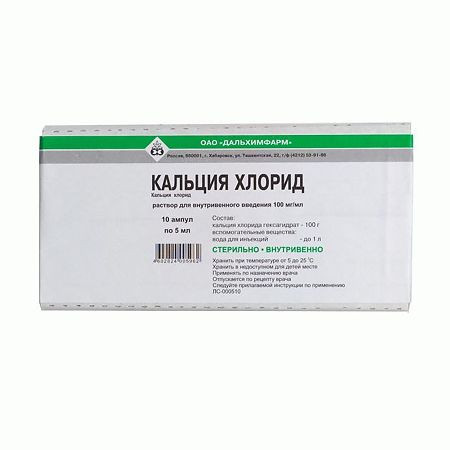
- 10% calcium chloride delivers roughly three times the elemental calcium per millilitre of 10% calcium gluconate (about 27 mg or 1.36 mEq of Ca2+ per mL versus about 9 mg), which is the single most common dosing error with these two agents.
- A 1987 randomized comparison in children and dogs confirmed that calcium chloride raises ionised calcium faster and higher than an equal volume of gluconate [1].
- The old teaching that calcium is dangerous in digoxin toxicity ('stone heart') was not reproduced in a controlled porcine model of digoxin-induced hyperkalaemia [5].
- Routine calcium chloride infusion in neonates after cardiac surgery was not associated with better outcomes in a large observational cohort, arguing against reflexive use [3].
- Calcium does not lower serum potassium; it only antagonises the membrane effect, so it must always be paired with a potassium-shifting or potassium-removing therapy.
Mechanism
It raises ionised serum calcium directly, and delivers about three times as much elemental calcium per millilitre as calcium gluconate. In hyperkalaemia it does not lower potassium at all; it raises the cardiac myocyte threshold potential so the membrane is less excitable while other measures actually move the potassium.
receptor fingerprint
Extracellular ionised calcium pool (Ca2+)Raises serum ionised calcium directly; CaCl2 dissociates without needing hepatic metabolism, unlike calcium gluconate
Coagulation factor cascade (Factor IV role of Ca2+)Supplies the Ca2+ cofactor required for the tenase and prothrombinase complexes, depleted by citrate in stored blood
Cardiac myocyte membrane threshold potential (indirect, via Nav1.5 availability)Restores the gap between resting and threshold potential in hyperkalaemia, antagonising membrane excitability changes without lowering serum potassium
Voltage-gated L-type calcium channels (Cav1.2)Increases the driving force for Ca2+ entry, partially overcoming pharmacological blockade
Safetyrisks and cautions, not medical advice
a hospital intravenous emergency drug; extravasation causes tissue necrosis, rapid injection causes bradycardia and cardiac arrest, and it is fatal if given to someone on digoxin, so it is never a self administered product
Subjective profileweighing the evidence above
Given to someone on digoxin this can be fatal, and that sentence alone carries most of the argument. It is a hospital drug for the minutes around an arrest: a large vein is preferred because extravasation causes tissue necrosis, and a fast push causes the bradycardia and arrest it is meant to avert. In hyperkalaemia it does not lower potassium at all, which is widely misunderstood; it stabilises the myocardial membrane and buys time while something else moves the potassium. This page documents the pharmacology, and no supplier belongs beside it.
Resources
No suppliers are provided for compounds like this. This entry is here for reference.
Research
- 1987first citedCalcium chloride versus calcium gluconate: comparison of ionization and cardiovascular effects…
- 2023most recentSodium Bicarbonate and Calcium Chloride for the Treatment of Hyperkalemia-Induced Cardiac Arres…
- 1.Calcium chloride versus calcium gluconate: comparison of ionization and cardiovascular effects in children and dogs
- 2.Calcium Chloride Requirement and Postreperfusion Rebound During Massive Transfusion in Liver Transplantation
- 3.Calcium Chloride Infusions are Not Associated with Improved Outcomes in Neonates Undergoing Cardiac Operations
- 4.Sodium Bicarbonate and Calcium Chloride for the Treatment of Hyperkalemia-Induced Cardiac Arrest: A Randomized, Blinded, Placebo-Controlled Animal Study
- 5.The effect of calcium chloride in treating hyperkalemia due to acute digoxin toxicity in a porcine model
5 listed here; entry last updated August 2026
Reviews
My notesprivate to this device
Notes and cautions
- Calcium chloride is a potent vesicant: extravasation causes tissue necrosis and skin sloughing, so central venous administration is strongly preferred and peripheral use should be reserved for emergencies with the largest available vein.
- Rapid intravenous push causes bradycardia, hypotension and, in the extreme, asystole; it should be given slowly except in cardiac arrest.
- It is incompatible with sodium bicarbonate and with phosphate-containing solutions, which precipitate calcium carbonate or calcium phosphate in the line.
- Calcium is contraindicated in hyperkalaemic arrest from digoxin toxicity by long-standing convention, although the experimental basis for that contraindication is weak [5].