
spec sheet12 rows
Selenium is an essential trace element required in small amounts for human health, where it is built into a family of proteins called selenoproteins. These selenoproteins, which include the antioxidant enzyme glutathione peroxidase, thioredoxin reductase, and the deiodinases that regulate thyroid hormone, give selenium roles in antioxidant defense, immune function, and thyroid metabolism. Its relationship with health follows a U-shaped curve, since both deficiency and excess are harmful.
- an essential trace element behind every selenoprotein
- powers glutathione peroxidase, a frontline antioxidant enzyme
- activates thyroid hormone through the deiodinase enzymes
- supports normal immune function
- corrects a deficiency quickly at a trivial cost
- Selenosis with excess intake
- Garlic-like breath at high doses
- Hair and nail changes with toxicity
Overview
Selenium is a chemical element and a micronutrient that the body needs in trace quantities [1]. Rather than acting freely, it exerts its biological effects after being incorporated as the amino acid selenocysteine into selenoproteins, and the human genome encodes around twenty-five of them [1][2]. Key examples include the glutathione peroxidases, which neutralize hydrogen peroxide and other reactive oxygen species, thioredoxin reductases, which support antioxidant defense and DNA synthesis, and the iodothyronine deiodinases, which activate and inactivate thyroid hormones [2].
Through these proteins, selenium contributes to antioxidant protection, healthy immune and inflammatory responses, thyroid hormone metabolism, and reproduction in both sexes [1][2]. Low selenium status has been associated with increased mortality, impaired immunity, cognitive decline, and a higher risk of autoimmune thyroid disease, while adequate status supports these systems [1].
The selenium content of food depends heavily on the selenium in the soil where crops are grown or animals are raised. Rich dietary sources include Brazil nuts, seafood such as tuna and shellfish, organ meats, eggs, and cereal grains [1]. In regions with selenium-poor soils, deficiency has historically contributed to conditions such as Keshan disease, a heart muscle disorder, and Kashin-Beck disease, a bone and joint disorder, though pure selenium deficiency is uncommon and often interacts with other factors such as iodine status [1].
Selenium supplements have been widely studied, with mixed results. Observational studies have linked higher selenium status to lower risk of some cancers, but a Cochrane review of randomized trials found no convincing evidence that supplementation prevents cancer, and some trials reported increased risks of high-grade prostate cancer and type 2 diabetes in already-replete individuals [3]. This reinforces the central lesson that supplementation is likely to help only those whose intake is genuinely low [1][3].
Selenium is available in foods and in supplements as inorganic forms such as sodium selenite and selenate and organic forms such as selenomethionine and selenium-enriched yeast [1]. It is regulated as a nutrient, with recommended intakes and a defined safe upper limit [1]. Excess intake causes selenosis, whose signs include a garlic-like odor on the breath, gastrointestinal upset, hair and nail loss, fatigue, irritability, and, in severe cases, neurological damage, underscoring the narrow window between beneficial and harmful intake [1].

Mechanism
Selenium functions almost entirely through its incorporation into selenoproteins as the specialized amino acid selenocysteine, which sits at the catalytic center of several important enzymes [1][2]. In the glutathione peroxidases, the selenium atom enables the reduction of hydrogen peroxide and lipid hydroperoxides, protecting cells from oxidative damage, while thioredoxin reductases use a cysteine-selenocysteine pair to maintain the redox balance needed for antioxidant defense and cell division [2].
The iodothyronine deiodinases depend on selenium to convert the thyroid prohormone thyroxine into its active and inactive forms, linking selenium status directly to thyroid function [2]. Because these effects saturate once the body's selenoproteins are fully supplied, additional selenium beyond that point provides no further benefit and can instead become toxic, which explains the U-shaped relationship between intake and health [1].
receptor fingerprint
Glutathione peroxidaseessential component
Thioredoxin reductaseessential component
Iodothyronine deiodinaseessential component
Immune cell functionsupports
Dosingtypical ranges, not medical advice
interested in protocols and clinical dosages? make an account to see them! ^_^
Safetyrisks and cautions, not medical advice
At normal intakes selenium is safe, but chronic high intake causes selenosis: hair and nail brittleness or loss, garlic breath, GI upset, and neurological issues. The tolerable upper limit for adults is around 400 mcg per day from all sources. Brazil nuts vary widely in content, so eating many daily can push intake high.
Subjective profileweighing the evidence above
Essential in small amounts and worth ensuring adequacy, but respect the narrow safe range and don't megadose.
Where to buy
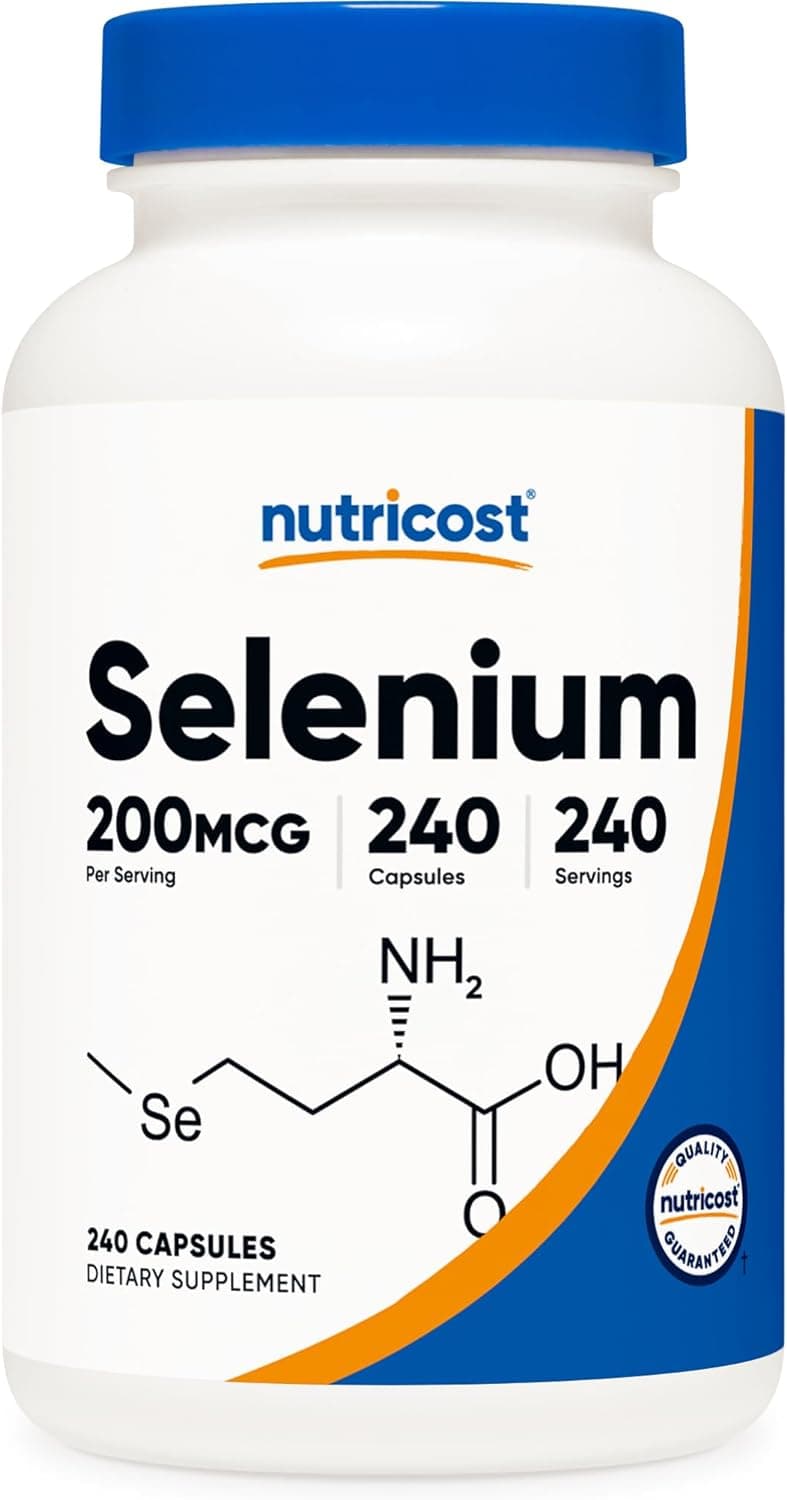
Suppliers
Vendors carrying Selenium, with live product details and codes. Links are affiliate links that support the wiki at no cost to you.
Amazon
Selenium
Research
- 2012first citedSelenium and human health
- 2018meta-analysisSelenium for preventing cancer.
- 2021most recentRole for Selenium in Metabolic Homeostasis and Human Reproduction
- 1.Selenium and human health
- 2.Role for Selenium in Metabolic Homeostasis and Human Reproduction
- 3.Selenium for preventing cancer.
3 listed here; entry last updated August 2026
Reviews
My notesprivate to this device
FAQ
How much selenium do I need?
The RDA is about 55 mcg per day for adults; most balanced diets provide this.
Can I get it from food?
Yes, Brazil nuts, seafood, eggs, and organ meats are rich sources; a couple of Brazil nuts can cover the RDA.
What's the risk of too much?
Chronic intake above 400 mcg per day can cause selenosis with hair loss, nail changes, and nerve problems.
Does it help thyroid?
Selenium supports the enzymes that activate thyroid hormone and has been studied in autoimmune thyroiditis, with mixed but generally supportive results.
Adverse effects
- Selenosis with excess intake
- Garlic-like breath at high doses
- Hair and nail changes with toxicity
- Gastrointestinal upset
- Possible increased type 2 diabetes risk with excess in already-replete people