
data + articles · 4 listed
newest 2026spec sheet11 rows
Ergothioneine is a naturally occurring, sulfur-containing amino acid derived from histidine. It is produced only by certain fungi, mycobacteria, and cyanobacteria, yet it accumulates to relatively high levels in animals, including humans, who obtain it entirely from the diet. Mushrooms are the richest common food source. Studied mainly for its antioxidant and cell-protective properties, it is sold as a dietary supplement, although its precise physiological role in humans is not yet firmly established.
- Powerful dietary antioxidant with its own dedicated transporter
- That transporter hints at a real job in human physiology
- Concentrates exactly where oxidative stress runs highest
- Mushrooms are the richest food source; supplements go further
- Studied for longevity, brain protection and mitochondrial health
- Remarkably well tolerated across the human studies
Overview
Ergothioneine is a small, water-soluble molecule classified as a thione-containing derivative of the amino acid histidine, carrying a sulfur atom on its imidazole ring [1][4]. Unusually for a sulfur compound, it resists oxidation by air and exists largely in a form that is less chemically reactive than typical thiols such as glutathione [4]. It was first isolated in 1909 by the French chemist Charles Tanret from the ergot fungus, which is the source of its name, and its structure was worked out a few years later [4].
Only a limited set of organisms can manufacture ergothioneine, chiefly certain fungi, actinobacteria such as mycobacteria, and cyanobacteria; the pathway begins by methylating histidine and then incorporates sulfur derived from cysteine [4]. Animals and humans cannot make it and must obtain it from food, with mushrooms, particularly oyster and bolete species, being the richest dietary sources, alongside smaller amounts in organ meats, beans, and grains [1][4]. Once ingested, it is taken up and concentrated inside cells by a dedicated transporter known as OCTN1, encoded by the gene SLC22A4, and it builds up in tissues such as red blood cells, bone marrow, liver, kidney, and the eyes [1][4].
The existence of a specific, high-affinity transporter that concentrates ergothioneine in the body has led researchers to suspect it serves a beneficial physiological role, even though that role has not been definitively pinned down [1][2]. Laboratory studies have repeatedly shown that ergothioneine can neutralize reactive oxygen species and shield cells from various forms of oxidative and chemical stress, and one influential hypothesis frames its accumulation in injured tissues as an adaptive, protective response [1][2]. Low blood levels have been associated in some studies with age-related disease, prompting the proposal that ergothioneine be regarded as a "longevity vitamin," a dietary compound that may not be essential for immediate survival but could help protect long-term health [3]. Firm evidence for clinical benefit in humans nonetheless remains preliminary [1][3].
Ergothioneine is sold as a dietary supplement, and biotechnology methods using engineered microbes have been developed to produce it at scale [4]. Food-safety authorities in Europe have assessed synthesized ergothioneine and set intake levels considered safe [4]. Related compounds include the selenium-containing analog selenoneine, which is made by the same biosynthetic machinery when selenium is present [4].

Mechanism
Ergothioneine is widely regarded as a physiological antioxidant and cytoprotectant, though its exact mechanism within the body is still being worked out [1][2]. In laboratory tests it scavenges reactive oxygen and nitrogen species, binds certain metal ions, and protects proteins, lipids, and DNA from oxidative damage [1]. A defining feature is the way cells handle it: rather than diffusing freely, it is actively imported and concentrated by the OCTN1 transporter, so tissues that express this transporter can accumulate high internal levels [1][2]. Because ergothioneine tends to build up in tissues under oxidative or inflammatory stress, some researchers propose that the body deliberately stockpiles this diet-derived molecule to buffer against damage, an idea that would help explain its selective uptake in the absence of a classic vitamin-style deficiency syndrome [2][3].
receptor fingerprint
OCTN1 transportersubstrate
Reactive oxygen speciesscavenges
integrityprotects
DNA oxidative damagereduces
reduces
Dosingtypical ranges, not medical advice
interested in protocols and clinical dosages? make an account to see them! ^_^
Safetyrisks and cautions, not medical advice
Ergothioneine has an excellent safety profile with no significant toxicity reported even at high intakes. It's naturally present in the diet, especially in mushrooms, and is well tolerated as a supplement. Because outcome data in humans is still early, benefits should be viewed as promising rather than proven.
Subjective profileweighing the evidence above
A promising, very safe antioxidant with a dedicated transporter hinting at real importance; longevity claims are still emerging.
Where to buy
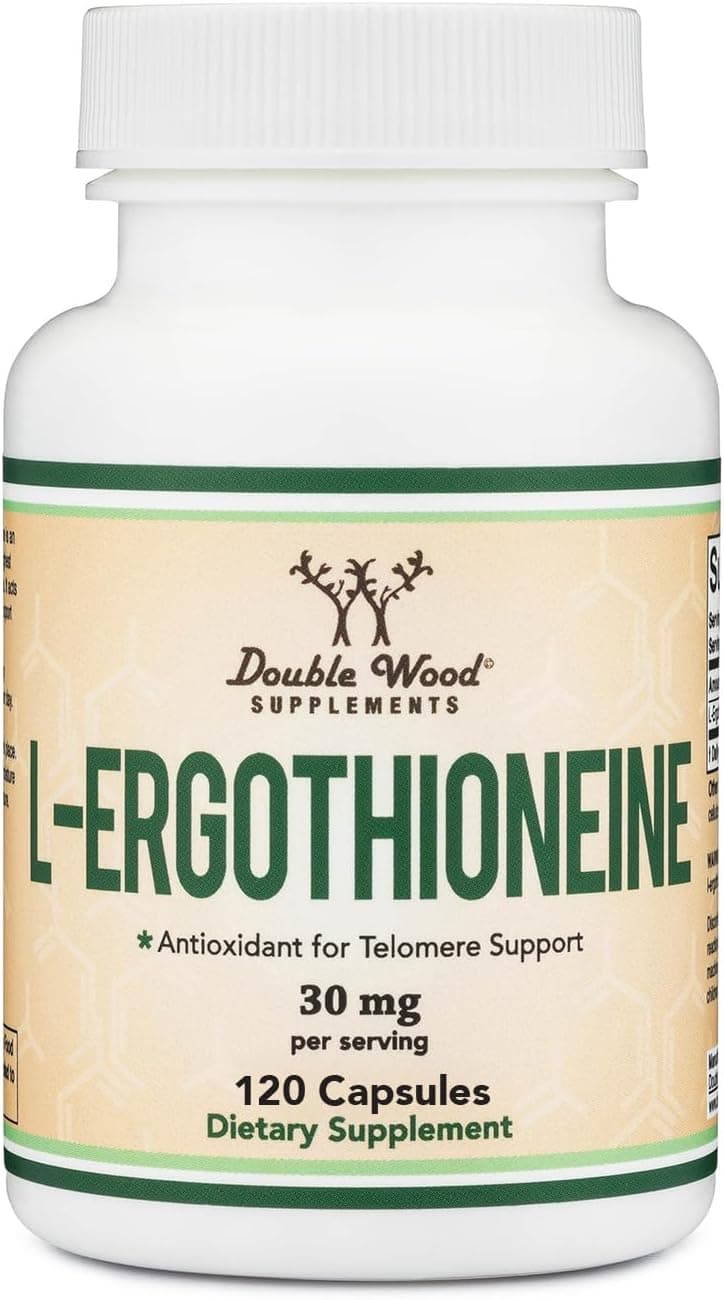
1 other outlet

Suppliers
Vendors carrying Ergothioneine, with live product details and codes. Links are affiliate links that support the wiki at no cost to you.
Amazon
Ergothioneine
iHerb
Ergothioneine
Research
- 2012first citedErgothioneine; antioxidant potential, physiological function and role in disease
- 2026most recentErgothioneine and exercise: A match made in (cognitive) heaven?
- 1.Ergothioneine and exercise: A match made in (cognitive) heaven?
- 2.Ergothioneine; antioxidant potential, physiological function and role in disease
- 3.Ergothioneine, an adaptive antioxidant for the protection of injured tissues? A hypothesis
- 4.Prolonging healthy aging: longevity vitamins and proteins
4 listed here; entry last updated August 2026
Reviews
My notesprivate to this device
FAQ
Why is the transporter a big deal?
The body built a dedicated transporter (OCTN1) to actively retain it, which strongly hints it serves an important role.
Can I just eat mushrooms?
Yes, mushrooms are the richest dietary source, and cooking doesn't destroy much of it.
Is it proven to extend lifespan?
No. It's a promising longevity candidate, but human outcome data is still emerging.
Is it safe?
Very; no meaningful toxicity has been reported, even at high intakes.
Limitations of the evidence
- Its physiological role and long-term health effects in humans are not yet established
- Human clinical evidence remains preliminary
Notes and cautions
- Generally regarded as well tolerated in the amounts found in food and studied supplements
- Obtained naturally from the diet, especially mushrooms