
spec sheet12 rows
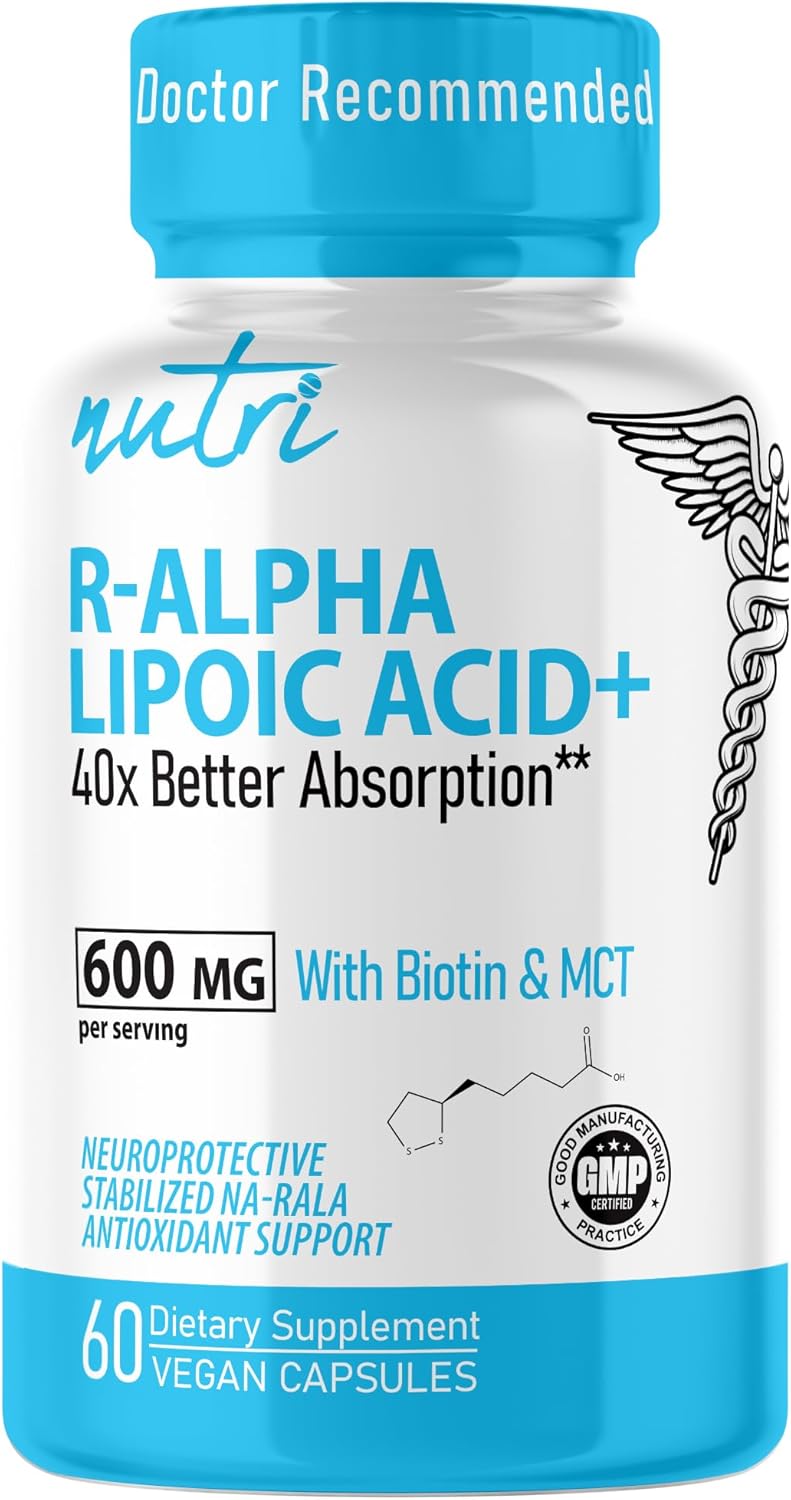
R-Alpha Lipoic Acid R-alpha-lipoic acid is the naturally occurring form of alpha-lipoic acid, a sulfur-containing compound that the body uses as an essential cofactor in energy metabolism and that also acts as an antioxidant. Alpha-lipoic acid exists as two mirror-image forms, and only the R version is made and used by living cells, whereas most synthetic supplements contain an equal mixture of the R and S forms. Sold as a dietary supplement and, in some countries, as a medicine for diabetic nerve pain, the R form is often promoted as the more biologically active and better absorbed of the two.
- The natural form, the one living cells actually make and use
- A prescription medicine for diabetic nerve pain in some countries
- Improves insulin sensitivity and blood sugar handling
- The universal antioxidant; it works in water and fat alike
- Recycles vitamin C, vitamin E and glutathione back to active
- A core cofactor feeding mitochondrial energy production
- In trials of infused lipoic acid for diabetic neuropathy, side effects were no more frequent than with placebo
- It may lower blood sugar, which is relevant for people also taking diabetes medicines
Overview
Alpha-lipoic acid, also called thioctic acid, is an organosulfur compound built around a five-membered dithiolane ring containing two sulfur atoms joined by a disulfide bond [1]. The molecule has a single stereocentre, so it can exist as two non-superimposable mirror images, the R and S enantiomers. Only the R enantiomer, written as R-alpha-lipoic acid or RLA, occurs in nature and is the form that living organisms synthesize and use [2]. Chemically synthesized lipoic acid, by contrast, is typically a racemate, an equal blend of the R and S forms, because ordinary synthesis produces both [1][2]. Studies indicate that these forms are not equivalent, with the natural R enantiomer generally regarded as the more active and better absorbed [1][2].
In its natural setting, R-alpha-lipoic acid is bound to proteins and serves as an essential cofactor for several key enzyme complexes inside mitochondria, the cell's energy factories [1]. It is required by the pyruvate dehydrogenase and alpha-ketoglutarate dehydrogenase complexes, which feed the citric acid cycle, as well as by other complexes involved in amino acid breakdown [1]. Attached to these enzymes, it shuttles chemical groups and electrons during the reactions that release energy from food. This central metabolic role, combined with its capacity to take part in oxidation and reduction reactions, is the foundation of the compound's biological importance [1].
Interest in lipoic acid as a supplement and medicine stems largely from its antioxidant behaviour and its use in diabetic complications [1]. The best-supported clinical use is diabetic peripheral neuropathy, the nerve damage that can accompany diabetes: in Germany, alpha-lipoic acid has been licensed as a treatment for this condition for decades, and a meta-analysis of several randomized trials found that giving it by infusion over a few weeks safely improved neuropathic symptoms such as pain, burning, and numbness to a clinically meaningful degree [1][3]. Lipoic acid has also been studied for a range of other conditions, including obesity and central nervous system disorders, but the evidence there is of more limited quality [1]. A recurring theme in the research is that lipoic acid's usefulness is constrained by its pharmacokinetics; taken by mouth it has only moderate bioavailability, a short half-life, and instability in the stomach, and the R enantiomer, particularly in specialized liquid formulations, shows better absorption than the racemic or solid forms [1][2].
R-alpha-lipoic acid and racemic alpha-lipoic acid are widely sold as dietary supplements, in capsules, tablets, and liquids, with the R form often marketed as the superior version [2]. Because naturally occurring lipoic acid is tightly bound within foods and hard to extract in useful amounts, the material used in supplements is chemically synthesized [1]. Its regulatory standing varies by country: it is a nonprescription supplement in many places and, in Germany, an approved drug for diabetic neuropathy, while broader therapeutic claims remain unproven [1].
Mechanism
R-alpha-lipoic acid works through two complementary roles [1]. As a metabolic cofactor it is fixed to enzyme complexes such as pyruvate dehydrogenase, where its dithiolane ring is alternately oxidized and reduced to carry acyl groups and electrons through the reactions that generate cellular energy [1]. As an antioxidant it is unusual in being soluble in both water and fat, allowing it to act throughout the cell; both lipoic acid and its reduced partner, dihydrolipoic acid, can neutralize reactive oxygen species, bind reactive metal ions, and help regenerate other antioxidants such as vitamins C and E and glutathione [1].
More recent work suggests that a large part of its benefit comes not from directly mopping up free radicals but from switching on the cell's own protective machinery, activating signalling pathways and gene expression that raise the cell's antioxidant defences [1]. Because the R is the form recognized by these biological systems and is more readily absorbed, it is considered the therapeutically preferred version [1][2].
receptor fingerprint
Reactive oxygen speciesscavenges
Glutathione and vitamin C/Eregenerates
dehydrogenase enzymescofactor
signaling / glucose uptakeenhances
Metal ionschelates
Dosingtypical ranges, not medical advice
interested in protocols and clinical dosages? make an account to see them! ^_^
Safetyrisks and cautions, not medical advice
Generally well tolerated; sides include GI upset and, because it lowers blood sugar, potential hypoglycemia especially alongside diabetes medications. Rare reports of a rash or, at very high doses, an autoimmune insulin syndrome exist. R-ALA is less stable than racemic ALA, so quality and stabilization matter.
Subjective profileweighing the evidence above
The active form of ALA and the one worth choosing; genuinely useful for blood sugar and nerve health, just buy it stabilized.
Where to buy
1 other outlet

Suppliers
Vendors carrying R-Alpha Lipoic Acid, with live product details and codes. Links are affiliate links that support the wiki at no cost to you.
Amazon
R-Alpha Lipoic Acid
iHerb
R-Alpha Lipoic Acid
Research
- 2004first citedTreatment of symptomatic diabetic polyneuropathy with the antioxidant alpha-lipoic acid: a meta…
- 2019most recentInsights on the Use of α-Lipoic Acid for Therapeutic Purposes.
- 1.Insights on the Use of α-Lipoic Acid for Therapeutic Purposes.
- 2.(R)-α-lipoic acid oral liquid formulation: pharmacokinetic parameters and therapeutic efficacy.
- 3.Treatment of symptomatic diabetic polyneuropathy with the antioxidant alpha-lipoic acid: a meta-analysis.
3 listed here; entry last updated August 2026
Reviews
My notesprivate to this device
FAQ
Why R-ALA over regular ALA?
R is the natural, active enantiomer; racemic ALA is half the less-useful S form.
What's its best-proven use?
Reducing diabetic peripheral neuropathy symptoms has the strongest evidence.
Can it lower blood sugar too much?
It can, especially with diabetes medication, so monitor for hypoglycemia.
Why is stability a concern?
R-ALA degrades more easily than racemic ALA, so buy a stabilized formulation and store it cool.
Empty stomach or with food?
Absorption is better on an empty stomach for most people.
Adverse effects
- In trials of infused lipoic acid for diabetic neuropathy, side effects were no more frequent than with placebo
- It may lower blood sugar, which is relevant for people also taking diabetes medicines
Notes and cautions
- As an oral supplement it is generally well tolerated, with occasional nausea or stomach upset
- Its limited oral absorption and short half-life in the body affect how well it works and how it is formulated