
spec sheet9 rows
Pygeum is a fat-soluble extract of the bark of Prunus africana (the African cherry, sometimes called the African plum tree), and its whole reputation rests on one job: easing the urinary symptoms of benign prostatic hyperplasia (BPH, the non-cancerous prostate enlargement that makes older men get up at night and struggle to fully empty the bladder). The bark is standardized to a blend of fat-soluble actives; phytosterols like beta-sitosterol, pentacyclic triterpenes, and ferulic acid esters; which together are thought to calm prostate inflammation and soften the hormone and growth-factor signals that drive the gland to swell. It has been used in Europe as a prescription-grade BPH remedy since the 1960s, and it is one of the two herbs (saw palmetto is the other) that men reach for first when they want a plant option before or alongside medication.
- One of the better evidenced botanicals for prostate symptoms
- Pooled randomized data behind better peak urine flow
- Fewer trips out of bed at night
- Less urine left in the bladder after voiding
- Calms inflammation in prostate tissue, the main proposed mechanism
- European prescription grade use since the 1960s
- Not a treatment for prostate cancer and not a substitute for medical evaluation
Overview
A lipophilic Prunus africana bark extract standardized to phytosterols and triterpenes; the go-to herbal option for easing BPH urinary symptoms (flow, nocturia, residual volume). Trial dose is about 100 to 200 mg a day, best taken with a fatty meal, and often stacked with saw palmetto. Well tolerated but backed by older, smaller studies.

- Pygeum comes from the bark of Prunus africana, an evergreen also called the African cherry or red stinkwood; it belongs to the same genus (Prunus) as cherries, plums, and almonds.
- It has been sold as a prescription-grade BPH remedy in France and other parts of Europe since the 1960s, long before it became a shelf supplement elsewhere; Tadenan is the classic brand.
- Demand for the bark grew so heavy that the tree is now protected under CITES, which spurred sustainable-harvest and plantation programs across Africa.
- The extract is standardized to fat-soluble sterols and triterpenes, which is exactly why an old-school unstandardized bark powder is not really the same product.
- One of pygeum's most-studied lab effects is blocking the growth factors (like bFGF and IGF-1) that tell prostate tissue to keep proliferating.
Mechanism
Nobody has fully pinned down how pygeum works, and the honest sources say so; the picture is pieced together from lab and animal studies plus the makeup of the extract. Three fat-soluble fractions carry most of the proposed activity. The phytosterols (plant-cholesterol lookalikes, chiefly beta-sitosterol) appear to blunt inflammatory prostaglandin and leukotriene signaling in prostate tissue, which is the main anti-inflammatory angle behind the symptom relief.
The pentacyclic triterpenes (ursolic and oleanolic acids) add anti-edema (anti-swelling) effects and may push back on enzymes that remodel connective tissue. The long-chain fatty alcohols n-docosanol and n-tetracosanol, which show up in the bark both as free alcohols (n-docosanol is the classic ~0.5% standardization marker) and esterified to ferulic acid as docosyl and tetracosyl ferulate, have been reported to interfere with how the prostate handles cholesterol and androgens locally.
On top of the anti-inflammatory story, pygeum is often described as anti-androgen-adjacent and 5-alpha-reductase-adjacent, meaning it is thought to soften the prostate's response to dihydrotestosterone (DHT, the potent androgen made from testosterone by the enzyme 5-alpha-reductase) rather than shutting the enzyme down the way finasteride or dutasteride do; if that effect is real it is gentler and far less complete.
The most-cited mechanism is on growth factors: in lab work pygeum extract inhibits the proliferation of prostate fibroblasts driven by growth factors like bFGF, EGF, and , the signals that tell prostate stroma to keep growing, which fits the idea that it slows the tissue remodeling behind BPH rather than dramatically shrinking the gland. Because every one of these actives is fat-soluble, how much actually reaches the prostate hinges on absorption, and that is the weak link in the whole story.
receptor fingerprint
Prostate inflammation (prostaglandin / leukotriene signaling)anti-inflammatory dampening
Growth-factor-driven prostate fibroblast proliferation (bFGF, EGF, )inhibitor (lab)
Bladder emptying / urinary flowimproves voiding
Beta-sitosterol / phytosterol pathwaysupplies fat-soluble anti-inflammatory sterols
Prostate response to DHT (5-alpha-reductase-adjacent)softens androgen drive (partial, indirect)
Evidencehow good the literature is
The evidence is better than most herbs but softer than the drugs. A Cochrane systematic review pooled the randomized trials and concluded that pygeum modestly improves urinary symptoms and flow versus placebo; men were roughly twice as likely to report feeling improved, with better peak urine flow, lower post-void residual volume (the urine left in the bladder after voiding), and fewer nighttime bathroom trips (nocturia). The caveats are big and there is no point soft-pedalling them: most of those trials were old, small, short (often 30 to 120 days), used different products and doses, and few captured the harder long-term endpoints. Head-to-head data against saw palmetto, or against alpha-blockers and 5-alpha-reductase inhibitors, are thin. So pygeum is best treated as a reasonable, evidence-backed option for mild-to-moderate BPH symptoms rather than a proven substitute for medical treatment; part of why it carries more credibility than the average botanical is that European regulators long treated standardized extracts as legitimate BPH therapy. None of this should be read as a treatment for prostate cancer or for the enlargement itself; the realistic target is symptom relief.
Dosingtypical ranges, not medical advice
interested in protocols and clinical dosages? make an account to see them! ^_^
Safetyrisks and cautions, not medical advice
Pygeum has a clean safety record in the trials; it is generally well tolerated, and the side effects that do show up are mild and mostly gastrointestinal (stomach upset, nausea, or loose stools), usually no worse than placebo. There are no well-documented serious drug interactions, but because it is described as mildly anti-androgenic in effect it is worth being thoughtful about layering it on top of other hormone-active supplements or drugs, and anyone already on prostate medication should loop in their clinician before adding it. Two honest caveats sit outside the pill itself.
First, self-treating urinary symptoms can delay the diagnosis of something that needs real attention; blood in the urine, pain, fever, or a sudden inability to urinate are not things to manage with a bark extract, and pygeum does not treat or prevent prostate cancer. Second, there is a sustainability issue: Prunus africana is a slow-growing African tree that has been heavily over-harvested for its bark and is listed under CITES (the international treaty that protects threatened species), so it is worth buying from brands that use sustainably harvested or cultivated bark. As with any supplement, quality and standardization vary between products. This is general educational information, not medical advice.
History
Pygeum's medicinal use traces back to traditional African healers, who used the powdered bark of Prunus africana for bladder and 'old man's' urinary complaints long before it reached a lab. That folk use caught European attention in the mid-twentieth century; by the 1960s a standardized lipophilic bark extract had been developed and marketed in France (Tadenan being the classic brand) as a treatment for BPH, and it became a routine prescription-grade phytotherapy across parts of Europe.
As modern BPH drugs like alpha-blockers and 5-alpha-reductase inhibitors arrived, pygeum shifted from front-line therapy toward a popular supplement, especially in markets like the United States where it sits on the shelf next to saw palmetto. The plant's own popularity created a problem: decades of stripping bark from wild trees pushed Prunus africana onto the CITES list of protected species, which in turn drove sustainable-harvest and cultivation efforts so the supply could continue.
Reputation
Among men's-health supplements, pygeum has a solid if unflashy reputation; it is one of the two herbs (saw palmetto being the other) that reliably come up when people talk about natural options for an aging prostate. It earns more respect than most botanicals because it has real randomized trials and a Cochrane review behind it, and because European medicine treated it as legitimate BPH therapy for years rather than fringe. That said, the enthusiasm outruns the certainty: the trials are old and small, saw palmetto has become the more famous of the pair, and modern BPH care leans on drugs with harder evidence. So the fair take is that pygeum is a reasonable, well-tolerated option for mild symptoms and a common stack partner, not a miracle and not a replacement for a proper workup.
Subjective profileweighing the evidence above
One of the better-evidenced botanicals, with pooled randomized data behind modest gains in urine flow and fewer nighttime trips. Cheap, well tolerated, and a reasonable option for mild BPH symptoms; it is not a substitute for having an enlarged prostate properly evaluated.
Where to buy
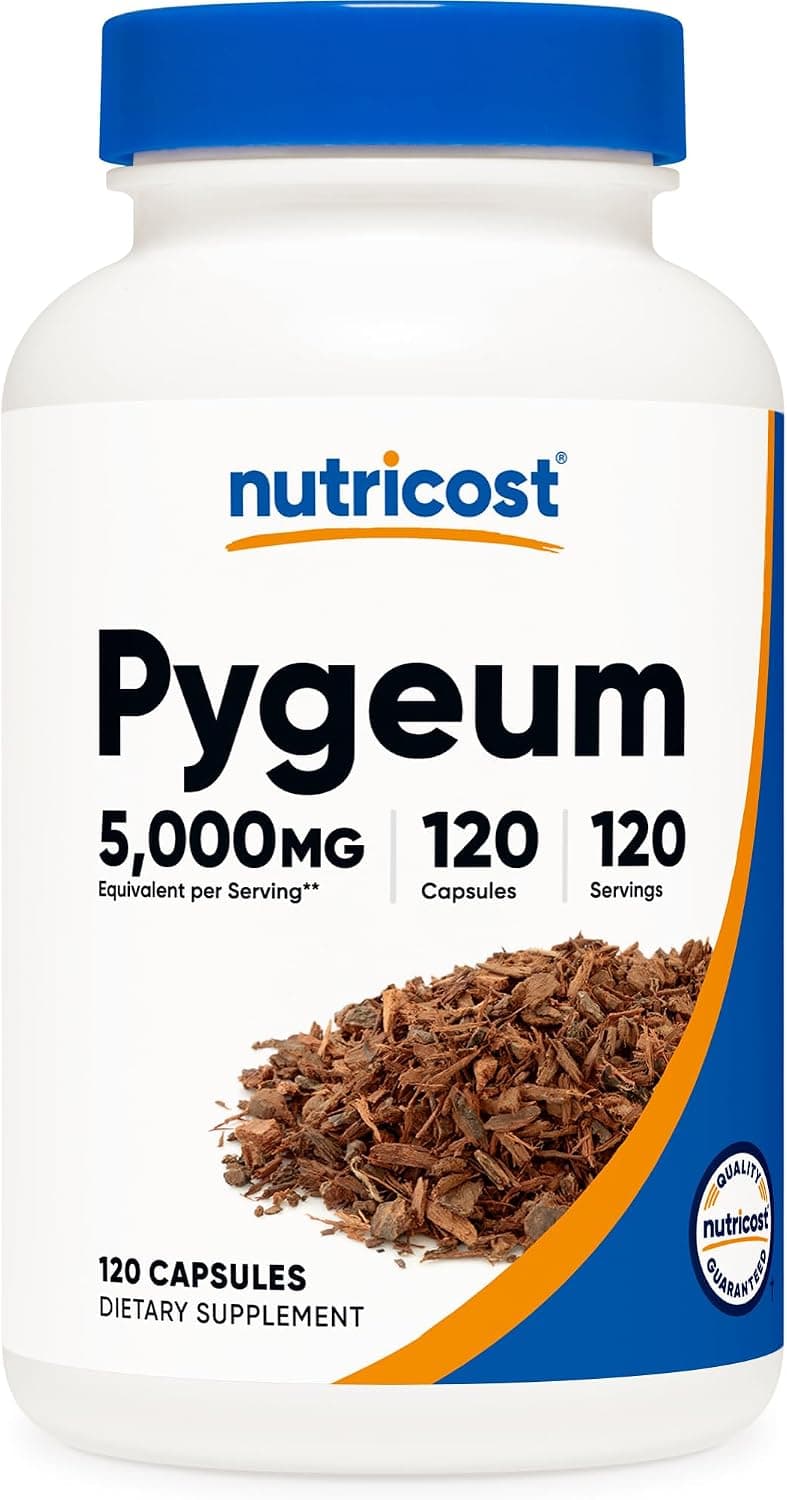
Suppliers
Vendors carrying Pygeum, with live product details and codes. Links are affiliate links that support the wiki at no cost to you.
Amazon
Pygeum
Research
- 1990first cited[Efficacy of Pygeum africanum extract in the medical therapy of urination disorders due to beni…
- 2024most recentA Comprehensive Review of Ethnomedicinal Uses, Phytochemistry, Pharmacology, and Toxicity of Pr…
- 1.Pygeum africanum for benign prostatic hyperplasia.
- 2.Pygeum africanum for the treatment of patients with benign prostatic hyperplasia: a systematic review and quantitative meta-analysis.
- 3.[Efficacy of Pygeum africanum extract in the medical therapy of urination disorders due to benign prostatic hyperplasia: evaluation of objective and subjective parameters. A placebo-controlled double-blind multicenter study].
- 4.Antiproliferative effect of Pygeum africanum extract on rat prostatic fibroblasts.
- 5.A Comprehensive Review of Ethnomedicinal Uses, Phytochemistry, Pharmacology, and Toxicity of Prunus africana (Hook. f.) Kalkman from Africa.
5 listed here; entry last updated August 2026
Reviews
My notesprivate to this device
FAQ
What is pygeum actually for?
It is used to ease the urinary symptoms of BPH (benign prostatic hyperplasia, the non-cancerous prostate enlargement that is common with age); think weaker flow, waking up at night to urinate, and not fully emptying the bladder. It is not a cancer treatment.
How much do I take, and does it need food?
The trial dose is about 100 mg a day of a standardized extract, sometimes up to 200 mg, taken as one dose or split into two. The actives are fat-soluble, so take it with a meal that has some fat in it to help absorption.
Pygeum or saw palmetto?
Both are the go-to plant options for BPH symptoms, and both have mixed-but-reasonable evidence; many men just take them together in a prostate formula. Head-to-head data are thin, so there is no clear winner, and neither replaces seeing a clinician if symptoms are significant.
Does it lower DHT like finasteride?
Not really; it is described as anti-androgen-adjacent, meaning it is thought to soften how the prostate responds to DHT rather than strongly blocking the 5-alpha-reductase enzyme the way finasteride and dutasteride do. The effect is gentler and less certain.
How long until I know if it is working?
Give it at least 4 to 8 weeks; symptom changes are gradual, not overnight.
Limitations of the evidence
- Trial evidence is mostly old, small, and short, so the effect sizes are modest and uncertain
Adverse effects
- Not a treatment for prostate cancer and not a substitute for medical evaluation
Notes and cautions
- Generally well tolerated; the side effects that occur are usually mild
- Most common complaints are gastrointestinal (nausea, stomach upset, loose stools)
- Sustainability concern: Prunus africana bark is over-harvested and CITES-listed, so choose responsibly sourced products