
spec sheet10 rows
Devil's claw is a herbal medicine prepared from the tuberous roots of Harpagophytum procumbens, a plant of the sesame family (Pedaliaceae) native to the semiarid regions of southern Africa. The remedy takes its name from the small hooked barbs that cover the plant's woody fruit, and its root preparations are valued chiefly for iridoid glycosides such as harpagoside. In traditional southern African medicine and in modern European phytotherapy, devil's claw is used mainly to ease musculoskeletal pain, particularly osteoarthritis and lower back pain. It is marketed as a dietary supplement or traditional herbal product rather than an approved pharmaceutical drug.
- Eases osteoarthritis joint pain
- Helps chronic low back pain
- Reduces stiffness over time
- Traditional digestive bitter
- Most commonly mild digestive upset such as dyspepsia
- Caution advised with peptic ulcers, gallstones, or blood-thinning medication
Overview
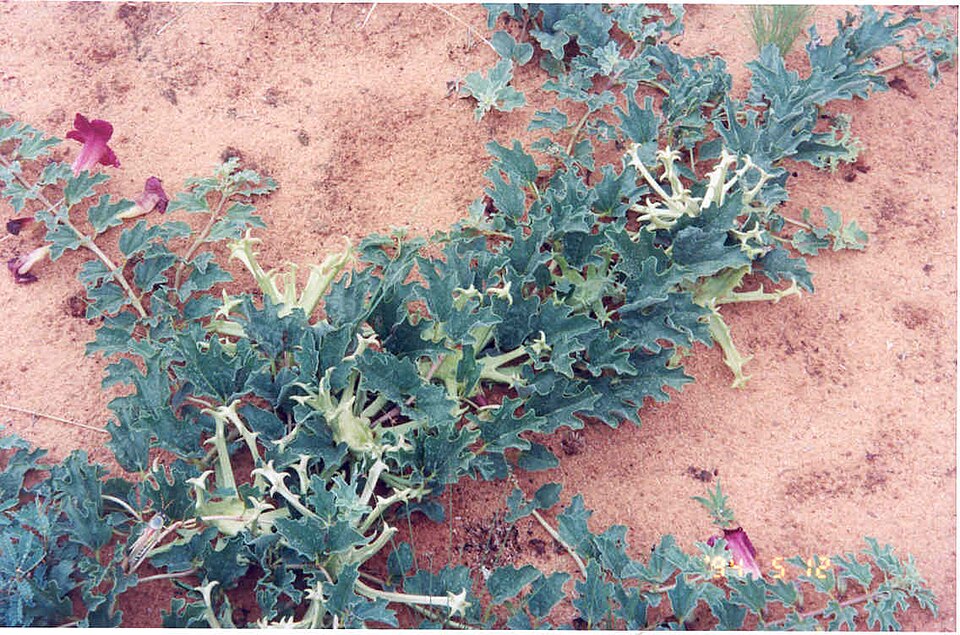
Devil's claw refers to herbal preparations made from the secondary storage tubers of Harpagophytum procumbens, and to a lesser extent the related species Harpagophytum zeyheri, members of the sesame family Pedaliaceae [3]. The plants grow across the sandy Kalahari and other semiarid parts of Namibia, Botswana, and the Northern Cape of South Africa, and the common name comes from the claw-like hooks that cover the ripened seed capsule [3].
The medicinal activity of the root is generally attributed to a group of iridoid glycosides, of which harpagoside is the best studied; harpagide and procumbide are also present, alongside phenolic acids, flavonoids, and plant sugars [1][4]. Commercial extracts are commonly standardized to a defined harpagoside content, and analyses have shown that the amount of this marker varies with the plant material and the extraction solvent, which complicates direct comparison between products [4][5].
Indigenous peoples of southern Africa have long used the bitter root for fever, pain, and digestive complaints, and the plant was brought to European attention in the early twentieth century [1]. In contemporary practice it is taken as a phytomedicine for rheumatic and musculoskeletal disorders, most often osteoarthritis of the hip and knee and chronic non-specific low back pain [1][2]. Interest has grown partly because prolonged use of non-steroidal anti-inflammatory drugs is limited by gastrointestinal, cardiovascular, and renal risks, prompting a search for gentler alternatives [3].
Clinical studies, including open surveillance trials and several randomized, placebo-controlled trials, suggest that standardized root extracts can produce measurable reductions in pain and stiffness in osteoarthritis and low back pain, with generally good tolerability [1][2]. Reviewers nonetheless caution that the overall evidence base is constrained by small sample sizes, differing formulations and doses, short follow-up, and a shortage of high-quality head-to-head comparisons with conventional analgesics [3][5]. The most frequently reported adverse effects are mild digestive upsets [2].
Devil's claw is sold in many countries as a dietary supplement or, in parts of Europe, as a registered traditional herbal medicinal product, rather than as an approved prescription drug [3]. It is available in numerous forms, including dried powdered root, aqueous and hydroalcoholic extracts, tablets, capsules, tinctures, and teas [1]. Because wild harvesting supplies most of the global trade, the species was once proposed for international protection under CITES; the listing was ultimately withdrawn after the range states adopted sustainable harvesting and management measures [3].
Mechanism
The pharmacological effects of devil's claw are attributed mainly to its iridoid glycosides, particularly harpagoside, which appear to dampen inflammatory signaling [3][4]. In laboratory and animal studies, root extracts and isolated harpagoside have been reported to suppress the enzyme cyclooxygenase-2, reduce activation of the transcription factor nuclear factor-kappa B, and lower the output of pro-inflammatory mediators such as tumor necrosis factor and various interleukins, while also blunting [3]. These actions are thought to underlie the herb's analgesic and anti-inflammatory effects in painful joint and back conditions [1]. Much of this mechanistic evidence is indirect, drawn from preclinical models rather than human tissue, so its precise contribution to the clinical response remains uncertain [3].
receptor fingerprint
Prostaglandin synthesisinhibits
Digestive secretionsstimulates
COX-2 pathwayinhibits
TNF-alpha / releaseinhibits
productioninhibits
Dosingtypical ranges, not medical advice
interested in protocols and clinical dosages? make an account to see them! ^_^
Safetyrisks and cautions, not medical advice
Generally well tolerated; the most common complaints are mild stomach upset and diarrhea. Because it stimulates stomach acid and gut motility, people with active ulcers or gallstones should be cautious. There is a theoretical interaction with blood thinners and with heart-rhythm or blood-pressure drugs, so check with a clinician if you take those.
Resources
This entry is here for reference.
Research
- 2003first citedTreatment of patients with arthrosis of hip or knee with an aqueous extract of devil's claw (Ha…
- 2026most recentHarpagophytum procumbens in musculoskeletal disorders: current evidence and comparison with NSA…
- 1.Devil's Claw (Harpagophytum procumbens) as a treatment for osteoarthritis: a review of efficacy and safety
- 2.Treatment of patients with arthrosis of hip or knee with an aqueous extract of devil's claw (Harpagophytum procumbens DC.)
- 3.Harpagophytum procumbens in musculoskeletal disorders: current evidence and comparison with NSAIDs
- 4.Plant food supplements with anti-inflammatory properties: a systematic review (II)
- 5.Devil's claw extract as an example of the effectiveness of herbal analgesics
5 listed here; entry last updated July 2026
Reviews
My notesprivate to this device
FAQ
How long until it works?
Most people need two to four weeks of consistent use before joint pain improvements show up.
Is it as strong as ibuprofen?
No. It's gentler and slower; think of it as a milder, better-tolerated option rather than a direct NSAID replacement.
Can I take it with food?
Yes, and taking it with meals actually helps reduce stomach upset.
Who should avoid it?
People with active stomach ulcers, gallstones, or those on blood thinners should talk to a doctor first.
Adverse effects
- Most commonly mild digestive upset such as dyspepsia
- Caution advised with peptic ulcers, gallstones, or blood-thinning medication
Notes and cautions
- Traditional herbal product; not an approved prescription drug