
spec sheet10 rows
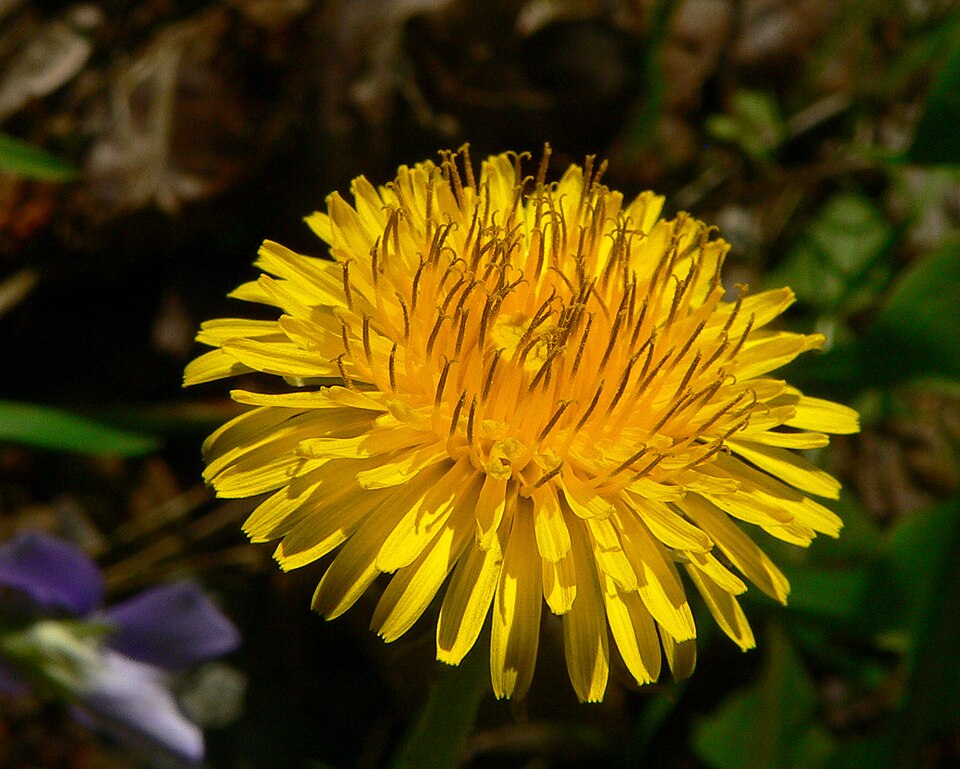
Dandelion root is the root of the common dandelion, Taraxacum officinale, a widespread perennial in the daisy family (Asteraceae). Long used in European, Asian, and other herbal traditions, the root serves as a bitter digestive tonic and mild diuretic and, when roasted and ground, as a caffeine-free coffee substitute. It contains bitter sesquiterpene compounds, triterpenes such as taraxasterol, phenolic acids, and the storage carbohydrate inulin. Most evidence for its traditional uses comes from laboratory and animal studies rather than clinical trials, and it is used as a food and herbal supplement.
- Supports digestion
- Mild diuretic
- Prebiotic fiber
- Traditional liver tonic
- Antioxidant polyphenols
- Allergic reactions in people sensitive to ragweed and related plants
- Mild stomach upset or heartburn
- Diuretic effect may matter alongside certain medications
Overview
Taraxacum officinale is a familiar herbaceous perennial of the family Asteraceae, native to Eurasia and now naturalized around the world as a common lawn and roadside plant [1]. Although its leaves and flowers are also used, the fleshy taproot has its own long history in both herbal medicine and food.
Traditionally the root has been taken as a bitter tonic to stimulate digestion and appetite, as a mild diuretic, and as a remedy directed at the liver and gallbladder [1][2]. Roasted and ground, it becomes a caffeine-free substitute for coffee, a use especially associated with periods of coffee scarcity in Europe.
Chemically, the root is a mixture of bitter sesquiterpene lactones such as taraxinic acid and taraxacin, triterpenes and sterols including taraxasterol, taraxerol, and beta-sitosterol, phenolic acids such as chlorogenic and chicoric acid, and generous amounts of the prebiotic carbohydrate inulin [1][3]. These constituents are regarded as the basis of its reported effects.
Modern pharmacological studies, most of them in cell and animal models, report anti-inflammatory, antioxidant, antimicrobial, liver-protective, and blood sugar and lipid-modulating activities for dandelion and its constituents, and root extracts rich in terpenoids and polysaccharides have drawn some interest in anticancer research [1][2][3]. Clinical evidence in humans remains limited; a small pilot study of a dandelion leaf extract found a short-term rise in urine output, supporting the plant's traditional diuretic reputation but falling well short of proof [4].
Dandelion is treated as an edible plant and herbal supplement rather than a medicine, and it is generally regarded as safe as a food and flavoring, though people allergic to other Asteraceae plants such as ragweed may react to it. The root is sold dried, as roasted dandelion coffee, and as teas, tinctures, capsules, and concentrated extracts.
Mechanism
The root's actions are attributed to its mixture of bioactive constituents rather than to any single compound [1]. Bitter sesquiterpene lactones are thought to stimulate salivary and digestive secretions, in keeping with its traditional use as a digestive tonic, while its phenolic acids and triterpenes such as taraxasterol contribute antioxidant and anti-inflammatory activity in laboratory studies, partly by modulating inflammatory signaling and oxidative-stress pathways [1][3].
The inulin content acts as a fermentable prebiotic fiber that nourishes gut bacteria [2]. The plant's diuretic effect has been linked both to its constituents and to a high potassium content, and a human pilot study of a leaf extract observed increased urination, although the precise mechanism was not established [4]. Overall, most proposed mechanisms derive from preclinical work and await confirmation in humans [1].
receptor fingerprint
Digestive secretions (bitters)stimulates
Gut microbiota (inulin)feeds
Urine outputmild diuresis
Inflammatory and oxidative markersreduces
Dosingtypical ranges, not medical advice
interested in protocols and clinical dosages? make an account to see them! ^_^
Safetyrisks and cautions, not medical advice
Generally well tolerated; it's a common food and beverage herb. People allergic to ragweed and related plants may react, and its diuretic effect could matter for those on diuretic or blood-pressure medication. Its potassium content and possible interactions mean caution for people with kidney issues.
Resources
This entry is here for reference.
Research
- 2009first citedThe diuretic effect in human subjects of an extract of Taraxacum officinale folium over a singl…
- 2024most recentTaraxacum: A Review of Ethnopharmacology, Phytochemistry and Pharmacological Activity
- 1.Taraxacum: A Review of Ethnopharmacology, Phytochemistry and Pharmacological Activity
- 2.The potential of dandelion in the fight against gastrointestinal diseases: A review
- 3.Ethnobotany of the genus Taraxacum: Phytochemicals and antimicrobial activity
- 4.The diuretic effect in human subjects of an extract of Taraxacum officinale folium over a single day
4 listed here; entry last updated July 2026
Reviews
My notesprivate to this device
FAQ
Is dandelion root a real diuretic?
Mildly, yes; a small human study showed increased urine output, though it's gentle compared to drug diuretics.
Does it detox the liver?
It's a traditional liver tonic with some antioxidant support, but the strong detox claims aren't well proven.
Can I take it every day?
As a tea or mild supplement, most people tolerate daily use fine, barring allergy or medication interactions.
Who should avoid it?
People allergic to ragweed-family plants, and those on diuretics or with kidney problems should be cautious.
What's the prebiotic angle?
The root is rich in inulin, a fiber that feeds beneficial gut bacteria.
Limitations of the evidence
- Human clinical evidence is limited
Adverse effects
- Allergic reactions in people sensitive to ragweed and related plants
- Mild stomach upset or heartburn
- Diuretic effect may matter alongside certain medications