
spec sheet14 rows
Dextrose is the D-isomer of glucose, the simple sugar your body runs on directly. It is a monosaccharide (one sugar unit) that needs no digestion to be absorbed, so it raises blood glucose faster than almost anything else you can eat. In practice it is used three ways: as a fast fuel and glycogen-replenisher around hard training, as a rapid rescue for low blood sugar, and as a bulk sweetener/carrier in supplements and IV fluids.
- Refills muscle and liver glycogen fast after hard training
- Absorbed with no digestion; hits the bloodstream immediately
- Rapid rescue for a low blood sugar dip
- Known dose beats candy when glucose crashes
- Spikes insulin to shuttle creatine and peptides in
- Instant fuel for high intensity work
- Sharp blood-glucose and insulin spike
- Reactive (rebound) hypoglycemia after large empty-stomach doses
- GI discomfort, bloating, or osmotic loose stool at high single doses
Overview
Dextrose is the D-isomer of glucose, the simple sugar that the human body runs on directly. As a monosaccharide it is a single sugar unit, so it requires no digestion to be absorbed; it crosses the intestinal wall almost immediately and raises blood glucose faster than nearly any other carbohydrate. The name is a historical artifact of chemistry, referring to the way the molecule rotates polarized light to the right (dextro-), which distinguished the D-form from its mirror image. Commercially it is derived from the hydrolysis of starch, usually corn, which is why it is often sold as "corn sugar" or as dextrose monohydrate powder that carries one water molecule per glucose unit and is therefore about 91 percent glucose by weight. It is functionally identical to the glucose already circulating in the bloodstream, and it sits at the reference point of the glycemic index, defining the value of 100 against which other foods are compared.
Mechanistically, dextrose plugs straight into central metabolism without being broken down first. In the gut it is absorbed across the enterocyte mainly by SGLT1, a sodium-coupled cotransporter, and then exits into the blood via GLUT2; because that uptake is sodium-driven it also pulls water along, which is why glucose combined with sodium forms the backbone of oral rehydration therapy. Once in circulation it stimulates pancreatic beta cells to release insulin, and insulin drives GLUT4 translocation so that muscle and fat cells take glucose up. Inside cells the sugar is either oxidized through glycolysis and the mitochondria to produce ATP or stored as glycogen in muscle and liver. The brain, which depends on glucose as its primary fuel and imports it via GLUT1 and GLUT3 largely independent of insulin, is the basis for the observation that a glucose drink can transiently improve performance on demanding memory tasks.
The evidence base is strongest for its role in recovery and acute rescue, and it is honest about the limits elsewhere. Classic work on post-exercise glycogen resynthesis found that the timing of carbohydrate ingestion matters substantially; delaying carbohydrate intake by a couple of hours after glycogen-depleting exercise meaningfully slows the rate at which muscle glycogen is restored, which is the empirical foundation for eating fast carbohydrate soon after hard training [1]. The cognitive claim is real but modest: a comprehensive review of the "glucose memory facilitation" effect concludes that glucose can enhance memory-heavy performance, though the effect is inconsistent and depends on task demand and metabolic state [2], and controlled work in healthy young adults shows the benefit is most reliable when subjects are fasted or when the task is sufficiently demanding rather than being a general or dose-dependent boost [3]. It is not a nootropic; it is a transient fuel effect that arrives with a blood-sugar spike. For treating low blood sugar, a randomized crossover trial in type 1 diabetes compared different quantities of oral carbohydrate across insulin-induced hypoglycemia ranges and supports using a defined, modest dose rather than overtreating [4], consistent with the standard clinical "15-15" approach reflected in current diabetes care guidance [5].
Regarding status, dextrose is not a drug but a food ingredient and a nutrient, and in the United States it is generally recognized as safe; it is widely used as a bulk sweetener, a carrier in supplements, and, in medical settings, as an intravenous fluid under supervision where concentration matters. For a healthy person the risks are simply the ordinary risks of sugar in concentrated form: it spikes blood glucose and insulin sharply, making it a poor everyday choice for anyone managing diabetes or insulin resistance outside a deliberate hypoglycemia rescue, and large single doses on an empty stomach can provoke a reactive-hypoglycemia rebound, gastrointestinal discomfort, or osmotic loose stool. It supplies no protein, fat, fiber, vitamins, or minerals, so routine intake offers calories without nutrition and contributes to dental caries and metabolic strain if not accounted for. In short it is a tool with a narrow useful window rather than a daily supplement taken for its own sake.

- "Dextrose" is just glucose named for its optical rotation: it rotates polarized light to the right (dextro-), which is how 19th-century chemists told the D-form from its mirror image.
- It is measured against itself: dextrose is the reference point for the glycemic index, sitting at (or defining) 100.
- The sodium-glucose link in SGLT1 is why oral rehydration salts work; the sugar literally helps drag water and salt across the gut wall, a discovery credited with saving millions from dehydration.
- Dextrose monohydrate carries one water molecule per glucose, so it is about 91% glucose by weight; anhydrous dextrose is ~100%.
Mechanism
dextrose is glucose, so it plugs straight into central metabolism without being broken down first. in the gut it is absorbed across the enterocyte mainly by SGLT1, a sodium-coupled cotransporter, then exits into the blood via GLUT2; because absorption is sodium-driven it also pulls water along, which is why glucose plus sodium is the backbone of oral rehydration. once in the blood it triggers pancreatic beta cells to release , and insulin drives GLUT4 translocation so muscle and fat cells pull glucose in. inside cells glucose is either burned through glycolysis and the mitochondria to make ATP, or stored as glycogen in muscle and liver. the brain, which relies on glucose as its main fuel and takes it up via GLUT1 and GLUT3 largely independent of insulin, is why a glucose drink can transiently sharpen memory-heavy tasks; that "glucose facilitation" effect is real but modest and mostly shows up when the task is demanding or glucose is low.
receptor fingerprint
SGLT1 (intestinal Na+/glucose cotransporter)Primary route of active glucose absorption across the gut; co-transports sodium and water
GLUT2 / GLUT4 transportersGLUT2 moves glucose into blood and liver; insulin-driven GLUT4 pulls it into muscle and fat
Pancreatic beta-cell ( secretion)Rising glucose triggers insulin release
Skeletal muscle & liver glycogen synthaseSupplies substrate for post-exercise glycogen resynthesis, rate-dependent on timing and dose
Brain glucose uptake (GLUT1/GLUT3)Provides the CNS's primary fuel, largely insulin-independent
Dosingtypical ranges, not medical advice
interested in protocols and clinical dosages? make an account to see them! ^_^
Safetyrisks and cautions, not medical advice
for a healthy person dextrose is food; the risks are the ordinary risks of sugar, concentrated. it spikes blood glucose and insulin sharply, so it is a poor choice for anyone managing diabetes or insulin resistance outside of a deliberate hypoglycemia rescue. large single doses on an empty stomach can cause a reactive-hypoglycemia rebound, gut discomfort, or osmotic loose stool. routine high intake feeds dental caries and, if calories are not accounted for, weight gain and metabolic strain. it offers no protein, fat, fiber, vitamins, or minerals, so it should never crowd out real food. IV dextrose is a different context (medical supervision, concentration matters). the honest summary: safe and useful in the right window, genuinely not something to sip through the day.
Interactionsdocumented pairs only, not exhaustive
Dextrose is glucose, so its interactions are physiologic rather than metabolic; it does not touch cytochrome P450 enzymes.
The most consequential one is with thiamine status. A glucose load consumes thiamine as a cofactor, and concentrated dextrose given to someone already deficient, whether from alcohol use disorder, prolonged vomiting or severe malnutrition, can precipitate Wernicke encephalopathy. The labeling for 50% dextrose flags this directly.
Dextrose solutions also interact with blood products at the level of the infusion line. Running dextrose through the same set as packed red cells causes pseudoagglutination and hemolysis, because the solution turns effectively hypotonic as the glucose is taken up.
Pharmacodynamically, dextrose opposes insulin and sulfonylureas, which is why it treats their hypoglycemia, and it adds to the hyperglycemia produced by corticosteroids, thiazides and some antipsychotics. Several drugs are chemically unstable or frankly insoluble in dextrose, phenytoin most notoriously.
Checking a whole stack? Run it through interactions + stacks.
Subjective profileweighing the evidence above
dextrose is a tool, not a supplement you take every day for its own sake. it earns its place in two spots: post-workout when the goal is refilling glycogen quickly, and as a fast carb to spike insulin alongside things that ride that (creatine loading, some peptide protocols). it is also the honest answer to a real hypoglycemia dip; glucose tabs beat candy because you know the dose. outside those windows it is just sugar, so treat it like one; it spikes blood glucose hard, does nothing magic, and daily use with no training demand is a recipe for dental and metabolic downside.
Where to buy
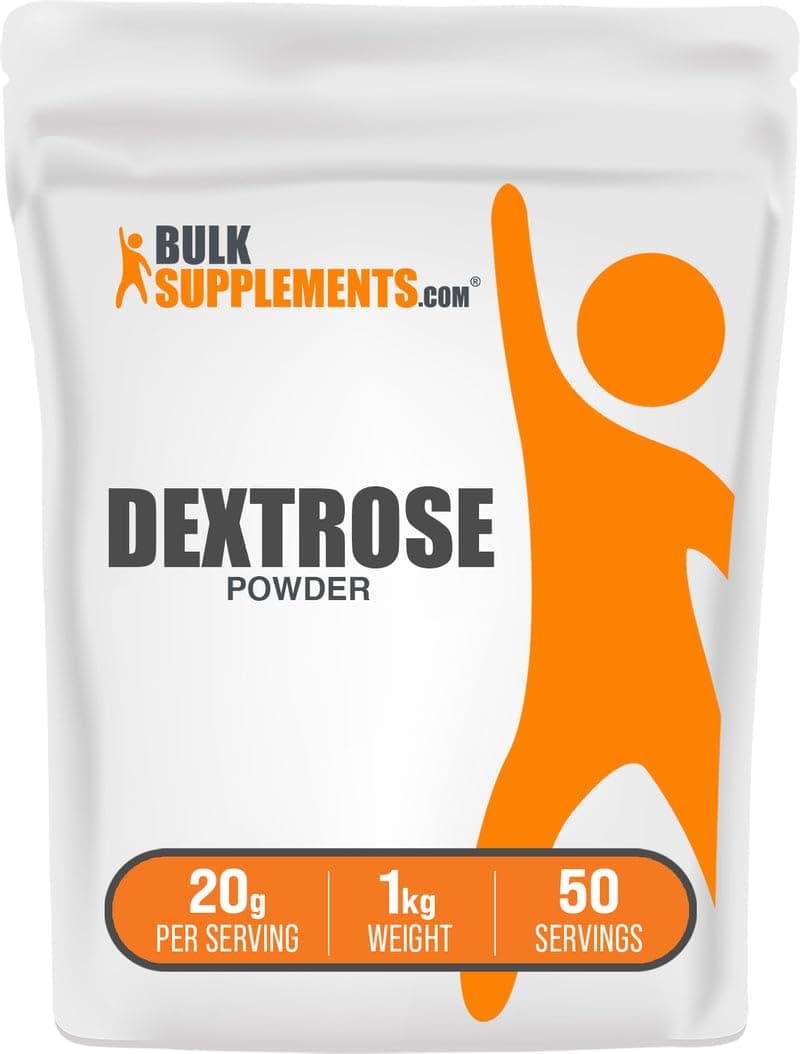
Suppliers
Vendors carrying Dextrose, with live product details and codes. Links are affiliate links that support the wiki at no cost to you.
Amazon
Dextrose
Research
- 1988first citedMuscle glycogen synthesis after exercise: effect of time of carbohydrate ingestion
- 2001controlled trialGlucose facilitation of cognitive performance in healthy young adults: examination of the influ…
- 2026most recent6. Glycemic Goals, Hypoglycemia, and Hyperglycemic Crises: Standards of Care in Diabetes-2026.
- 1.Muscle glycogen synthesis after exercise: effect of time of carbohydrate ingestion
- 2.Glucose enhancement of human memory: a comprehensive research review of the glucose memory facilitation effect
- 3.Glucose facilitation of cognitive performance in healthy young adults: examination of the influence of fast-duration, time of day and pre-consumption plasma glucose levels
- 4.Non-severe hypoglycemia in type 1 diabetes: a randomized crossover trial comparing two quantities of oral carbohydrates at different insulin-induced hypoglycemia ranges
- 5.6. Glycemic Goals, Hypoglycemia, and Hyperglycemic Crises: Standards of Care in Diabetes-2026.
5 listed here; entry last updated August 2026
Reviews
My notesprivate to this device
FAQ
Dextrose vs table sugar; what is the difference?
Table sugar (sucrose) is glucose bonded to fructose and has to be split by an enzyme before absorption. Dextrose is pure glucose, already in the form your body uses, so it hits the blood faster with a higher glycemic index.
Is dextrose better than fructose or maltodextrin for recovery?
For muscle glycogen, glucose (dextrose) and maltodextrin are roughly equivalent and both beat fructose alone. Adding some fructose helps refill liver glycogen faster and eases the gut when carb intake is very high, which is why endurance products blend them.
Will dextrose actually make me smarter?
No. There is a real but modest "glucose facilitation" effect on memory-heavy tasks, strongest when you are fasted or glucose is low. It is a transient fuel effect, not a nootropic, and it comes with a blood-sugar spike.
How much for a low blood sugar episode?
The standard clinical approach is 15-20 g of fast carbs (about four glucose tablets), recheck in 15 minutes, and repeat if still low. Tablets beat candy because the dose is exact. If someone is unconscious or can't swallow, that is an emergency, not a dextrose situation.
Do I need dextrose after every workout?
Usually not. Rapid glycogen refueling matters most when you train hard again within a day or do long depleting sessions. For a normal gym session with normal meals, whole-food carbs over the rest of the day do the job.
Adverse effects
- Sharp blood-glucose and insulin spike
- Reactive (rebound) hypoglycemia after large empty-stomach doses
- GI discomfort, bloating, or osmotic loose stool at high single doses
- Contributes to dental caries with routine use
- Weight gain / metabolic strain if calories are not accounted for