
spec sheet11 rows
Tributyrin, also called glyceryl tributyrate, is a triglyceride made of glycerol esterified with three molecules of butyric acid, and it occurs naturally in butter. It serves as a stable, orally absorbed prodrug that releases butyrate into the body, letting the short-chain fatty acid reach the bloodstream more effectively than butyrate salts [1]. Because butyrate acts as a histone deacetylase inhibitor, tributyrin has been studied in cancer, gut health and, more recently, as a postbiotic dietary supplement [4].
- Delivers butyrate past the stomach where plain salts fall short
- Fuels colon cells and supports a tighter gut barrier
- Feeds a balanced microbiome as a postbiotic
- Skips the notorious smell of butyrate salts
- Butyrate blocks histone deacetylases, a heavily studied pathway
- Mechanism is well mapped; human supplement trials are still early
- Nausea or vomiting at high intake
- Abdominal cramping or diarrhea
- Headache
Overview
Tributyrin, or glyceryl tributyrate, is a triester of glycerol in which each of the three hydroxyl groups is bound to a molecule of butyric acid. It is a naturally occurring fat found in dairy, with butter being its richest food source, and appears as an oily, water-insoluble liquid with a bitter taste. Chemically it belongs to the short-chain triglycerides, and on hydrolysis it yields glycerol and free butyrate.
The compound's main interest lies in its role as a prodrug for butyric acid. Butyrate itself is poorly suited to oral dosing because it is cleared quickly and unpleasant to take, whereas tributyrin is stable, well absorbed and able to raise circulating butyrate for a period of hours after ingestion [1]. Early clinical pharmacology confirmed that oral tributyrin produces measurable plasma butyrate, though levels are short-lived and vary between individuals, which led investigators to explore divided daily dosing [1][2].
Much of the research on tributyrin follows from the biology of butyrate. As a short-chain fatty acid, butyrate inhibits histone deacetylase enzymes, an action that alters gene expression and can drive cell differentiation; tributyrin has been shown to reshape the epigenetic landscape of muscle stem cells in line with this mechanism [4]. It was tested in Phase I oncology trials in the late 1990s and early 2000s as a differentiation agent for solid tumors [1][2], and more recent work has examined butyrate and tributyrin in gut health, metabolism and sleep, where oral tributyrin increased slow-wave sleep in rodents by way of a signal sensed in the liver or portal vein [3]. In the microbiology laboratory, tributyrin hydrolysis is used as a test that helps identify the bacterium Moraxella catarrhalis.
Tributyrin is not an approved drug; it is sold over the counter as a dietary supplement, often described as a postbiotic and marketed under trade names such as CoreBiome and ButyraGen. As a food-derived substance it is also encountered as a flavoring ingredient.
Because it delivers butyrate rather than acting through a novel pharmacology, its tolerability broadly reflects that of butyrate; clinical studies in cancer patients reported gastrointestinal effects such as nausea and cramping among the more common complaints, without dose-limiting toxicity at the levels tested [1][2].
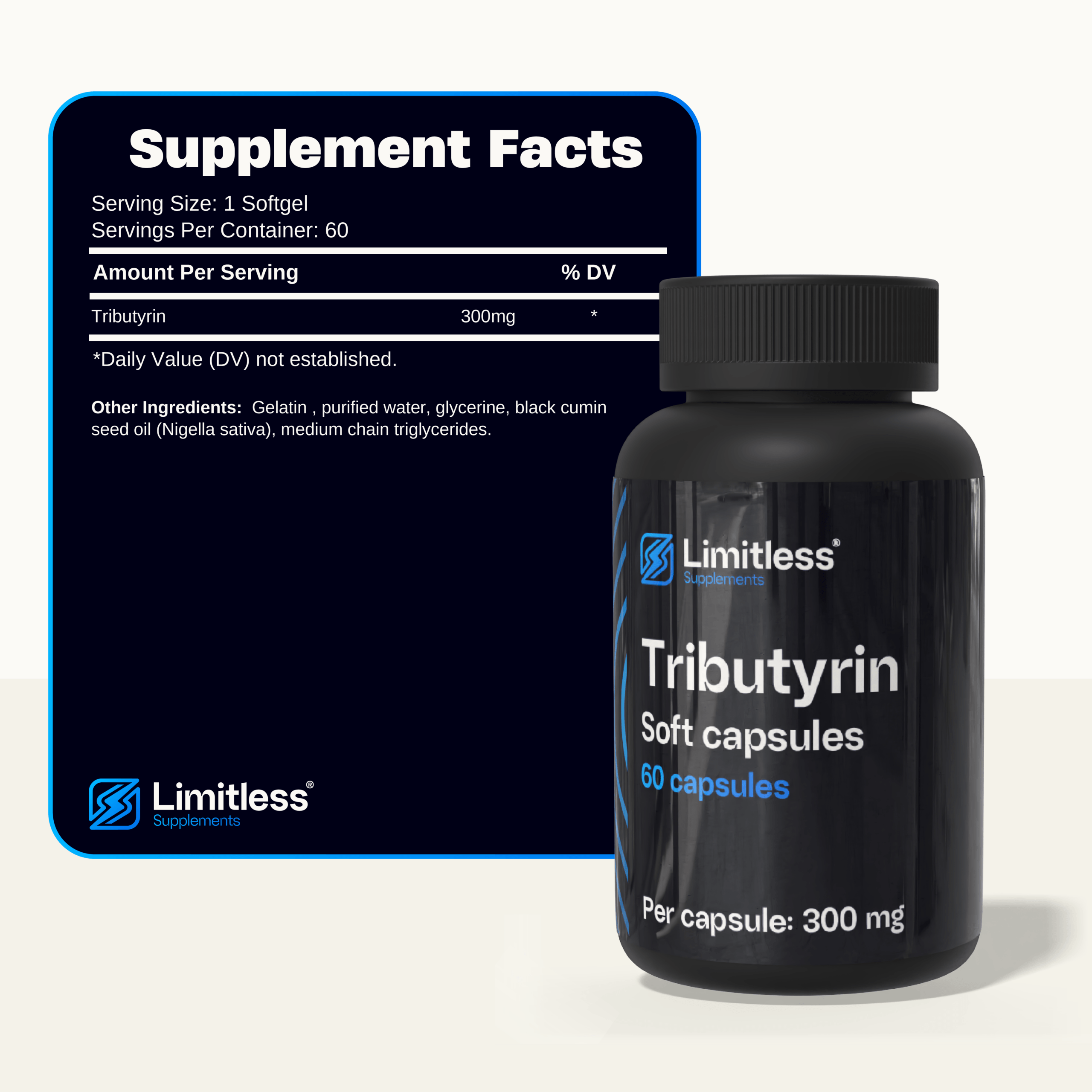
- Tributyrin is a natural part of butter, and it helps give the food its distinctive smell.
- It behaves as a Trojan-horse prodrug, slipping butyrate into the body and releasing it only after fat-splitting enzymes break the molecule apart.
- The freed butyrate is a histone deacetylase inhibitor, the same class of epigenetic action that first drew researchers to test tributyrin against cancer.
Mechanism
Tributyrin functions as a that ferries butyrate into the body. After ingestion it is hydrolysed, largely by lipases, into glycerol and three molecules of butyric acid, releasing the short-chain fatty acid into the circulation more efficiently and durably than butyrate salts can achieve [1]. The freed butyrate is the active species, and its best-characterised action is inhibition of histone deacetylase enzymes; by blocking removal of acetyl groups from histones, butyrate loosens chromatin and shifts gene transcription, promoting cell-cycle arrest and differentiation in many cell types, an effect demonstrated for tributyrin in the remodelling of the epigenetic state of muscle satellite cells [4].
This differentiation-inducing, -inhibitory activity is what motivated its testing as an anticancer agent [2]. Butyrate delivered from tributyrin also serves as an energy substrate for colonic cells and engages signalling that influences metabolism and, through a sensory mechanism located in the liver or portal vein, sleep regulation, with oral tributyrin increasing non-rapid-eye-movement sleep in animals [3]. Its pharmacokinetics are marked by a short , so plasma butyrate rises soon after a dose and then falls within hours [1].
receptor fingerprint
ColonocytesDelivers butyrate as their primary fuel
Tight junction proteinsSupports gut barrier integrity
Histone deacetylasesInhibits HDAC to lower NF-kB inflammation
Safetyrisks and cautions, not medical advice
Tributyrin is a butyrate prodrug, a glyceride that releases butyric acid, and as a food-derived compound it is generally well tolerated, with gastrointestinal upset such as nausea or loose stools the most likely complaint. Human data for supplemental use are limited, so long-term safety at supplement doses is not well established. People with gastrointestinal disease or on other therapies should be cautious given the sparse evidence.
History
Tributyrin, also called glyceryl tributyrate, is a natural triglyceride in which glycerol is esterified with three molecules of butyric acid, and it occurs in ordinary foods, most familiarly as a component of butter that contributes to its characteristic aroma. Its emergence as a compound of therapeutic interest owes less to a single discovery than to a practical problem: butyrate, a short-chain fatty acid with intriguing biological effects, is difficult to deliver because butyrate salts are cleared rapidly and can be unpalatable.
Investigators recognized that tributyrin, being lipophilic and orally absorbable, could act as a prodrug that releases butyrate more efficiently and durably once broken down by the body's lipases. This rationale led to its evaluation as an anticancer differentiation agent, including early-phase clinical studies in the 1990s that explored its ability to inhibit histone deacetylase enzymes. In more recent years it has been reframed as a postbiotic dietary supplement and studied for gut health, muscle biology, and, in early research, sleep and mood, reflecting the broad reach of butyrate signaling.
Reputation
Tributyrin has built an appealing reputation in the gut-health and longevity communities as an elegant way to deliver butyrate, the short-chain fatty acid that colon cells use as their preferred fuel. Its central advantage is practical; as a stable, fat-soluble prodrug it carries butyrate further and more comfortably than butyrate salts, avoiding much of the rapid clearance and odor that limit those alternatives.
Supporters point to butyrate's well-documented roles in nourishing the intestinal lining, supporting the gut barrier, and acting as a histone deacetylase inhibitor that can dial down inflammatory signaling. It is worth being clear that much of the most striking evidence comes from laboratory and animal work, and that human clinical data, while growing and now extending into areas such as mood, remain at an early stage. For those interested in supporting gut health through the microbiome's own chemistry, however, tributyrin offers a scientifically grounded and thoughtfully designed approach.
Subjective profileweighing the evidence above
A sensible way to get butyrate past the stomach if gut barrier support is the goal, and it spares you the smell of butyrate salts. Be honest that human evidence at supplement doses is thin, so treat it as a reasonable experiment rather than a proven one, and expect cramping or loose stools if you push the dose.
Where to buy
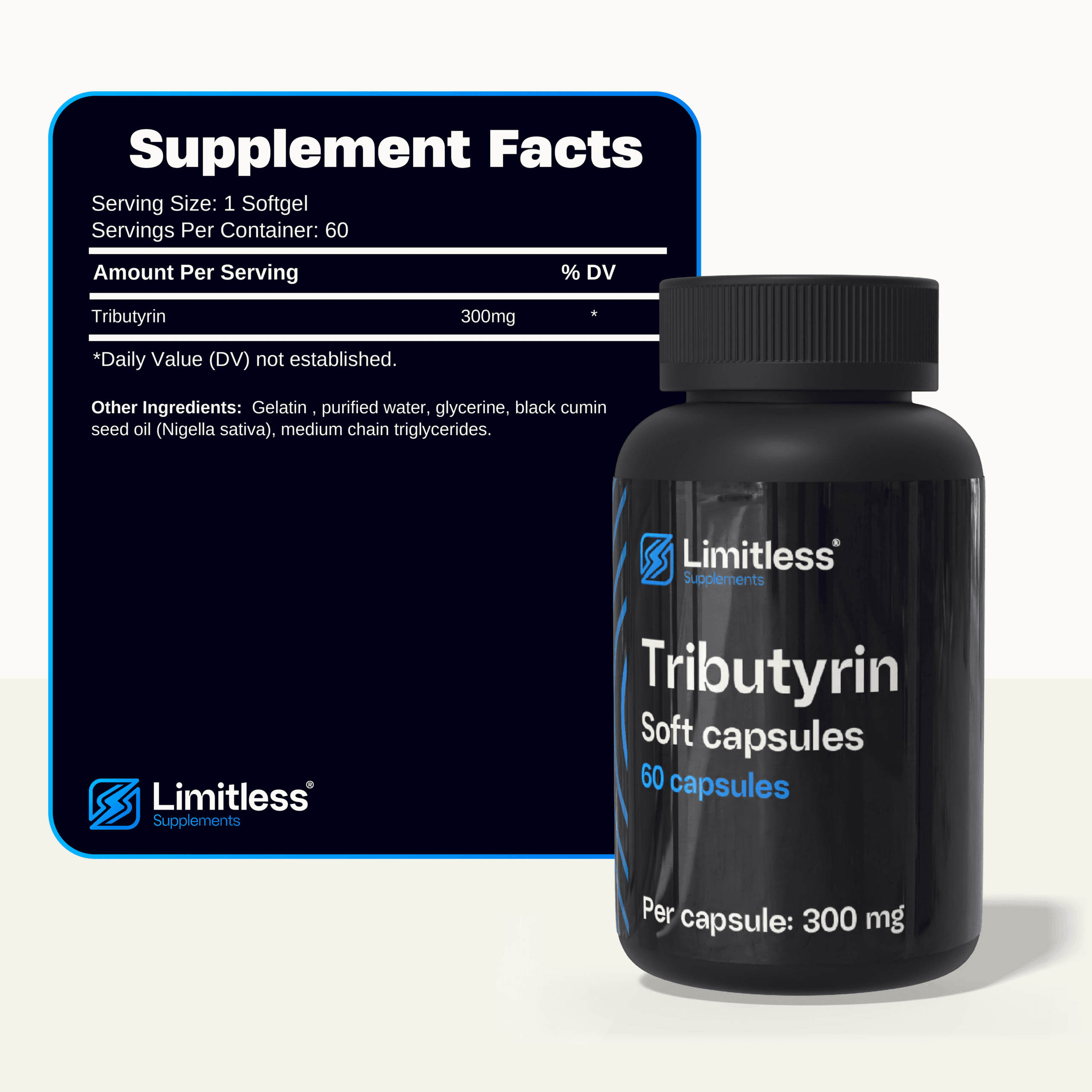
Suppliers
Vendors carrying Tributyrin, with live product details and codes. Links are affiliate links that support the wiki at no cost to you.
Limitless Biochem🌐
Tributyrin
Research
- 1998first citedPhase I study of the orally administered butyrate prodrug, tributyrin, in patients with solid t…
- 2025most recentFeasibility and acceptability of 8-week oral tributyrin supplementation as add on to antidepres…
- 1.Phase I study of the orally administered butyrate prodrug, tributyrin, in patients with solid tumors
- 2.Clinical and pharmacologic study of tributyrin: an oral butyrate prodrug
- 3.Butyrate, a metabolite of intestinal bacteria, enhances sleep
- 4.Tributyrin, a Butyrate Pro-Drug, Primes Satellite Cells for Differentiation by Altering the Epigenetic Landscape
- 5.Feasibility and acceptability of 8-week oral tributyrin supplementation as add on to antidepressant medication in patients with depression: a study protocol paper for a pilot, randomised controlled trial
5 listed here; entry last updated August 2026
Reviews
My notesprivate to this device
FAQ
Why choose tributyrin over sodium butyrate?
The triglyceride form resists stomach acid and releases butyrate further down the gut, and it lacks the strong smell of butyrate salts.
What does butyrate do?
It is the main energy source for colon cells and helps keep the gut barrier tight and inflammation in check.
Is the human evidence strong?
Not yet; much of the data is from animal and cell studies, with human trials only beginning.
Can I just eat fiber instead?
Fiber feeds bacteria that make butyrate naturally, which is a solid foundation; supplements aim to add more directly.
Adverse effects
- Nausea or vomiting at high intake
- Abdominal cramping or diarrhea
- Headache
- Short-lived and variable blood butyrate levels