
spec sheet11 rows
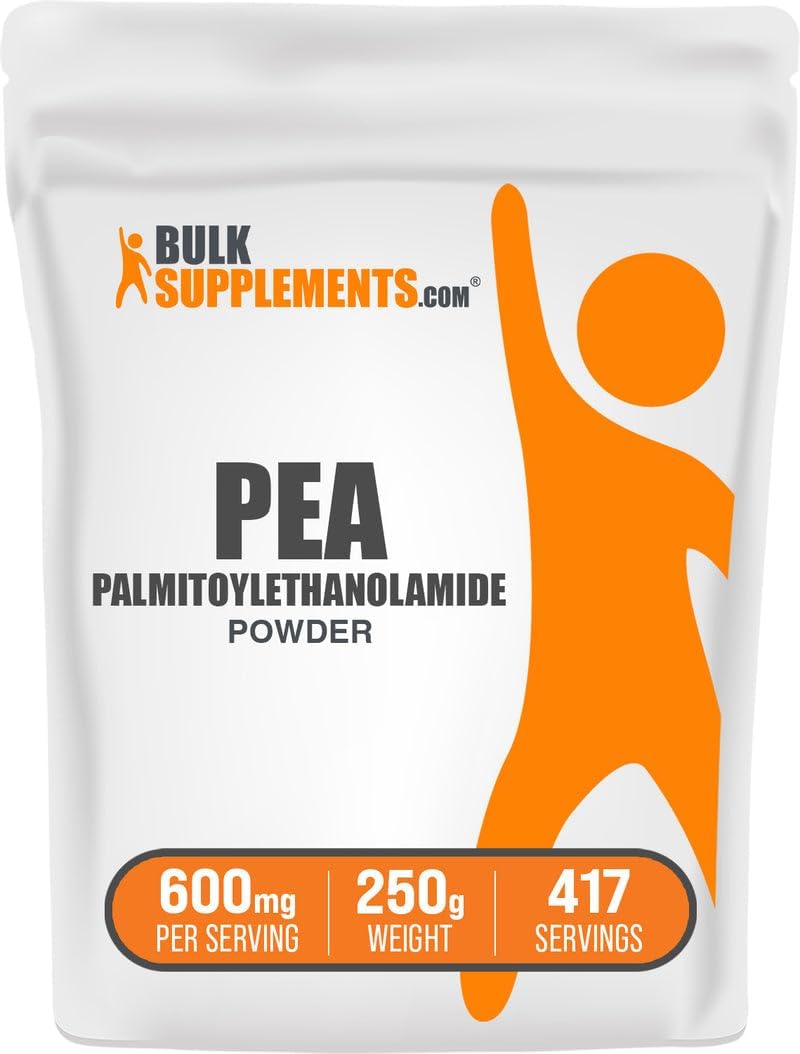
Palmitoylethanolamide (PEA) is a naturally occurring fatty acid amide belonging to the N-acylethanolamine family. Produced in the body and also found in foods, it acts largely by activating the nuclear receptor PPAR-alpha and by dampening the activity of inflammatory cells such as mast cells. It has been studied mainly for chronic pain, inflammation, and neuroprotection, and it is sold as a dietary supplement or food for special medical purposes rather than as a conventional drug.
- twenty-plus trials with an unusually clean tolerability record
- one of the better options for chronic and neuropathic pain
- the body already makes it; it is a natural fatty acid amide
- works through PPAR-alpha and calms overactive mast cells
- non-habit-forming, so it layers with other pain tools
- the effect builds over weeks rather than in one dose
- Occasional mild gastrointestinal upset
- Rare reports of fatigue
Overview
Palmitoylethanolamide (PEA), also known as palmidrol, is an endogenous fatty acid amide of the N-acylethanolamine class, the same family that includes the endocannabinoid anandamide [2]. The body makes PEA on demand within cell membranes, and it is also present in foods such as egg yolk, soybeans, and milk. Despite its structural resemblance to endocannabinoids, PEA does not bind the classical cannabinoid receptors CB1 and CB2, and it is instead regarded as a lipid signaling molecule and regulator of inflammation [1][2].
PEA is best understood as an activator of the nuclear receptor PPAR-alpha, through which it turns down the transcription of pro-inflammatory genes, and it also appears to restrain the activation of mast cells and other immune cells that amplify pain and inflammation [1]. On the strength of these actions it has been investigated for a range of conditions marked by chronic pain and nerve involvement, including peripheral neuropathy, where controlled and preclinical studies describe both pain relief and protection of nerve tissue [1][4]. Reviews have extended this interest to the central nervous system and to conditions such as neurodegeneration and, more tentatively, autism spectrum disorder [2][3].
Commercially, PEA is supplied as a dietary supplement and, in some countries, as a food for special medical purposes, often in micronized or ultra-micronized forms designed to improve absorption [4]. It is generally regarded as well tolerated, with analyses reporting a low rate of adverse effects and no notable drug interactions [1]. Because it is not licensed as a conventional medicine in most places, its regulatory status varies by region, and much of the supporting evidence comes from small trials and laboratory research rather than large definitive studies [3].
Mechanism
The main molecular action of PEA is activation of peroxisome proliferator-activated receptor alpha (PPAR-alpha), a nuclear receptor that governs genes involved in inflammation and pain; by engaging PPAR-alpha, PEA reduces the production of inflammatory mediators [1]. It also stabilizes mast cells and modulates other immune cells, lessening the release of substances that sensitize pain pathways, an effect that helps explain its anti-inflammatory and analgesic actions [1].
In addition, PEA is thought to work partly through an entourage effect, indirectly strengthening the signaling of endocannabinoids at their receptors even though it does not bind those receptors itself [2]. These combined actions underlie the neuroprotective and pain-relieving effects reported in models of nerve injury and neuropathy [1][4]. In the body PEA is broken down by the enzymes FAAH and NAAA, the latter being relatively selective for PEA [2].
receptor fingerprint
PPAR-alphaAgonist
Mast cellsStabilizer
Endocannabinoid toneEnhancer
Safetyrisks and cautions, not medical advice
Palmitoylethanolamide (PEA) has an unusually clean safety record; across more than twenty clinical trials involving roughly 2,000 patients, and a meta-analysis of ten RCTs at 300 to 1200 mg/day for up to six months, no serious adverse effects were reported. The rare events that do appear are mild and self-limiting, such as brief stomach discomfort, transient drowsiness, or short-lived palpitations in isolated participants. Being an endogenous fatty-acid amide, it is well tolerated and available data through roughly seven weeks argue against serious adverse drug reactions at a rate of 1 in 200 or greater. The honest limits are the usual ones: robust long-term (multi-year) data are thin, and safety in pregnancy and breastfeeding is not established. No significant drug-interaction contraindications are documented, though prudence with other agents is reasonable.
Subjective profileweighing the evidence above
One of the better options for chronic and neuropathic pain: an unusually clean record across twenty-plus trials, non-habit-forming, and worth a real trial at 600 to 1200 mg twice daily. Give it several weeks, because the effect builds gradually rather than arriving in a single dose.
Where to buy
Suppliers
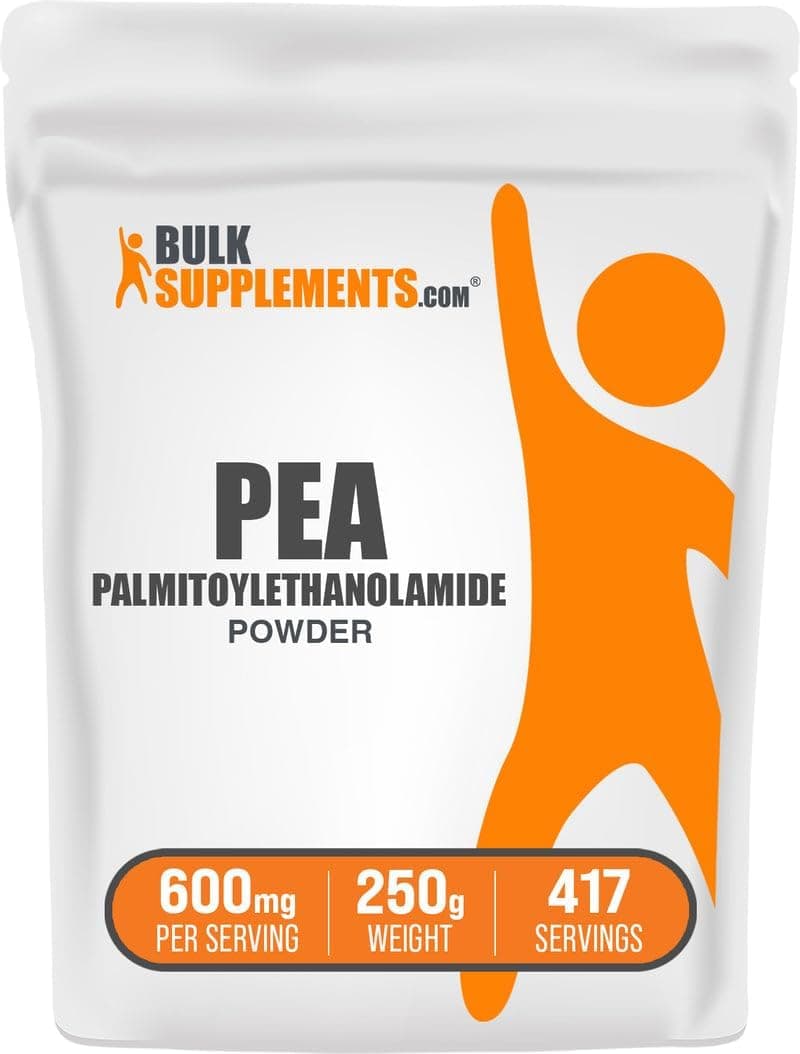
Vendors carrying Palmitoylethanolamide, with live product details and codes. Links are affiliate links that support the wiki at no cost to you.
Amazon
Palmitoylethanolamide
Research
- 2013first citedPalmitoylethanolamide is a disease-modifying agent in peripheral neuropathy: pain relief and ne…
- 2021most recentPalmitoylethanolamide and Its Biobehavioral Correlates in Autism Spectrum Disorder: A Systemati…
- 1.Palmitoylethanolamide is a disease-modifying agent in peripheral neuropathy: pain relief and neuroprotection share a PPAR-alpha-mediated mechanism
- 2.Palmitoylethanolamide in CNS health and disease
- 3.Palmitoylethanolamide and Its Biobehavioral Correlates in Autism Spectrum Disorder: A Systematic Review of Human and Animal Evidence
- 4.The neuroprotective effects of micronized PEA (PEA-m) formulation on diabetic peripheral neuropathy in mice
4 listed here; entry last updated August 2026
Reviews
My notesprivate to this device
FAQ
Will PEA get me high like cannabis?
No; it is endocannabinoid-like but does not bind the CB1 receptor that causes intoxication, so there is no high.
How long until it works?
Most trials ran for weeks; plan on giving it a solid month or two of daily use before judging it.
Does the form matter?
Yes; micronized or ultra-micronized PEA absorbs far better than the plain version, and that is what the studies used.
Limitations of the evidence
- Long-term and large-scale human data remain limited
Adverse effects
- Occasional mild gastrointestinal upset
- Rare reports of fatigue
Notes and cautions
- Generally well tolerated in studies