
data + articles · 6 listed
newest 2025spec sheet11 rows
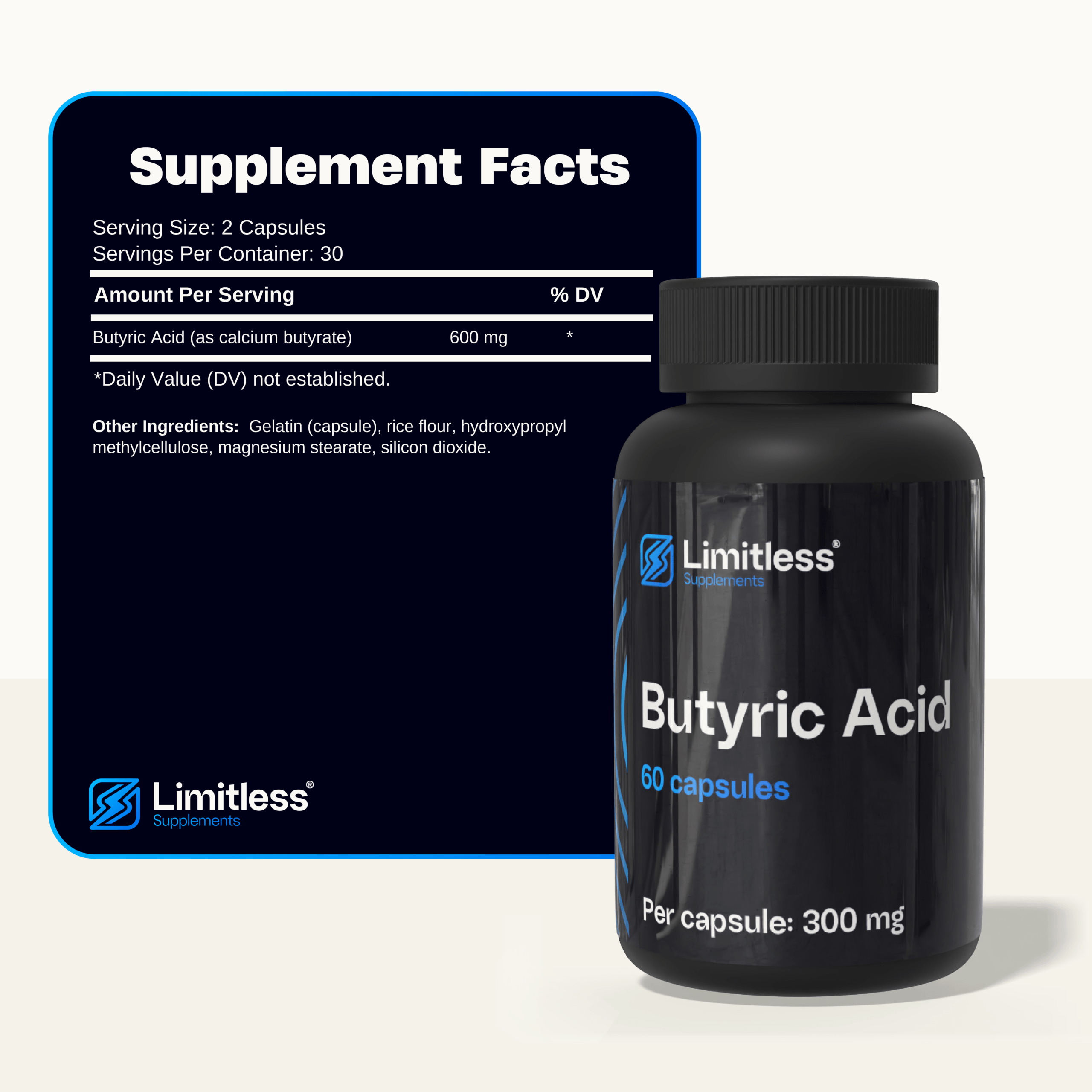
Butyric acid (butanoic acid) is a short-chain fatty acid with the formula CH3CH2CH2COOH, present in the body mainly as its salt, butyrate. It is produced when gut bacteria ferment dietary fiber in the colon, and it also occurs naturally in butter and other dairy fats. Butyrate serves as the primary energy source for the cells lining the colon and is widely studied for its roles in gut and metabolic health.
- The primary fuel for the cells lining the colon
- Supports gut barrier integrity
- Studied for irritable bowel and ulcerative colitis support
- Made naturally when gut bacteria ferment dietary fiber
- Coated capsules keep the smell well out of the way
- Calms inflammation right where it is produced
- Oral butyrate supplements are usually well tolerated
- Mild digestive upset or gas
- Strong, unpleasant odor of the free acid
Overview
Butyric acid, also called butanoic acid, is a straight-chain fatty acid with four carbon atoms and one of the smallest of the short-chain fatty acids commonly discussed in nutrition. At the pH of the body it is almost entirely present as its negatively charged form, butyrate [1]. It is an oily liquid with a characteristically rancid smell and occurs naturally in butter, where it appears as the triglyceride tributyrin, as well as in milk and cheese; it was first isolated from butter by the French chemist Michel Eugene Chevreul in the early nineteenth century, and its name derives from the Greek word for butter. In the human body, most butyrate is generated in the large intestine when anaerobic gut bacteria ferment dietary fiber and resistant starch [1][3].
Butyrate has drawn intense scientific interest because of its central role in the gut. It is the preferred fuel for colonocytes, the cells lining the colon, supplying much of their energy, and it helps maintain the intestinal barrier, supports mucosal immunity, and exerts anti-inflammatory effects [1][3]. Depletion of butyrate-producing bacteria has been linked to a range of conditions, and reviews have examined butyrate in inflammatory bowel disease, colon cancer, and the gut-brain axis, as well as its possible metabolic benefits in obesity and type 2 diabetes [2][3][5].
At the molecular level, butyrate acts in two main ways. It inhibits histone deacetylases, enzymes that remove acetyl groups from histone proteins, thereby influencing which genes are switched on and off; and it activates several G-protein-coupled receptors that sense short-chain fatty acids [1][4]. Through these actions it can alter cell proliferation, immune signaling, and gene expression in the gut and elsewhere in the body [4].
Beyond the butyrate the body makes for itself, butyric acid is sold as a dietary supplement, usually as salts such as sodium butyrate or calcium butyrate, or as the ester tributyrin, taken in an effort to raise butyrate levels or support gut health. Clinical attempts to increase butyrate in people have produced mixed results, and it remains an active area of research rather than an approved treatment for most conditions [3][5].
- Butyrate is the preferred fuel of the cells lining your colon, which draw most of their energy from it rather than from glucose in the bloodstream.
- The compound was first isolated from butter roughly two centuries ago, yet its role as a gene-regulating HDAC inhibitor was only appreciated much more recently.
Mechanism
Butyrate influences cells through two principal mechanisms. First, it is a natural inhibitor of histone deacetylases (HDACs), enzymes that strip acetyl groups from histone proteins; by blocking them, butyrate promotes a more acetylated, open state of chromatin that changes gene expression, an effect linked to reduced proliferation and increased programmed cell death in cancerous colon cells [1][4]. Second, it acts as a signaling molecule at G-protein-coupled receptors that respond to short-chain fatty acids, including FFAR2, FFAR3, and the receptor HCA2, shaping immune and metabolic responses [1]. In healthy colon cells butyrate is also simply burned for energy, feeding into fatty-acid oxidation, which is why it is described as the main fuel of the colonic lining [1][4].
receptor fingerprint
ColonocytesServes as their primary energy source
Gut barrierStrengthens tight junctions
Histone deacetylasesInhibits HDAC to reduce inflammation
Dosingtypical ranges, not medical advice
interested in protocols and clinical dosages? make an account to see them! ^_^
Safetyrisks and cautions, not medical advice
Butyric acid (butyrate) is a short-chain fatty acid and HDAC inhibitor used as a gut-health supplement; oral use commonly causes gastrointestinal effects such as bloating, cramping and nausea, and it has a strong, unpleasant odor. It is generally tolerated in supplemental amounts, but long-term and high-dose human safety data are limited, and its effects in significant gastrointestinal disease are not well characterized.
History
Butyric acid takes its name from the Latin word for butter, butyrum, reflecting its early isolation from rancid butter by the French chemist Michel Eugene Chevreul in the early nineteenth century. Long recognized as a short-chain fatty acid, it was later understood to be produced in large quantities in the human colon when gut bacteria ferment dietary fiber. Over recent decades interest has shifted from its chemistry to its biology, as researchers identified butyrate as the principal energy source for the cells lining the colon and as a natural inhibitor of histone deacetylase enzymes. It is now widely studied, and supplemented in salt or ester forms, for its roles in gut and metabolic health.
Reputation
Butyric acid enjoys a strong and growing reputation in gut-health science as one of the most important products of a fiber-rich diet. It is appreciated for its dual character; it both fuels the colonic lining directly and acts as a signaling molecule that helps strengthen the gut barrier and temper inflammation. Research into delivery strategies, such as butyrylated resistant starches that carry butyrate to the colon, reflects genuine enthusiasm for harnessing its benefits. While much of the strongest evidence still comes from cell and animal studies, butyrate is broadly viewed as a promising, naturally occurring supporter of digestive and metabolic wellbeing rather than a quick fix.
Subjective profileweighing the evidence above
Worth trying if gut barrier trouble or IBS is the target, and the colon-fuel rationale is sound. Buy a coated form, since the free acid smells genuinely foul, and keep expectations honest in serious bowel disease where the evidence is still early. Feeding fiber does much of the same job.
Where to buy
Suppliers
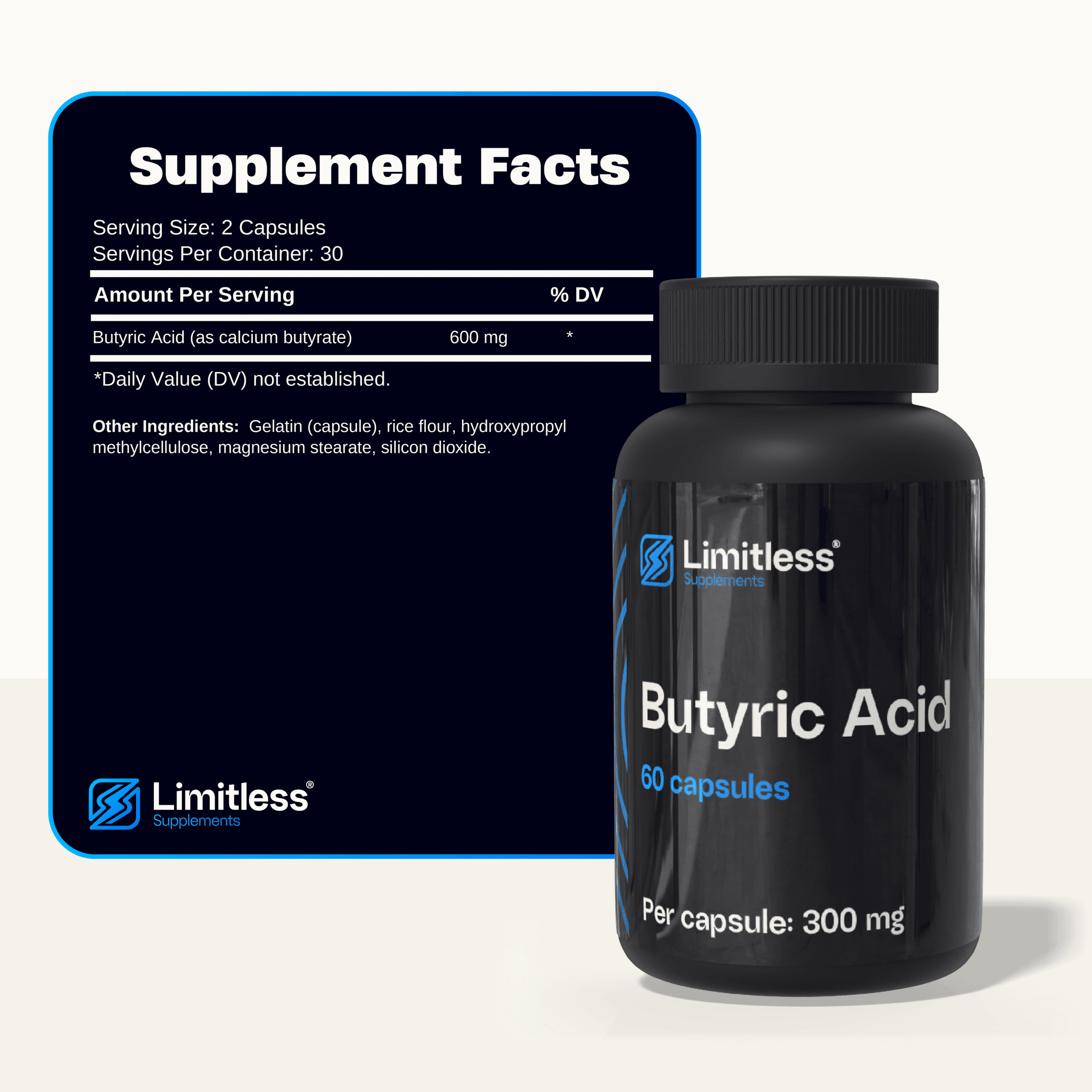
Vendors carrying Butyric Acid, with live product details and codes. Links are affiliate links that support the wiki at no cost to you.
Limitless Biochem🌐
Butyric Acid
Research
- 2018first citedButyrate: A Double-Edged Sword for Health?
- 2025most recentBeyond the Gut: Unveiling Butyrate's Global Health Impact Through Gut Health and Dysbiosis-Rela…
- 1.Butyrate: A Double-Edged Sword for Health?
- 2.Beyond the Gut: Unveiling Butyrate's Global Health Impact Through Gut Health and Dysbiosis-Related Conditions: A Narrative Review
- 3.Butyrate's role in human health and the current progress towards its clinical application to treat gastrointestinal disease
- 4.Epigenetic effects of short-chain fatty acids from the large intestine on host cells
- 5.Therapeutic Potential of Butyrate for Treatment of Type 2 Diabetes
- 6.Unraveling the gut health puzzle: exploring the mechanisms of butyrate and the potential of High-Amylose Maize Starch Butyrate (HAMSB) in alleviating colorectal disturbances
6 listed here; entry last updated August 2026
Reviews
My notesprivate to this device
FAQ
Why does butyrate supplement smell?
Free butyric acid smells strongly of rancid butter, so most supplements use microencapsulated salts to mask it and protect it through the stomach.
How does it differ from tributyrin?
Tributyrin is a triglyceride carrier that releases butyrate lower in the gut; sodium butyrate delivers it more directly, often microencapsulated.
Does it help IBS?
Several human trials report reduced abdominal pain and better symptoms, though it is not a cure for everyone.
Can fiber do the same thing?
Yes in part; dietary fiber feeds the bacteria that produce butyrate naturally, which is the foundation supplements build on.
Limitations of the evidence
- Limited long-term human safety data for supplements
Adverse effects
- Oral butyrate supplements are usually well tolerated
- Mild digestive upset or gas
- Strong, unpleasant odor of the free acid
- Concentrated butyric acid is irritating to skin and eyes