
spec sheet13 rows
Salicin is an alcoholic beta-glucoside and a principal salicylate of willow (Salix) and poplar bark and meadowsweet, historically valued as a botanical analgesic and the conceptual forerunner of aspirin. Following ingestion it is hydrolyzed and oxidized to salicylic acid, the same active metabolite that mediates aspirin's effects, though at doses that spare much of the gastric irritation associated with acetylsalicylic acid. Mechanistic studies attribute its anti-inflammatory and antioxidant actions to suppression of the NF-kappaB and MAPK signaling pathways and activation of the Nrf2-heme oxygenase-1 axis, with additional contributions from co-occurring polyphenols and downstream catechol metabolites; salicin has also been identified as an agonist of the bitter taste receptor TAS2R16, a receptor-mediated route to resolving inflammation. Standardized willow bark preparations are used mainly for musculoskeletal and inflammatory pain, and their clinical activity is not fully accounted for by salicin content alone.
- willow bark's original painkiller; aspirin's plant ancestor
- eases everyday aches and inflammation
- gentler on the stomach than aspirin in research
- human data for low back pain and osteoarthritis
- a mild dopaminergic kick on top of the pain relief
- stretches caffeine's dopamine effect in animal data
- Possible stomach upset, generally milder than aspirin
- Allergic reactions in people sensitive to aspirin or other salicylates
- May add to the effect of blood-thinning medication
Overview
Salicin is an alcoholic beta-glucoside with the molecular formula C13H18O7, made up of a glucose unit joined to salicyl alcohol, also called saligenin [1]. It belongs to the wider family of salicylates and occurs naturally in the bark and leaves of willow (Salix) species as well as in poplar, aspen, and meadowsweet [1]. In pure form it is a white crystalline solid with a notably bitter taste [1].
The medicinal use of willow bark long predates the isolation of its active constituents, since bark decoctions were used for fever and pain in antiquity, and salicin was identified in the nineteenth century as a key active principle [1]. This line of research eventually led chemists at Bayer to synthesize acetylsalicylic acid, or aspirin, in 1899, giving salicin a notable place in the history of analgesic and anti-inflammatory drugs [1]. Today it is best known as the marker compound to which standardized willow bark extracts are calibrated [1][2].
In modern use, willow bark preparations standardized to salicin are taken chiefly for chronic low back pain, joint pain, and osteoarthritis, and a limited number of clinical studies support these applications [1]. Laboratory work has broadened the picture, since extracts and isolated salicin lower inflammatory mediators such as tumor necrosis factor-alpha and reduce activation of the transcription factor NF-kappa B in immune cells [3]. Salicin has additionally been reported to influence neuronal signaling and to inhibit tumor blood-vessel growth in experimental models [4][5]. Researchers generally caution that the whole extract also contains polyphenols and flavonoids, so its clinical activity cannot be attributed to salicin by itself [1][3].
Pharmacologically, orally taken salicin is hydrolyzed in the gut to saligenin, which is absorbed and oxidized to salicylic acid, the compound largely responsible for its effects [2]. Human pharmacokinetic study shows that willow bark yields much lower peak serum salicylate levels than analgesic doses of synthetic salicylates, which suggests that other constituents contribute to its pain-relieving action [2]. Compared with aspirin and other non-steroidal anti-inflammatory drugs, standardized willow bark generally causes fewer gastrointestinal effects [1].
Salicin itself is not a regulated pharmaceutical; in most countries willow bark extracts are sold as herbal or dietary supplements rather than approved medicines, and product potency is expressed in terms of salicin content [1]. The main safety consideration is cross-reactivity in people who are sensitive or allergic to aspirin and other salicylates [1].

Mechanism
Salicin acts largely as a natural . After ingestion it is hydrolyzed by gut flora and enzymes into glucose and salicyl alcohol, or saligenin, and the saligenin is then oxidized in the liver to salicylic acid [2]. Salicylic acid is the same that mediates much of aspirin's activity, inhibiting cyclooxygenase enzymes and thereby reducing the synthesis of prostaglandins that drive pain, fever, and inflammation [1][2].
Beyond this classical pathway, in vitro studies indicate that salicin and willow bark extracts suppress pro-inflammatory signaling by lowering tumor necrosis factor-alpha and cyclooxygenase-2 expression and by blocking nuclear translocation of NF-kappa B in activated monocytes and macrophages [3]. Salicin is also an of the bitter taste receptor TAS2R16, and activation of this receptor in neuronal cells has been linked to ERK and signaling [4]. Because willow bark produces relatively low circulating salicylate levels, its overall effect is thought to arise from the combined action of salicin-derived salicylate together with the polyphenols and flavonoids present in the extract [1][2].
receptor fingerprint
Cyclooxygenase / prostaglandin pathwaySalicylic acid metabolite dampens prostaglandin production
Inflammatory signalingPlant polyphenols and salicin together reduce inflammatory mediators
Gastric mucosa (relative sparing)Produces lower systemic salicylate than aspirin
/ stimulates CREB, upregulating tyrosine hydroxylase
Brain bitter taste receptors (TAS2Rs)binds, stimulating CREB
Dosingtypical ranges, not medical advice
interested in protocols and clinical dosages? make an account to see them! ^_^
Safetyrisks and cautions, not medical advice
Salicin is gentler than aspirin. Because less salicylic acid is formed, it lacks aspirin's gastrointestinal damage and excessive blood thinning, and it may spare the ototoxicity linked to aspirin as well. White willow bark extract is generally regarded as safe with few side effects. Standard salicylate cautions still apply: avoid it with a salicylate or aspirin allergy, be careful alongside blood thinners, and do not give it to children with a viral illness due to Reye syndrome concerns.
Subjective profileweighing the evidence above
Think of it as a gentler aspirin with a mild dopaminergic kick, not a standalone nootropic. It shines most stacked with caffeine, whose dopaminergic effect it stretches out. Nice for everyday anti-inflammatory use without aspirin's stomach and bleeding downsides.
Where to buy
Suppliers
Vendors carrying Salicin, with live product details and codes. Links are affiliate links that support the wiki at no cost to you.
Amazon
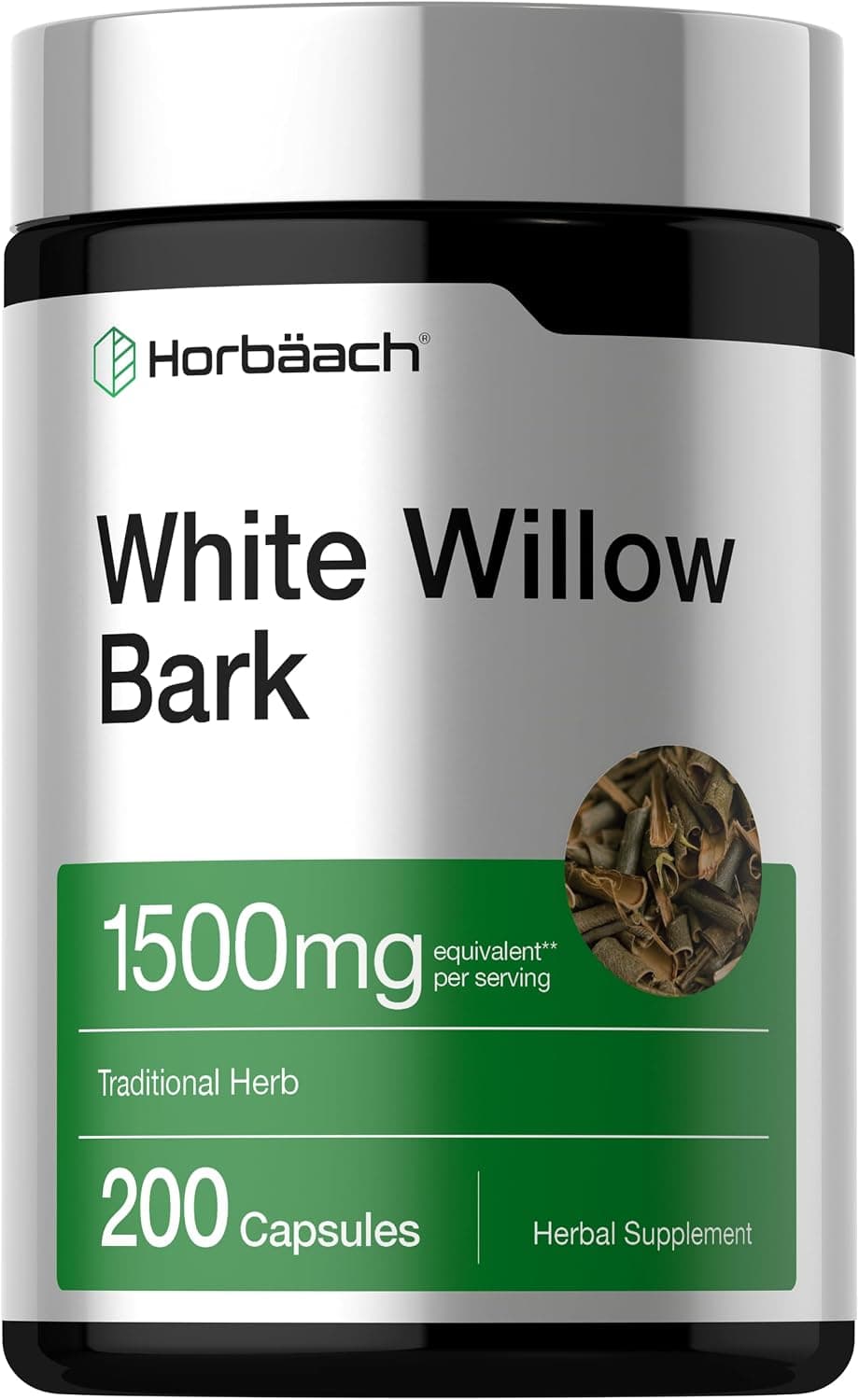
White Willow Bark
Research
- 2001first citedPharmacokinetics of salicin after oral administration of a standardised willow bark extract
- 2015most active year3 papers
- 2021most recentTAS2R16 Activation Suppresses LPS-Induced Cytokine Expression in Human Gingival Fibroblasts.
- 1.Efficacy and Safety of White Willow Bark (Salix alba) Extracts
- 2.Pharmacokinetics of salicin after oral administration of a standardised willow bark extract
- 3.Anti-inflammatory effects of the willow bark extract STW 33-I (Proaktiv(®)) in LPS-activated human monocytes and differentiated macrophages.
- 4.Salicin from Willow Bark can Modulate Neurite Outgrowth in Human Neuroblastoma SH-SY5Y Cells
- 5.Salicin, an extract from white willow bark, inhibits angiogenesis by blocking the ROS-ERK pathways
- 6.D(-)-Salicin inhibits the LPS-induced inflammation in RAW264.7 cells and mouse models.
- 7.Salicin from Alangium chinense Ameliorates Rheumatoid Arthritis by Modulating the Nrf2-HO-1-ROS Pathways.
- 8.Salicin inhibits AGE-induced degradation of type II collagen and aggrecan in human SW1353 chondrocytes: therapeutic potential in osteoarthritis.
- 9.Vascular protection of salicin on IL-1β-induced endothelial inflammatory response and damages in retinal endothelial cells.
- 10.Catechol conjugates are in vivo metabolites of Salicis cortex.
- 11.Catechol, a bioactive degradation product of salicortin, reduces TNF-α induced ICAM-1 expression in human endothelial cells.
- 12.Novel neurological and immunological targets for salicylate-based phytopharmaceuticals and for the anti-depressant imipramine.
13 listed here; entry last updated August 2026
Reviews
My notesprivate to this device
FAQ
Is salicin just natural aspirin?
It is related but not identical; salicin converts to salicylic acid, while aspirin is acetylsalicylic acid. Willow bark also gives much lower blood salicylate levels than aspirin doses.
Is it safe if I am allergic to aspirin?
No; anyone with salicylate or aspirin sensitivity should avoid willow bark, since it works through the same salicylate chemistry.
How strong is the pain relief?
Trials show a moderate effect for back pain and osteoarthritis, not a knockout painkiller, and standardization to salicin content matters.
Does salicin do anything for focus or mood?
Possibly a mild lift. Through CREB it can nudge tyrosine hydroxylase and dopamine, and it prolongs caffeine's dopaminergic effect in animals, but there is no solid proof it boosts cognition in healthy people. Treat it as a gentle adjunct to caffeine, not a standalone nootropic.
Adverse effects
- Possible stomach upset, generally milder than aspirin
- Allergic reactions in people sensitive to aspirin or other salicylates
- May add to the effect of blood-thinning medication
- Avoided in children with viral illness because of Reye syndrome concerns
- Not suitable for anyone who must avoid salicylates