
spec sheet12 rows
Thymalin is a polypeptide preparation extracted from the thymus gland of calves, developed in the Soviet Union and Russia and used as an immunomodulator. It is a mixture of small thymic peptides intended to restore and regulate immune function, particularly the maturation and activity of T lymphocytes [2]. Studied and marketed chiefly in Russia and neighboring countries as an immunocorrector and geroprotector, Thymalin is given by injection and is not an approved medicine in the United States or the European Union [1][2].
- Thymic peptides aimed straight at aging immune function
- Rebalances T cell maturation and activity
- Decades of Russian clinical and longevity data behind it
- Studied as both immunocorrector and geroprotector
- A genuinely interesting story; modern trials still to come
- Most evidence comes from Russian-language studies
Overview
Thymalin is one of the original thymus-derived peptide preparations produced by researchers associated with the St. Petersburg Institute of Bioregulation and Gerontology, who pioneered the extraction of biologically active peptide complexes from animal tissues. It is obtained from the thymus, the gland where T lymphocytes mature, and consists of a complex of short polypeptides rather than a single defined molecule [2]. The approach later gave rise to defined synthetic analogues, such as the dipeptide Thymogen, developed to reproduce Thymalin's immune activity in a simpler form [3].
Thymalin has been studied for decades in the former Soviet sphere as a treatment to correct impaired immunity. Reported applications include immunodeficiency states, chronic and recurrent infections, recovery from injury or radiation exposure, and support of immune function in older adults [2][3]. In experimental and clinical work on radiation-induced immune and blood-cell suppression, thymus and bone-marrow peptide preparations including Thymalin were reported to aid recovery of the thymus, bone marrow, spleen, and lymph nodes and to improve the function of circulating immune cells [3]. A long-term clinical study by its developers, in which older adults received Thymalin, alone or with the pineal peptide Epithalamin, over several years, reported improvements in immune, cardiovascular, and other health indicators and lower mortality compared with untreated controls [1].
Thymalin is supplied as a powder that is dissolved and given by intramuscular injection under medical supervision. It is registered and used as a medicine in Russia and several post-Soviet states, where it is classed among immunostimulant or immunomodulatory drugs. It has not been evaluated or approved by Western regulators such as the U.S. Food and Drug Administration or the European Medicines Agency, and outside its region of origin it is often encountered as a research peptide. Much of the clinical evidence appears in Russian-language journals from a limited number of research groups [1][2].
Claims for broad benefits, including anti-aging effects, rest largely on studies conducted by the compound's developers, and independent large-scale confirmation is limited [1][2]. Thymalin is generally described as well tolerated in the reports available, but a complete safety and efficacy assessment by modern international standards has not been established. As a biologically derived immunomodulator, it is intended for use under medical guidance rather than as a casual supplement.
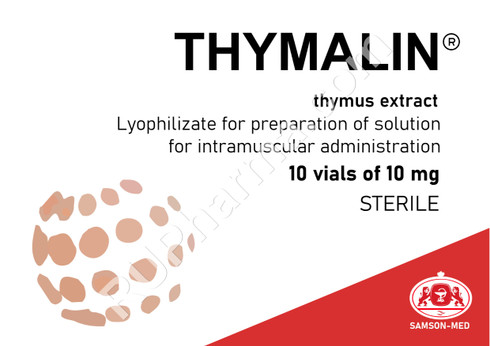
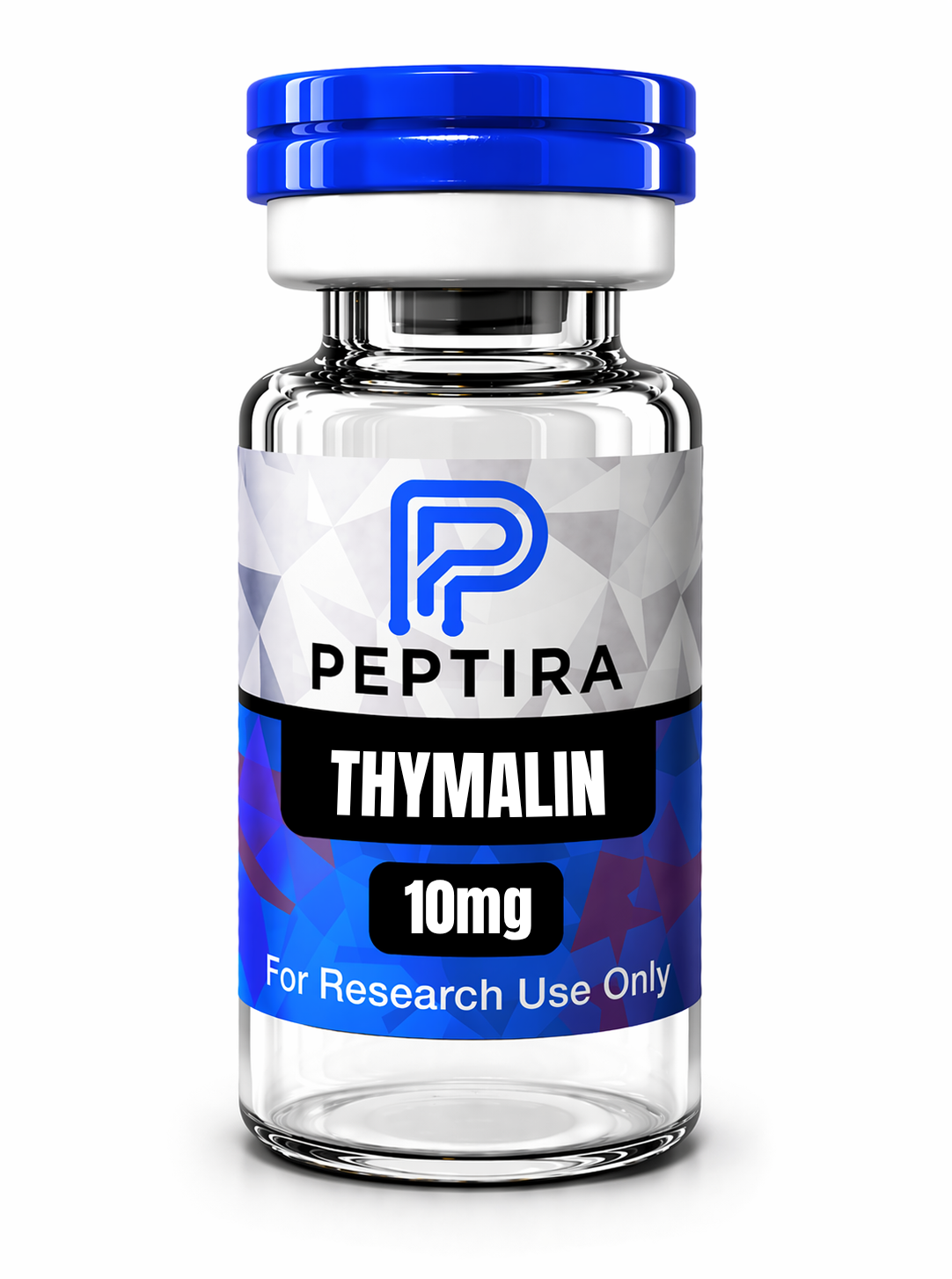
- Thymalin is a mixture of small peptides extracted from calf thymus glands, not a single synthetic molecule.
- A long-term Russian study tracked 266 elderly people for six to eight years and reported a roughly twofold lower mortality rate among those given thymalin compared with controls.
- Its developers place thymalin within a broader peptide-bioregulator theory holding that short peptides can influence gene expression to help normalize age-related decline.
Mechanism
Thymalin is thought to work by supplying thymic signals that guide the development and balance of the immune system, especially the T-lymphocyte arm. The thymus normally releases peptide hormones that direct immature immune cells to mature into functional T lymphocytes and that help keep the immune response balanced; Thymalin, as an extract of thymic peptides, is proposed to substitute for or reinforce these signals when thymic function is weakened by age, illness, injury, or radiation [2][3].
At the cellular level, early experimental studies linked the action of thymus-derived immunocorrectors, Thymalin among them, to the cyclic nucleotide system: in lymphocytes the peptides altered the levels of the second messengers cyclic AMP and cyclic GMP and changed phosphodiesterase activity, especially under conditions of immune sensitization, providing a biochemical route by which they could modulate how immune cells respond [4].
The reported net effect is restoration of cell-mediated immunity, seen as normalized lymphocyte counts and subpopulations, recovery of immune organs after damage, and improved resistance to infection [3]. Its developers place these effects within a broader -bioregulator framework, in which short peptides are proposed to influence gene expression and thereby help normalize tissue-specific functions that decline with age, an idea used to explain the geroprotective effects attributed to Thymalin in their long-term studies [1][2]. As with related preparations, these mechanisms derive largely from the originating laboratories and have not been broadly confirmed by independent international research [1][2].
receptor fingerprint
T-lymphocyte balancenormalizes
Thymic functionsupports
Cellular immunitystimulates
Inflammatory signalingreduces
Dosingtypical ranges, not medical advice
interested in protocols and clinical dosages? make an account to see them! ^_^
Safetyrisks and cautions, not medical advice
Reported to be well tolerated in regional clinical use, with allergic reactions the main noted risk given its animal-tissue origin. As an immune modulator, caution is warranted in people with autoimmune disease or on immunosuppressants. Independent long-term safety data are limited, and it is not an approved drug in most Western countries.
History
Thymalin is a polypeptide preparation extracted from the thymus glands of calves, developed in the Soviet Union in the 1970s as part of a broad program on thymic and peptide bioregulators led by researchers including Vladimir Khavinson and V. G. Morozov at what became the St. Petersburg Institute of Bioregulation and Gerontology. It was created as an immunocorrector intended to restore and regulate T-lymphocyte function, particularly when thymic activity is weakened by age, illness, injury, or radiation.
Over subsequent decades its developers extended their claims from immune restoration to geroprotection, embedding thymalin in a wider theory that short peptides can influence gene expression and normalize tissue-specific functions that decline with age. A notable long-term clinical study followed 266 elderly patients over six to eight years and reported reductions in illness incidence and mortality among those treated with thymalin and the related pineal peptide epithalamin. Thymalin has been studied and marketed chiefly in Russia and neighboring countries and is not an approved medicine in the United States or the European Union.
Reputation
Thymalin is one of the flagship compounds of the Russian peptide-bioregulator tradition and enjoys a devoted following among those interested in thymic peptides and healthy aging. Its supporters point to a striking body of work from its originating institutes, including multi-year clinical observations reporting normalized immune parameters, fewer infections, and even reduced mortality in elderly patients, results that have kept interest in the compound alive for decades.
As an injectable immunocorrector it is credited with restoring cell-mediated immunity and supporting recovery of immune organs after damage. Intellectual honesty requires emphasizing that much of this evidence originates from the same laboratories that developed the compound and has not been broadly replicated by independent international researchers, and that thymalin holds no Western regulatory approval. Viewed as a historically rich and much-studied thymic peptide with intriguing longevity claims that still await independent confirmation, it remains a compelling subject for the curious.
Where to buy

1 other outlet

Suppliers
Vendors carrying Thymalin, with live product details and codes. Links are affiliate links that support the wiki at no cost to you.
RUPharma🌐
Thymalin
Peptira
Thymalin
Research
- 1991first citedEffect of thymagen, thymalin and vilosen on the cAMP and cGMP levels and phosphodiesterase acti…
- 2003most recentPeptides of pineal gland and thymus prolong human life.
- 1.Peptides of pineal gland and thymus prolong human life.
- 2.Peptides and Ageing.
- 3.A cytomorphological basis for the correction of radiation-induced immunodeficiencies and hematopoietic depression using thymus and bone marrow peptides.
- 4.Effect of thymagen, thymalin and vilosen on the cAMP and cGMP levels and phosphodiesterase activity in spleen lymphocytes during sensitization and anaphylactic shock.
- 5.Geroprotective effect of thymalin and epithalamin
5 listed here; entry last updated August 2026
Reviews
My notesprivate to this device
FAQ
What is thymalin used for?
Modulating and restoring immune function, especially in aging or immunocompromised people.
Is the longevity claim real?
There are old Russian reports of reduced mortality in the elderly, but they are dated, regional and not replicated to modern standards.
Where does it come from?
It is a peptide extract from the thymus glands of young animals.
Should anyone avoid it?
People with autoimmune conditions or on immunosuppressants should be cautious with any immune modulator.
How is it taken?
By intramuscular injection over a treatment course, not orally.
Adverse effects
- Most evidence comes from Russian-language studies
Notes and cautions
- Generally reported as well tolerated in the studies available
- Given by injection under medical supervision
- Not approved by U.S. or E.U. regulators
- Derived from animal thymus tissue
- No study administering thymalin by the nasal route was found. The single record pairing thymalin with the word intranasal used intranasal influenza virus to infect the mice while the peptide itself was given by another route, so it is not route evidence. The published human use of thymalin is intramuscular injection of the lyophilised thymus polypeptide complex. A different thymus peptide, the dipeptide Glu-Trp known as thymogen or IM862, genuinely has been given as intranasal drops in a randomised clinical trial, and confusing the two is the likeliest source of a false nasal claim about thymalin.