
spec sheet10 rows
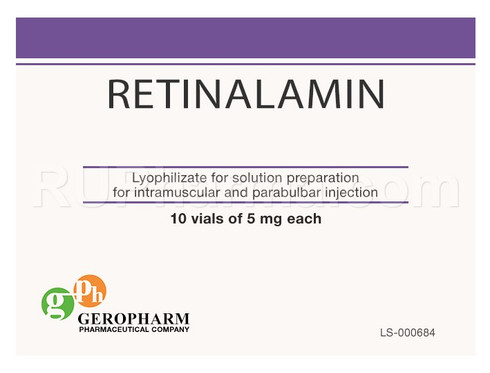
Retinalamin is a peptide preparation made from water-soluble polypeptide fractions extracted from cattle retina, developed and used mainly in Russia and some neighboring countries. Classed as a peptide bioregulator, it is given by injection as a neuroprotective treatment for retinal diseases such as diabetic retinopathy, retinal dystrophies, and glaucoma. It is not approved in the United States or the European Union.
- A retina targeted peptide, not a generic eye supplement
- Given by injection as a neuroprotective treatment for retinal disease
- Used for diabetic retinopathy, retinal dystrophies, and glaucoma
- Established regional clinical use in Russia and neighboring countries
- Peptide bioregulator class, a genuinely unusual find
- Water soluble polypeptide fractions drawn from cattle retina
- Injection-site reactions such as discomfort or redness
- As an animal-derived peptide, a small risk of allergic reaction
Overview
Retinalamin is a complex of water-soluble polypeptides isolated from the retinas of cattle, marketed as a peptide bioregulator by a Russian manufacturer [1]. It is administered by injection, including into the muscle and around the eye, and is used chiefly in ophthalmology within Russia and several post-Soviet countries; it is not registered as a medicine in the major Western regulatory systems [1]. In experimental pharmacology, the polypeptide mixture has been shown to bind several receptor targets and to distribute into the tissues of the brain and eye after injection [1].
The drug is used as a neuroprotective, or retinoprotective, therapy for a range of retinal disorders. Clinical studies from the region have examined it in diabetic retinopathy, where treatment was associated with favorable changes in retinal structure and electrical function on imaging and electrophysiology [2]. In primary open-angle glaucoma, a controlled study reported that repeated courses of retinalamin appeared to slow the structural and functional progression of the disease [3]. As with many peptide bioregulators, much of the supporting evidence comes from smaller studies conducted in Russia and neighboring countries [2][3].
The evidence base is mixed. While several clinical reports describe benefits, an experimental study in a rabbit model of light-induced retinal damage found no significant neuroprotective effect of retinalamin, illustrating that results are not uniformly positive [4]. Because the drug is used and studied mainly outside the major Western regulatory frameworks, it has not undergone the large international trials typical of globally marketed medicines [3][4].
Mechanism
Retinalamin consists of a mixture of small polypeptides derived from retinal tissue, and its effects are described as those of a bioregulator that supports and protects retinal nerve cells [1]. In laboratory receptor studies, the polypeptide preparation bound to several subtypes of receptors, including , , and metabotropic mGluR1 receptors, targets linked to the survival or loss of retinal ganglion cells, which its developers propose as a basis for a neuroprotective effect [1].
Biodistribution work using a radiolabeled version found that after intramuscular or intravenous injection the drug reaches the tissues of the eye and brain, with clearance chiefly through the kidneys [1]. Clinical studies attribute its proposed benefit to preservation of retinal ganglion cells and improved retinal function, though not every experimental model has confirmed a protective effect [2][4].
receptor fingerprint
Retinal cell metabolismstimulates
Photoreceptor functionimproves
Retinal inflammationreduces
Neuronal survivalsupports
Dosingtypical ranges, not medical advice
interested in protocols and clinical dosages? make an account to see them! ^_^
Safetyrisks and cautions, not medical advice
Reported to be generally well tolerated in regional use, with allergic reactions the main concern due to its animal-tissue origin. It is typically administered by injection (intramuscular or parabulbar) by clinicians. Independent long-term safety data are limited, and it is not an approved drug in most Western countries.
Subjective profileweighing the evidence above
A retina-targeted peptide with regional clinical use for eye conditions, but the evidence is limited and not widely validated. Worth knowing about, not a proven therapy in Western terms.
Where to buy

Suppliers
Vendors carrying Retinalamin, with live product details and codes. Links are affiliate links that support the wiki at no cost to you.
RUPharma🌐
Retinalamin
Research
- 2020first citedThe influence of long-term retinal protective therapy on glaucoma progression according to stru…
- 2024most recentObjective structural and functional monitoring of polypeptide retinal neuroprotective therapy i…
- 1.Investigation of ligand-receptor interaction and biodistribution of a drug containing cattle retinal polypeptides in various administration routes
- 2.Objective structural and functional monitoring of polypeptide retinal neuroprotective therapy in diabetic retinopathy
- 3.The influence of long-term retinal protective therapy on glaucoma progression according to structural and functional tests
- 4.Retinoprotective effects of Retinalamin studied in an experimental model of photochemical damage to rabbit retinas
4 listed here; entry last updated August 2026
Reviews
My notesprivate to this device
FAQ
What is retinalamin used for?
Retinal and optic-nerve conditions such as retinal dystrophy, diabetic retinopathy and glaucoma-related nerve damage, mostly in Eastern Europe.
Where does it come from?
It is extracted from cattle retinal tissue as a peptide bioregulator.
How is it administered?
By injection, usually intramuscular or near the eye, given by a clinician over a treatment course.
Is it proven to work?
The evidence is limited and mostly from regional studies, so it is not firmly established by Western standards.
Can I just take it as a pill?
No; like other peptide bioregulators it is used by injection, not orally.
Limitations of the evidence
- Limited safety data outside Russia and neighboring countries
Adverse effects
- Injection-site reactions such as discomfort or redness
- As an animal-derived peptide, a small risk of allergic reaction
Notes and cautions
- Generally reported as well tolerated in regional studies