
spec sheet10 rows
Saccharomyces boulardii is a probiotic yeast used to support gut health and to prevent and treat several kinds of diarrhea. Genetically it is a strain of the baking and brewing yeast Saccharomyces cerevisiae, though it grows well at human body temperature and behaves distinctly from ordinary strains. It is taken by mouth as a supplement or medicine and is best known for reducing antibiotic-associated diarrhea.
- Prevents and treats several kinds of diarrhea
- Best known for reducing antibiotic-associated diarrhea
- Real evidence for preventing traveler's diarrhea too
- A yeast, so it survives right alongside the antibiotic
- One of the few probiotics with evidence worth acting on
- Supports gut flora balance and the gut barrier
- Gas or bloating
- Mild abdominal discomfort
- Constipation
Overview
Saccharomyces boulardii is a strain of yeast belonging to the fungal kingdom, and it is the only yeast widely marketed as a probiotic. Although once regarded as its own species, genetic analysis has shown it to be a lineage of Saccharomyces cerevisiae, sharing almost all of its genome with that familiar baking and brewing yeast, so it is often written as S. cerevisiae var. boulardii [2]. Unlike many probiotics, which are bacteria, it is a fungus, a difference that gives it natural resistance to antibiotics since those drugs target bacteria [2].
The yeast was isolated in the 1920s by the French microbiologist Henri Boulard, who reportedly noticed people in Southeast Asia chewing the skins of lychee and mangosteen to control diarrhea during a cholera outbreak and traced the effect to a yeast on the fruit. The commercial strain that descends from this work is grown by a single manufacturer and has since been studied in a large number of clinical trials [2].
The best-supported use of Saccharomyces boulardii is the prevention of antibiotic-associated diarrhea, a common side effect of antibiotics; a meta-analysis of randomized trials found that it roughly halved the risk in both children and adults [1]. It has also been studied for acute infectious gastroenteritis, for reducing recurrence of Clostridioides difficile infection, as an add-on that improves eradication of the ulcer bacterium Helicobacter pylori while easing treatment side effects, and for diarrhea linked to travel and to HIV, among other gut conditions [2][3]. The strength of the evidence varies by condition, being strongest for antibiotic-associated diarrhea [4].
Saccharomyces boulardii is sold as capsules, sachets, and powders, often as freeze-dried live yeast, under names such as Florastor, and its regulatory status ranges from an over-the-counter supplement to a prescription medicine depending on the country [2]. It is generally considered safe in otherwise healthy people, but because it is a live organism there have been rare reports of it entering the bloodstream in seriously ill or immunocompromised patients and those with central venous catheters, so it is used cautiously in such groups [2].
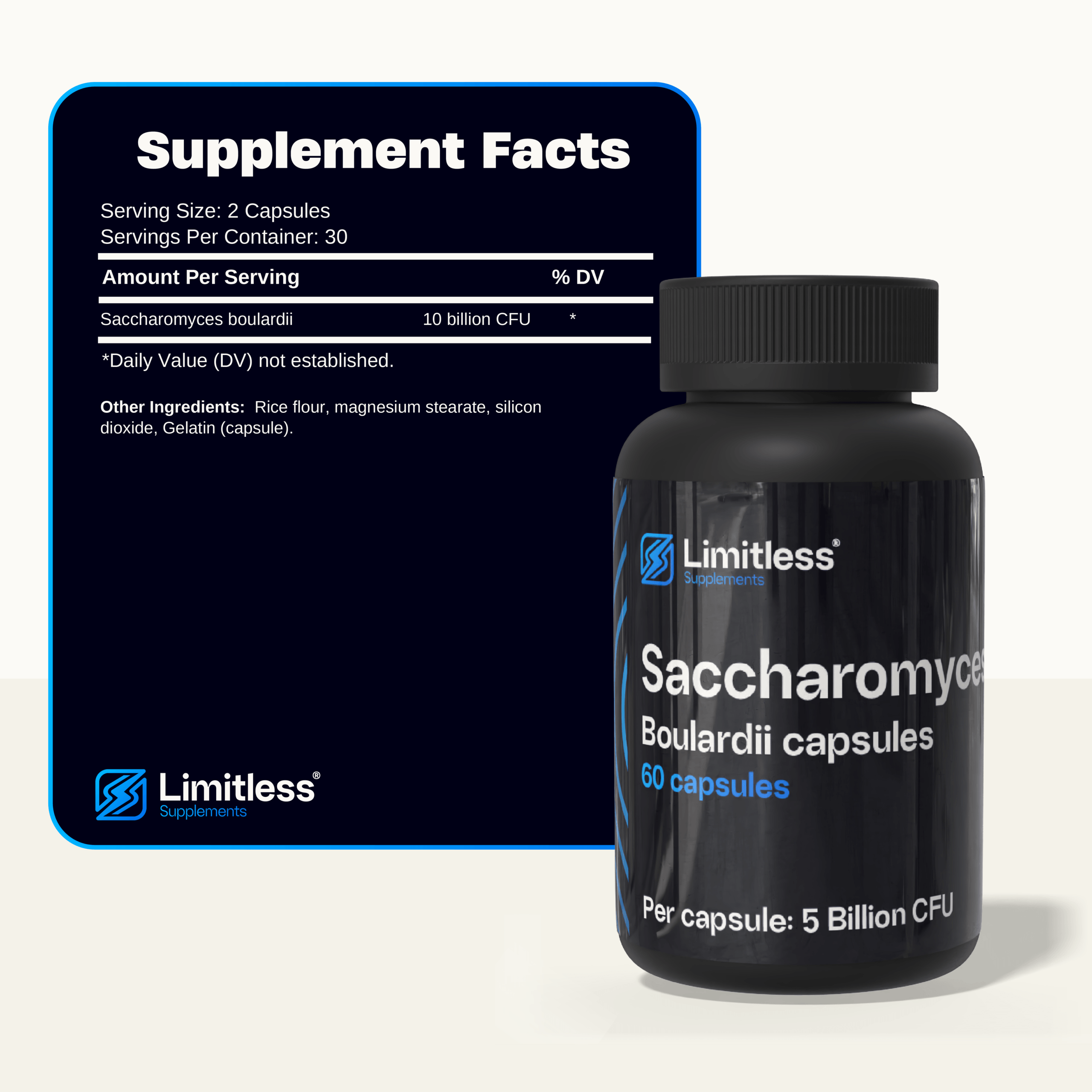
- Genetically it is nearly identical to ordinary baker's and brewer's yeast, yet it grows best at human body temperature and behaves differently enough to be treated as its own probiotic strain.
- Because it is a yeast rather than a bacterium, common antibacterial antibiotics do not kill it, which is why it can be taken alongside an antibiotic course.
- It was discovered by watching people chew the skins of lychee and mangosteen fruit to calm cholera-related diarrhea.
Mechanism
Saccharomyces boulardii acts through several local effects within the gut rather than by being absorbed into the body. It passes through the intestine as a live yeast, and because it is a fungus it is unaffected by antibacterial antibiotics, allowing it to work even during a course of antibiotics [2]. The yeast secretes proteins that directly counter pathogens, including a protease that breaks down the toxins produced by Clostridioides difficile and a phosphatase that inactivates bacterial endotoxin, reducing their harmful effects on the intestinal lining [2]. It also helps strengthen the gut barrier, competes with harmful microbes, and modulates the immune response and inflammation of the intestinal wall, which together help restore normal function after disturbances such as infection or antibiotic use [2][4].
receptor fingerprint
Gut pathogensCompetes with and displaces harmful microbes
Intestinal barrierSupports tight junction integrity and mucosal health
Gut immune signalingModulates local inflammatory responses
Dosingtypical ranges, not medical advice
interested in protocols and clinical dosages? make an account to see them! ^_^
Safetyrisks and cautions, not medical advice
Saccharomyces boulardii is a probiotic yeast that is generally well tolerated in healthy people, with mild gas or bloating the most common complaint. Its important risk is fungemia, a bloodstream infection: rare cases have occurred in immunocompromised, critically ill, or central-catheter patients, so it should be avoided in those groups. Handling of the powder near catheters has also been implicated in these infections.
History
Saccharomyces boulardii was isolated in the 1920s by the French microbiologist Henri Boulard, after whom it is named. While working in Indochina during a cholera outbreak, Boulard observed local people chewing the skins of tropical lychee and mangosteen fruit to control their diarrhea, and from these skins he cultured a heat-tolerant yeast. The organism was later characterized as a strain of Saccharomyces cerevisiae that thrives at human body temperature and behaves distinctly from ordinary baking and brewing strains. It was subsequently commercialized by the French pharmaceutical company Biocodex, which registered the reference strain CNCM I-745 and brought it to market as a lyophilized probiotic. Over the following decades it became the most extensively studied probiotic yeast, investigated in a broad range of diarrheal and gastrointestinal conditions.
Reputation
Saccharomyces boulardii is widely regarded as the best-characterized probiotic yeast and one of the few probiotics with a coherent, mechanistically grounded evidence base. It is best known for reducing the incidence of antibiotic-associated diarrhea and for helping to prevent recurrence of Clostridioides difficile infection, and it has also been studied for traveler's diarrhea and acute pediatric gastroenteritis. Because it is a fungus, it survives exposure to antibacterial antibiotics, allowing it to be taken during a course of antibiotics when many bacterial probiotics would be suppressed. It is generally very well tolerated in healthy people. In fairness, it is not for everyone; rare cases of bloodstream infection have been reported in severely ill or immunocompromised patients and in those with central venous catheters, so it is avoided in those settings.
Subjective profileweighing the evidence above
One of the few probiotics with evidence worth acting on, particularly for preventing antibiotic-associated and traveler's diarrhea, and being a yeast it survives right alongside the antibiotic. Skip it entirely if immunocompromised, critically ill or on a central line, where rare bloodstream infections have occurred.
Where to buy
Suppliers
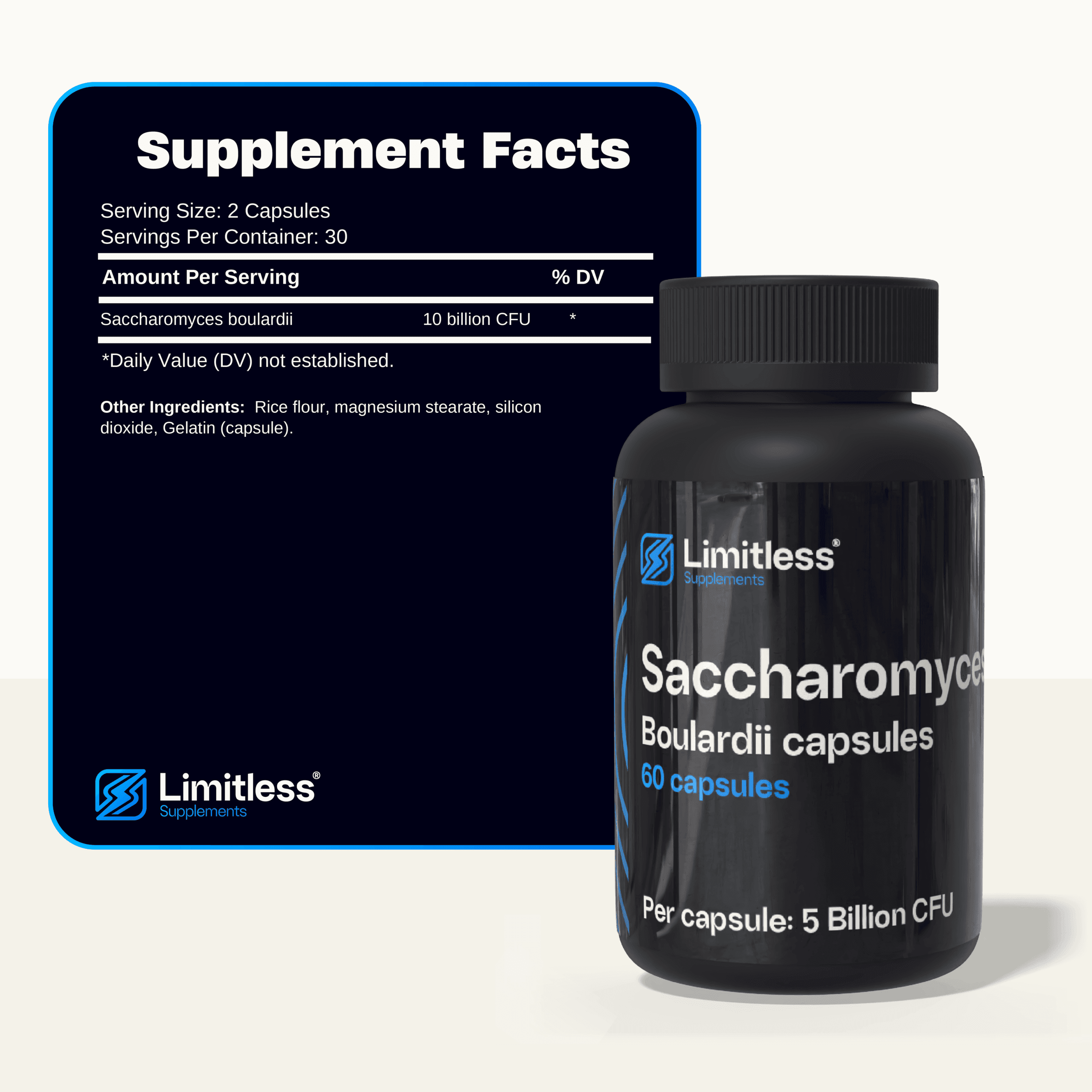
Vendors carrying Saccharomyces Boulardii, with live product details and codes. Links are affiliate links that support the wiki at no cost to you.
Limitless Biochem🌐
Saccharomyces Boulardii
Research
- 2012first citedEfficacy and safety of the probiotic Saccharomyces boulardii for the prevention and therapy of…
- 2019most recentProbiotics for the prevention of pediatric antibiotic-associated diarrhea
- 1.Systematic review with meta-analysis: Saccharomyces boulardii in the prevention of antibiotic-associated diarrhoea.
- 2.Efficacy and safety of the probiotic Saccharomyces boulardii for the prevention and therapy of gastrointestinal disorders.
- 3.Systematic review with meta-analysis: Saccharomyces boulardii supplementation and eradication of Helicobacter pylori infection.
- 4.A review of dose-responses of probiotics in human studies.
- 5.Probiotics for the prevention of pediatric antibiotic-associated diarrhea
- 6.Probiotics for the Prevention of Antibiotic-Associated Diarrhea in Children
6 listed here; entry last updated August 2026
Reviews
My notesprivate to this device
FAQ
Can I take it with antibiotics?
Yes; because it is a yeast, antibiotics do not kill it, which is exactly why it is popular during a course.
How is it different from bacterial probiotics?
It is a yeast, so it fills a different niche and resists antibacterial drugs that would knock out Lactobacillus or Bifidobacterium.
Who should be cautious?
People who are severely immunocompromised or have central venous catheters should avoid it without medical guidance.
How long until it helps?
For acute gut upset many people notice benefit within a few days; it clears once you stop taking it.
Adverse effects
- Gas or bloating
- Mild abdominal discomfort
- Constipation
- Increased thirst
- Rare bloodstream infection in seriously ill or immunocompromised people
Notes and cautions
- Generally well tolerated