
spec sheet13 rows
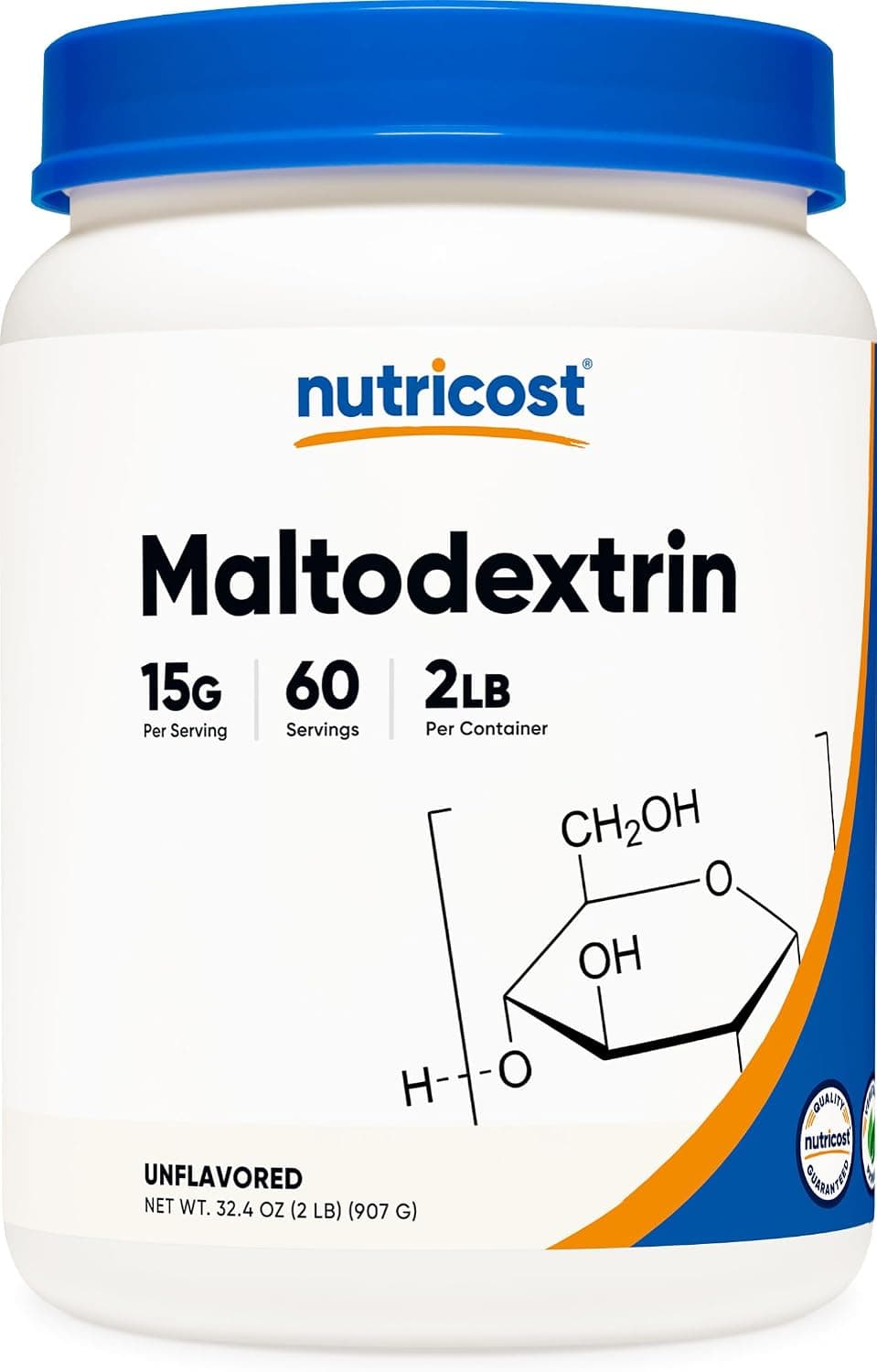
Maltodextrin is a rapidly-digested glucose polymer made by partially hydrolyzing starch (usually corn, rice, or potato) into short chains of glucose units. Because it is broken down at the intestinal brush border into pure glucose and absorbed through SGLT1, it behaves like fast carbohydrate fuel with a very high glycemic index but lower osmolality than an equal weight of straight glucose. Athletes use it intra- and post-workout to keep blood glucose up, spare muscle glycogen, and refill glycogen stores after hard sessions.
- Fast carbohydrate fuel that goes down easy mid session
- Keeps blood glucose up and spares muscle glycogen
- Refills glycogen stores fast after hard sessions
- Lower osmolality than glucose, so the stomach empties quickly
- Neutral, barely sweet taste that stays tolerable at hour three
- Pairs with fructose to push fuel rates even higher
- blood-glucose spike then reactive dip if taken at rest
- bloating, cramping, or diarrhea from over-concentrated drinks (>10%)
Overview
Maltodextrin is a rapidly digested glucose polymer produced by the partial hydrolysis of starch, most often from corn, rice, or potato. Acid or enzymatic treatment breaks the parent starch into short chains of glucose units, typically with a dextrose equivalent of about 3 to 20; the higher the DE, the shorter the chains, the sweeter the powder, and the faster it is absorbed, which blurs the line between maltodextrin and corn syrup solids. Although it is nominally a "complex carbohydrate," it behaves in the body like fast fuel, carrying a very high glycemic index alongside a lower osmolality than an equal weight of straight glucose. Athletes use it during and after training to keep blood glucose up, spare muscle glycogen, and refill glycogen stores after depleting sessions.
Maltodextrin is not absorbed as an intact polymer. Brush-border enzymes in the small intestine, chiefly maltase-glucoamylase and sucrase-isomaltase, cleave the chains into free glucose, which is then carried into enterocytes by the sodium-glucose cotransporter SGLT1 and released into the blood. Because a maltodextrin solution delivers the same glucose load as fewer dissolved particles, it exerts lower osmotic pressure and clears the stomach more quickly than an isocaloric glucose drink while still supplying carbohydrate fast. The resulting glucose sharply raises blood sugar, triggers insulin, fuels working muscle directly, and drives glycogen synthesis in muscle and liver. Sodium co-transports with glucose through SGLT1, so it also aids fluid absorption during long efforts.
The exercise-physiology literature frames maltodextrin mainly around how fast the body can actually burn ingested carbohydrate. Combining maltodextrin with fructose, which is absorbed by the separate GLUT5 transporter, raises total exogenous carbohydrate oxidation above what maltodextrin can reach on its own [1], and that higher fuel-delivery rate has been associated with improved endurance performance compared with a single carbohydrate source [2]. Marketing claims for exotic high-molecular-weight glucose polymers, by contrast, are not well supported; such polymers are oxidized no faster, and in some cycling tests slightly slower, than ordinary glucose [3]. The underlying constraint is that any glucose-based carbohydrate is oxidized at a ceiling near 1 g per minute, roughly 60 g per hour, because it all depends on the saturable SGLT1 route [4]; this is why single-transporter formulations plateau and why the two-transporter glucose-plus-fructose approach exists at all.
Maltodextrin is regulated and sold as a food ingredient rather than a dietary supplement, and it is generally recognized as a common carbohydrate additive and sports-nutrition fuel rather than a bioactive compound. It is well tolerated by people who exercise, but its cautions are practical: its very high glycemic index makes sipping it at rest a poor idea, producing sharp glucose spikes and reactive dips that are especially inadvisable for anyone managing insulin resistance or type 2 diabetes outside of training. Drinks more concentrated than about 10 percent commonly cause bloating, cramping, and diarrhea, particularly while running, and frequent sipping is cariogenic. Most commercial maltodextrin is corn- or rice-derived, and because processing removes protein it is generally considered gluten-free even when wheat-sourced, though celiac individuals are advised to verify the source. It is calorically dense with essentially no micronutrients, so it earns its place only around exercise, not as a daily addition.

- despite being a "complex carbohydrate," maltodextrin has a glycemic index around 105-135, often higher than pure glucose, because it digests almost instantly and its lower osmolality lets it leave the stomach faster.
- the trick behind glucose:fructose sports drinks is transporter math: glucose saturates SGLT1 near 60 g/h, so adding fructose (which uses GLUT5) is the only way to push usable carb intake toward ~90 g/h.
- the "DE" (dextrose equivalent) number on maltodextrin tells you how hydrolyzed it is; higher DE means shorter chains, more sweetness, and faster absorption, blurring the line between maltodextrin and straight corn syrup solids.
Mechanism
maltodextrin is a chain of glucose units (dextrose-equivalent typically 3-20) produced by acid or enzymatic hydrolysis of starch. it is not absorbed intact; brush-border enzymes in the small intestine (mainly maltase-glucoamylase and sucrase-isomaltase) cleave it into free glucose, which is then carried into enterocytes by the sodium-glucose cotransporter SGLT1 and released into blood. because a maltodextrin solution carries the same glucose load as fewer dissolved particles, it has lower osmolality than an isocaloric glucose drink, so it clears the stomach quickly while still delivering carbohydrate fast. the resulting glucose raises blood sugar sharply (very high glycemic index), triggers , fuels working muscle directly, and drives glycogen synthesis in muscle and liver. single-carbohydrate oxidation is capped near 1 g/min by SGLT1 saturation; adding fructose (absorbed via GLUT5) opens a parallel route and lifts total exogenous carbohydrate oxidation.
receptor fingerprint
SGLT1 (intestinal glucose transporter)glucose freed from maltodextrin is absorbed here; saturates near 60 g/h
Brush-border enzymes (maltase-glucoamylase, sucrase-isomaltase)hydrolyze glucose chains into free glucose
Muscle & liver glycogen synthesissupplies glucose substrate and drives insulin
Blood glucose / very high glycemic response
Gastric osmolality / emptyingpolymer lowers particle count vs equal glucose
Dosingtypical ranges, not medical advice
interested in protocols and clinical dosages? make an account to see them! ^_^
Safetyrisks and cautions, not medical advice
for people who exercise, maltodextrin is well tolerated and is just food carbohydrate; the real cautions are practical. it has a very high glycemic index, so sipping it while sedentary produces sharp glucose spikes and reactive dips, which makes it a poor idea for anyone managing insulin resistance or type 2 diabetes outside of training. too concentrated a drink (over ~10%) commonly causes bloating, cramping, and diarrhea, particularly during running. it is fermentable and cariogenic, so frequent sipping is hard on teeth. most commercial maltodextrin is corn- or rice-derived and processing removes protein, so it is generally gluten-free even when wheat-sourced, but celiac individuals should check the source. it is calorically dense with essentially no micronutrients, so it only earns its place around exercise, not as a daily add-on.
Subjective profileweighing the evidence above
it is not a "supplement" in the biohacker sense; it is just fast carbs in a convenient, easy-drinking form. it earns its place during long or hard sessions where fuel has to go in without a heavy, sugary-tasting drink, and right after depleting work to jump-start glycogen. outside of training there is no reason to take it; it is a high-GI carb that will spike and drop your blood sugar if you sip it at a desk. if you want higher fuel rates on the bike, pair it with fructose rather than pushing maltodextrin alone.
Where to buy
Suppliers
Vendors carrying Maltodextrin, with live product details and codes. Links are affiliate links that support the wiki at no cost to you.
Amazon
Maltodextrin
Research
- 1993first citedOxidation rates of orally ingested carbohydrates during prolonged exercise in men
- 2005controlled trialOxidation of combined ingestion of maltodextrins and fructose during exercise
- 2011most recentLower oxidation of a high molecular weight glucose polymer vs. glucose during cycling
- 1.Oxidation of combined ingestion of maltodextrins and fructose during exercise
- 2.Superior endurance performance with ingestion of multiple transportable carbohydrates
- 3.Lower oxidation of a high molecular weight glucose polymer vs. glucose during cycling
- 4.Oxidation rates of orally ingested carbohydrates during prolonged exercise in men
4 listed here; entry last updated August 2026
Reviews
My notesprivate to this device
FAQ
is maltodextrin better than plain sugar for training?
not really "better," just different. gram for gram it delivers the same glucose, but its lower osmolality and neutral taste make a concentrated drink easier on the stomach and less sickly-sweet mid-session. for absorption ceiling they are the same until you add fructose.
will it break a fast or spike my blood sugar?
yes on both counts. it is high-GI carbohydrate; it breaks a fast and produces a sharp glucose and insulin response. that is exactly why it is useful around exercise and a bad idea while sitting still.
how much can I actually absorb per hour?
maltodextrin alone tops out near 60 g/h because it all rides the SGLT1 glucose transporter. combining it with fructose in roughly a 2:1 ratio recruits a second pathway and lets well-adapted athletes use up to ~90 g/h.
is it gluten-free?
usually. even wheat-derived maltodextrin is processed to remove protein, so it is generally considered gluten-free, but if you have celiac disease check the source and labeling.
Adverse effects
- blood-glucose spike then reactive dip if taken at rest
- bloating, cramping, or diarrhea from over-concentrated drinks (>10%)
Notes and cautions
- cariogenic with frequent sipping (hard on teeth)
- no micronutrients; empty calories outside of exercise
- poor fit for insulin resistance or type 2 diabetes outside training