
spec sheet10 rows
Dihydroberberine (DHB) is a reduced, or hydrogenated, form of berberine; basically the same molecule with two extra hydrogen atoms tacked on. Once it hits the gut it gets converted right back to berberine, so you end up with all the familiar berberine effects (blood sugar control, better lipids, AMPK activation) but from a much smaller dose. The whole reason DHB exists is absorption. Plain berberine is notoriously hard to get into the bloodstream, so DHB is the clever workaround. Think of it as the same engine with a better fuel line; nothing new downstream, just far more of it actually reaching your cells. People reach for it for the same goals as berberine: steadier blood sugar, improved insulin sensitivity, healthier cholesterol and triglycerides, and that "exercise in a pill" AMPK effect on the cell's energy machinery.
- berberine's absorption problem, finally solved
- same glucose and lipid wins from a far smaller dose
- much less stomach upset than high dose berberine
- steadier fasting glucose and flatter spikes after meals
- sharper insulin sensitivity and healthier triglycerides
- AMPK activation, the pathway exercise and metformin switch on
- Mild GI upset (cramping, loose stools, or constipation), though typically less than high-dose berberine
- Risk of low blood sugar (hypoglycemia) when combined with diabetes medication
- Not for pregnancy or breastfeeding (berberine crosses the placenta and carries a newborn jaundice/kernicterus risk)
Overview
If you already like berberine but hate the giant multi-gram doses and the stomach churn that comes with them, DHB is the smarter delivery of the same idea; roughly a fifth of the milligrams for a similar job, with usually gentler digestion. Just remember it becomes berberine in your body, so it inherits berberine's cautions too.

- The "di-hydro" in the name literally means two hydrogens; DHB is berberine with a couple of extra hydrogen atoms, and that small tweak is enough to change how your gut handles it.
- Berberine's oral bioavailability is often cited at under 1%, meaning over 99% of a big dose never reaches your blood; DHB is essentially the pharmacology world's patch for that leak.
- The same complex I and AMPK pathway DHB rides is the one triggered by exercise and by the diabetes drug metformin, which is where the 'exercise in a pill' nickname comes from.
- Your own gut bacteria reduce berberine into dihydroberberine as part of absorbing it, so supplementing DHB directly just skips a step your body was already trying to do.
- Berberine is the bright yellow alkaloid that colors goldenseal, barberry, and Oregon grape; it has been used as a natural dye and a folk remedy for centuries.
Mechanism
Berberine works mostly by gently poking complex I (the first protein in the cell's energy-production chain). That mild slowdown nudges up the ratio of AMP to ATP (spent versus charged cellular fuel), which flips on (AMP-activated protein kinase, the cell's master "energy is running low, start conserving" switch). Activated AMPK tells cells to pull glucose out of the blood, burn fat for fuel, and ease off manufacturing new fat and cholesterol; that is the "exercise in a pill" framing you see tossed around, since physical exercise (and the drug metformin) activate AMPK too.
DHB does exactly the same thing, because in the body it is converted straight back to berberine. So the pharmacology downstream is basically identical; the entire difference is upstream, at absorption. Plain berberine is a quaternary alkaloid, meaning it carries a permanent positive charge, and charged molecules are not very (fat-soluble), so they cross the fatty gut wall poorly. Berberine is also a substrate for P-glycoprotein (P-gp, an efflux pump in the intestinal wall that grabs certain foreign molecules and shoves them back into the gut) and gets heavily chewed up by metabolism in the liver. Stack those together and oral is famously low, often cited under 1%. DHB is the reduced form: those two extra hydrogens make it a neutral, more lipophilic molecule, so it crosses the gut wall much more readily by passive diffusion, then gets oxidized back to berberine in the intestinal wall and liver. The reported result is roughly 5x the systemic exposure of an equal dose of berberine, which is exactly why much smaller amounts get the job done.
receptor fingerprint
AMP-activated protein kinase ()Indirect activation via mild complex I inhibition
respiratory complex IMild inhibition
LDL receptor / PCSK9 pathway (liver)Upregulates LDL receptors via the berberine it converts into
Intestinal absorption (gut-wall uptake)As the reduced, neutral, more lipophilic form, DHB crosses the gut wall by passive diffusion, then is oxidized back to berberine
Gut microbiotaModulation of bacterial populations
Evidencehow good the literature is
Here is the honest read. The upstream biology is well established: the landmark work showing that both berberine and dihydroberberine inhibit complex I and activate AMPK is solid, and berberine's own metabolic benefits (comparable to some oral diabetes drugs for lowering fasting glucose, HbA1c, and blood lipids) are backed by multiple human trials and meta-analyses. The specific claim that matters for DHB, that it is far better absorbed, is well supported by animal pharmacokinetic studies and at least one human crossover study measuring blood levels and glucose response. What is thinner is long-term human outcome data on DHB specifically; most of the deep clinical evidence sits on berberine, and we lean on the conversion argument (DHB turns into berberine) to bridge the gap. That bridge is reasonable but worth naming plainly: DHB is very likely doing berberine's job more efficiently, rather than doing something genuinely new.
Dosingtypical ranges, not medical advice
interested in protocols and clinical dosages? make an account to see them! ^_^
Safetyrisks and cautions, not medical advice
DHB is generally well tolerated, and because the effective dose is small, it tends to cause less of the stomach upset (cramping, loose stools, constipation) that large berberine doses are known for. Still, treat it with the same respect you would give berberine, since berberine is what it becomes inside you.
Because it lowers blood sugar, be careful stacking it with diabetes medication (metformin, sulfonylureas, insulin); the combination can push glucose too low (hypoglycemia). Berberine is also a known inhibitor of CYP3A4 and P-glycoprotein (drug-processing systems in the liver and gut), so it can raise blood levels of many prescription drugs; if you take anything routed through those pathways (some statins, blood thinners, immunosuppressants, certain blood pressure and heart-rhythm meds), talk to a pharmacist before combining. Berberine should be avoided in pregnancy and while breastfeeding; it crosses the placenta and has been linked to worsening newborn jaundice (kernicterus risk). This is general educational information, not medical advice; please check with a clinician before starting, especially if you are on medication or managing a health condition.
History
Berberine is the ancient half of this story; it is the vivid yellow alkaloid (a bitter plant compound) found in goldenseal, barberry, Oregon grape, and the Coptis root used in Traditional Chinese and Ayurvedic medicine for centuries, mostly for infections and digestive complaints. Its modern reputation took off when researchers found it could rival some metabolic drugs for blood sugar and lipid control; the persistent catch was always its terrible absorption. Dihydroberberine entered as the engineered fix for that specific problem. A pivotal 2008 study in the journal Diabetes showed that DHB was more bioavailable than berberine while hitting the same AMPK target, and interest built from there. In the supplement market DHB is best known under the branded ingredient GlucoVantage, which packaged it precisely to solve the dose-and-absorption headache that limited plain berberine.
Reputation
In the supplement world DHB has a solid, if niche, reputation as "berberine that actually absorbs." Metabolic-health and biohacker circles like it for the low milligram dose and the gentler stomach profile, and it rides berberine's broader popularity wave (berberine got tagged "nature's Ozempic" online, which is an overstatement but tells you the vibe it travels in). The fair skeptical counterpoint is that most of the hard clinical evidence sits on berberine rather than DHB itself, and that the premium price mostly buys convenience and tolerability rather than a fundamentally different effect. Reasonable people land on: worth it if the low dose and easier digestion matter to you, less essential if you already tolerate plain berberine fine.
Subjective profileweighing the evidence above
Worth it if berberine's gut upset put you off, since you get the same glucose and lipid benefits from a much smaller dose. Do not take it in pregnancy or while breastfeeding, given berberine's newborn jaundice risk, and be careful stacking it with diabetes medication because the glucose drop adds up.
Where to buy
Suppliers
Vendors carrying Dihydroberberine, with live product details and codes. Links are affiliate links that support the wiki at no cost to you.
Amazon
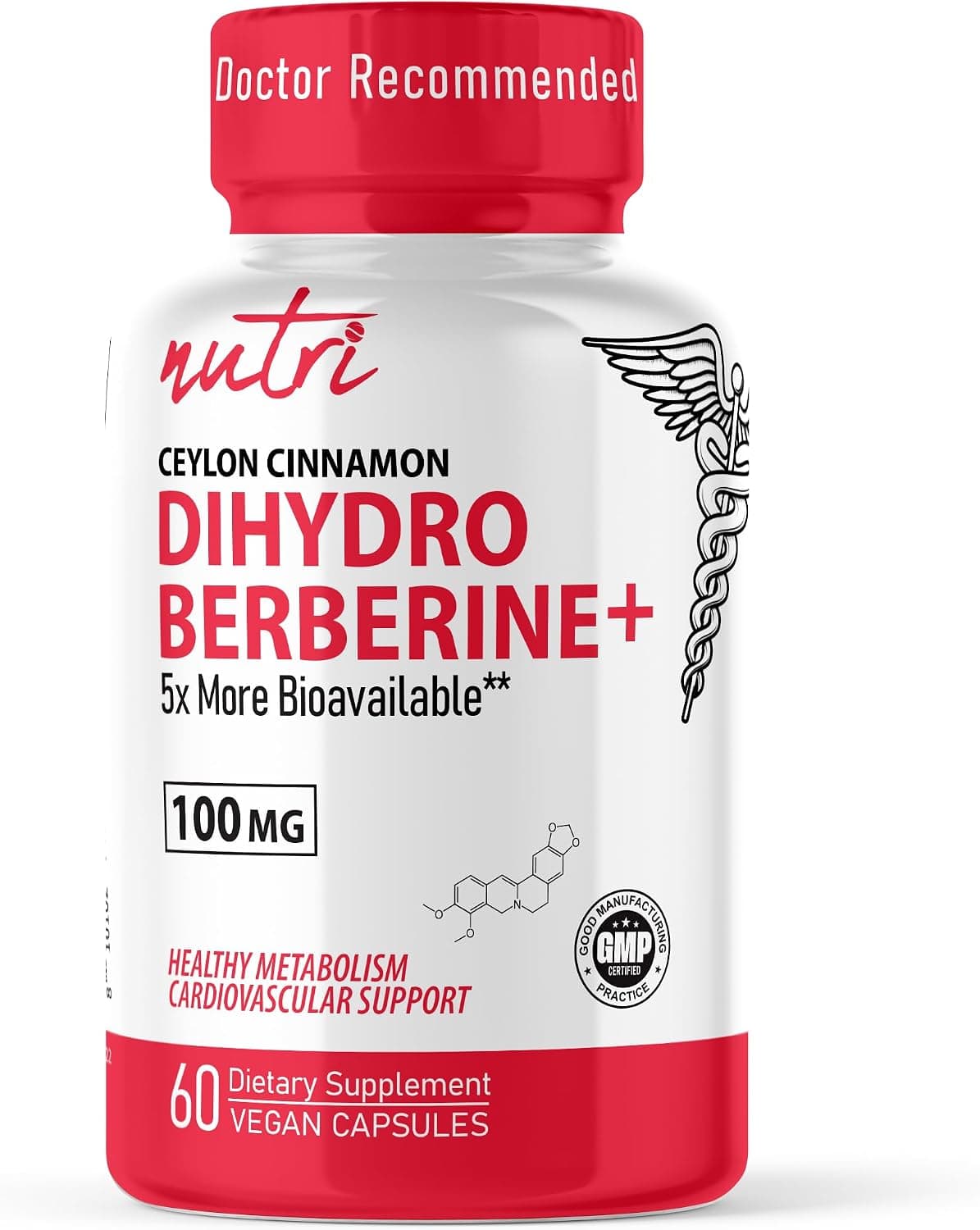
Dihydroberberine
Research
- 2004first citedBerberine is a novel cholesterol-lowering drug working through a unique mechanism distinct from…
- 2021controlled trialAbsorption Kinetics of Berberine and Dihydroberberine and Their Impact on Glycemia: A Randomize…
- 2024most recentEffects of administering berberine alone or in combination on type 2 diabetes mellitus: a syste…
- 1.Berberine and its more biologically available derivative, dihydroberberine, inhibit mitochondrial respiratory complex I: a mechanism for the action of berberine to activate AMP-activated protein kinase and improve insulin action.
- 2.Absorption Kinetics of Berberine and Dihydroberberine and Their Impact on Glycemia: A Randomized, Controlled, Crossover Pilot Trial.
- 3.Berberine is a novel cholesterol-lowering drug working through a unique mechanism distinct from statins
- 4.Efficacy of berberine in patients with type 2 diabetes mellitus.
- 5.Effects of administering berberine alone or in combination on type 2 diabetes mellitus: a systematic review and meta-analysis.
5 listed here; entry last updated August 2026
Reviews
My notesprivate to this device
FAQ
Is dihydroberberine just a better version of berberine?
Sort of. It is not a different effect; it is the same effect delivered more efficiently. DHB converts back to berberine in your body, so the biology is identical downstream. What is genuinely better is absorption, which is why you can take much less and often feel it in your stomach less.
How much DHB equals a typical berberine dose?
Rough rule of thumb: because DHB is around 5x more bioavailable, 100 to 200 mg of DHB is in the ballpark of the 500 to 1,500 mg of berberine people usually take. It is not an exact conversion, but that is the reason the DHB doses on the label look so small.
Does DHB actually turn into berberine inside me?
Yes. That is the whole design. DHB is absorbed more readily, then gets oxidized back to berberine in the gut wall and liver, so what is circulating and doing the work is berberine itself.
Will DHB wreck my stomach the way berberine can?
Usually less so. A lot of berberine's GI grief (cramping, diarrhea, constipation) comes from cramming grams of poorly absorbed powder through your gut. DHB needs far less material to do the same job, so digestion tends to be gentler, though it is not guaranteed to be zero.
Can I take DHB alongside metformin or other diabetes meds?
Be cautious. Both lower blood sugar and both lean on the AMPK pathway, so the combination can drive glucose too low. This is a conversation to have with your clinician or pharmacist before stacking them, not something to freelance.
When is the best time to take it?
Most people take it right before or with a carbohydrate-containing meal, so it is active when blood sugar is climbing. Splitting the daily amount across meals tends to give steadier coverage than one large dose.
Adverse effects
- Mild GI upset (cramping, loose stools, or constipation), though typically less than high-dose berberine
- Risk of low blood sugar (hypoglycemia) when combined with diabetes medication
- Not for pregnancy or breastfeeding (berberine crosses the placenta and carries a newborn jaundice/kernicterus risk)
- Occasional headache or mild digestive changes as your body adjusts in the first days
Notes and cautions
- Drug interactions; it inhibits CYP3A4 and P-glycoprotein, so it can raise blood levels of many prescription drugs