
spec sheet13 rows
Atorvastatin is a lipid-lowering medication in the statin class, sold originally under the brand name Lipitor. It works by inhibiting HMG-CoA reductase, a liver enzyme central to cholesterol production, which lowers LDL (low-density lipoprotein) cholesterol and reduces the risk of heart attacks and strokes. Introduced in 1996 and once the best-selling drug in the world, it is now a widely used inexpensive generic and appears on the World Health Organization's List of Essential Medicines.
- Lowers LDL cholesterol hard and fast
- Reduces the risk of heart attacks and strokes
- One of the best evidenced drugs in medicine
- Cheap generic on the WHO Essential Medicines list
- Once daily at any time of day
- Stabilizes artery plaque and calms vessel inflammation
- Muscle aches, usually mild
- Rise in liver enzymes
- Headache
Overview
Atorvastatin is a member of the statin family, formally the HMG-CoA reductase inhibitors, a group of drugs that lower blood cholesterol. [1] It is used to treat dyslipidemia (abnormal blood lipids) and, more importantly, to prevent cardiovascular disease in people at risk, lowering LDL and total cholesterol and triglycerides while modestly raising HDL.
The molecule was first synthesized in the mid-1980s by the chemist Bruce Roth at Warner-Lambert and reached the market in 1996 as Lipitor. [1] Marketed by Pfizer, it became the best-selling pharmaceutical product in history, with cumulative sales exceeding one hundred billion dollars before its main patent expired around 2011 and low-cost generics appeared.
Atorvastatin's benefit for preventing cardiovascular events is supported by a large body of randomized trials. In the CARDS trial it reduced first cardiovascular events in people with type 2 diabetes who did not have unusually high cholesterol, supporting its use for primary prevention. [3] The TNT trial showed that intensive lowering of LDL with a high dose provided greater protection than a low dose in patients with stable coronary disease. [2] In the SPARCL trial, high-dose atorvastatin reduced the risk of recurrent stroke in people who had already had a stroke or transient ischemic attack. [4] Comprehensive reviews of statin trials conclude that, for appropriate patients, the cardiovascular benefits substantially outweigh the risks. [1]
The most discussed side effect is muscle-related symptoms, ranging from common mild aches to very rare severe muscle breakdown (rhabdomyolysis); large analyses indicate that serious muscle harm is uncommon and that many reported aches are not actually caused by the drug. [1] Statins can slightly raise liver enzymes and modestly increase the chance of developing type 2 diabetes, but reviews find these risks are small relative to the reduction in heart attacks and strokes. [1]
Atorvastatin is taken by mouth once daily and can be taken at any time of day thanks to its long duration of action. It is broken down by the liver enzyme CYP3A4, so strong inhibitors of that enzyme, and large amounts of grapefruit juice, can raise its blood levels. It is a prescription-only medicine, is available generically worldwide, and is listed as a WHO essential medicine.
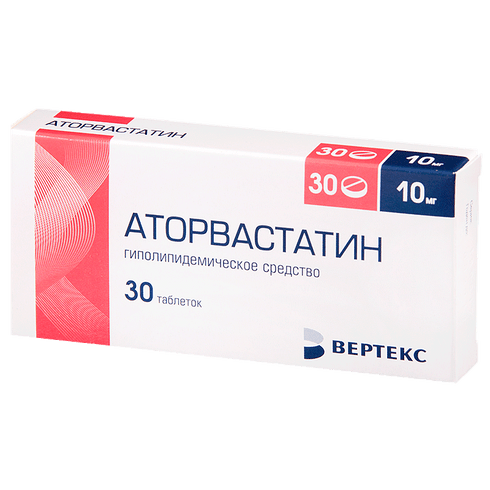
- At its commercial peak Lipitor was the best-selling drug the world had ever seen, with lifetime sales exceeding one hundred billion dollars.
- In the CARDS trial, atorvastatin cut the rate of major cardiovascular events by 37% in people with type 2 diabetes, and the study was stopped two years early because the benefit was so clear.
Mechanism
Atorvastatin competitively inhibits HMG-CoA reductase, the enzyme that catalyzes the rate-limiting step of cholesterol synthesis in the liver, converting HMG-CoA into mevalonate. [1] With less cholesterol being made inside liver cells, those cells respond by increasing the number of LDL receptors on their surface, which pulls more LDL cholesterol out of the bloodstream and lowers circulating LDL levels. [1] It also reduces the liver's output of triglyceride-rich particles and produces a smaller rise in protective HDL cholesterol.
Beyond its effect on lipids, statins have additional so-called pleiotropic effects, including reduced vascular inflammation and improved function of the blood-vessel lining, which may contribute to their protection against heart attacks and strokes. [2] These combined actions translate, in large trials, into fewer cardiovascular events across a range of patient groups. [3][4]
receptor fingerprint
HMG-CoA reductaseinhibits
LDL receptoractivates
Hepatic VLDL productioninhibits
Vascular inflammation (CRP)modulates
Endothelial functionmodulates
Dosingtypical ranges, not medical advice
interested in protocols and clinical dosages? make an account to see them! ^_^
Safetyrisks and cautions, not medical advice
Atorvastatin is prescription only and generally well tolerated. The most talked-about effect is muscle aches; true muscle injury is uncommon and severe rhabdomyolysis is rare. It can raise liver enzymes, so testing is done as needed, and it slightly increases the chance of new-onset diabetes, a risk outweighed by cardiovascular benefit in most people. Because it is broken down by the CYP3A4 enzyme, strong inhibitors such as clarithromycin, azole antifungals, protease inhibitors, and large amounts of grapefruit juice can raise blood levels and side effect risk. Combining it with fibrates, especially gemfibrozil, or with cyclosporine adds muscle risk. It is contraindicated in active liver disease and during pregnancy and breastfeeding. Report unexplained muscle pain or weakness.
Interactionsdocumented pairs only, not exhaustive
Atorvastatin is cleared by CYP3A4 and carried into the liver by OATP1B1, and blocking either raises its blood concentration and with it the risk of myopathy and rhabdomyolysis. Strong CYP3A4 inhibitors matter most: clarithromycin, itraconazole and ketoconazole, HIV protease inhibitors such as ritonavir and tipranavir, and hepatitis C regimens such as elbasvir with grazoprevir. Cyclosporine blocks both CYP3A4 and OATP1B1 and produces the largest rise of all. Grapefruit juice inhibits intestinal CYP3A4, though ordinary quantities have a modest effect.
Fibrates add myopathy risk through their own action on muscle rather than through exposure, and gemfibrozil is the worst offender; fenofibrate is the less troublesome pairing. Rifampin is awkward because it induces CYP3A4 and inhibits OATP1B1 at once, so the net direction depends on the timing of the two drugs.
Atorvastatin itself inhibits P-glycoprotein modestly, which raises digoxin concentrations, and it increases exposure to oral contraceptive steroids.
Checking a whole stack? Run it through interactions + stacks.
History
Atorvastatin was synthesized in 1985 by chemist Bruce Roth and colleagues at Warner-Lambert/Parke-Davis, one of several statins under development in the wake of the discovery of HMG-CoA reductase inhibitors. Clinical trials showed unusually strong LDL-cholesterol lowering, and it reached the U.S. market in 1996 under the brand name Lipitor. Marketed by Pfizer after its acquisition of Warner-Lambert, it went on to become the best-selling prescription drug in history, generating well over one hundred billion dollars in sales before its patent expired in 2011. It is now an inexpensive generic and appears on the World Health Organization's List of Essential Medicines.
Reputation
Atorvastatin enjoys an exceptional evidence base and a strong reputation as a first-choice statin, backed by landmark outcome trials such as CARDS in diabetes and SPARCL in stroke prevention that demonstrated real reductions in heart attacks and strokes. Physicians favor it for its potency, once-daily convenience, and flexible dosing across a wide range, and its move to low-cost generic status has only broadened its use. It is generally well tolerated, with muscle aches being the most commonly discussed side effect. Decades of large trials have made it one of the most thoroughly studied medicines in modern cardiology.
Subjective profileweighing the evidence above
One of the best-evidenced drugs in medicine and cheap as a generic; it lowers LDL hard, and the reduction in heart attacks and strokes is measured rather than inferred. Muscle aches are usually mild, and the CYP3A4 interactions, grapefruit included, are the thing to actually watch.
Where to buy

1 other outlet

Suppliers
Vendors carrying Atorvastatin, with live product details and codes. Links are affiliate links that support the wiki at no cost to you.
PCT.Zone
Atorvastatin
RUPharma🌐
Atorvastatin
Research
- 2004first citedPrimary prevention of cardiovascular disease with atorvastatin in type 2 diabetes in the Collab…
- 2005controlled trialIntensive lipid lowering with atorvastatin in patients with stable coronary disease.
- 2016most recentInterpretation of the evidence for the efficacy and safety of statin therapy
- 1.Interpretation of the evidence for the efficacy and safety of statin therapy
- 2.Intensive lipid lowering with atorvastatin in patients with stable coronary disease.
- 3.Primary prevention of cardiovascular disease with atorvastatin in type 2 diabetes in the Collaborative Atorvastatin Diabetes Study (CARDS): multicentre randomised placebo-controlled trial.
- 4.High-dose atorvastatin after stroke or transient ischemic attack.
4 listed here; entry last updated August 2026
Reviews
My notesprivate to this device
FAQ
Do I have to take it at night?
No, unlike some older statins it lasts long enough to work at any time of day. Just pick a time you will remember consistently.
Why should I limit grapefruit juice?
Grapefruit blocks the CYP3A4 enzyme that clears atorvastatin, which can raise blood levels and side effect risk. Small amounts are fine, but avoid large daily quantities.
Are muscle aches dangerous?
Most aches are mild and harmless, but unexplained pain, weakness, or dark urine should be reported. Serious muscle injury is rare.
Will it give me diabetes?
Statins slightly raise the odds of developing diabetes, but for most people the protection against heart attacks and strokes far outweighs that small risk.
Can I stop once my cholesterol is normal?
The normal number reflects the drug working, not a cure. Stopping usually lets cholesterol and cardiovascular risk climb back up.
Adverse effects
- Muscle aches, usually mild
- Rise in liver enzymes
- Headache
- Digestive upset
- Rare serious muscle breakdown (rhabdomyolysis)
Notes and cautions
- Small increase in type 2 diabetes risk
- Avoid large amounts of grapefruit juice