
spec sheet13 rows
Pitavastatin is a statin, a cholesterol-lowering drug that blocks HMG-CoA reductase, the enzyme controlling an early step of cholesterol synthesis. Two features distinguish it within the class: it is barely metabolized by the CYP3A4 enzyme, so it has notably few drug interactions, and it is the most glucose-neutral of the statins, avoiding much of the small rise in diabetes risk seen with others. Used to lower LDL cholesterol and cardiovascular risk and given once daily as a calcium salt, it is marketed under names such as Livalo, Livazo, and Zypitamag, and was first approved in Japan in 2003.
- Lowers LDL cholesterol and cardiovascular risk once daily
- The most glucose-neutral statin of the class
- Barely touched by CYP3A4, so notably few drug interactions
- Blocks HMG-CoA reductase at an early cholesterol step
- Sold as Livalo, Livazo and Zypitamag
- Approved in Japan back in 2003, well established
- Muscle aches
- Headache
- Digestive upset
Overview
Pitavastatin is a fully synthetic member of the statin family, a group of lipid-lowering drugs that share the ability to inhibit cholesterol synthesis in the liver [1][2]. Chemically it carries a fluorophenyl-quinoline core and is most often supplied as a calcium salt; it is considered a relatively potent, lipophilic statin [1].
The molecule was patented in the late 1980s and developed in Japan, where it reached the market in 2003; approvals in South Korea and India followed the same year. It was cleared in the United States in 2009 under the brand Livalo, in the United Kingdom in 2010, and a further formulation (Zypitamag) was approved in 2017 [1]. In Europe and several other regions it is sold as Livazo.
Clinically, pitavastatin is used to treat elevated cholesterol and to help prevent cardiovascular disease. Beyond lowering LDL cholesterol, studies have highlighted a relatively favourable effect on HDL cholesterol; trials of the LIVALO tablet reported measurable increases in HDL in treated patients [3]. Reviews of its cardiometabolic profile note that, unlike some statins, it has a broadly neutral or favourable effect on glucose handling, which has drawn interest for people with metabolic syndrome or diabetes, although a small rise in new-onset diabetes is regarded as a class effect of statins generally [4].
Pitavastatin is a prescription medicine taken as an oral tablet. A notable pharmacological feature is that it is cleared mainly by glucuronidation with only minor involvement of cytochrome P450 enzymes, giving it a comparatively low potential for drug interactions [1][4]. Its tolerability profile resembles that of other statins, with muscle-related complaints, gastrointestinal upset and headache among the reported effects, and elevated uric acid has also been described [1].

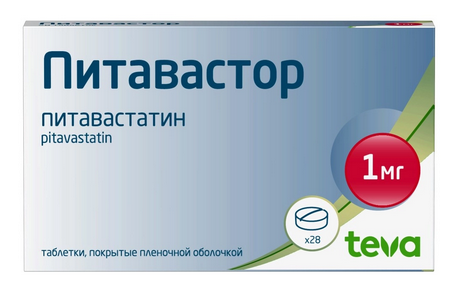
- Pitavastatin is metabolized largely by glucuronidation rather than the CYP3A4 enzyme, so it interacts far less than many statins with common drugs that share that pathway.
- It is considered the most glucose-neutral of the statins, largely avoiding the small increase in diabetes risk associated with the class.
- First approved in Japan in 2003, it is the active ingredient in Livalo, Livazo, and Zypitamag and is administered as a calcium salt.
Mechanism
Like other statins, pitavastatin competitively inhibits HMG-CoA reductase, the rate-limiting enzyme in the liver's synthesis of cholesterol [1][2]. By slowing this pathway it reduces the amount of cholesterol produced inside liver cells, which prompts those cells to display more LDL receptors on their surface and pull more LDL cholesterol out of the bloodstream [2]. In practice pitavastatin lowers LDL cholesterol substantially while also modestly raising HDL cholesterol [3]. A distinctive aspect of its behaviour is metabolism: it is processed largely through glucuronidation with little reliance on the CYP3A4 enzyme, so it interacts less than some statins with drugs that share that route [1][4].
receptor fingerprint
HMG-CoA reductaseinhibits
Hepatic LDL receptorsupregulates
HDL / plaqueimproves
Dosingtypical ranges, not medical advice
interested in protocols and clinical dosages? make an account to see them! ^_^
Safetyrisks and cautions, not medical advice
As a statin, pitavastatin can cause muscle aches and, rarely, serious muscle breakdown (myopathy or rhabdomyolysis), with risk higher at high doses or combined with certain interacting drugs. It can elevate liver enzymes and modestly raise blood glucose, slightly increasing the chance of new-onset diabetes, so liver and glucose monitoring is appropriate. It should not be used during pregnancy or breastfeeding.
Interactionsdocumented pairs only, not exhaustive
Pitavastatin depends almost entirely on OATP1B1 to get into the liver, so anything blocking that transporter raises its blood levels and with them the risk of myopathy and rhabdomyolysis. Cyclosporine is the clearest case, increasing exposure four to seven fold, and the combination is contraindicated. Erythromycin, clarithromycin, rifampin, and the boosted HIV protease inhibitors lopinavir and atazanavir all inhibit the same route and raise exposure substantially.
Gemfibrozil roughly doubles pitavastatin exposure and adds its own muscle toxicity on top, which is why fibrate pairings are treated cautiously; fenofibrate is the less troublesome partner.
What sets pitavastatin apart is what does not interact with it. It is barely metabolized by CYP3A4, being cleared instead by glucuronidation through UGT1A3 and UGT2B7, so the azole antifungals, macrolides and other strong CYP3A4 inhibitors that complicate atorvastatin and simvastatin have comparatively little effect on it. That is the main argument for choosing it in a crowded medication list.
Checking a whole stack? Run it through interactions + stacks.
History
Pitavastatin was discovered in Japan by chemists at Kowa Company working in collaboration with Nissan Chemical Industries, who synthesized the novel quinoline-based statin during the 1990s under development codes such as NK-104 and itavastatin. It reached the market first in its country of origin, gaining Japanese approval in 2003 under the brand name Livalo. Subsequent clinical development extended its reach internationally, with approval by the United States Food and Drug Administration in 2009 and by European regulators shortly thereafter, marketed under names including Livazo and Zypitamag.
The compound was designed as a fully synthetic statin intended to combine potent low-density lipoprotein reduction with a metabolic profile that avoids heavy dependence on the cytochrome P450 3A4 pathway. Over the following two decades it accumulated a substantial evidence base, and it now appears on the World Health Organization's List of Essential Medicines as a representative lipid-lowering agent.
Reputation
Pitavastatin is well regarded within the statin class for two qualities that set it apart: a minimal reliance on CYP3A4 metabolism, which translates into comparatively few drug interactions, and a notably glucose-neutral profile that appears to avoid much of the small rise in new-onset diabetes seen with some other statins. It delivers robust reductions in LDL cholesterol at low milligram doses while also producing modest increases in HDL cholesterol, a combination clinicians often find attractive in patients taking multiple medications.
It has been studied extensively in populations where drug interactions are a particular concern, including people living with HIV. Its evidence base is genuine and its safety record within the class is solid; that said, like all statins it can cause muscle-related complaints and requires monitoring, and it is a prescription cardiovascular medicine rather than a casual supplement. On balance it occupies a respected niche as a clean, well-tolerated statin.
Subjective profileweighing the evidence above
A smart pick within the statin class when blood sugar or drug interactions are the concern, since it is the most glucose-neutral statin and is barely touched by CYP3A4. Muscle aches, headache and digestive upset are still the usual complaints, and it is avoided in pregnancy and breastfeeding.
Where to buy
1 other outlet

Suppliers
Vendors carrying Pitavastatin, with live product details and codes. Links are affiliate links that support the wiki at no cost to you.
PCT.Zone
Pitavastatin
RUPharma🌐
Pitavastatin
Research
- 2003first citedPitavastatin: efficacy and safety profiles of a novel synthetic HMG-CoA reductase inhibitor
- 2010most active year3 papers
- 2024most recentEffects of Pitavastatin on Coronary Artery Disease and Inflammatory Biomarkers in HIV: Mechanis…
- 1.Pitavastatin.
- 2.Pitavastatin: efficacy and safety profiles of a novel synthetic HMG-CoA reductase inhibitor
- 3.Effects of pitavastatin (LIVALO Tablet) on high density lipoprotein cholesterol (HDL-C) in hypercholesterolemia.
- 4.Pitavastatin in cardiometabolic disease: therapeutic profile
- 5.Pitavastatin to Prevent Cardiovascular Disease in HIV Infection
- 6.Effects of Pitavastatin on Coronary Artery Disease and Inflammatory Biomarkers in HIV: Mechanistic Substudy of the REPRIEVE Randomized Clinical Trial
- 7.Pitavastatin, an HMG-CoA reductase inhibitor, exerts eNOS-independent protective actions against angiotensin II induced cardiovascular remodeling and renal insufficiency
- 8.Pitavastatin: an overview
- 9.Pitavastatin - results from phase III & IV
- 10.Pitavastatin: clinical effects from the LIVES Study
- 11.Effects of pitavastatin (LIVALO tablet) on the estimated glomerular filtration rate (eGFR) in hypercholesterolemic patients with chronic kidney disease. Sub-analysis of the LIVALO Effectiveness and Safety (LIVES) Study
- 12.Effect of intensive statin therapy on regression of coronary atherosclerosis in patients with acute coronary syndrome: a multicenter randomized trial evaluated by volumetric intravascular ultrasound using pitavastatin versus atorvastatin (JAPAN-ACS [Japan assessment of pitavastatin and atorvastatin in acute coronary syndrome] study)
25 listed here; entry last updated August 2026
Reviews
My notesprivate to this device
FAQ
What is pitavastatin?
It is a statin medication used to lower LDL cholesterol.
How does it differ from other statins?
It is noted for having a comparatively gentle effect on blood sugar relative to some other statins.
Why is it often taken in the evening?
Cholesterol production tends to peak at night, so many statins are taken then; follow your clinician's guidance.
Is it a prescription medication?
Yes, it is a prescription drug and should be used under medical supervision.
Adverse effects
- Muscle aches
- Headache
- Digestive upset
- Raised blood sugar in some people
- Raised uric acid