
data + articles · 5 listed
newest 2024spec sheet11 rows
Adenosine triphosphate (ATP) is a nucleoside triphosphate that serves as the primary energy-carrying molecule in all living cells, often described as the cell's energy currency. It is built from the nucleobase adenine, the sugar ribose, and a chain of three phosphate groups, and the energy held in its phosphate bonds is released and recaptured as the molecule is interconverted with adenosine diphosphate (ADP). Beyond energy transfer, ATP also acts as a signaling molecule and as a building block for nucleic acids.
- the cell's own energy currency, in supplement form
- trials point to better strength adaptations with training
- may blunt the performance drop during hard training blocks
- supports blood flow to working muscle
- well tolerated across the human trials so far
- effects run through breakdown products; the data set is small
- Swallowed ATP is largely digested rather than absorbed intact, so directly raising ATP inside cells is unlikely
Overview
ATP consists of adenine joined to ribose, forming adenosine, with three phosphate groups attached in series [1]. Its central role is to power the enormous number of energy-requiring reactions in cells: breaking the bond to the terminal phosphate converts ATP to ADP and inorganic phosphate and liberates free energy that enzymes couple to work such as biosynthesis, molecular transport, and muscle contraction [1]. The molecule is continuously regenerated; over a day the human body turns over an amount of ATP comparable to its own weight, recycling each molecule many times rather than storing large quantities [1].
Cells make ATP through several pathways, including substrate-level phosphorylation in glycolysis, the citric acid cycle, and, most productively, oxidative phosphorylation in the mitochondria, where the electron transport chain drives the enzyme ATP synthase; plants and other photosynthetic organisms also make it using light energy [1]. ATP is far more than a fuel: it is the phosphate donor for the protein kinases that run signaling cascades, a precursor of the second messenger cyclic AMP, and one of the nucleotide building blocks used to synthesize RNA [1]. Outside the cell, released ATP and its breakdown products act on purinergic receptors, contributing to functions such as neurotransmission and the regulation of blood flow [2].
ATP was first isolated from muscle in 1929, and its role as the universal energy intermediary was recognized over the following decades, work later honored with several Nobel Prizes. As a consumer product, oral ATP is sold as a dietary supplement, often marketed for exercise performance and recovery. Small controlled studies of oral ATP have reported modest effects, such as reduced muscle fatigue and better maintenance of force at the end of exhausting exercise [2], and improved post-exercise blood pressure and heart-rate recovery in one trial [3]; the overall evidence base remains limited. Because swallowed ATP is largely broken down in digestion rather than absorbed intact, its reported benefits are generally attributed to downstream metabolites and signaling rather than to directly raising ATP inside cells [2].
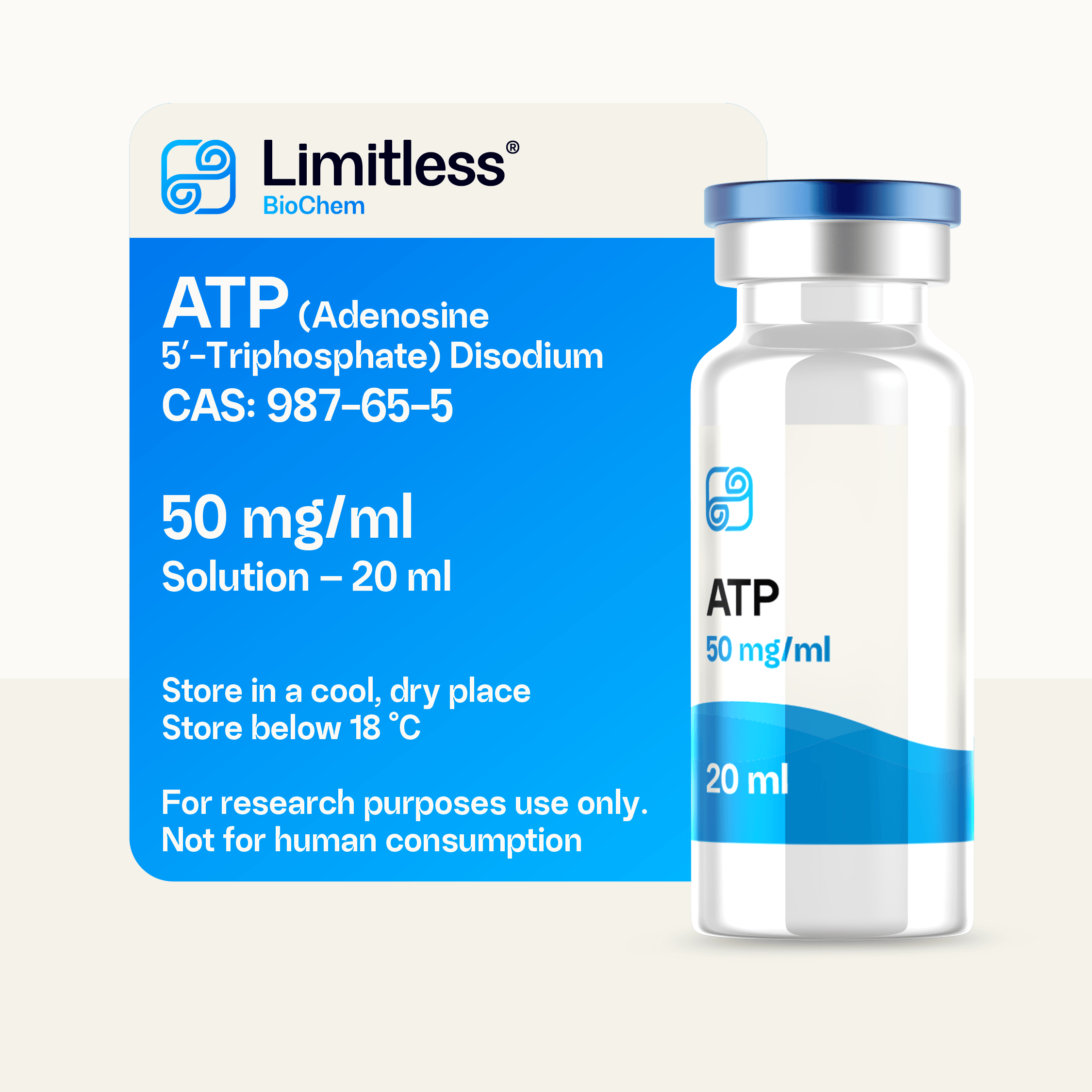
- A resting adult turns over roughly their own body weight in ATP every day, continuously recycling ADP back into ATP because the body stores only a few seconds' worth at any moment.
- Two separate Nobel Prizes trace back to ATP: Fritz Lipmann's 1953 award for its role in metabolism, and the 1997 chemistry prize to Boyer and Walker for the mechanism of the enzyme that makes it.
Mechanism
Inside cells, ATP functions through the energy released when its bonds to phosphate are broken. Enzymes hydrolyze ATP to ADP and inorganic phosphate, or to AMP and pyrophosphate, and couple that release of free energy to otherwise unfavorable reactions, driving biosynthesis, active transport across membranes, and the actin-myosin cycle of muscle contraction [1]. The molecule is constantly rebuilt from ADP by phosphorylation, principally by ATP synthase using the proton gradient generated during oxidative phosphorylation [1].
ATP additionally serves as a phosphate donor for kinases and as the raw material for cyclic AMP and RNA [1]. When ATP is released into the extracellular space, it and its act as signaling molecules at purinergic receptors, where they can increase blood flow and tissue oxygenation and act as neurotransmitters; this extracellular signaling is the mechanism most often invoked to explain the effects reported for oral ATP supplements [2].
receptor fingerprint
Extracellular purinergic receptorsSignals vasodilation and blood flow
Muscle performanceReduces fatigue in repeated sets
Recovery pathwaysSupports adaptation to training
Dosingtypical ranges, not medical advice
interested in protocols and clinical dosages? make an account to see them! ^_^
Safetyrisks and cautions, not medical advice
Oral adenosine triphosphate is used as a performance supplement and is generally well tolerated in short-term studies; because ingested ATP is largely broken down during digestion, systemic effects are modest. Reported adverse effects are minor and may include gastrointestinal discomfort, and long-term human safety data are limited.
History
Adenosine triphosphate was first isolated from muscle in 1929, independently by Karl Lohmann in Germany and by Cyrus Fiske and Yellapragada Subbarow in the United States. In 1941 Fritz Lipmann articulated the concept that ATP serves as the universal carrier of chemical energy in the cell, linking energy-releasing and energy-consuming reactions. The molecule was chemically synthesized by Alexander Todd in 1948, and the enzymatic machinery that regenerates it, ATP synthase, was later elucidated by Paul Boyer and John Walker, who shared the 1997 Nobel Prize in Chemistry for that work. Interest in ATP as an oral supplement is much more recent, emerging in the 2000s as researchers explored its extracellular signaling roles.
Reputation
ATP is universally recognized in biochemistry as the cell's energy currency, one of the most fundamental molecules in all of life. As a supplement its reputation is more modest but genuinely intriguing; because ingested ATP is broken down before it can reach the bloodstream, any benefit is attributed to extracellular signaling that promotes blood flow and supports recovery rather than to simply adding fuel. A small but reasonably consistent set of human trials points to modest gains in strength and fatigue resistance during demanding training. It is best understood as a niche ergogenic aid with an interesting mechanism, valued by those experimenting at the margins of performance.
Subjective profileweighing the evidence above
Skip it. Swallowed ATP is largely broken down in digestion rather than absorbed intact, so whatever effect exists works indirectly through breakdown products, and the strength and recovery data are limited and small. Safe enough, just not a good use of supplement money.
Where to buy
Suppliers
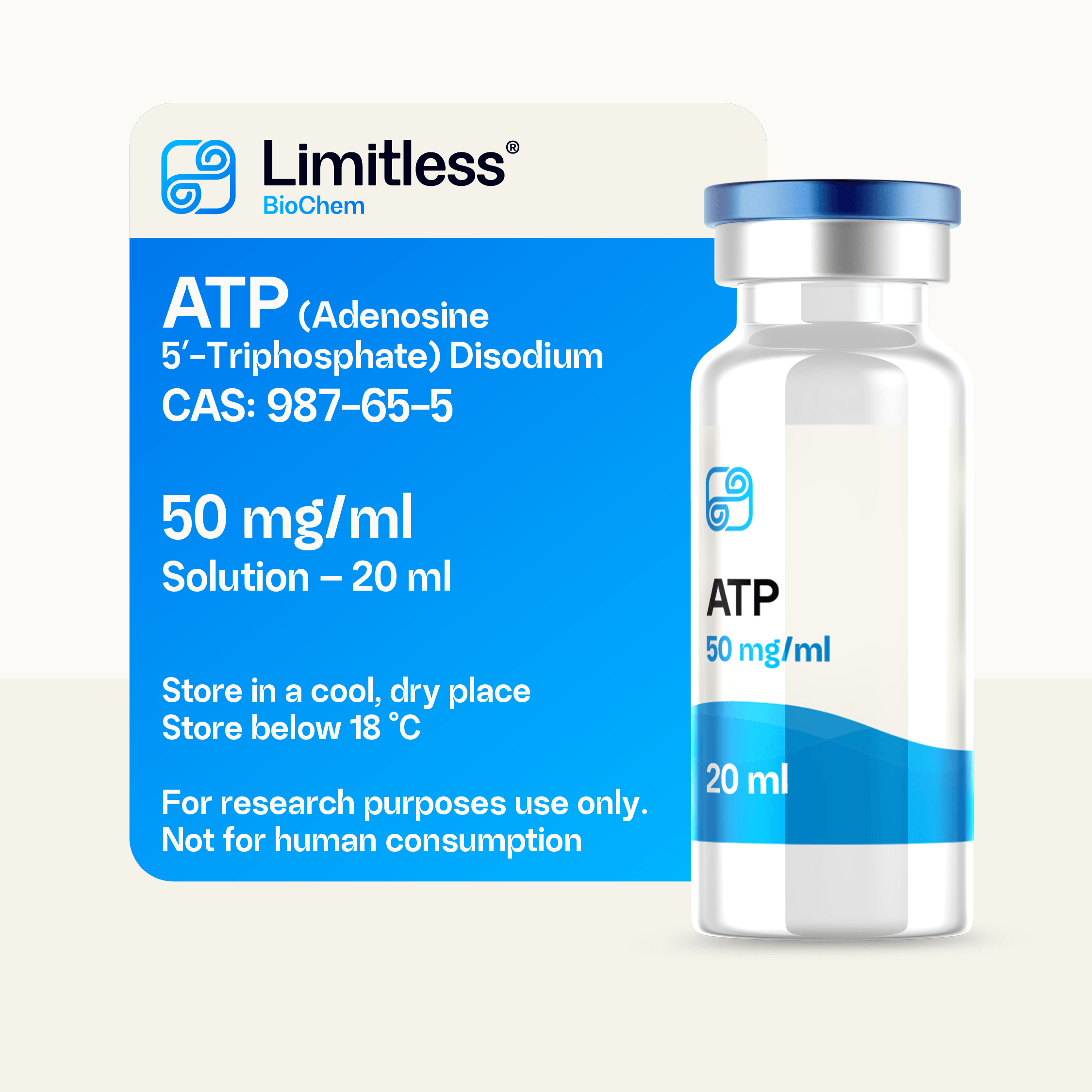
Vendors carrying ATP, with live product details and codes. Links are affiliate links that support the wiki at no cost to you.
Limitless Biochem🌐
ATP
Research
- 2012first citedAdenosine-5'-triphosphate (ATP) supplementation improves low peak muscle torque and torque fati…
- 2024most recentAcute Effect of Oral Adenosine Triphosphate (ATP) Supplementation on Muscular Performance in Tr…
- 1.Physiology, Adenosine Triphosphate (StatPearls)
- 2.Adenosine-5'-triphosphate (ATP) supplementation improves low peak muscle torque and torque fatigue during repeated high intensity exercise sets
- 3.Oral adenosine 5'-triphosphate supplementation improved hemodynamic and autonomic parameters after exercise in hypertensive women
- 4.Dose Response of Acute ATP Supplementation on Strength Training Performance
- 5.Acute Effect of Oral Adenosine Triphosphate (ATP) Supplementation on Muscular Performance in Trained Adults
5 listed here; entry last updated August 2026
Reviews
My notesprivate to this device
FAQ
Does oral ATP raise my cellular ATP?
Not directly; studies show it is broken down before absorption, so benefits are thought to come from signaling effects like better blood flow.
Is it the same as creatine?
No; creatine helps you regenerate ATP inside cells and has far more evidence, while ATP supplements act outside the cell.
Who might benefit?
Resistance trainers doing repeated high intensity sets show the clearest signal, though results vary.
Is it safe?
Trials report good tolerability, but long term data is limited.
Limitations of the evidence
- Evidence for performance and recovery benefits from oral ATP is limited and modest
Adverse effects
- Swallowed ATP is largely digested rather than absorbed intact, so directly raising ATP inside cells is unlikely
Notes and cautions
- As an endogenous molecule taken orally, ATP is generally regarded as well tolerated in the amounts studied
- It is sold as a dietary supplement, not an approved medicine