
spec sheet11 rows
Astaxanthin is a reddish keto-carotenoid of the xanthophyll subgroup, produced by microalgae such as Haematococcus pluvialis and concentrated up the food chain in krill, shrimp, salmon and flamingos, which it colours pink to red. Structurally it is unusual: one molecule spans the full width of a cell membrane, its polar end groups anchored at both surfaces while the chain crosses the lipid interior. It is a potent lipid-soluble antioxidant in the direct sense, but its more durable action is transcriptional; it activates Nrf2, the transcription factor that switches on the cell's own antioxidant enzymes, which is why it is classed as an Nrf2 activator rather than only a scavenger. It is sold as an aquaculture feed pigment and a human supplement, and is studied for skin, ocular, cardiovascular, metabolic and neuroprotective effects.
- Strongest human evidence is skin: elasticity, moisture, wrinkles
- Switches on Nrf2, so cells build their own antioxidant enzymes
- One molecule spans the whole membrane, guarding both faces at once
- GRAS status and a strong safety record at 4 to 12 mg
- Extended median lifespan in male mice, at doses above capsule scale
- An easy antioxidant to run through an anabolic cycle
- Mild digestive upset at high intake
- May slightly lower blood pressure
Overview
Astaxanthin is a xanthophyll, an oxygen-containing carotenoid, distinguished by keto and hydroxyl groups on its ring structures and a long chain of conjugated double bonds that both absorb light and quench free radicals. [1] Because it is fat-soluble and long enough to span a cell membrane, it can protect both the interior and the surface of lipid membranes from oxidative damage.
The richest natural source is the freshwater microalga Haematococcus pluvialis, which accumulates large amounts of the pigment when stressed by drought, strong light, or nutrient scarcity. [1] It is also produced by the yeast Xanthophyllomyces dendrorhous and, further up the food chain, is found in krill, shrimp, crayfish, and wild salmon; the pink flesh of salmon and the color of flamingos both come from dietary astaxanthin. Commercial material is produced either by cultivating algae or by chemical synthesis.
By volume, the largest use of astaxanthin is as a feed additive in aquaculture, where it colors the flesh of farmed salmon and trout and the yolks of eggs. [1] It is also marketed as a human dietary supplement, typically in softgels made from algal oil, and is used as an ingredient in cosmetics.
Human research is still developing but has centered on the pigment's antioxidant and anti-inflammatory activity. Systematic reviews of clinical studies suggest possible benefits for skin, including improvements in elasticity and moisture and protection against ultraviolet-induced damage. [2] Reviews have also examined potential neuroprotective roles, based on its ability to reach nervous tissue and limit oxidative stress, [3] as well as anti-cancer activity in laboratory models, which appears to involve several molecular pathways. [4]
Regulatory bodies treat astaxanthin primarily as a feed colorant and a dietary supplement. It carries the European food-additive designation E161j, and food-safety authorities have set acceptable intake levels for supplement use. As a supplement it is generally regarded as well tolerated.


Mechanism
Astaxanthin works through two mechanisms that are usually collapsed into one, and the difference decides how long its effect lasts.
The first is direct and chemical. An extended system of conjugated double bonds lets the molecule quench singlet oxygen and hand electrons to reactive species, and it is unusual among carotenoids in that its polar end groups anchor at both faces of a lipid membrane while the chain spans the interior, so a single molecule covers the full width of the bilayer instead of sitting at one surface. [1] That reaction is stoichiometric: a scavenger neutralizes a radical and is spent, and the protection ends when the supply does.
The second is transcriptional, and it is the one that carries the durable effect. Astaxanthin activates Nrf2, a transcription factor normally held in the cytoplasm by Keap1 and marked for destruction; released, it moves into the nucleus and switches on the antioxidant response element, so the cell transcribes its own defensive enzymes, among them heme oxygenase-1, NAD(P)H quinone dehydrogenase 1 and the enzymes that make glutathione. [22] The product is an enzyme the cell keeps producing, so the effect outlives the molecule that triggered it.
The evidence that this second route is the operative one is a knockout rather than a correlation. In dopaminergic SH-SY5Y cells under , astaxanthin preserved the activity of respiratory complexes I and V, membrane potential and ATP synthesis; silencing Nrf2, or inhibiting heme oxygenase-1, abolished that protection entirely, and carbon monoxide or bilirubin (the downstream products of that axis) reproduced part of it. [8] A molecule acting purely as a scavenger would have kept working with Nrf2 silenced. In aged rats the axis moves in the direction the model predicts: Nrf2 expression rose roughly 118% while Keap1 fell roughly 51%, alongside suppressed NF-kB signalling and lower interleukin-1beta and interleukin-6. [23]
Both mechanisms are real and the entry keeps both. The correction is about which one leads, because "spends itself neutralizing a radical" and "instructs the cell to build its own antioxidant enzymes" predict very different things about dose, timing and how long a benefit persists after the last capsule. Downstream of the same axis, limiting lipid peroxidation dampens inflammatory signalling, which is what the skin and cardiovascular work invokes. [2] Its lipid solubility lets it reach the nervous system, which is where the neuroprotective interest comes from. [3] In cancer cell models it touches several pathways governing proliferation, programmed cell death and inflammation. [4] Unlike beta-carotene, astaxanthin is not converted to vitamin A.
receptor fingerprint
Nrf2 / Keap1 (ARE genes)activates
Heme oxygenase-1 (HO-1)induces (downstream of Nrf2)
Free radicals / ROS (membrane-spanning)quenches directly
NF-kB (IL-1beta, IL-6)suppresses
Skin (UV damage)protects
Mitochondria / endurancesupports
Evidencehow good the literature is
The human evidence is strongest for skin and weakest for endurance, and the longevity evidence is entirely animal.
Skin is the best supported. A systematic review and meta-analysis of human trials found consistent improvements in wrinkle depth, elasticity and moisture across the doses commonly sold. [17] A separate systematic review of skin-health trials reached the same direction. [2] A controlled trial combining astaxanthin with collagen hydrolysate improved skin elasticity and barrier integrity. [18]
Exercise results are genuinely mixed, and that is the honest summary rather than a hedge. Trials report enhanced metabolic adaptation to aerobic training [12] and improved fat oxidation during exercise [13], while a controlled trial in trained cyclists found no augmentation of fat use and no endurance benefit at all. [14] A review of the exercise literature sets out the mechanistic case [10], and mouse work shows an effect on muscle lipid metabolism [11], but the human picture does not resolve to a clear yes.
The longevity claim rests on one rigorous animal study and needs its qualifiers carried with it. The Interventions Testing Program, a multi-site programme designed specifically to make lifespan results reproducible, fed astaxanthin to genetically heterogeneous UM-HET3 mice from 12 months of age and reported a 12% extension of MEDIAN lifespan in males. [21] Three qualifiers matter. The effect was male only; females showed no significant lifespan change. It was median rather than maximum; the 90th-percentile gain was about 6% and did not reach significance. And the dose was large: the diet concentration works out near 300 mg per kg of body weight per day in a mouse, and standard body-surface-area scaling puts the human equivalent well above a gram a day, more than a hundred times a typical 12 mg capsule. Nothing in that study says a supplement-sized dose extends human life.
Cardiometabolic and cognitive results are early. A trial found modest movement in cardiometabolic markers [19], another in metabolic and anthropometric parameters [20], and a composite supplement containing astaxanthin and sesamin was tested for cognitive outcomes, which makes the astaxanthin contribution impossible to isolate. [9]
Dosingtypical ranges, not medical advice
interested in protocols and clinical dosages? make an account to see them! ^_^
Safetyrisks and cautions, not medical advice
Astaxanthin is a carotenoid antioxidant with a strong safety record; it holds GRAS status and is well tolerated in clinical trials at doses up to roughly 40 mg daily, with only mild, infrequent side effects. The most commonly reported issues are minor gastrointestinal symptoms such as bloating or loose stools, largely avoidable by taking it with food, and at very high intake a harmless orange tint to the skin. Because it can modestly lower blood pressure and improve blood sugar, users on antihypertensive or antidiabetic medication should monitor for additive effects. It may also mildly affect bleeding, so caution is advised for those on warfarin or other anticoagulants. No serious adverse events, genotoxicity, or organ toxicity have been documented in the available human and animal studies.
History
Astaxanthin traces to 1933, when Richard Kuhn and Edgar Lederer isolated carotenoids from the shell and eggs of the lobster Astacus gammarus; in 1938 Kuhn and N. A. Sorensen characterized the red ketocarotenoid and named it astaxanthin, joining the lobster genus 'Astacus' to the Greek 'xanthos' for yellow. Researchers in the 1950s traced its natural origin to the freshwater green microalga Haematococcus pluvialis, which accumulates the pigment under stress and remains the dominant commercial source of natural astaxanthin today. Through the late twentieth century it entered the aquaculture feed industry as the pigment that gives farmed salmon and trout their flesh color, a large-scale use that predated its human-supplement market. Interest in astaxanthin as an antioxidant and longevity ingredient developed later as algal-derived material became a widely sold nutraceutical.
Subjective profileweighing the evidence above
One of the easiest antioxidants to recommend: a strong safety record, GRAS status, and real human trials in the 4 to 12 mg range for skin, eye and exercise-recovery outcomes. The skin evidence is the most solid; the endurance evidence is genuinely split. It is an Nrf2 activator rather than a plain scavenger, which is the more interesting claim and the reason it keeps appearing in longevity work; the one rigorous lifespan study behind that reputation extended median lifespan in male mice only, at a dose far above anything sold in a capsule. Take it with a fatty meal in an oil-based softgel, since dry powder on an empty stomach mostly passes straight through.
Where to buy
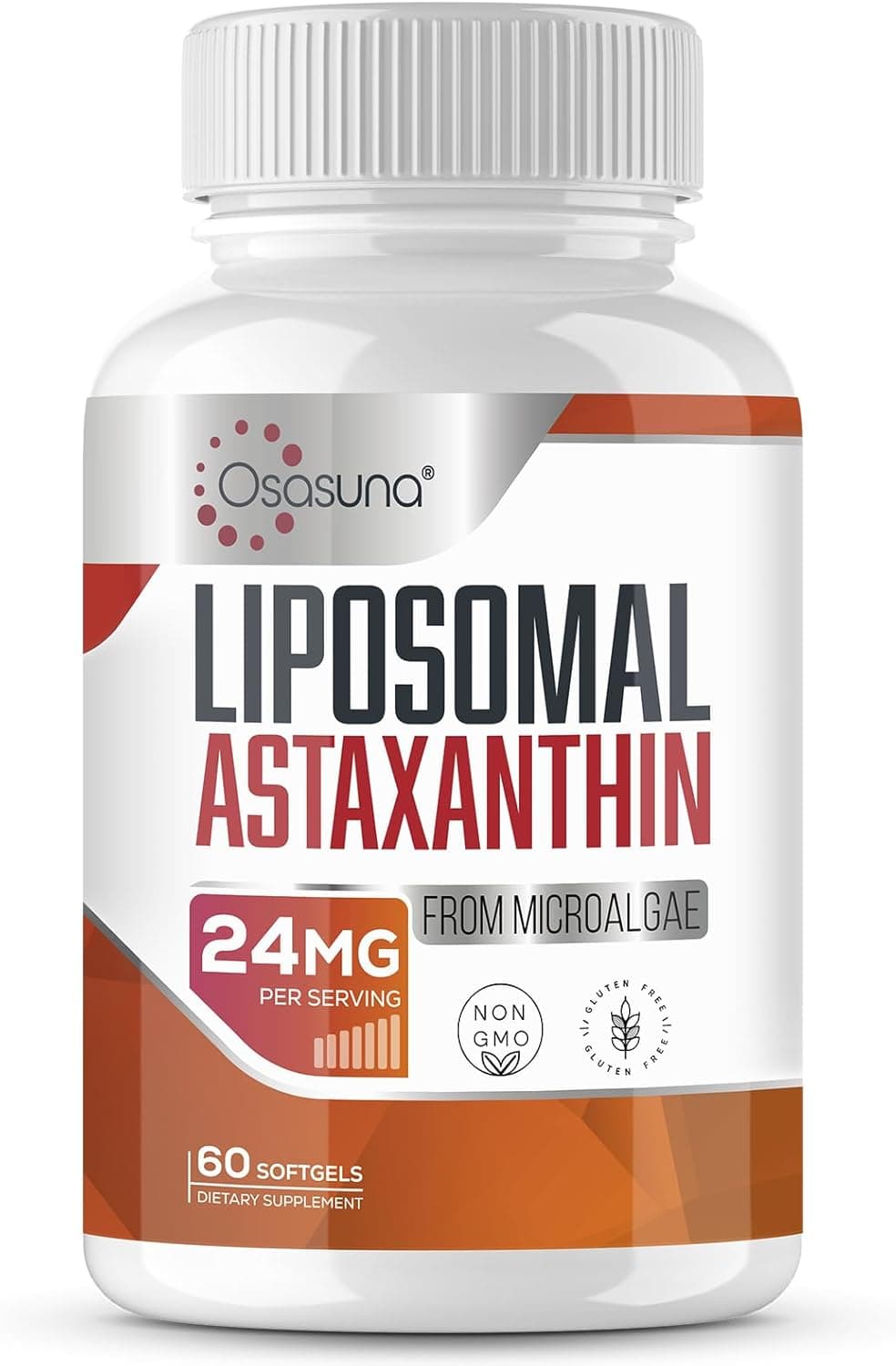
3 other outlets

Suppliers
Vendors carrying Astaxanthin, with live product details and codes. Links are affiliate links that support the wiki at no cost to you.
Amazon
Astaxanthin
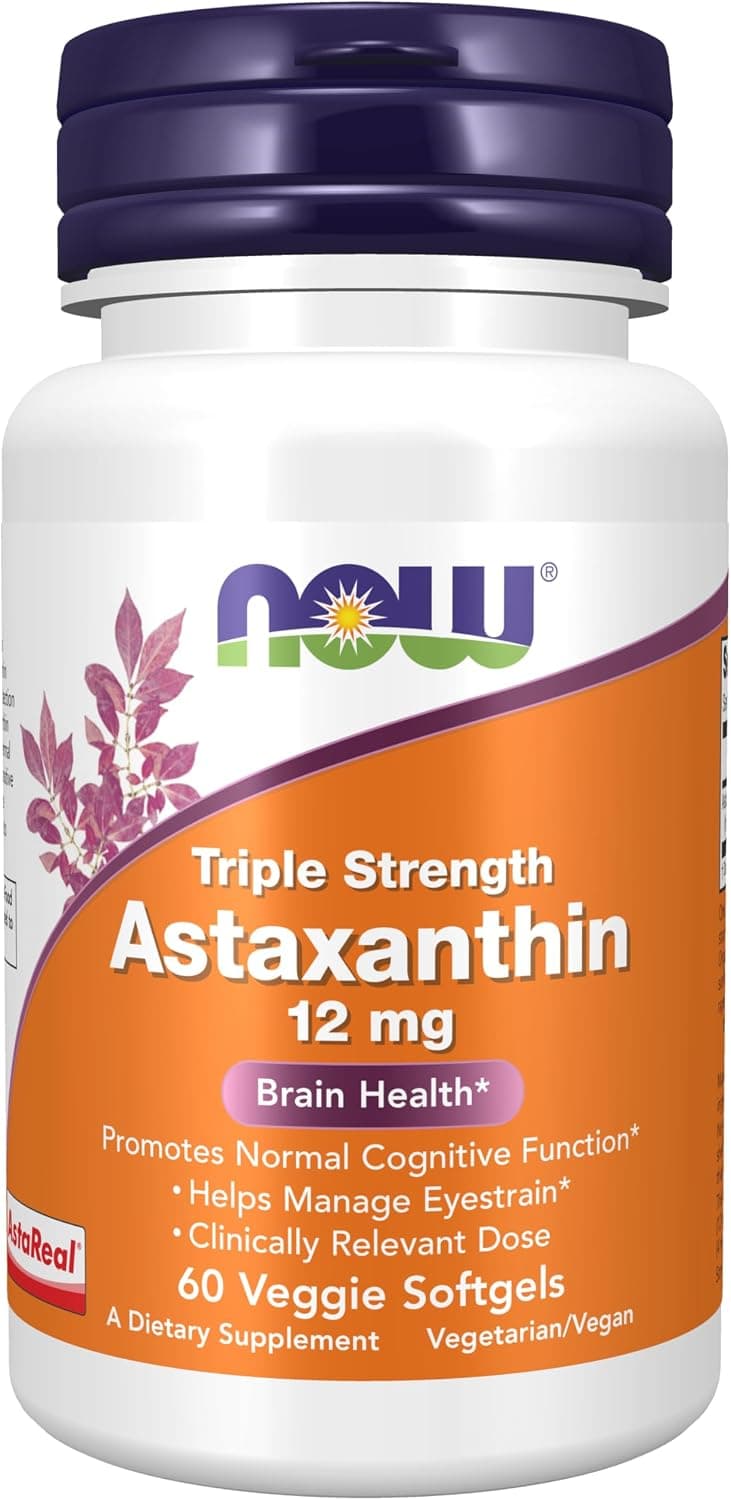
Amazon
Astaxanthin

iHerb
Astaxanthin
iHerb
Astaxanthin
Research
- 2007first citedDifferential effects of carotenoids on lipid peroxidation due to membrane interactions: X-ray d…
- 2021most active year5 papers
- 2025most recentLocation and dynamics of astaxanthin in the membrane
- 1.Astaxanthin: sources, extraction, stability, biological activities and its commercial applications--a review.
- 2.Effects of Astaxanthin Supplementation on Skin Health: A Systematic Review of Clinical Studies
- 3.A marine-derived antioxidant astaxanthin as a potential neuroprotective and neurotherapeutic agent: A review of its efficacy on neurodegenerative conditions
- 4.Astaxanthin anticancer effects are mediated through multiple molecular mechanisms: A systematic review
- 5.Location and dynamics of astaxanthin in the membrane
- 6.Biologic activity of carotenoids related to distinct membrane physicochemical interactions
- 7.Differential effects of carotenoids on lipid peroxidation due to membrane interactions: X-ray diffraction analysis
- 8.Astaxanthin prevents mitochondrial impairment in the dopaminergic SH-SY5Y cell line exposed to glutamate-mediated excitotoxicity: Role for the Nrf2/HO-1/CO-BR axis
- 9.Effects of Composite Supplement Containing Astaxanthin and Sesamin on Cognitive Functions in People with Mild Cognitive Impairment: A Randomized, Double-Blind, Placebo-Controlled Trial
- 10.Astaxanthin in Exercise Metabolism, Performance and Recovery: A Review
- 11.Astaxanthin improves muscle lipid metabolism in exercise via inhibitory effect of oxidative CPT I modification
- 12.Astaxanthin supplementation enhances metabolic adaptation with aerobic training in the elderly
23 listed here; entry last updated August 2026
Reviews
My notesprivate to this device
FAQ
What is Astaxanthin used for?
It is a carotenoid used to lower oxidative stress and support skin, eyes and endurance. The skin evidence is the strongest of the three.
How does Astaxanthin work?
Two ways, and the second is the interesting one. It quenches free radicals directly, spanning the whole width of a cell membrane so one molecule covers both surfaces and the core. It also activates Nrf2, a transcription factor that switches on the genes for the cell's own antioxidant enzymes; that route keeps producing protection after the molecule itself is gone, which plain scavenging cannot do.
Is it just another antioxidant?
Not quite. Most dietary antioxidants are consumed as they work, one molecule per radical. Astaxanthin does that too, but its durable effect is instructing cells to build their own defences, which is a different kind of claim and the reason it appears in ageing research.
Does it actually extend lifespan?
In male mice, at a very large dose. A multi-site programme designed for reproducible lifespan results found a 12% increase in median lifespan in males, with no significant effect in females and no significant gain in maximum lifespan. The dose scales to well over a gram a day for an adult human, so a 12 mg capsule is not the same experiment.
Is Astaxanthin well-researched?
For skin, yes, including a meta-analysis of human trials. For endurance the human trials disagree with each other. For longevity the evidence is animal only.
What are the main side effects?
It is generally well tolerated; very high intake may cause mild digestive upset or a slight orange tint to the skin.
Why does it need to be taken with fat?
It is a fat-soluble pigment with very low absorption on its own. Taken on an empty stomach much of a dose passes straight through; an oil-based softgel with a meal containing real fat absorbs several times better than dry powder.
Limitations of the evidence
- The lifespan result is male mice only, on median rather than maximum lifespan, at a dose scaling to well over a gram a day in an adult human.
- Human endurance trials contradict each other; at least one controlled trial in trained cyclists found no benefit to fat use or performance.
- Absorption is very low without dietary fat, so trials using different formulations are not directly comparable to each other.
- Several cognitive results come from composite supplements, so the astaxanthin contribution cannot be separated out.
- Most human trials are small and short relative to the outcomes being claimed for it.
Adverse effects
- Mild digestive upset at high intake
- May slightly lower blood pressure
Notes and cautions
- Generally well tolerated
- Possible reddish tint to the skin with very high long-term intake
- Sourced from seafood or algae, so product origin matters for shellfish allergy