
spec sheet11 rows
Carnosic acid is a phenolic diterpene found in the herbs rosemary (Salvia rosmarinus) and common sage (Salvia officinalis), where it is one of the main compounds responsible for their antioxidant activity. Together with its oxidation product carnosol, it is used commercially as a natural antioxidant food preservative, labeled as rosemary extract (E392). It has been studied extensively for antioxidant, anti-inflammatory, and neuroprotective effects, which are largely attributed to its ability to activate the cell's Nrf2 defense pathway.
- Perhaps the strongest antioxidant nature makes, straight from rosemary
- A benzodiazepine like calm with no GABA involvement at all
- Mildly sedating, so it earns a place by the bed
- Fires up Nrf2, the master switch for the cell's own defenses
- Raises neurotrophic growth factors and shields neurons
- The on cycle antioxidant of choice, around 400 mg a day
- As a rosemary constituent, it may in theory interact with certain medications, though this is not well characterized
Overview
Carnosic acid is a naturally occurring phenolic diterpene, more precisely an abietane-type benzenediol diterpene, found in high concentrations in two familiar culinary herbs: rosemary (Salvia rosmarinus, formerly Rosmarinus officinalis) and common sage (Salvia officinalis) [1]. It is one of the principal compounds responsible for the antioxidant properties of these plants, and their dried leaves can contain it at a level of a few percent by weight [1]. Chemically it is closely related to carnosol, another rosemary diterpene into which it is readily converted [4].
A defining feature of carnosic acid is its reactivity as an antioxidant. It carries an ortho-dihydroquinone group and behaves as a so-called pro-electrophile: it is relatively unreactive until it encounters oxidizing free radicals, whereupon it is converted into an electrophilic form [4]. This makes it prone to oxidation, and on exposure to air and light it degrades, in part forming carnosol, which is one reason rosemary extracts are prized for their stabilizing effect in fatty foods [4].
Because of this antioxidant activity, carnosic acid and carnosol are used commercially as natural preservatives. In food and some non-food products they are added, under the designation rosemary extract (E number E392), to slow the oxidation of fats and oils and extend shelf life [1]. This food-additive role, alongside the culinary use of the whole herbs, is the most established practical application of the compound.
Most biomedical research on carnosic acid has focused on its antioxidant, anti-inflammatory, and neuroprotective effects, with additional interest in possible anticancer activity [1]. Rather than acting only as a direct radical scavenger, carnosic acid works largely as an indirect antioxidant by activating the KEAP1/Nrf2 pathway, a master cellular switch that turns on a battery of protective and detoxifying enzymes [3][5]. Through this and related mechanisms it has been reported to dampen inflammatory signaling, including the NLRP3 inflammasome, to protect the mitochondria of brain cells, and to cross the blood-brain barrier, prompting study of its potential against neurodegenerative conditions such as Alzheimer's and Parkinson's disease [2][3][4]. These findings come largely from laboratory and animal experiments, and rigorous clinical trials in humans remain limited [1].
As a constituent of ordinary herbs and a permitted food antioxidant, carnosic acid is generally regarded as safe at the levels encountered in food, and it is also sold, usually as a standardized rosemary extract, as a dietary supplement [1]. Its promise as a therapeutic agent remains at the research stage rather than established medical practice [2].

Mechanism
Carnosic acid exerts its biological effects through a combination of direct and, more importantly, indirect antioxidant actions [1][4]. Structurally it bears an ortho-dihydroquinone moiety and functions as a pro-electrophile: in its resting state it is comparatively inert, but when it reacts with reactive oxygen species it is oxidized into an electrophilic quinone that can modify protein targets [4]. A key target is KEAP1, the sensor protein that normally restrains the transcription factor Nrf2; by reacting with KEAP1, carnosic acid frees Nrf2 to enter the nucleus and switch on genes for antioxidant and phase 2 detoxifying enzymes, raising the cell's own defenses against [3][5].
This Nrf2 activation is thought to underlie many of its downstream effects, including suppression of inflammatory pathways such as the NLRP3 inflammasome and stabilization of function in neurons under stress [2][4]. Because carnosic acid can penetrate the and reach brain tissue, these protective actions have been of particular interest for neurodegenerative disease, where oxidative damage and chronic inflammation are prominent [2][3]. Additional reported activities, such as anti-inflammatory and anticancer effects, are linked to its modulation of several other signaling pathways [1].
A separate line of work identifies a direct molecular target that has nothing to do with antioxidant chemistry. Carnosic acid is a potent and unusually selective opener of neuronal KCNQ (Kv7) potassium channels, the family carrying the M-current that sets how readily a neuron fires [6]. It opens KCNQ3 and KCNQ3/5 strongly, KCNQ5 weakly, and leaves KCNQ1 and KCNQ2 essentially alone, a selectivity the licensed anticonvulsant retigabine does not have; on KCNQ3/5 its potency and efficacy are comparable to retigabine's [6]. The interaction was traced to two arginines on the KCNQ3 S4-5 linker, R242 and R243, with an ionic bond between the compound's carboxylate group and the guanidinium group of R243. Replacing either arginine with alanine largely abolishes the effect, and so does removing the carboxylate from the molecule, which is why carnosol and the methyl ester are both far weaker [6]. A 2026 follow-up extended the finding to Kv1.1, where carnosic acid binds inside the voltage-sensing domain and, at 0.3 mg/kg, restored normal balance-beam performance in a mouse model of episodic ataxia type 1 [7].
This channel activity changes how the compound's calming reputation should be read. The idea that carnosic acid works at the -A receptor traces to a single in vitro report that it displaces a radioligand from rat brain membranes; no functional study was ever published to establish what that binding does, and the authors of the KCNQ work flag the gap explicitly [6]. Opening KCNQ3/5 is the better supported explanation for a non- anxiolytic and mildly sedating effect, since suppressing excitability through those channels is what retigabine was licensed to do.
receptor fingerprint
Keap1 / Nrf2 pathwayActivator
KCNQ3 / KCNQ5 (Kv7) potassium channelsOpener
Heme oxygenase-1 (HO-1)Inducer
Kv1.1 (KCNA1)Opener
Reactive oxygen species / lipid peroxidationScavenger
(neurons)Protector
NF-kB inflammatory signalingInhibitor
/ noradrenaline balanceraises serotonin, lowers noradrenaline (non-GABAergic)
Dosingtypical ranges, not medical advice
interested in protocols and clinical dosages? make an account to see them! ^_^
Safetyrisks and cautions, not medical advice
Carnosic acid, and the rosemary extracts that supply it, has a long history of dietary use and is generally considered well tolerated at the low levels found in food and typical supplement doses. Acute animal toxicity is low, with an oral LD50 in mice of about 7.1 g/kg [6], and regulatory bodies such as the European Food Safety Authority have set a temporary acceptable daily intake for the combined carnosic acid and carnosol content of rosemary extract in the range of a few tenths of a milligram per kilogram of body weight per day.
Safety at higher supplemental doses is less well characterized; some studies raise the possibility of liver and kidney stress, and effects on reproductive and hormonal function with prolonged high intake, so very high doses are not advised. Concentrated rosemary preparations and essential oils should not be used in large amounts during pregnancy because of a theoretical risk of stimulating uterine activity. People with liver disease or those taking anticoagulant or antidiabetic medication should consult a clinician before regular use, since the compound may interact with these therapies.
History
Carnosic acid is a phenolic diterpene first isolated in the 1960s from sage species of the genus Salvia, from which it takes its name, and subsequently identified as one of the principal antioxidant constituents of rosemary (Rosmarinus officinalis, now often classified as Salvia rosmarinus). Its chemical structure was elucidated by natural product chemists over the following decade.
For most of the twentieth century it was studied chiefly as the compound responsible for the food-preservative and antioxidant properties of rosemary extract, which is widely used in the food industry to retard the oxidation of fats and oils. Interest in its neurobiology grew later, driven by observations that it activates the Nrf2 antioxidant response pathway and that it is converted to its active form under conditions of oxidative stress, a property that prompted investigation into its potential neuroprotective applications.
Reputation
Carnosic acid is generally well regarded within the antioxidant and neuroprotection research communities, where it is valued for its unusual redox-activated mechanism and its ability to cross the blood-brain barrier. Among consumers it is encountered less as a stand-alone product and more as the standardized active fraction of rosemary extract marketed for cognitive, anti-inflammatory, and general antioxidant support. Enthusiasm is tempered by the recognition that much of the supporting evidence comes from cell and animal studies rather than large human trials, and that oral bioavailability is modest. It is often viewed as a promising but still preliminary botanical compound rather than an established therapeutic.
Subjective profileweighing the evidence above
A standout on two fronts: one of the strongest natural antioxidants and Nrf2 inducers, and a non-GABAergic, benzodiazepine-like anxiolytic that leans sedating, handy before bed. It also pairs synergistically with idebenone, topping up the NQO1 that keeps idebenone safe. An easy antioxidant to reach for.
Where to buy
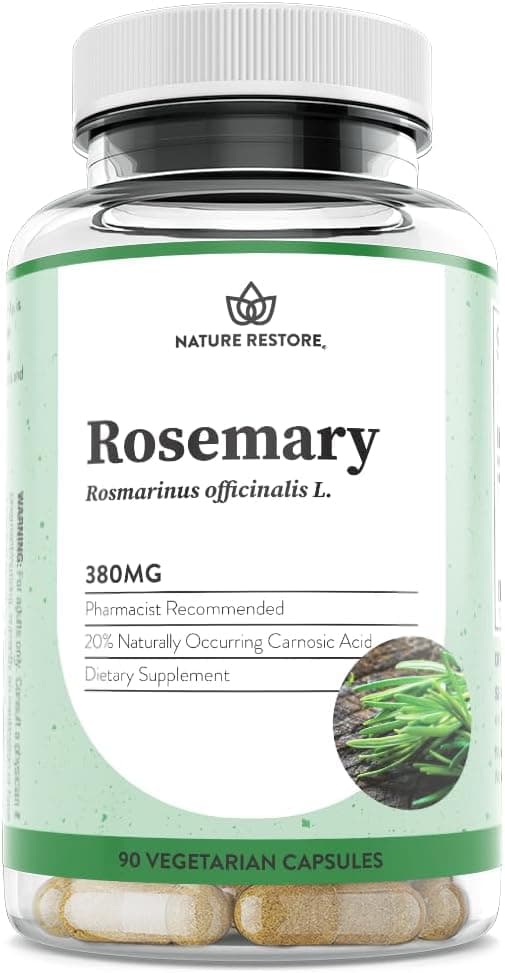
Suppliers
Vendors carrying Carnosic Acid, with live product details and codes. Links are affiliate links that support the wiki at no cost to you.
Amazon
Carnosic Acid
Research
- 2010first citedNutraceutical antioxidants as novel neuroprotective agents
- 2026most recentRosemary metabolite carnosic acid opens Kv1.1 via its voltage sensor and corrects Kv1.1-linked…
- 1.Relevance of carnosic acid to the treatment of several health disorders: Molecular targets and mechanisms
- 2.Carnosic Acid as a Promising Agent in Protecting Mitochondria of Brain Cells
- 3.Potential Therapeutic Use of the Rosemary Diterpene Carnosic Acid for Alzheimer's Disease, Parkinson's Disease, and Long-COVID through NRF2 Activation to Counteract the NLRP3 Inflammasome.
- 4.Neuroprotective Effects of Carnosic Acid: Insight into Its Mechanisms of Action
- 5.Nutraceutical antioxidants as novel neuroprotective agents
- 6.Ancient medicinal plant rosemary contains a highly efficacious and isoform-selective KCNQ potassium channel opener.
- 7.Rosemary metabolite carnosic acid opens Kv1.1 via its voltage sensor and corrects Kv1.1-linked episodic ataxia in mice.
7 listed here; entry last updated August 2026
Reviews
My notesprivate to this device
FAQ
What is the Nrf2 pathway?
Nrf2 is a master switch that turns on the body's own antioxidant and detox defenses when activated.
Where does it come from?
Carnosic acid is a diterpene found naturally in rosemary and sage.
Why take it with fat?
It is fat-soluble, so pairing it with dietary fat may help absorption.
What is excitotoxicity?
It refers to nerve-cell damage from overstimulation, which carnosic acid is studied to help protect against.
Can carnosic acid help anxiety or sleep?
Yes, and unusually so. It mimics the anxiolytic effect of benzodiazepines without touching GABA, instead raising serotonin and lowering noradrenaline, and it is mildly sedating, making it useful before bed. It is calming rather than stimulating despite also raising tyrosine hydroxylase.
Limitations of the evidence
- Concentrated supplement doses have not been well studied for long-term safety in people
Adverse effects
- As a rosemary constituent, it may in theory interact with certain medications, though this is not well characterized
Notes and cautions
- As a component of common culinary herbs and an approved food antioxidant, it is generally regarded as safe at food-level intakes
- Most evidence for its health effects comes from laboratory and animal studies rather than human trials
- It oxidizes readily on exposure to air and light, so extracts can degrade over time