
spec sheet10 rows
Modified GRF 1-29 is a synthetic peptide analog of growth hormone-releasing hormone (GHRH), built from the first 29 amino acids of GHRH with four amino acid substitutions that make it more resistant to breakdown. It is closely related to sermorelin and to CJC-1295; in fact it is the short-acting form of CJC-1295, lacking the albumin-binding attachment (the drug affinity complex, or DAC) that gives the latter its long duration. Like other GHRH analogs it prompts the pituitary gland to release growth hormone, and it is handled as a research chemical rather than an approved medicine.
- Prompts your own pituitary to release growth hormone in pulses
- Supports recovery and body composition over a cycle
- Stacks powerfully with a GHRP for a bigger pulse
- Four amino acid swaps make it far more stable than sermorelin
- The short acting half of CJC-1295, without the DAC
- Human data is limited; real enthusiasm sits behind this peptide
- Injection-site reactions such as redness, itching, or pain
- Facial flushing or a feeling of warmth
- Water retention or transient tingling
Overview
Modified GRF 1-29 is a laboratory-made analog of growth hormone-releasing hormone (GHRH), the hypothalamic signal that tells the pituitary gland to secrete growth hormone. It is based on the biologically active first 29 amino acids of human GHRH, a fragment also known as sermorelin, into which four amino acid substitutions have been introduced to make the peptide more durable [1].
Those four changes, at positions 2, 8, 15 and 27 of the chain, protect the molecule from the enzymes that rapidly degrade natural GHRH, chief among them dipeptidyl peptidase-4 [1]. Modified GRF 1-29 is closely tied to the compound CJC-1295: CJC-1295 is this same tetrasubstituted GRF 1-29 carrying an additional attachment, a maleimide group known as a drug affinity complex (DAC), which bonds to albumin in the blood and stretches the peptide's half-life to roughly a week. Modified GRF 1-29 is essentially CJC-1295 without the DAC, so it lacks the albumin anchor and acts only briefly, producing a short pulse of activity more like that of native GHRH [1][2].
Research on this family of peptides has been carried out largely with the long-acting DAC form. In studies of CJC-1295, single subcutaneous injections raised growth hormone and insulin-like growth factor 1 (IGF-1) levels for several days in healthy adults, the analog preserved the natural pulsatile pattern of growth hormone release, and once-daily dosing normalized growth in mice lacking their own GHRH [2][3][4]. Development of CJC-1295 for conditions such as growth hormone deficiency and lipodystrophy reached early clinical testing but was halted, and neither CJC-1295 nor Modified GRF 1-29 became an approved drug [2].
Modified GRF 1-29 has no marketing approval and no assigned therapeutic classification; it is distributed as a research chemical and is not intended for human use. Because it stimulates growth hormone secretion, it falls within the class of substances prohibited in sport by the World Anti-Doping Agency, and specific human safety data for the peptide itself are very limited [1].
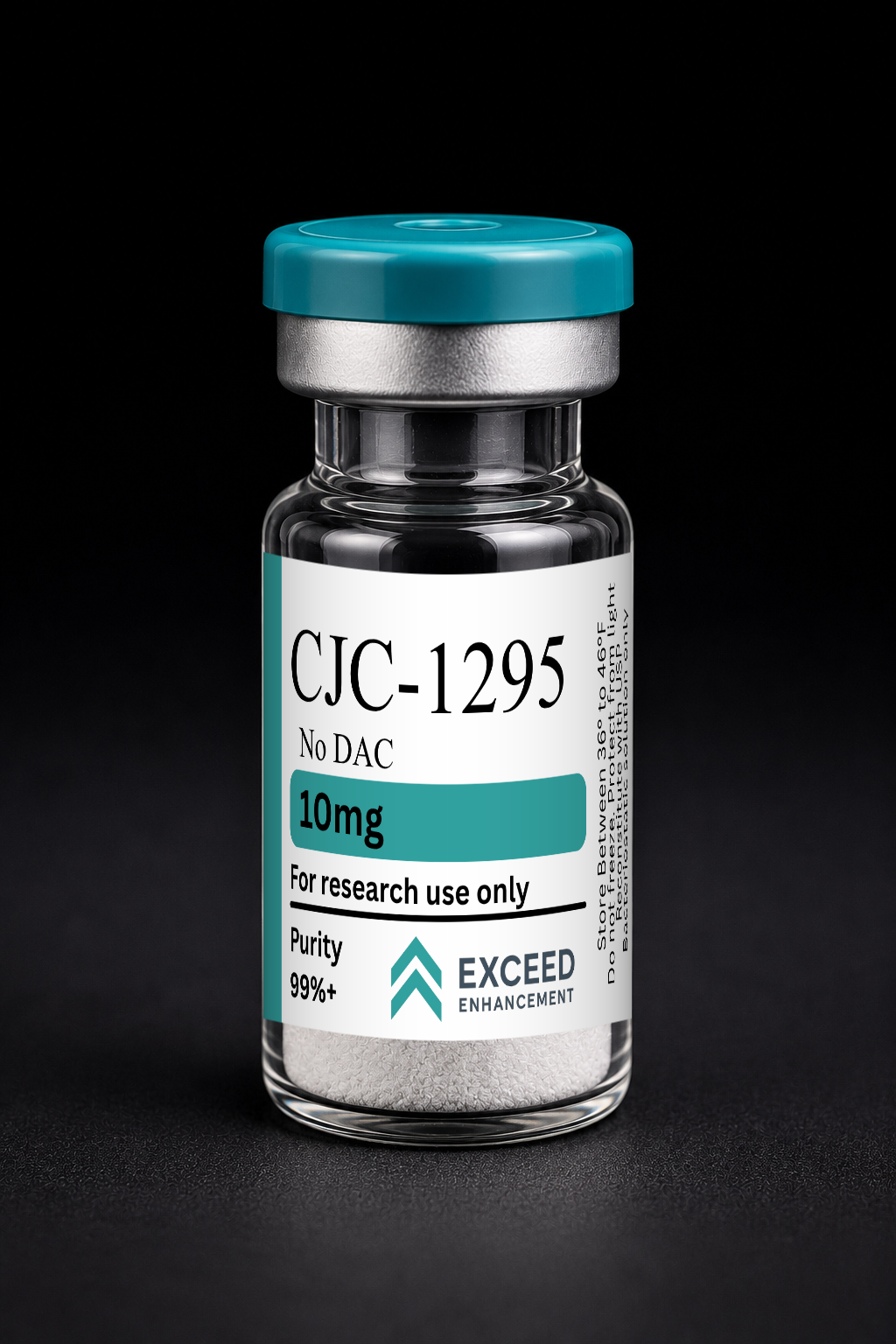
Mechanism
Modified GRF 1-29 works in the same way as the natural hormone it imitates. It binds to the GHRH receptor (also called the GRF receptor) on the somatotroph cells of the anterior pituitary gland, and this activation prompts those cells to synthesize and release growth hormone into the bloodstream [1]. The rise in growth hormone in turn stimulates the liver and other tissues to produce -like growth factor 1 (), the mediator of many of growth hormone's downstream effects [2].
The four amino acid substitutions in the 's backbone shield it from dipeptidyl peptidase-4 and related enzymes, so it survives longer than unmodified GHRH; however, because Modified GRF 1-29 lacks the albumin-binding drug affinity complex present in CJC-1295, its action is short-lived, generating a brief burst of growth hormone secretion rather than the sustained, multi-day elevation produced by the long-acting analog [1][3]. Studies of the related DAC form indicate that this kind of stimulation can raise growth hormone and while preserving the pulsatile rhythm of secretion thought to matter for the hormone's physiological actions [3].
receptor fingerprint
GHRH receptoragonist
GHRP pathway synergycomplements
DPP-4 degradationresists
Pituitary GH pulseincreases
Dosingtypical ranges, not medical advice
interested in protocols and clinical dosages? make an account to see them! ^_^
Safetyrisks and cautions, not medical advice
Common side effects are injection-site reactions, flushing, a head-rush feeling, water retention and tingling. Raising GH and IGF-1 carries theoretical risks around insulin resistance, joint issues and, with chronic use, concerns about promoting existing tumors. It is not an approved drug; research-peptide sourcing means purity and dosing are uncertain.
Subjective profileweighing the evidence above
A reasonable, relatively gentle GH secretagogue when stacked with a GHRP. Effects on recovery and body comp are real but modest, and it is still an unapproved research peptide.
Where to buy
Suppliers
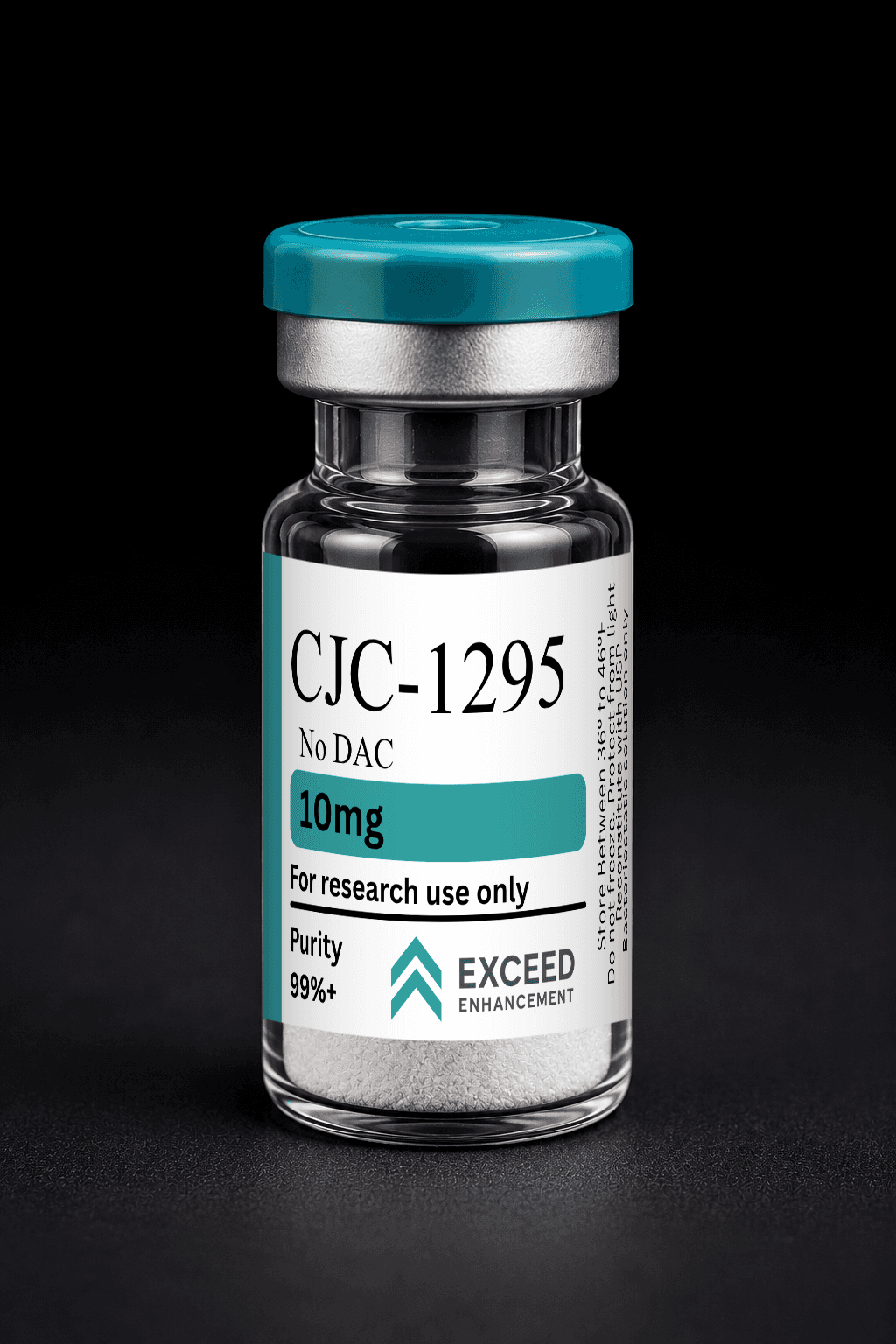
Vendors carrying Modified GRF 1-29, with live product details and codes. Links are affiliate links that support the wiki at no cost to you.
Exceed Enhancement
Modified GRF 1-29
Research
- 1.Human growth hormone-releasing factor (hGRF)1-29-albumin bioconjugates activate the GRF receptor on the anterior pituitary in rats: identification of CJC-1295 as a long-lasting GRF analog.
- 2.Prolonged stimulation of growth hormone (GH) and insulin-like growth factor I secretion by CJC-1295, a long-acting analog of GH-releasing hormone, in healthy adults.
- 3.Pulsatile secretion of growth hormone (GH) persists during continuous stimulation by CJC-1295, a long-acting GH-releasing hormone analog.
- 4.Once-daily administration of CJC-1295, a long-acting growth hormone-releasing hormone (GHRH) analog, normalizes growth in the GHRH knockout mouse.
4 listed here; entry last updated August 2026
Reviews
My notesprivate to this device
FAQ
How is this different from CJC-1295 with DAC?
The DAC version adds a tail that keeps GH elevated for days; mod GRF 1-29 gives a short pulse and keeps release pulsatile.
Do I have to stack it?
It works alone but is much more effective combined with a GHRP like ipamorelin because they hit different receptors.
Why take it on an empty stomach?
High blood sugar and fatty meals blunt GH release, so fasting timing gives a cleaner pulse.
Is it the same as HGH?
No; it makes your own pituitary release GH rather than injecting the hormone directly, so the effect is gentler and self-limiting.
Is it legal and approved?
It is an unapproved research peptide, not a licensed medication.
Limitations of the evidence
- Human safety data are very limited; the peptide is not approved for human use
Adverse effects
- Injection-site reactions such as redness, itching, or pain
- Facial flushing or a feeling of warmth
- Water retention or transient tingling
- Headache