
spec sheet13 rows
CJC-1295 / Ipamorelin is a classic synergistic peptide pairing that combines a long-acting GHRH analogue with a highly selective growth hormone secretagogue. Together they stimulate growth hormone release through two complementary pathways, amplifying the natural, pulsatile GH signal cleanly and without raising stress hormones. For those exploring GH-axis support, this stack is among the most refined and popular combinations.
- Raises your own growth hormone and IGF-1
- Two pathways firing at once, true synergy
- Drives recovery and lean muscle gains
- Deeper, heavier sleep
- Clean and selective; cortisol and prolactin stay put
- Keeps GH release natural and pulsatile
- Injection-site reactions such as redness or itching
- Fluid retention, tingling, or flushing
- Increased appetite from the ghrelin-receptor component
Overview
CJC-1295 / Ipamorelin is a combination of two peptides that stimulate growth hormone release through different, complementary mechanisms. CJC-1295 is a long-acting analogue of growth hormone-releasing hormone (GHRH), modified to resist degradation and, in its drug affinity complex form, to bind albumin for a circulating half-life of roughly 8 days [1][2]. Ipamorelin is a selective growth hormone secretagogue, a pentapeptide (Aib-His-D-2-Nal-D-Phe-Lys-NH2) that acts as an agonist at the growth hormone secretagogue (ghrelin) receptor, mimicking the endogenous peptide ghrelin [3].
The rationale for pairing them is mechanistic synergy. A GHRH analogue increases the amount of growth hormone the pituitary is prepared to release, while a ghrelin-receptor agonist triggers release and amplifies the pulse, so combining the two produces a larger, cleaner GH response than either alone [3][5]. Ipamorelin was specifically notable at its discovery for its selectivity: unlike earlier secretagogues, it released growth hormone without significantly raising ACTH or cortisol [3].
This pairing is one of the most popular in applied peptide use for growth hormone support, body composition, and recovery, and it is commonly encountered in the context of physique and performance protocols [5]. Both components are also studied for legitimate clinical questions around GH deficiency and, for ipamorelin, gastrointestinal motility and appetite [4]. Regulatory status is investigational; neither peptide is an approved medicine for these uses, both are sold as research compounds, and they are prohibited in sport, with reviews emphasizing the uncertainties of unregulated products [5].
- In its founding study, Ipamorelin released growth hormone as potently as older peptides yet, remarkably, did not raise ACTH or cortisol even at doses more than 200-fold above its effective dose.
- CJC-1295 owes its multi-day half-life to a clever trick; it carries a reactive group that latches onto albumin in the blood, turning a short-lived hormone fragment into a long-acting one.
- The stack works because its two peptides hit entirely different receptors, the GHRH receptor and the ghrelin receptor, so their growth-hormone-releasing effects add together rather than overlap.
Mechanism
The benefit of the CJC-1295 / Ipamorelin combination is a strong yet physiological increase in growth hormone and IGF-I, produced by hitting the GH axis from two directions at once. CJC-1295 supplies sustained GHRH signaling: as a GHRH analogue it stimulates pituitary somatotrophs to make and release growth hormone, and its albumin-binding modification gives a of about 5.8 to 8.1 days, so a single dose raises GH and IGF-I for many days [1]. In healthy adults it increased mean GH by 2 to 10 fold and IGF-I by 1.5 to 3 fold, while a separate study confirmed it preserves natural GH pulsatility, lifting trough GH about 7.5 fold and mean GH by 46% [1][2].
Ipamorelin contributes the second pathway. It selectively activates the growth hormone secretagogue receptor, the same receptor used by ghrelin, to trigger a pulse of growth hormone release; in the discovery studies it released GH in rats and swine with potency comparable to older secretagogues but with markedly greater selectivity, notably without the increases in ACTH and seen with GHRP-6 and GHRP-2 [3]. This selectivity is the reason ipamorelin is favored in the stack: it boosts the GH pulse without the stress-hormone side effects [3].
Because GHRH analogues and ghrelin-receptor agonists act on distinct receptors and signaling steps, their effects on GH release are additive to synergistic, which is the pharmacological basis for combining them [3][5]. Ipamorelin's ghrelin-like activity also touches gastrointestinal function; in a rodent model of postoperative ileus, repeated ipamorelin dosing accelerated gastrointestinal transit and increased food intake and body weight gain, reflecting the broader physiology of the receptor it targets [4]. Reported adverse effects for the class include fluid retention, injection-site reactions, appetite changes, and shifts in glucose and other hormones [5].
receptor fingerprint
GHRH receptoragonist
Ghrelin receptor (GHS-R1a)selective agonist
Growth hormone / raises
GH pulse amplitudeincreases
ACTH / / prolactinspares
Dosingtypical ranges, not medical advice
interested in protocols and clinical dosages? make an account to see them! ^_^
Safetyrisks and cautions, not medical advice
These are research peptides, not approved drugs, so they are legal to buy but not sold for human use. Pushing GH and IGF-1 up is not free; common effects are water retention, tingling or numbness in the hands, joint aches, and head-rush flushing after a dose. Raising IGF-1 chronically is the real concern; it can worsen insulin resistance and, in theory, feed existing tumors, so anyone with cancer history or active cancer should avoid it. Injection-site reactions are typical, and sterile technique matters. It is popular and generally well tolerated short term, but long-term data in healthy people using it for enhancement is thin.
History
The two peptides in this pairing come from separate pharmaceutical efforts. Ipamorelin was developed in the 1990s by the Danish company Novo Nordisk and first described in a 1998 study by Raun and colleagues as the first selective growth-hormone secretagogue, notable because, unlike earlier peptides, it released growth hormone without also raising cortisol or prolactin.
CJC-1295 originated in the early 2000s at the Canadian biotechnology firm ConjuChem, which applied its Drug Affinity Complex technology to attach a group that binds albumin in the bloodstream, dramatically extending the half-life of a growth-hormone-releasing hormone fragment. Neither compound is an approved medicine; both remain research peptides. Their combination, joining a long-acting GHRH analogue with a selective ghrelin-receptor agonist, was popularized within the peptide and performance communities on the pharmacological logic that the two act through distinct, complementary pathways to amplify the body's own growth-hormone pulse.
Reputation
Among peptide enthusiasts, the CJC-1295 and Ipamorelin combination has achieved almost canonical status as the archetypal growth-hormone stack, and its reputation is built on sound pharmacology rather than mere popularity. The appeal lies in how cleanly the two peptides complement one another; CJC-1295 provides sustained GHRH signaling that can raise growth hormone and IGF-1 for days, while Ipamorelin delivers a sharp, selective pulse through the ghrelin receptor.
Ipamorelin's selectivity is the real star of the pairing, since it stimulates growth hormone release without the surges in stress hormones such as cortisol and ACTH that troubled older secretagogues, giving the stack its clean reputation. Because the two agents act on different receptors, their effects on growth-hormone release are additive, which is the elegant basis for combining them. As with any GH-axis intervention, an honest account notes the trade-offs; reported effects for the class include fluid retention, injection-site reactions, appetite changes, and shifts in glucose handling.
Subjective profileweighing the evidence above
The most sensible of the growth-hormone secretagogue pairings; ipamorelin's selectivity keeps cortisol and prolactin out of it, and better recovery and sleep are what people actually notice. These stay research peptides, not medicines, and chronically raised IGF-1 means anyone with a cancer history should leave it alone.
Where to buy


Suppliers
Vendors carrying CJC-1295 / Ipamorelin, with live product details and codes. Links are affiliate links that support the wiki at no cost to you.
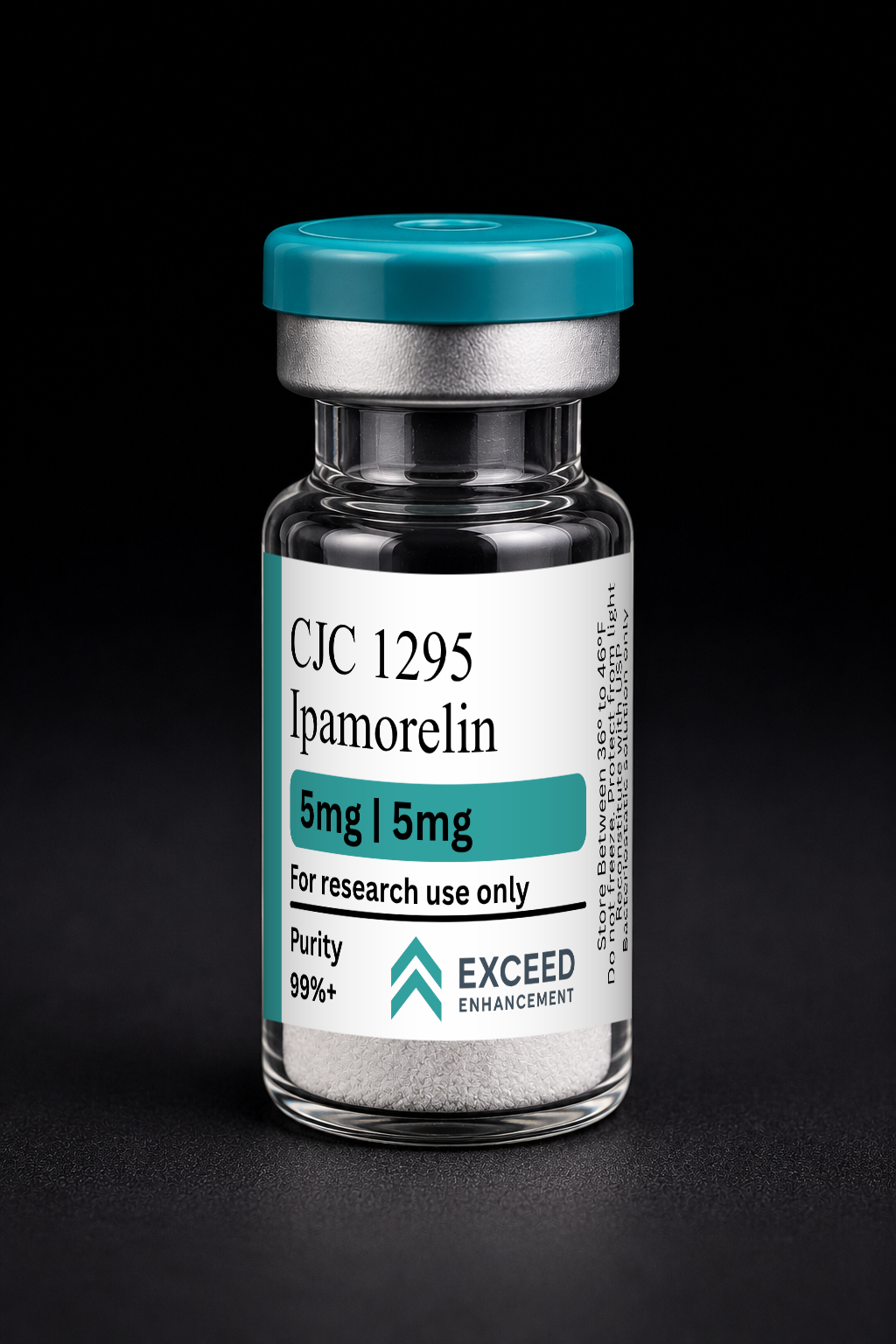
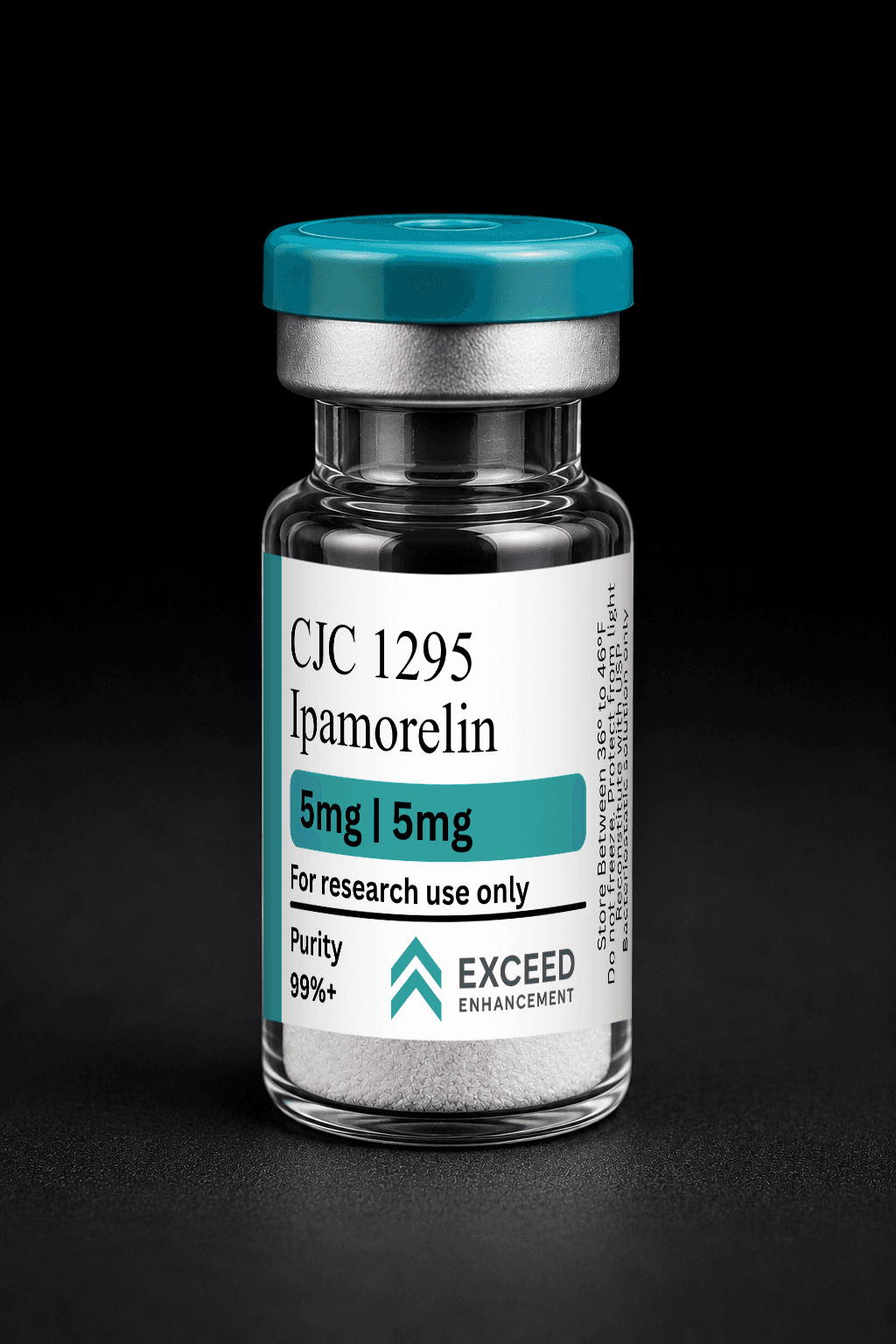
Exceed Enhancement
CJC-1295 / Ipamorelin
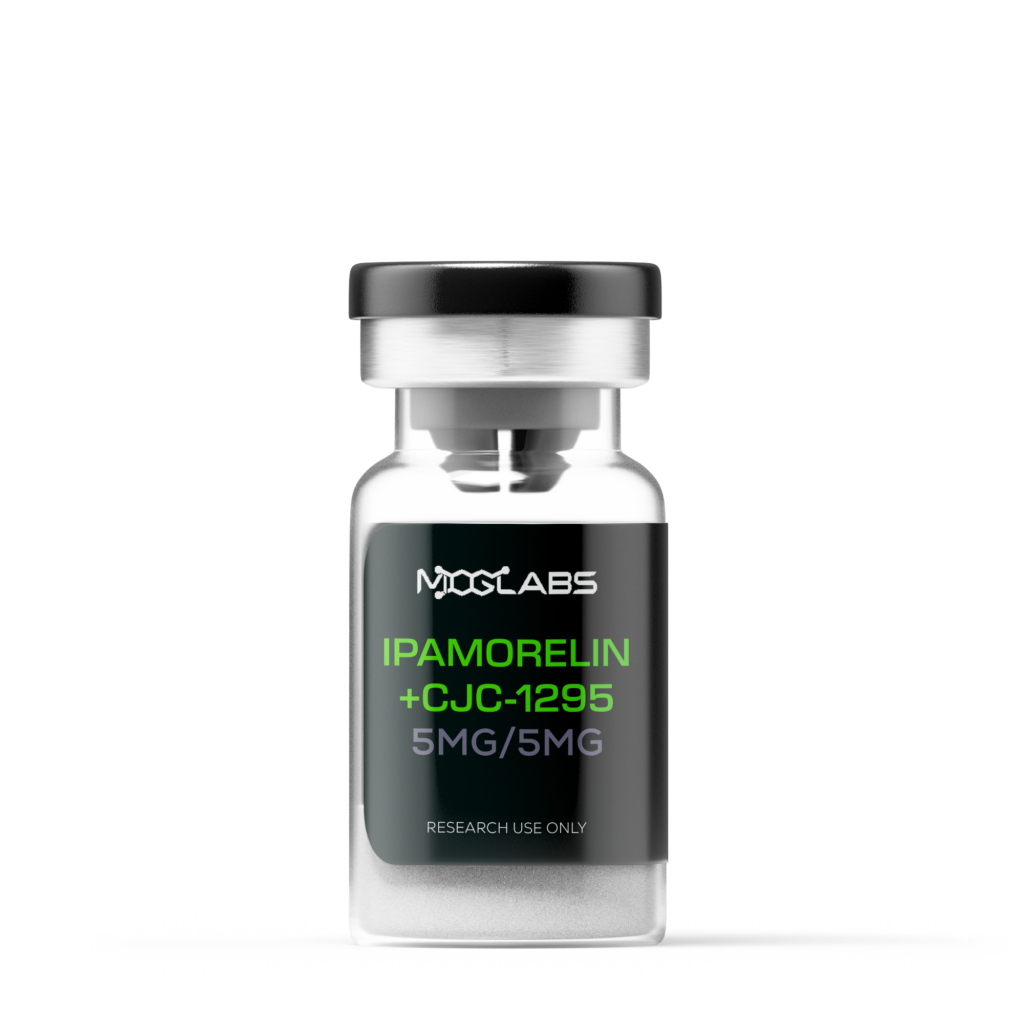
Moglabs
CJC-1295 / Ipamorelin
Kimera Chems
CJC-1295 / Ipamorelin
Research
- 1998first citedIpamorelin, the first selective growth hormone secretagogue
- 2026most recentThe emerging landscape of performance-enhancing peptides modulating GH-IGF1 axis: bridging the…
- 1.Prolonged stimulation of growth hormone (GH) and insulin-like growth factor I secretion by CJC-1295, a long-acting analog of GH-releasing hormone, in healthy adults
- 2.Pulsatile secretion of growth hormone (GH) persists during continuous stimulation by CJC-1295, a long-acting GH-releasing hormone analog
- 3.Ipamorelin, the first selective growth hormone secretagogue
- 4.Efficacy of ipamorelin, a novel ghrelin mimetic, in a rodent model of postoperative ileus
- 5.The emerging landscape of performance-enhancing peptides modulating GH-IGF1 axis: bridging the gap between clinical evidence and patient self-administration
5 listed here; entry last updated August 2026
Reviews
After CJC + IPA, my experience in the gym definitely felt elevated. Pretty great
0
My notesprivate to this device
FAQ
What is the CJC-1295 and Ipamorelin stack?
It is a growth hormone combo. CJC-1295 (the no-DAC version) is a GHRH analog that raises GH pulses, and Ipamorelin is a selective ghrelin-receptor agonist that adds a clean pulse. Together they boost your own GH and IGF-1.
Why use them together?
They hit two different receptors, so the GH release is bigger and more synergistic than either alone. One presses the GHRH pathway, the other the ghrelin pathway.
What is the no-DAC part about?
CJC-1295 comes with or without DAC. The no-DAC form (Modified GRF 1-29) is short-acting and gives sharp, natural-looking pulses, which is why it pairs so well with Ipamorelin.
When should it be taken?
Usually at night on an empty stomach so it lines up with the natural GH pulse during deep sleep. Eating right before, especially carbs and fat, dampens the effect.
Is it safe?
Short term it is generally well tolerated, but raising IGF-1 long term can affect insulin sensitivity and is a concern with any cancer history. It is not an approved drug.
Adverse effects
- Injection-site reactions such as redness or itching
- Fluid retention, tingling, or flushing
- Increased appetite from the ghrelin-receptor component
Notes and cautions
- Investigational and prohibited in sport; not approved medicines