
spec sheet12 rows
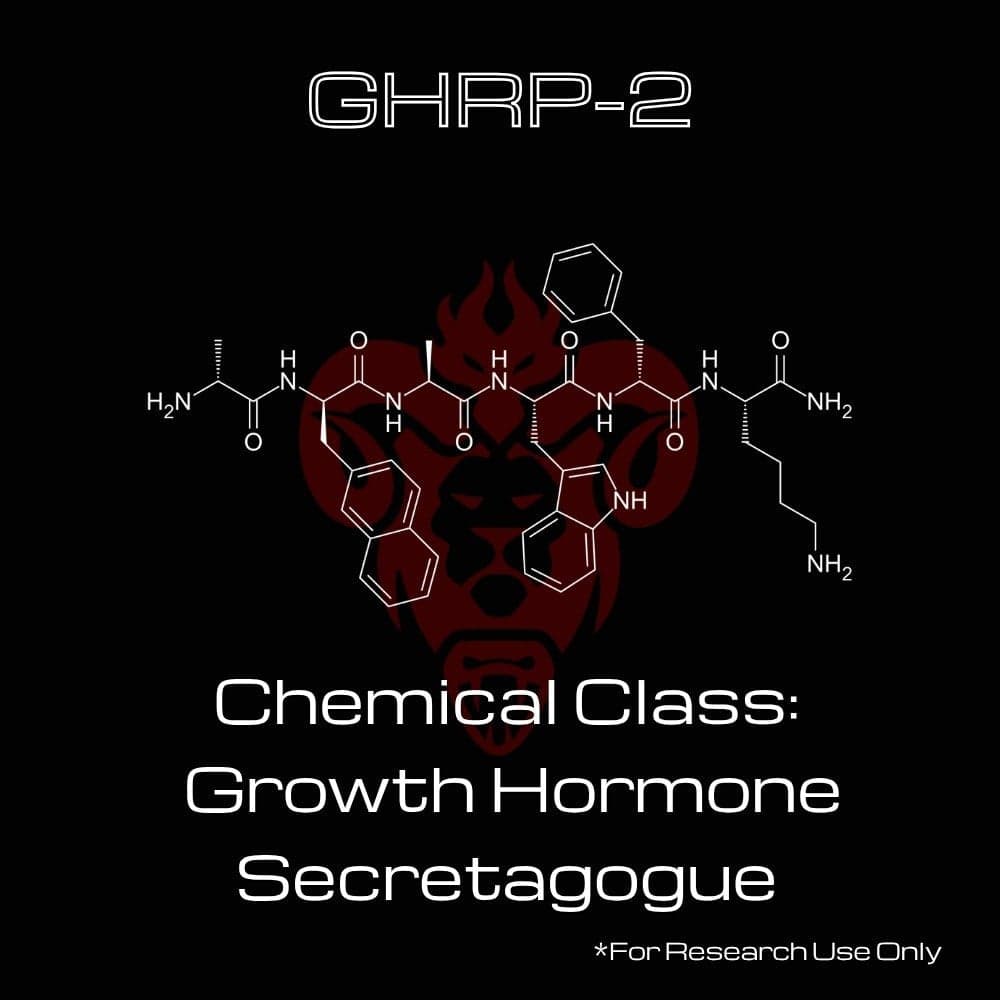
GHRP-2 (pralmorelin) is a synthetic growth hormone secretagogue, a ghrelin-mimetic that binds the ghrelin receptor (GHS-R1a) to trigger a pulse of the body's own growth hormone, and it also stimulates appetite and, to a lesser degree, ACTH and cortisol. Its growth-hormone response is reliable enough that it has been used clinically as a formal test of growth-hormone reserve, and it remains active by oral and intranasal routes. It is studied in the context of growth hormone deficiency, body composition, and recovery, and is used as a research peptide.
- Triggers a strong pulse of your own growth hormone
- Raises IGF-1 in study settings
- Reliable enough to be a clinical GH test
- Active by mouth and by nasal spray
- Appetite support when eating feels hard
- Studied for recovery and body composition
- Increased hunger
- Can nudge cortisol and prolactin up
- Mild water retention or hand tingling
Overview
GHRP-2, also known as pralmorelin, is a synthetic hexapeptide growth hormone secretagogue and ghrelin-receptor agonist. It belongs to the growth hormone-releasing peptide family first characterized by Bowers and colleagues, a class of small synthetic secretagogues that release growth hormone through a mechanism distinct from growth hormone-releasing hormone [1][3].
Unlike growth hormone itself, GHRP-2 does not replace the hormone but stimulates the pituitary to secrete more of its own, acting through the growth hormone secretagogue receptor GHS-R1a at both pituitary and hypothalamic sites [3]. This preservation of the body's natural pulsatile rhythm is a defining feature of the secretagogue approach.
Its research and clinical applications are unusually well developed for a peptide of this kind. GHRP-2 is effective by intravenous, oral, and intranasal routes; an intranasal course in children with short stature was well tolerated and modestly increased growth velocity [1]. It has been studied as part of the neuroendocrine regulation of the growth hormone axis, including its interaction with estrogen in postmenopausal women [2], and as a probe of growth hormone reserve, where the GHRP-2 stimulation test is used clinically, notably in Japan, to diagnose adult growth hormone deficiency [3]. It has also been examined in critical illness, where growth hormone secretagogues can reactivate a suppressed axis [5], and it is known to induce adrenocorticotropic hormone alongside growth hormone [4].
GHRP-2 is not an approved general medicine in most countries and is used as a research peptide and diagnostic agent; it tends to increase appetite through its ghrelin-mimetic action. It is supplied as a lyophilized peptide for reconstitution and, in some settings, as intranasal or oral preparations.
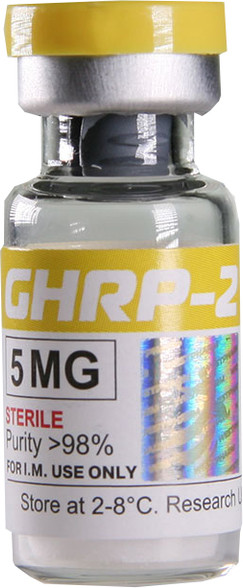
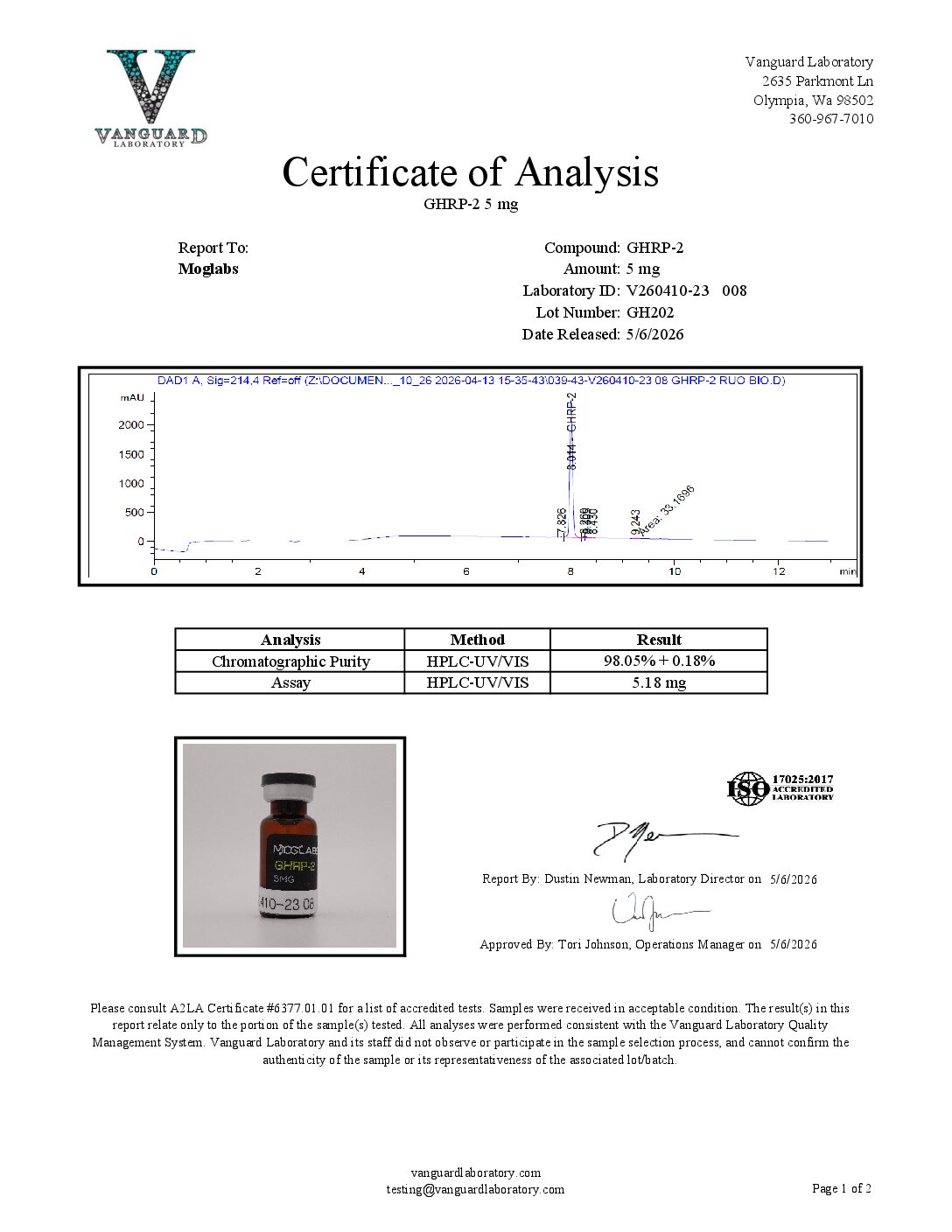
- GHRP-2's growth hormone response is so consistent that it is used clinically as a stimulation test for growth hormone deficiency.
- The research on peptides like GHRP-2 ultimately led scientists to discover the natural hormone ghrelin in 1999.
Mechanism
GHRP-2's draw is a clean, potent boost to the body's own growth hormone, with downstream support for , recovery, and body composition, plus a helpful nudge to appetite when intake needs to be high. Because it amplifies natural signaling rather than overriding it, the growth hormone it releases still follows the body's pulsatile rhythm.
The mechanism is agonism at the growth hormone secretagogue receptor GHS-R1a, the same receptor targeted by the natural hormone ghrelin. GHRP-2 binds this receptor in both the pituitary and the , producing a dual and complementary drive on growth hormone release that is stronger and differently regulated than growth hormone-releasing hormone acting alone [3]. Downstream signaling proceeds through cyclic AMP with contributions from protein kinase A and protein kinase C, which is also why GHRP-2 can stimulate secretion of adrenocorticotropic hormone in addition to growth hormone [4]. Its ghrelin-mimetic activity accounts for the increase in hunger that often accompanies it.
The evidence base is notably concrete. In children with short stature, intranasal GHRP-2 given over months raised height velocity from 3.7 to 6.1 centimeters per year while remaining well tolerated [1]. The reliability of its growth hormone response is the basis for the clinical GHRP-2 stimulation test, in which a peak growth hormone concentration below a defined threshold marks severe adult growth hormone deficiency [3]. In the chronic phase of critical illness, continuous infusion of growth hormone-releasing peptides reactivated pulsatile growth hormone secretion and raised , IGFBP-3, and acid-labile subunit, distinguishing that state from the growth hormone resistance of acute illness [5]. Its output is further modulated by sex steroids such as , underscoring how it works within, rather than around, normal endocrine control [2].
receptor fingerprint
GHS-R1a (ghrelin receptor)Agonist that triggers pituitary GH pulses
Hypothalamic GHRH neuronsAmplifies natural GH-releasing signals
Appetite / ghrelin pathwaysStimulates hunger signaling
Dosingtypical ranges, not medical advice
interested in protocols and clinical dosages? make an account to see them! ^_^
Safetyrisks and cautions, not medical advice
GHRP-2 is a growth-hormone secretagogue, and boosting GH and IGF-1 can cause fluid retention and edema, joint pain, carpal tunnel symptoms, reduced insulin sensitivity with higher blood glucose, and increased appetite. GHRP-2 in particular can also raise cortisol and prolactin. Long-term human safety data are limited and it is unapproved for these uses, and sustained elevation of GH/IGF-1 carries theoretical risks around tissue overgrowth, so it should be treated as a research peptide.
History
GHRP-2, also called pralmorelin and KP-102, is a synthetic six-amino-acid growth hormone secretagogue that grew out of the pioneering work of Cyril Y. Bowers, whose laboratory developed the growth hormone-releasing peptide series beginning with studies of enkephalin-derived analogues in the 1970s and 1980s. These peptides were found to release growth hormone through a receptor distinct from that of growth hormone-releasing hormone, a line of research that ultimately led to the discovery of the ghrelin receptor in 1996 and the hormone ghrelin in 1999.
GHRP-2 itself was shown to be a potent secretagogue active by intravenous, oral, and intranasal routes; a 1997 clinical study demonstrated that intranasal GHRP-2 increased growth velocity in children with short stature. Its reliable growth hormone response later formed the basis of the clinical GHRP-2 stimulation test, and it was approved in Japan as a diagnostic agent.
Reputation
GHRP-2 is respected as a clean and potent way to prompt the body's own pulse of growth hormone, and it is frequently favored for the reliability of that response, so much so that it became the basis of a formal diagnostic test of growth hormone reserve. Users appreciate that because it amplifies natural signaling, the released hormone still follows the body's pulsatile rhythm, and its activity by oral and intranasal routes adds practical flexibility. Its accompanying boost to appetite, stemming from ghrelin-mimetic activity, is seen as useful in research on low intake and wasting. It should be acknowledged that outside its diagnostic use it remains a research peptide rather than an approved therapy, and it can also raise ACTH and cortisol. On the whole it is regarded as one of the more dependable and well-characterized secretagogues.
Subjective profileweighing the evidence above
The most dependable of the growth-hormone secretagogues, reliable enough to have been used clinically as a test of GH reserve, which is real credit. The costs are honest: more hunger, water retention, a cortisol and prolactin nudge, and no long-term human safety data for how people actually use it.
Where to buy


Suppliers
Vendors carrying GHRP-2, with live product details and codes. Links are affiliate links that support the wiki at no cost to you.
| supplier | size | price | $/mg |
|---|---|---|---|
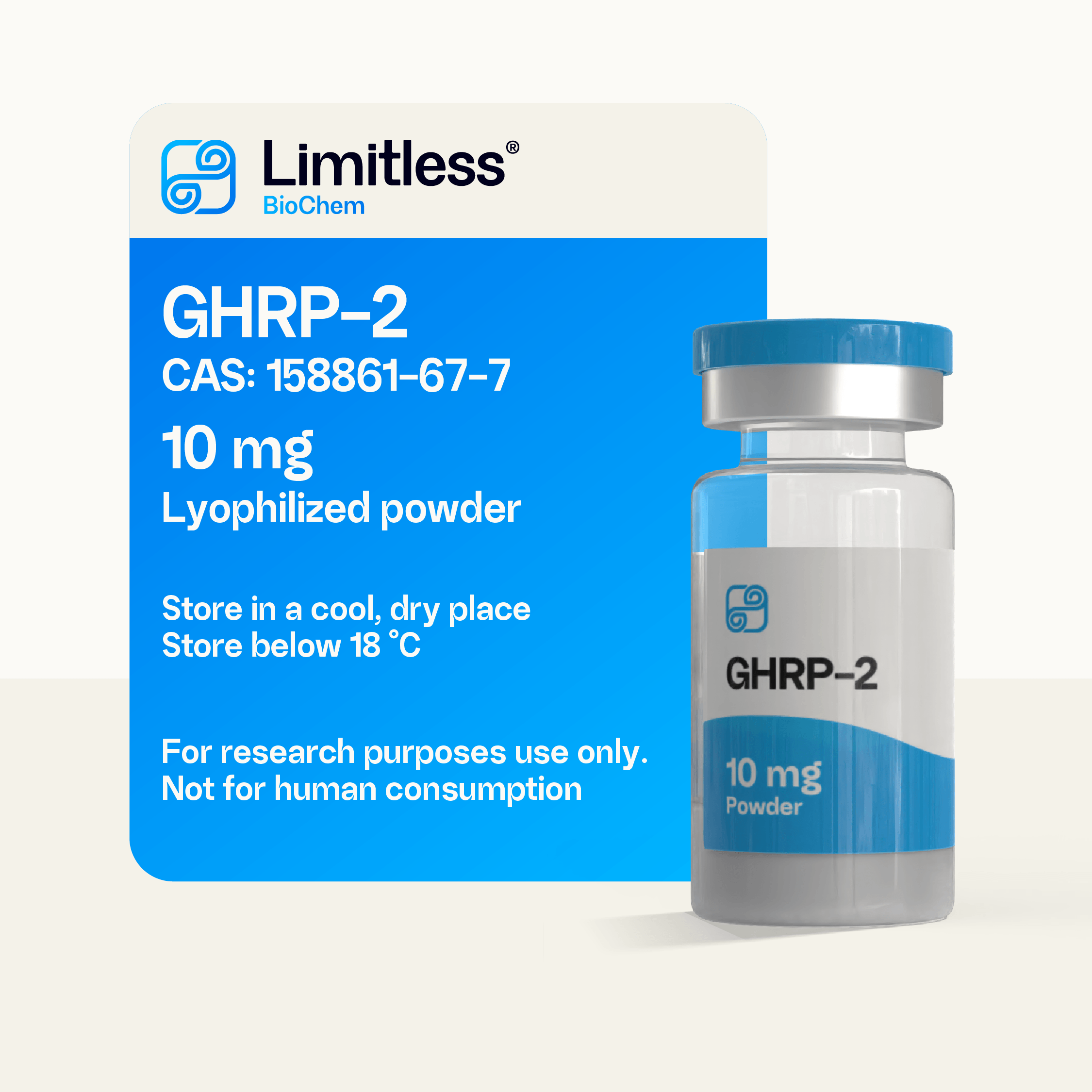
| Limitless Biochemlowest | 10mg | $22.99 | $2.30/mg |
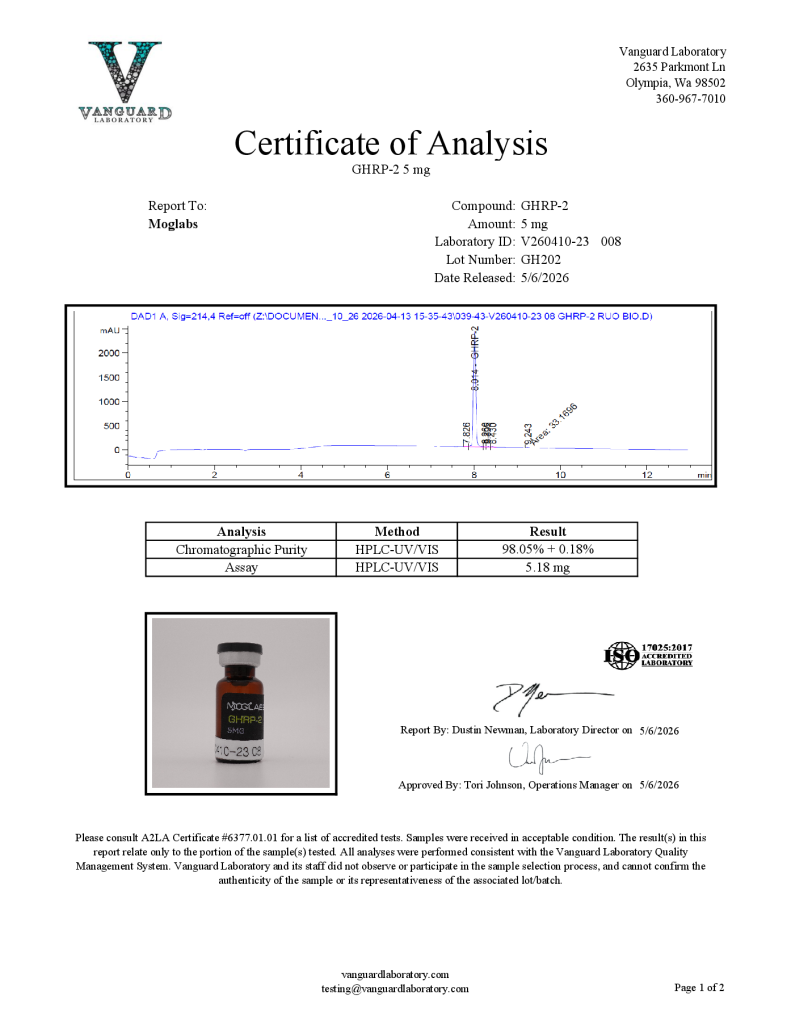
| RUO | 5mg | $14.00 | $2.80/mg |
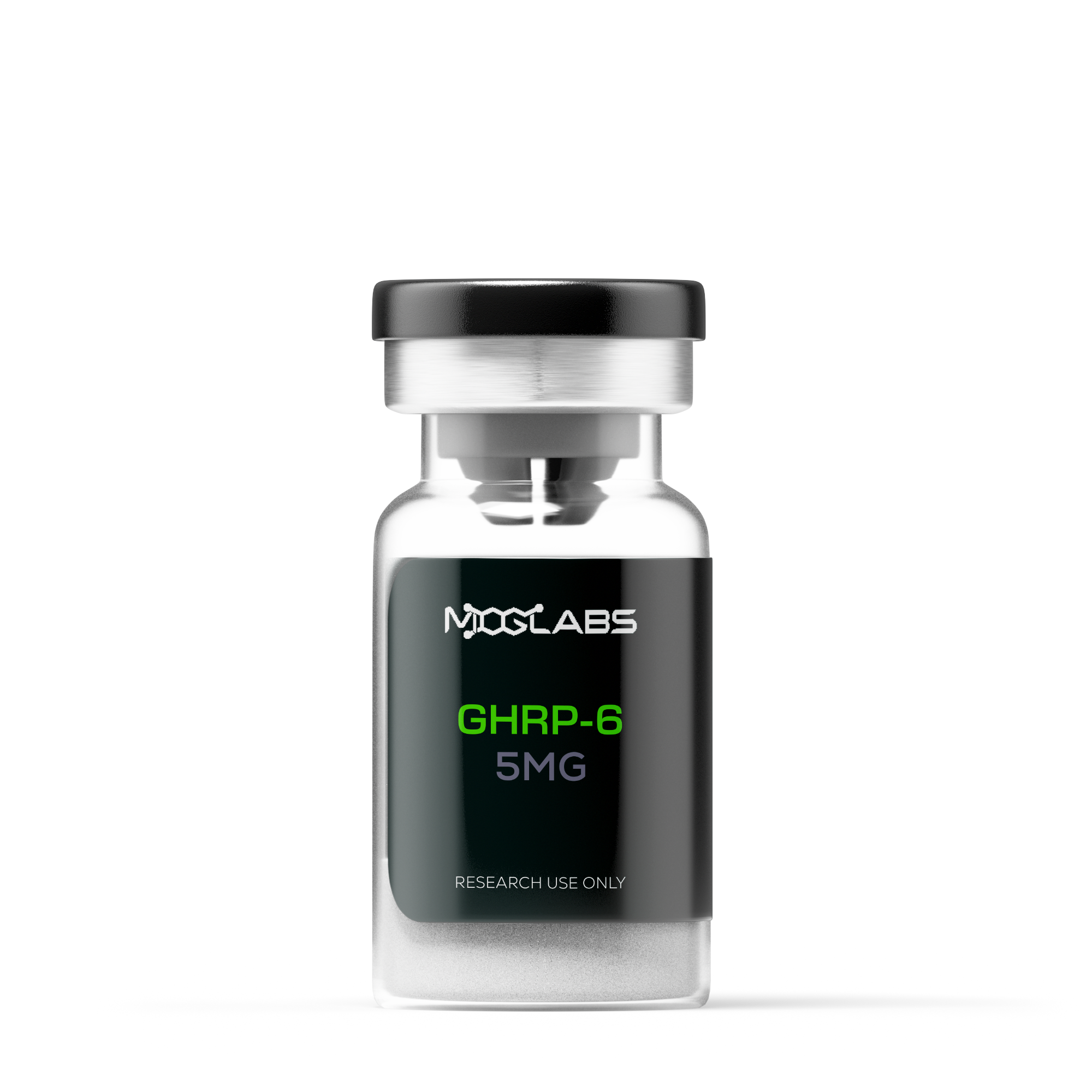
| Moglabs | 5mg | $16.00 | $3.20/mg |
RUPharma🌐
GHRP-2
RUO
GHRP-2
Moglabs
GHRP-2
Kimera Chems
GHRP-2
Limitless Biochem🌐
GHRP-2
Exceed Enhancement
GHRP-2
Research
- 1994first citedThe effect of GH-releasing peptide-2 (GHRP-2 or KP 102) on GH secretion from primary cultured o…
- 1997controlled trialTreatment effects of intranasal growth hormone releasing peptide-2 in children with short statu…
- 2017most active year3 papers
- 2022most recentClinical Usefulness of the Growth Hormone-Releasing Peptide-2 Test for Hypothalamic-Pituitary D…
- 1.Treatment effects of intranasal growth hormone releasing peptide-2 in children with short stature
- 2.Interactive regulation of postmenopausal growth hormone insulin-like growth factor axis by estrogen and growth hormone-releasing peptide-2
- 3.Adult growth hormone deficiency: current concepts
- 4.Growth hormone-releasing peptide-2 stimulates secretion and synthesis of adrenocorticotropic hormone in mouse pituitary
- 5.Growth hormone secretagogues in critical illness
- 6.Pralmorelin: GHRP 2, GPA 748, growth hormone-releasing peptide 2, KP-102 D, KP-102 LN, KP-102D, KP-102LN
- 7.Pharmacological characteristics of KP-102 (GHRP-2), a potent growth hormone-releasing peptide
- 8.Growth hormone-releasing peptides
- 9.Beyond the androgen receptor: the role of growth hormone secretagogues in the modern management of body composition in hypogonadal males
- 10.Laparoscopic Sleeve Gastrectomy Resolves Low GHRP-2-Stimulated Growth Hormone Levels in Obese Patients
- 11.Clinical Usefulness of the Growth Hormone-Releasing Peptide-2 Test for Hypothalamic-Pituitary Disorder
- 12.Evaluation of growth hormone-releasing peptide-2 for diagnosis of thyrotropin-producing pituitary adenomas
16 listed here; entry last updated August 2026
Reviews
My notesprivate to this device
FAQ
How is GHRP-2 different from GHRP-6?
Both are ghrelin-receptor peptides, but GHRP-2 is generally reported as a stronger GH releaser with somewhat less appetite stimulation than GHRP-6.
Is it selective for growth hormone?
Not fully; it can also raise ACTH, cortisol and prolactin, which is one reason newer secretagogues were developed.
Is this an approved medicine?
It has been used as a diagnostic GH-stimulation agent in research; it is not an approved everyday therapy and is banned in sport by WADA.
Adverse effects
- Increased hunger
- Can nudge cortisol and prolactin up
- Mild water retention or hand tingling
- Brief head-rush or flush after a dose