
spec sheet12 rows
PT-141 (bremelanotide) is a first-in-class libido peptide that works in the brain rather than the bloodstream, activating melanocortin pathways to spark sexual desire and arousal in both women and men [1][2]. Unlike erectile-focused drugs that act on blood vessels, it targets the central circuits of desire, and it is the active ingredient in Vyleesi, approved by the FDA in 2019 for hypoactive sexual desire disorder in premenopausal women [2][3]. A synthetic analog of the hormone alpha-MSH, PT-141 is prized as the rare desire-boosting agent backed by large randomized clinical trials [3][4].
- Switches on desire inside the brain
- Works for men and women alike
- Real arousal, not just blood flow
- Non hormonal by design
- Backed by large randomized human trials
- FDA approved as Vyleesi in 2019
- The most common side effect is nausea, which is frequent and is the main reason people stop the drug
- Flushing and headache are also common
- It can cause small, temporary increases in blood pressure, so it is used cautiously in people with cardiovascular risk
Overview
PT-141, known by its International Nonproprietary Name bremelanotide and the brand name Vyleesi, is a synthetic cyclic peptide and an analogue of the naturally occurring hormone alpha-melanocyte-stimulating hormone (alpha-MSH) [1][2]. It acts as an agonist at melanocortin receptors, principally the melanocortin type 4 receptor (MC4R) and, to a lesser extent, the type 3 receptor (MC3R), which are expressed largely in the central nervous system and are thought to be important for sexual function [1][2]. It was developed by Palatin Technologies from the melanocortin agonist lineage and was first investigated as an intranasal spray for erectile dysfunction and female sexual dysfunction before being reformulated as a subcutaneous injection [5][7].
The defining feature of PT-141 is that it works centrally, acting on brain pathways that govern sexual desire and arousal, rather than on the vascular system like the PDE5 inhibitors used for erectile dysfunction [1][2]. Early studies showed that systemic PT-141 produced penile erections in animals and in men, and separate work found it improved subjective sexual desire and arousal in premenopausal women [1][5]. Development ultimately focused on female hypoactive sexual desire disorder (HSDD), a condition of persistently low sexual desire causing marked distress, and on this indication bremelanotide completed a full phase 1 through phase 3 clinical program [2][6].
In June 2019 the United States Food and Drug Administration approved bremelanotide (Vyleesi) for the treatment of acquired, generalized HSDD in premenopausal women, delivered as a self-administered, on-demand subcutaneous injection of 1.75 mg taken before anticipated sexual activity [2][3]. It is one of only two drugs approved for HSDD, the other being flibanserin [2]. Outside this approved use, PT-141 is also sold as a research peptide and used off-label or experimentally for male and female sexual dysfunction; in that unregulated market its quality and purity are not guaranteed [3][7].
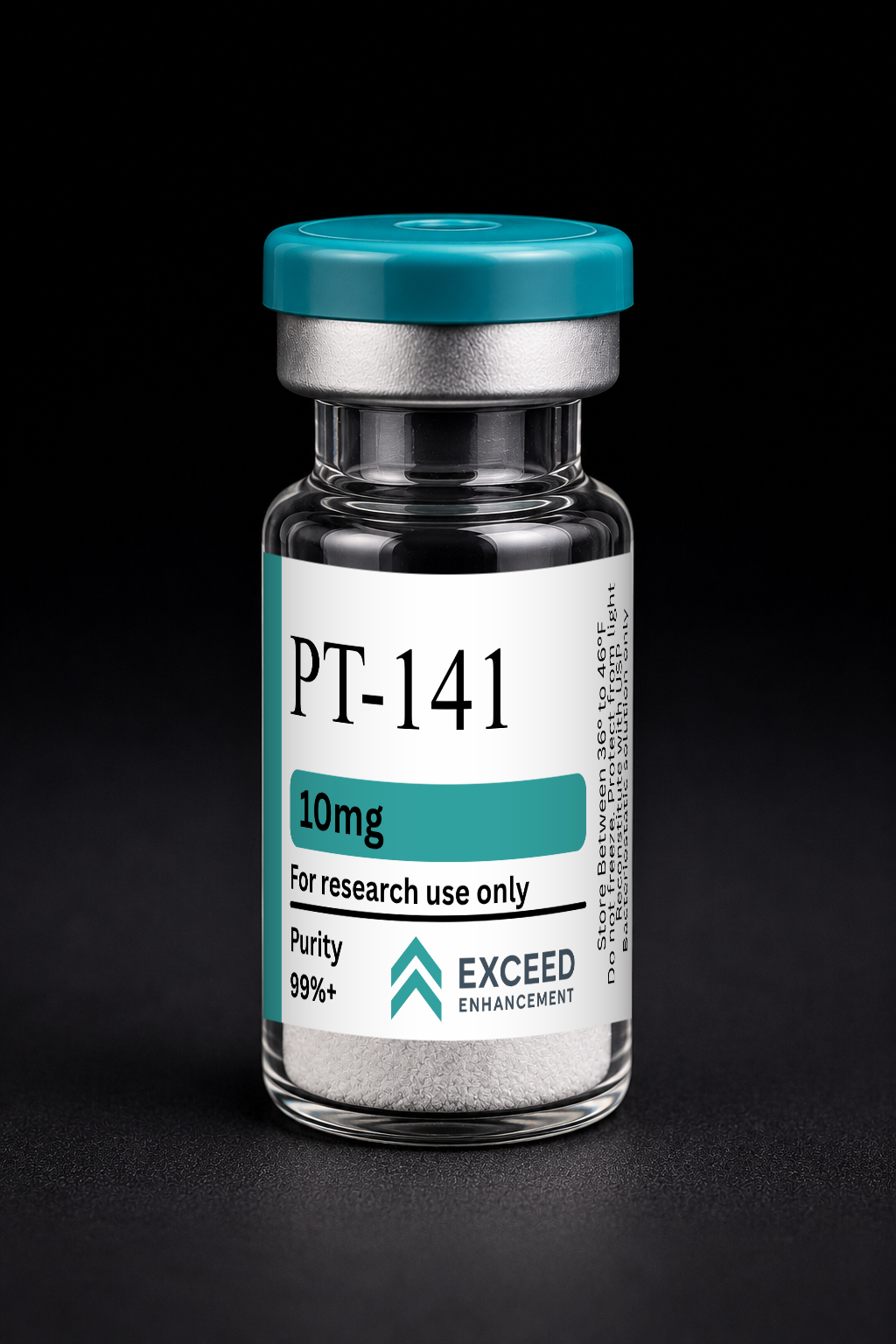
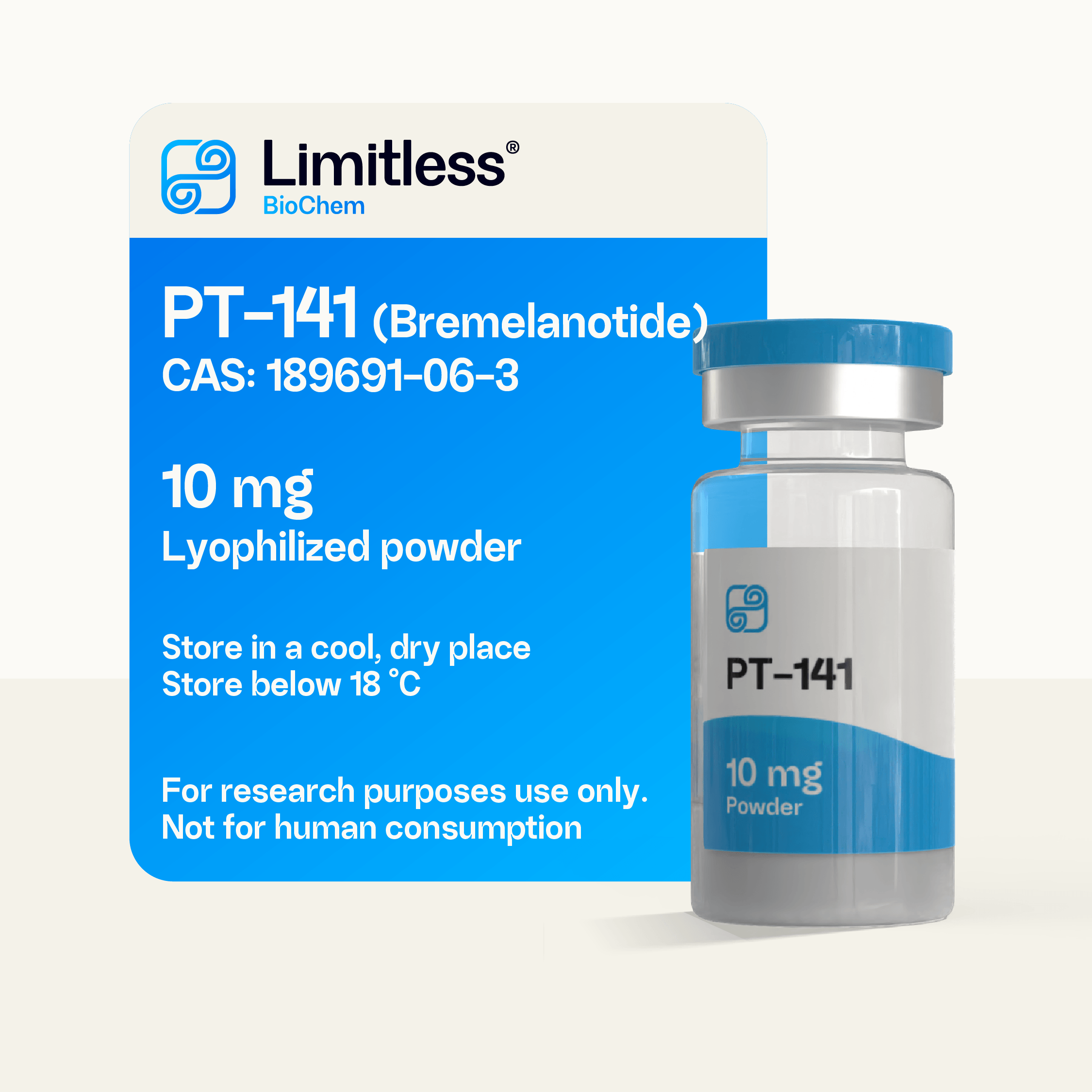
- PT-141 was discovered as a derivative of the tanning peptide Melanotan II, when researchers noticed it unexpectedly triggered sexual arousal.
- It is the active ingredient in Vyleesi, FDA-approved in 2019 and notable for acting through melanocortin pathways in the brain rather than on blood vessels.
Mechanism
PT-141 (bremelanotide) is a receptor , and its mechanism is fundamentally different from that of erectile dysfunction drugs that act on the vasculature. As a synthetic analogue of alpha-melanocyte-stimulating hormone, it binds and activates melanocortin receptors, with high affinity for the melanocortin type 4 receptor () and activity at the type 3 receptor (MC3R); these receptors are concentrated in the central nervous system, so PT-141 exerts its effects on sexual desire and arousal within the brain rather than by dilating blood vessels [1][2]. Experimental work traced this central action directly: systemic administration of PT-141 to rats activated neurons in the , shown by increased c-Fos expression in the same region that connects, through neural tracing, to the erectile tissue of the penis [1]. The result in animals and in men was a rapid, dose-dependent increase in erectile activity, and in women an increase in subjective desire and arousal [1][5].
By engaging the system, PT-141 is thought to modulate the brain pathways that initiate and coordinate the sexual response, effectively raising the central drive for sexual desire [2]. This explains why it is effective in hypoactive sexual desire disorder, where the core problem is diminished desire rather than a mechanical failure of arousal, and why it can act in both sexes despite their different physiology [2][3].
The clinical effect sizes are modest but statistically robust across large trials. In the two identical phase 3 RECONNECT studies, which randomized 1,267 premenopausal women with HSDD to bremelanotide 1.75 mg or placebo, the drug produced significant increases in the Female Sexual Function Index desire score and significant reductions in desire-related distress compared with placebo [3]. An earlier dose-finding trial similarly found more satisfying sexual events and improved sexual-function and distress scores at the 1.25 to 1.75 mg doses [4]. The same activity also drives its characteristic side effects: across a development program of about 3,500 subjects, nausea occurred in roughly 40 percent of bremelanotide users versus 1 percent on placebo, along with flushing and headache, and small transient increases in blood pressure and, with frequent daily dosing, focal skin hyperpigmentation were observed [6]. These effects reflect activation of receptors beyond those governing sexual response [6].
receptor fingerprint
-4 receptor ()agonist
-3 receptor (MC3R)agonist
Brain sexual pathwaysactivates
Dosingtypical ranges, not medical advice
interested in protocols and clinical dosages? make an account to see them! ^_^
Safetyrisks and cautions, not medical advice
PT-141 (bremelanotide) commonly causes nausea, which can be significant, along with flushing and headache, and it produces transient increases in blood pressure and decreases in heart rate, so it is not recommended in uncontrolled hypertension or known cardiovascular disease. Repeated use can cause focal darkening of the skin, gums, or face, and injection-site reactions are common. Its cardiovascular effects warrant caution in at-risk individuals, and it should not be dosed frequently.
Interactionsdocumented pairs only, not exhaustive
Bremelanotide (PT-141) undergoes Phase 1 and Phase 2 metabolism. In clinical trials, bremelanotide lowered plasma concentrations of indomethacin and naltrexone; the mechanism appears pharmacokinetic but was not fully characterized [6]. Small and transient statistically significant increases in blood pressure occurred during ambulatory monitoring; the clinical relevance of this pharmacodynamic effect was deemed modest. Bremelanotide's most common adverse event is nausea, reported in 40% of treated subjects versus 1.3% of placebo, suggesting direct pharmacodynamic activity rather than an interaction mechanism. Not documented; the specific mechanism of the indomethacin and naltrexone concentration reductions was not elucidated in published trials, and most other drug-drug interactions were not clinically significant.
Checking a whole stack? Run it through interactions + stacks.
Reconstitutionarithmetic only, not dosing advice
arithmetic only; not medical or dosing advice.
History
PT-141, or bremelanotide, emerged from research on Melanotan II, a cyclic melanocortin agonist studied at the University of Arizona; investigators observed that the compound produced unexpected sexual arousal effects, prompting a focused development program. Palatin Technologies advanced a related melanocortin peptide specifically for sexual dysfunction, tracing its central action to melanocortin receptors in the brain rather than the vasculature.
Early animal work showed that systemic PT-141 activated hypothalamic neurons linked to erectile tissue, distinguishing it mechanistically from vascular erectile-dysfunction drugs. After two large phase 3 trials known collectively as RECONNECT demonstrated significant improvements in desire and reductions in desire-related distress, the FDA approved bremelanotide as Vyleesi in June 2019 for hypoactive sexual desire disorder in premenopausal women.
Reputation
PT-141 is prized as a genuinely novel approach to low sexual desire, one of the few desire-boosting agents supported by large randomized controlled trials rather than anecdote. Its brain-based mechanism sets it apart from erectile-focused drugs and gives it appeal across both sexes, since it targets the central drive for desire rather than a mechanical arousal step. The FDA approval of Vyleesi lends it a level of regulatory validation uncommon among research peptides. Discussion is candid about its trade-offs; clinical effect sizes are statistically robust but modest, and characteristic side effects such as nausea, flushing, and headache are common because the same melanocortin activity extends beyond the receptors governing sexual response. This honest profile of real efficacy alongside tolerability considerations shapes its reputation.
Subjective profileweighing the evidence above
One of the few libido treatments that works on desire itself rather than blood flow, and it is FDA approved for exactly that in premenopausal women. Nausea is the catch and it is the usual reason people stop. Not for uncontrolled hypertension or known cardiovascular disease, and repeated use can darken skin.
Where to buy


Suppliers
Vendors carrying PT-141, with live product details and codes. Links are affiliate links that support the wiki at no cost to you.
| supplier | size | price | $/mg |
|---|---|---|---|
| Limitless Biochemlowest | 10mg | $32.00 | $3.20/mg |
| Moglabs | 10mg | $36.00 | $3.60/mg |
| RUO | 10mg | $36.00 | $3.60/mg |
Exceed Enhancement
PT-141
Limitless Biochem🌐
PT-141
RUO
PT-141
Moglabs
PT-141
Peptira
PT-141
RUPharma🌐
PT-141
Research
- 2003first citedPT-141: a melanocortin agonist for the treatment of sexual dysfunction.
- 2022most active year7 papers
- 2025most recentIntravenous peptides and amino acids for erectile dysfunction: a narrative review of current ap…
- 1.PT-141: a melanocortin agonist for the treatment of sexual dysfunction.
- 2.Bremelanotide: First Approval.
- 3.Bremelanotide for the Treatment of Hypoactive Sexual Desire Disorder: Two Randomized Phase 3 Trials.
- 4.Bremelanotide for female sexual dysfunctions in premenopausal women: a randomized, placebo-controlled dose-finding trial.
- 5.An effect on the subjective sexual response in premenopausal women with sexual arousal disorder by bremelanotide (PT-141), a melanocortin receptor agonist.
- 6.Safety Profile of Bremelanotide Across the Clinical Development Program.
- 7.PT-141 Palatin.
- 8.Hypoactive Sexual Desire Disorder in Women: Physiology, Assessment, Diagnosis, and Treatment.
- 9.Targeting the central melanocortin system for the treatment of metabolic disorders.
- 10.Melanocortins in the treatment of male and female sexual dysfunction.
- 11.Bremelanotide: an overview of preclinical CNS effects on female sexual function.
- 12.The neurobiology of bremelanotide for the treatment of hypoactive sexual desire disorder in premenopausal women.
30 listed here; entry last updated August 2026
Reviews
My notesprivate to this device
FAQ
How is PT-141 different from PDE5 inhibitors like sildenafil?
It acts on melanocortin receptors in the brain to influence desire and arousal rather than working on blood flow. That is why it can affect libido rather than just erectile mechanics.
Does it work for women too?
It has been studied in both men and women, and a related formulation is approved for premenopausal women with low sexual desire. Effects centre on desire and arousal.
Why does the skin sometimes darken?
Melanocortin receptors are also involved in pigmentation, so temporary darkening or freckling can occur. This is a known feature of this receptor pathway.
Is nausea common?
Nausea and flushing are among the more frequently reported effects. They tend to be dose-related and often ease over time.
Adverse effects
- The most common side effect is nausea, which is frequent and is the main reason people stop the drug
- Flushing and headache are also common
- It can cause small, temporary increases in blood pressure, so it is used cautiously in people with cardiovascular risk
- Frequent or daily dosing can cause focal darkening of the skin (hyperpigmentation)
Notes and cautions
- Injection site reactions can occur, and unregulated research-peptide products carry additional purity and quality risks
- PT-141 was developed first as a nasal spray, and the intranasal route is the best documented one in its published human record. A Phase I study dosed healthy men and men with mild to moderate erectile dysfunction intranasally; exposure rose with dose, median Tmax was 0.50 h, and the first response appeared around 30 minutes above 7 mg [27]. Later trials kept the route, at 7.5 mg alongside sildenafil [28], as a single 20 mg dose in premenopausal women with sexual arousal disorder [5], and as a 10 mg spray in 342 men who had not responded to sildenafil [29]. A safety study dosing 24 adults at 20 mg intranasally noted that this exposure is roughly one to two times the subcutaneous dose that went on to Phase III [30]. The product that reached approval is the subcutaneous injection; no nasal formulation is marketed, and long term nasal tolerability was never established.