
spec sheet11 rows
CJC-1295 is a long-acting growth hormone-releasing hormone analogue engineered to stimulate the body's own pulsatile release of growth hormone and IGF-I for days from a single dose. In clinical studies it produced sustained, dose-dependent increases in GH and IGF-I while preserving natural secretion patterns. For research into the GH-IGF-I axis, CJC-1295 is a uniquely long-lasting and elegant GHRH analogue.
- one dose keeps growth hormone elevated for days
- drives your own natural GH pulses instead of injecting GH
- clinical studies showed steady, dose-dependent IGF-1 gains
- feeds the GH axis behind recovery and lean mass
- long-acting by design, so far fewer injections
- the most elegant long-lasting GHRH analogue in the class
- Injection-site reactions such as redness or itching
- Fluid retention, tingling, or transient flushing
- Possible changes in blood glucose and other hormones
Overview
CJC-1295 is a synthetic analogue of growth hormone-releasing hormone (GHRH), engineered as a modified fragment of the first 29 amino acids of GHRH with substitutions that resist enzymatic breakdown [1]. Its defining feature is a technology that allows it to bind covalently to endogenous albumin after injection, a drug affinity complex that dramatically extends its circulating half-life to roughly 8 days, hence the long-acting designation [2]. Formulations are described both with this albumin-binding modification (with DAC) and without it [3].
The compound was developed to overcome a fundamental limitation of native GHRH, whose very short half-life restricts therapeutic use; by prolonging GHRH action, CJC-1295 can sustain stimulation of the pituitary to release growth hormone over an extended period [1][2]. In clinical pharmacology studies it was administered subcutaneously to healthy adults to characterize its effects on GH and insulin-like growth factor I (IGF-I) [1][2].
Research and applied interest in CJC-1295 spans growth hormone deficiency, body composition, recovery, and, outside approved medicine, physique and performance enhancement [3]. It is frequently grouped and stacked with growth hormone secretagogues such as ipamorelin that act through a complementary pathway [3]. Regulatory status is investigational; CJC-1295 is not an approved medicine and is sold as a research compound, and it is prohibited in sport, with reviews noting the absence of regulatory approval for performance-related use and the uncertainties of unregulated supply [3].
- CJC-1295 latches onto albumin in the bloodstream, which stretches its half-life to roughly a week from a single injection.
- Despite raising baseline growth hormone markedly, it leaves the natural frequency and amplitude of GH pulses intact.
Mechanism
CJC-1295's core benefit is a sustained, physiological elevation of growth hormone and IGF-I from infrequent dosing, achieved by amplifying the body's own GHRH signaling rather than injecting growth hormone directly. As a GHRH analogue it binds GHRH receptors on the pituitary somatotrophs, stimulating synthesis and release of growth hormone; its albumin-binding drug affinity complex keeps it in circulation for days, giving an estimated of about 5.8 to 8.1 days [1][2]. This prolonged action is what separates it from native GHRH and from short-acting analogues [1].
The clinical data are quantitatively clear. In healthy adults, a single subcutaneous injection of CJC-1295 produced dose-dependent increases in mean plasma GH of 2 to 10 fold lasting six days or more, and increases in IGF-I of 1.5 to 3 fold lasting nine to eleven days, with IGF-I remaining above baseline for up to 28 days after multiple doses [1]. Crucially, a second study showed that CJC-1295 raised GH while preserving natural pulsatility: the frequency and amplitude of GH pulses were unchanged, but basal or trough GH levels rose markedly, by about 7.5 fold, driving an overall 46% increase in mean GH and a 45% increase in IGF-I [2]. Preserving pulsatile secretion is considered important because the pulsatile pattern underlies many of growth hormone's physiological effects [2].
Downstream, the elevated GH and IGF-I mediate the anabolic and metabolic effects sought in research and applied use, including support of lean tissue, recovery, and body composition [1][3]. Because it works by stimulating endogenous GH within the pituitary's own regulatory framework, its action depends on intact pituitary secretory capacity [2]. Reported adverse effects associated with this class include fluid retention, injection-site reactions, and changes in glucose and other hormones, reflecting the reach of the GH-IGF-I axis [3].
receptor fingerprint
GHRH receptorlong-acting agonist
Growth hormone / raises
GH pulse amplitudeincreases
Dosingtypical ranges, not medical advice
interested in protocols and clinical dosages? make an account to see them! ^_^
Safetyrisks and cautions, not medical advice
CJC-1295 is a synthetic growth-hormone-releasing hormone (GHRH) analogue that raises growth hormone and IGF-1; it is sold as a research chemical, is not approved for human use, and is prohibited in sport. As a GH secretagogue, class effects include fluid retention and edema, joint pain, carpal tunnel symptoms, insulin resistance and elevated blood glucose, and theoretical acromegaly-type risks with sustained use; injection-site reactions, flushing and headache are also reported.
Reconstitutionarithmetic only, not dosing advice
arithmetic only; not medical or dosing advice.
History
CJC-1295 was developed by the biotechnology company ConjuChem as a long-acting analogue of growth hormone-releasing hormone, built around a Drug Affinity Complex (DAC) technology that lets the peptide bind covalently to circulating albumin and thereby resist rapid degradation. This design directly addressed the central limitation of native GHRH, whose therapeutic use is constrained by an extremely short duration of action. The pivotal human characterization came in 2005, when Teichman and colleagues reported two randomized, placebo-controlled trials in healthy adults showing that a single subcutaneous dose produced sustained, dose-dependent increases in growth hormone and IGF-I, with an estimated half-life of roughly 5.8 to 8.1 days. Those studies established CJC-1295 as a uniquely long-lasting GHRH analogue and remain the foundation of its use as a research tool for the GH-IGF-I axis.
Reputation
CJC-1295 is well regarded among researchers studying the growth hormone axis as an elegant demonstration of albumin-binding peptide engineering, prized for delivering days of elevated GH and IGF-I from infrequent dosing. A frequently highlighted strength is that it raises hormone output while preserving the natural pulsatile pattern of GH secretion, which is thought to underlie many of the hormone's physiological effects, rather than flooding the system continuously.
This combination of long action and preserved pulsatility gives it a distinctive appeal relative to native GHRH and short-acting analogues. Balanced discussion notes that its effects depend on intact pituitary secretory capacity and that class-associated effects such as fluid retention, injection-site reactions, and shifts in glucose and other hormones reflect the broad reach of the GH-IGF-I axis; it is best understood as an investigational agent rather than an approved therapy.
Subjective profileweighing the evidence above
It does what it claims, which is as much the problem as the point; holding GH and IGF-1 up for days brings fluid retention, joint pain and worse insulin sensitivity, with theoretical overgrowth concerns on top. Unapproved, banned in sport, and not a casual recovery aid.
Where to buy



Suppliers
Vendors carrying CJC-1295, with live product details and codes. Links are affiliate links that support the wiki at no cost to you.
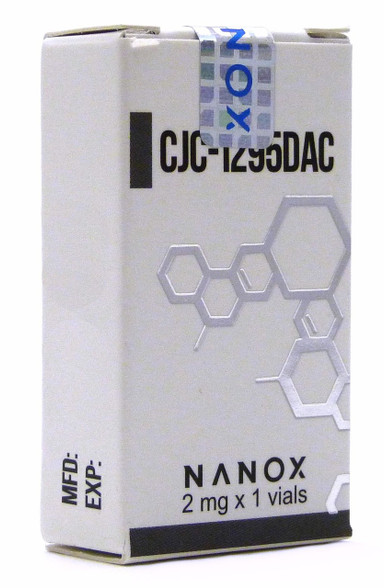
RUPharma🌐
CJC-1295
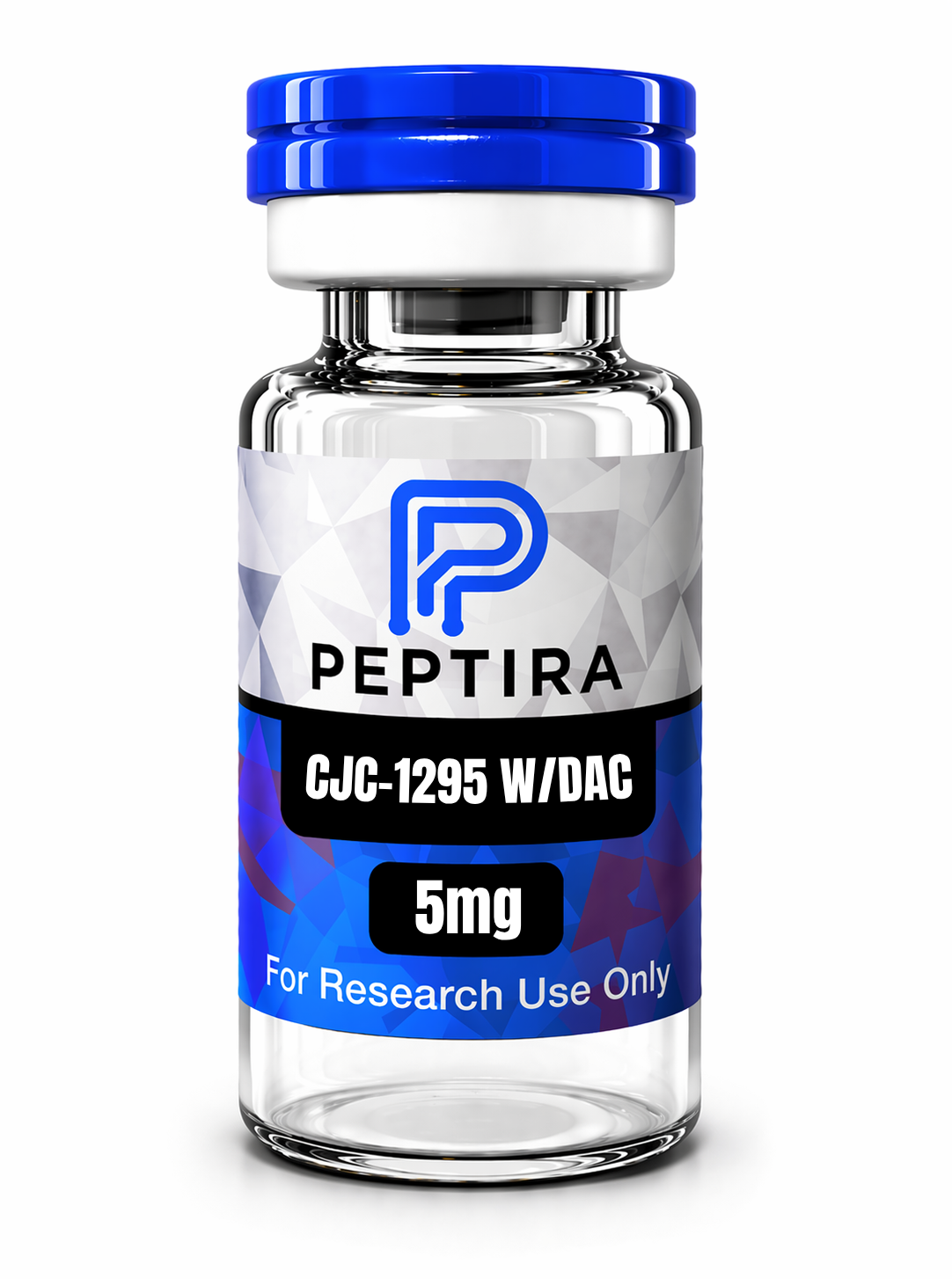
Peptira
CJC-1295 DAC

Kimera Chems
CJC-1295
Kimera Chems
CJC-1295
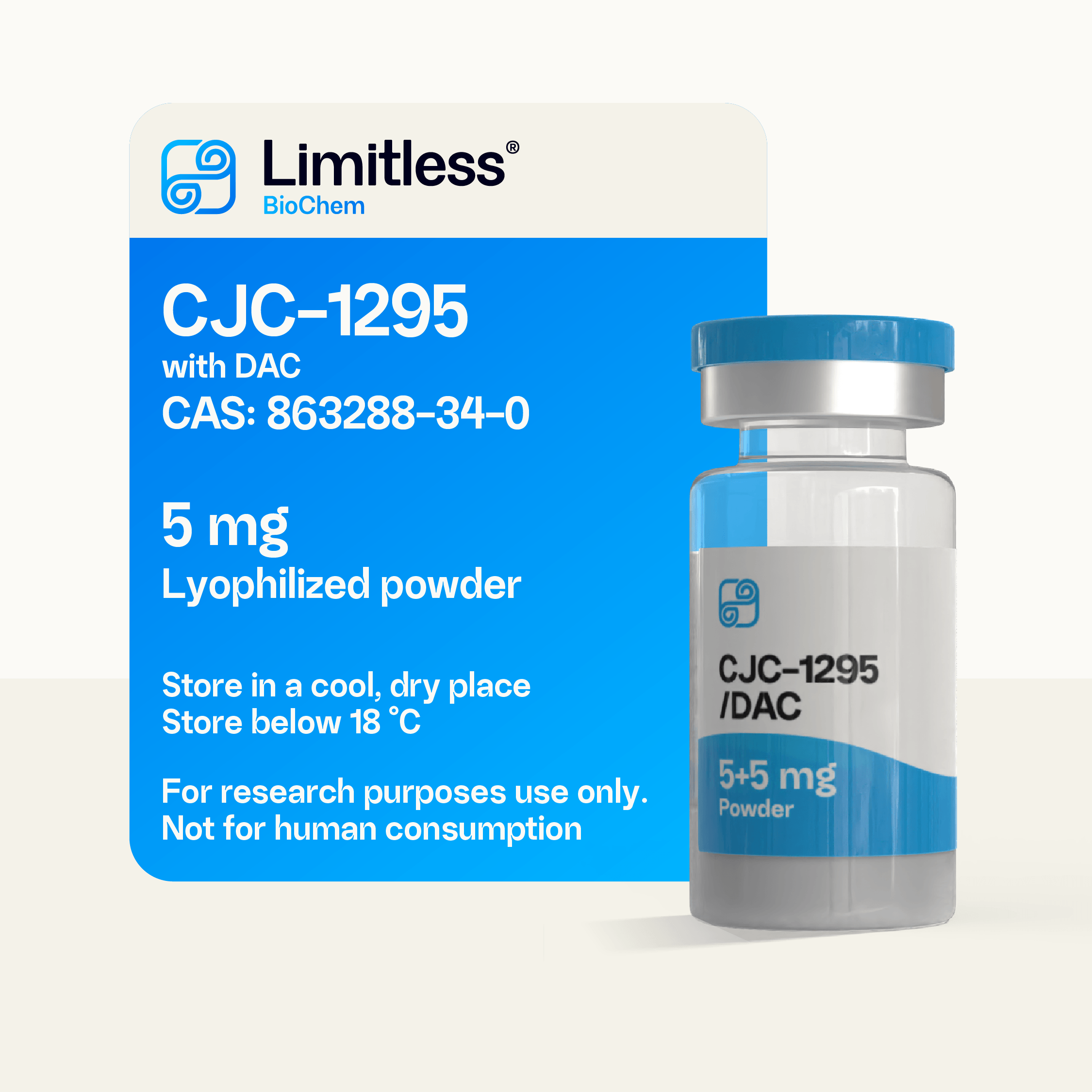
Limitless Biochem🌐
CJC-1295
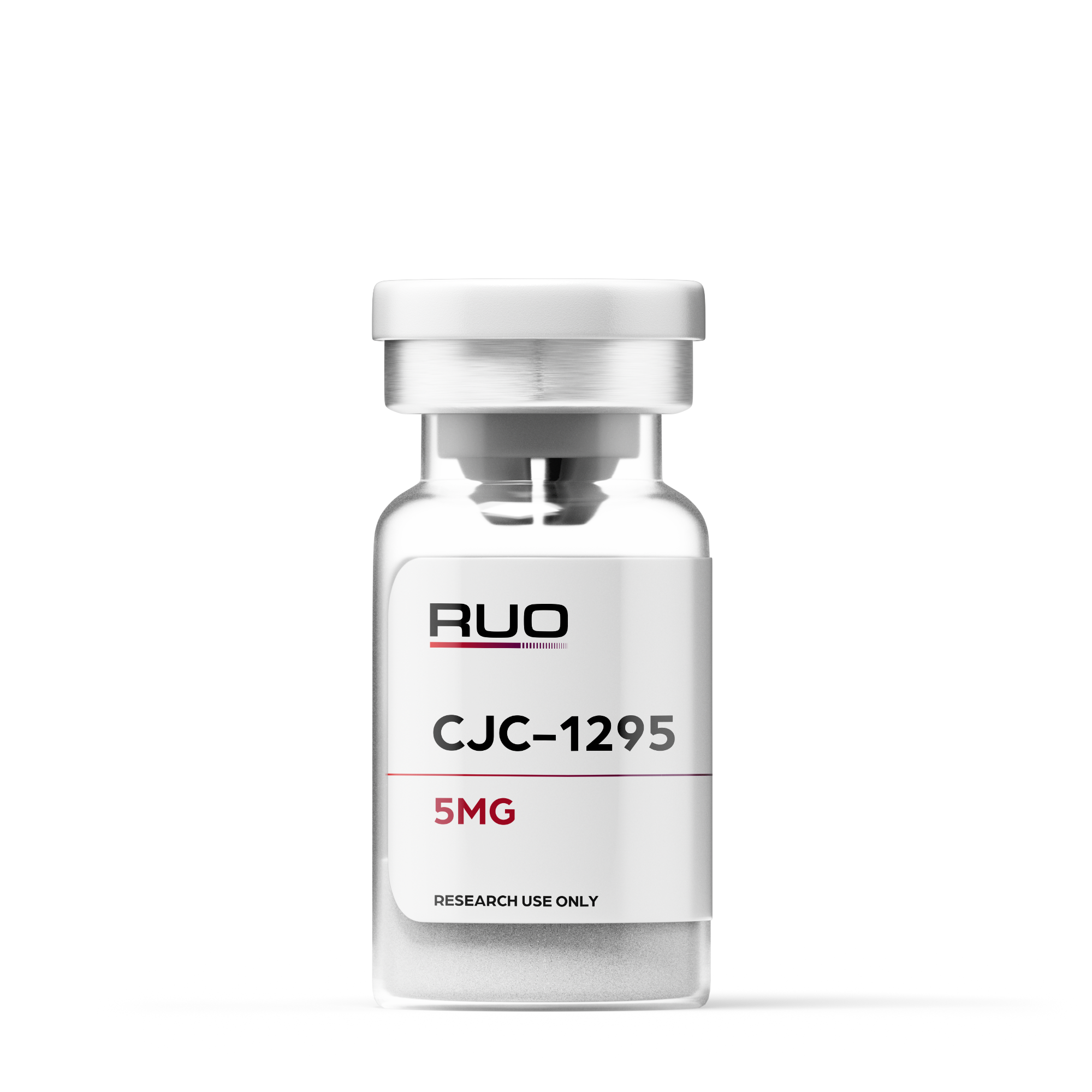
RUO
CJC-1295
Moglabs
CJC-1295
Research
- 2006first citedProlonged stimulation of growth hormone (GH) and insulin-like growth factor I secretion by CJC-…
- 2026most recentThe emerging landscape of performance-enhancing peptides modulating GH-IGF1 axis: bridging the…
- 1.Prolonged stimulation of growth hormone (GH) and insulin-like growth factor I secretion by CJC-1295, a long-acting analog of GH-releasing hormone, in healthy adults
- 2.Pulsatile secretion of growth hormone (GH) persists during continuous stimulation by CJC-1295, a long-acting GH-releasing hormone analog
- 3.The emerging landscape of performance-enhancing peptides modulating GH-IGF1 axis: bridging the gap between clinical evidence and patient self-administration
3 listed here; entry last updated August 2026
Reviews
My notesprivate to this device
FAQ
What is a GHRH analog?
It mimics growth-hormone-releasing hormone, prompting your pituitary to release more of your own GH.
Why pair it with ipamorelin?
GHRH analogs and ghrelin-type peptides work on complementary pathways, so combining them can produce a stronger, more natural GH pulse.
Why is it taken at night?
GH is naturally released during sleep, so timing it near bedtime aims to work with that rhythm.
How is it stored?
As a peptide it is generally refrigerated once reconstituted and kept out of light.
Adverse effects
- Injection-site reactions such as redness or itching
- Fluid retention, tingling, or transient flushing
- Possible changes in blood glucose and other hormones
Notes and cautions
- Investigational and prohibited in sport; not an approved medicine