
spec sheet14 rows
Human growth hormone, abbreviated HGH and also called somatotropin, is a peptide hormone of 191 amino acids produced by the somatotroph cells of the anterior pituitary gland. It drives growth during childhood and regulates metabolism throughout life, acting largely by prompting the liver and other tissues to make insulin-like growth factor 1 (IGF-1). A recombinant form, somatropin, is used medically to treat growth hormone deficiency and several other conditions, and it is also misused for anti-aging and athletic purposes.
- The body's master growth and repair signal
- Drives lean muscle growth
- Promotes fat loss at the same time
- Speeds recovery and tissue repair
- Raises IGF-1 across the whole body
- Supports skin, joints, and connective tissue
- Swelling from fluid retention
- Joint and muscle aches
- Carpal tunnel syndrome
Overview
Human growth hormone (HGH), known technically as somatotropin, is a single-chain peptide hormone made up of 191 amino acids and secreted by specialized somatotroph cells in the anterior lobe of the pituitary gland [1]. It belongs to a family of hormones that promote growth, cell division, and tissue repair. In the body it circulates in pulses, with the largest surge typically occurring roughly an hour after the onset of sleep.
The release of growth hormone is governed by the hypothalamus through two opposing signals: growth-hormone-releasing hormone, which stimulates secretion, and somatostatin, which suppresses it [1]. The stomach-derived peptide ghrelin also promotes release, and factors such as exercise, deep sleep, and fasting raise secretion, while high blood glucose and negative feedback from circulating growth hormone and IGF-1 lower it [1]. This layered control keeps the hormone within a tightly regulated range.
Physiologically, growth hormone stimulates linear bone growth during childhood and adolescence and continues to shape body composition and metabolism in adults [1]. Many of its growth-promoting actions are indirect, carried out through IGF-1, which the hormone induces the liver and other tissues to produce [1]. Growth hormone also raises blood glucose and free fatty acids, encourages the breakdown of stored fat, and supports protein synthesis and lean tissue [1].
For much of the twentieth century, growth hormone for medical use was extracted from the pituitary glands of human cadavers, a practice halted after some recipients developed Creutzfeldt-Jakob disease. Recombinant DNA technology allowed the hormone to be manufactured biosynthetically, and recombinant human growth hormone, marketed under the generic name somatropin, was approved in the United States in 1985 [3]. It is now sold under numerous brand names.
Approved medical uses center on genuine growth hormone deficiency in both children and adults, along with several other conditions such as Turner syndrome, Prader-Willi syndrome, chronic kidney disease in children, and wasting associated with HIV/AIDS [1]. Clinical guidelines note that treating adult deficiency can improve body composition, bone strength, exercise capacity, and quality of life, with the greatest benefit in those most severely affected [1]. Excess growth hormone, usually from a pituitary tumor, causes acromegaly in adults and gigantism in children, while deficiency in childhood leads to short stature.
Growth hormone has attracted controversial non-medical use. An influential small study in 1990 reported gains in lean mass and bone density in older men given the hormone, fueling anti-aging claims [2]. A later systematic review of healthy elderly people concluded that treatment produced only modest shifts in body composition, brought more side effects, and could not be recommended as an anti-aging therapy [3]. In sport, growth hormone is a prohibited substance for its presumed anabolic effect, and specialized blood tests have been developed to detect its use despite the difficulty posed by its natural pulsatile secretion [4]. It is a prescription-only medicine, and its distribution for non-approved purposes is restricted by law in the United States.
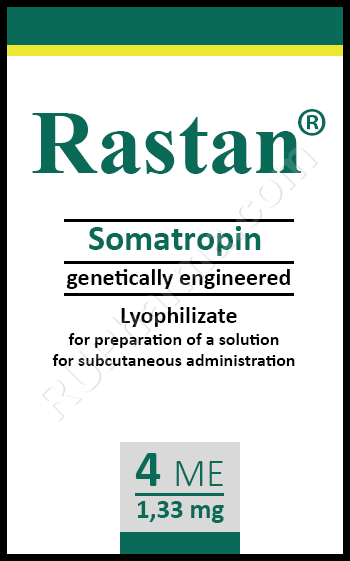

- Until 1985, growth hormone came only from human cadaver pituitaries; its use was halted after prion-contaminated extracts transmitted Creutzfeldt-Jakob disease.
- The first recombinant human growth hormone was approved by the FDA in 1985, giving medicine a safe and essentially unlimited supply.
- Because IGF-1 remains elevated much longer than growth hormone's short pulses, doctors measure IGF-1 as a practical marker of overall growth hormone activity.
Mechanism
Growth hormone exerts its effects by binding to the growth hormone receptor, a cell-surface receptor found on many tissues [1]. Binding causes two receptor molecules to associate and activates the receptor-linked JAK2 kinase, which in turn triggers the JAK-STAT intracellular signaling cascade that alters gene expression [1]. A major consequence of this signaling in the liver and other tissues is the production and release of -like growth factor 1 (), the mediator responsible for many of the hormone's growth-promoting actions, including the stimulation of cartilage and bone growth [1].
Growth hormone also acts directly on tissues, promoting the breakdown of stored fat for energy, encouraging protein synthesis and lean tissue accretion, and raising blood glucose by opposing some of the actions of [1]. Circulating and growth hormone feed back on the and pituitary to suppress further release, forming a self-limiting regulatory loop [1]. Because stays elevated far longer than the short-lived pulses of growth hormone itself, it serves as a practical marker of overall growth hormone activity [4].
receptor fingerprint
Growth hormone receptor (GHR)Agonist
JAK2 / STAT5 signalingActivates
Hepatic productionStimulates
receptor (IGF1R)Activates indirectly (via IGF-1)
Adipocyte lipolysis (hormone-sensitive lipase)Stimulates
sensitivityReduces (risk)
Safetyrisks and cautions, not medical advice
HGH (recombinant human growth hormone) commonly causes fluid retention with swelling, joint and muscle pain, carpal tunnel symptoms, and reduced insulin sensitivity that can raise blood glucose and precipitate diabetes. Higher or prolonged excess produces acromegaly-like tissue overgrowth, and there are concerns about promoting the growth of existing tumors, so it is contraindicated in active malignancy and acute critical illness. It is a potent hormone that should not be treated as a benign supplement.
Interactionsdocumented pairs only, not exhaustive
Somatropin labeling documents several established interactions rooted in its effects on glucose and hepatic enzymes. It antagonizes insulin action and can raise blood glucose, so doses of insulin and oral antidiabetic drugs frequently need upward adjustment. Glucocorticoids at supraphysiologic doses blunt the growth-promoting effect of growth hormone, and conversely growth hormone can increase the clearance of cortisol by inducing 11-beta-hydroxysteroid dehydrogenase, unmasking central hypoadrenalism in at-risk patients. Growth hormone influences cytochrome P450 activity and may alter clearance of CYP-metabolized drugs such as sex steroids, corticosteroids, anticonvulsants, and cyclosporine; oral estrogen in particular reduces the IGF-1 response, so higher somatropin doses may be required. This is research information, not medical advice.
Checking a whole stack? Run it through interactions + stacks.
History
Human growth hormone was isolated from the human pituitary gland in the mid-1950s, and in 1958 the Boston physician Maurice Raben first treated a growth-hormone-deficient child using hormone extracted from human cadaver pituitaries. For nearly three decades this cadaver-derived hormone was the only supply, distributed through national programs to treat childhood growth failure. That era ended abruptly in 1985, when several recipients developed Creutzfeldt-Jakob disease traced to prion contamination of the pituitary extracts, prompting withdrawal of cadaver-sourced hormone.
In the same year the U.S. Food and Drug Administration approved the first recombinant human growth hormone, produced by Genentech through genetic engineering, providing a safe and essentially unlimited supply. Recombinant somatropin, a 191-amino-acid replica of the natural hormone, has since become standard therapy for growth hormone deficiency and several other approved conditions.
Reputation
Human growth hormone holds a well-earned place in medicine as a genuine hormone-replacement therapy, transforming the outlook for children and adults with true growth hormone deficiency. Acting largely by prompting the liver to produce insulin-like growth factor 1, it drives skeletal growth in childhood and, in deficient adults, improves body composition by promoting lean tissue and fat breakdown. The switch to recombinant somatropin in 1985 gave clinicians a safe, consistent, and abundant supply, and its approved uses now extend to several conditions beyond classic deficiency.
Because IGF-1 stays elevated far longer than the brief pulses of growth hormone itself, it serves as a convenient marker of overall activity. Candor requires acknowledging that outside of genuine deficiency its use for anti-aging or athletic enhancement is not supported and carries real risks, including reduced insulin sensitivity; within its legitimate medical indications, however, it is a well-validated and valuable therapy.
Subjective profileweighing the evidence above
A potent prescription hormone, not a physique supplement. It does build muscle and shed fat, and the bill is fluid retention, joint pain, carpal tunnel and reduced insulin sensitivity that can tip into diabetes. It is contraindicated in active cancer, and cosmetic use deserves a hard second look.
Where to buy

Suppliers
Vendors carrying HGH, with live product details and codes. Links are affiliate links that support the wiki at no cost to you.
| supplier | size | price | $/iu |
|---|---|---|---|
| PCT.Zonelowest | 36IU | $251.82 | $7.00/iu |
| PCT.Zone | 18IU | $221.60 | $12.31/iu |

RUPharma🌐
Somatropin
RUPharma🌐
Somatropin
PCT.Zone
HGH
PCT.Zone
HGH
PCT.Zone
HGH
Research
- 1990first citedEffects of human growth hormone in men over 60 years old
- 2007meta-analysisSystematic review: the safety and efficacy of growth hormone in the healthy elderly
- 2008most active year3 papers
- 2020most recentCirculating Insulin-Like Growth Factor-1 and Risk of Total and 19 Site-Specific Cancers: Cohort…
- 1.Evaluation and treatment of adult growth hormone deficiency: an Endocrine Society Clinical Practice Guideline
- 2.Effects of human growth hormone in men over 60 years old
- 3.Systematic review: the safety and efficacy of growth hormone in the healthy elderly
- 4.Human growth hormone doping in sport
- 5.Physiological regulation of the human growth hormone (GH)-insulin-like growth factor type I (IGF-I) axis: predominant impact of age, obesity, gonadal function, and sleep
- 6.Modulation of glucocorticoid metabolism by the growth hormone - IGF-1 axis
- 7.Bone mineral, histomorphometry, and body composition in adults with growth hormone receptor deficiency
- 8.Diagnosis of growth hormone deficiency in adults
- 9.Adult-onset growth hormone deficiency: causes, complications and treatment options
- 10.Effects of growth hormone on body composition in adults
- 11.Growth hormone (GH) replacement therapy in adult-onset gh deficiency: effects on body composition in men and women in a double-blind, randomized, placebo-controlled trial
- 12.Effects of low dose versus high dose human growth hormone on body composition and lipids in adults with GH deficiency: a meta-analysis of placebo-controlled randomized trials
22 listed here; entry last updated August 2026
Reviews
My notesprivate to this device
FAQ
How does HGH work in the body?
It's released by the pituitary gland and stimulates IGF-1 production, which mediates many of its growth effects. It influences muscle, fat, and tissue repair.
Why is IGF-1 mentioned so often?
Much of growth hormone's downstream action is carried out by IGF-1, largely produced in the liver. The two are closely linked.
Does it require refrigeration?
Reconstituted growth hormone is generally kept refrigerated and protected from light. The dry powder is more stable before mixing.
Why is insulin sensitivity a concern?
Growth hormone can raise blood sugar and reduce insulin sensitivity over time. This is a commonly discussed metabolic effect.
Adverse effects
- Swelling from fluid retention
- Joint and muscle aches
- Carpal tunnel syndrome
- Higher blood sugar
- Injection site reactions