
spec sheet12 rows
Pyridoxal-5-phosphate, often abbreviated PLP or P5P, is the biologically active coenzyme form of vitamin B6. It serves as an essential helper molecule for well over a hundred different enzymes, most of them involved in the metabolism of amino acids and the manufacture of neurotransmitters. The body makes PLP from the various dietary forms of vitamin B6, and it is also sold directly as a supplement marketed as a ready-to-use form of the vitamin.
- the active coenzyme form of B6, ready to work
- no liver conversion step required
- cofactor for serotonin, dopamine and GABA synthesis
- a helper molecule for well over a hundred enzymes
- long standing use for easing PMS symptoms
- cheap, sensible and easy to slot into any stack
- Very high, prolonged intakes of vitamin B6 have been associated with reversible sensory nerve symptoms
Overview
Pyridoxal-5-phosphate is the coenzyme, or active, form of vitamin B6, with the chemical formula C8H10NO6P [1]. Vitamin B6 is not a single substance but a group of closely related molecules, called vitamers, that include pyridoxine, pyridoxal, and pyridoxamine along with their phosphorylated versions [1][2]. Whichever form is eaten, the body converts it through a series of enzyme steps into PLP; pyridoxal is phosphorylated by the enzyme pyridoxal kinase, and an oxidase enzyme completes the conversion of other vitamers to the active coenzyme [1]. Because humans cannot make the vitamin from scratch, vitamin B6 must come from the diet [1].
PLP is one of the most versatile cofactors in biochemistry, taking part in well over a hundred distinct enzyme-catalysed reactions, a large share of all known enzyme activities [1][2]. Most of these are steps in amino acid metabolism, such as transamination, decarboxylation, and deamination, and PLP-dependent enzymes are essential for building and breaking down amino acids and for interconverting them [1][2]. The coenzyme is central to the synthesis of several neurotransmitters, including serotonin, dopamine, and gamma-aminobutyric acid, and it also contributes to the first step of heme production, the breakdown of stored glycogen, the metabolism of tryptophan, and one-carbon and lipid metabolism [1][2][4]. Through these roles it touches nervous system function, the immune system, and the formation of red blood cells [1].
Because PLP underpins so many pathways, a shortage of vitamin B6 can produce wide-ranging problems, including skin inflammation, anemia, nerve damage, and, particularly in infants, seizures [1]. Certain rare inherited disorders bear directly on PLP. In some genetic epilepsies the enzyme that generates PLP is faulty, and affected newborns have seizures that respond to treatment with the vitamin given in an appropriate form [1]. In aromatic L-amino acid decarboxylase deficiency, a PLP-dependent enzyme needed to make dopamine and serotonin does not work properly, causing a severe neurological disorder from early life [4]. Interest in the coenzyme also extends to its behaviour as an antioxidant and to associations, still being studied, between low vitamin B6 and conditions such as cardiovascular disease, diabetes, and cancer [1].
Vitamin B6 is available as a supplement in several forms, most commonly pyridoxine, and also directly as pyridoxal-5-phosphate, which is promoted as a form that is already in the active coenzyme state and so does not require the body's conversion step [1]. PLP occurs naturally in many foods and is added to some fortified products and multivitamins, and it is generally regulated as a nutrient and dietary supplement ingredient rather than as a drug [1]. It is worth noting that very high intakes of vitamin B6 over long periods have been linked to reversible sensory nerve problems, so the vitamin is not without an upper limit despite being water-soluble [1].

Mechanism
The catalytic power of pyridoxal-5-phosphate comes from the reactive aldehyde group on its ring [1][3]. In a resting enzyme, this aldehyde is joined to a lysine residue in the active site, forming a covalent link known as an internal aldimine, or Schiff base [1][3]. When an amino acid substrate arrives, it displaces the lysine to form an external aldimine, tethering the substrate to the coenzyme [3].
The pyridine ring of PLP then acts as an electron sink, stabilizing the negatively charged intermediates that form as bonds around the substrate's central carbon are broken; depending on the particular enzyme, this lets different reactions proceed, such as transferring an amino group, removing a carboxyl group, or rearranging the molecule [1][3]. This same basic chemistry, steered by the surrounding protein, explains how a single coenzyme can serve such a large and varied family of enzymes [2][3]. The net effect in the body is to enable the countless amino acid transformations and neurotransmitter-forming reactions on which normal metabolism depends [1][4].
receptor fingerprint
Aromatic amino acid decarboxylasecofactor
decarboxylasecofactor
Homocysteine metabolism enzymescofactor
Glutathione synthesissupports
Heme synthesis pathwaycofactor
Dosingtypical ranges, not medical advice
interested in protocols and clinical dosages? make an account to see them! ^_^
Safetyrisks and cautions, not medical advice
Safe at sensible doses. The key caution is that chronically high-dose B6 (typically well above 100 mg/day for long periods) can cause peripheral neuropathy, which is usually reversible on stopping. Stick near the recommended range unless directed otherwise. Otherwise very well tolerated.
Subjective profileweighing the evidence above
A smart form of B6 for anyone focused on neurotransmitters or mood; effective and cheap, just respect the upper limit.
Where to buy
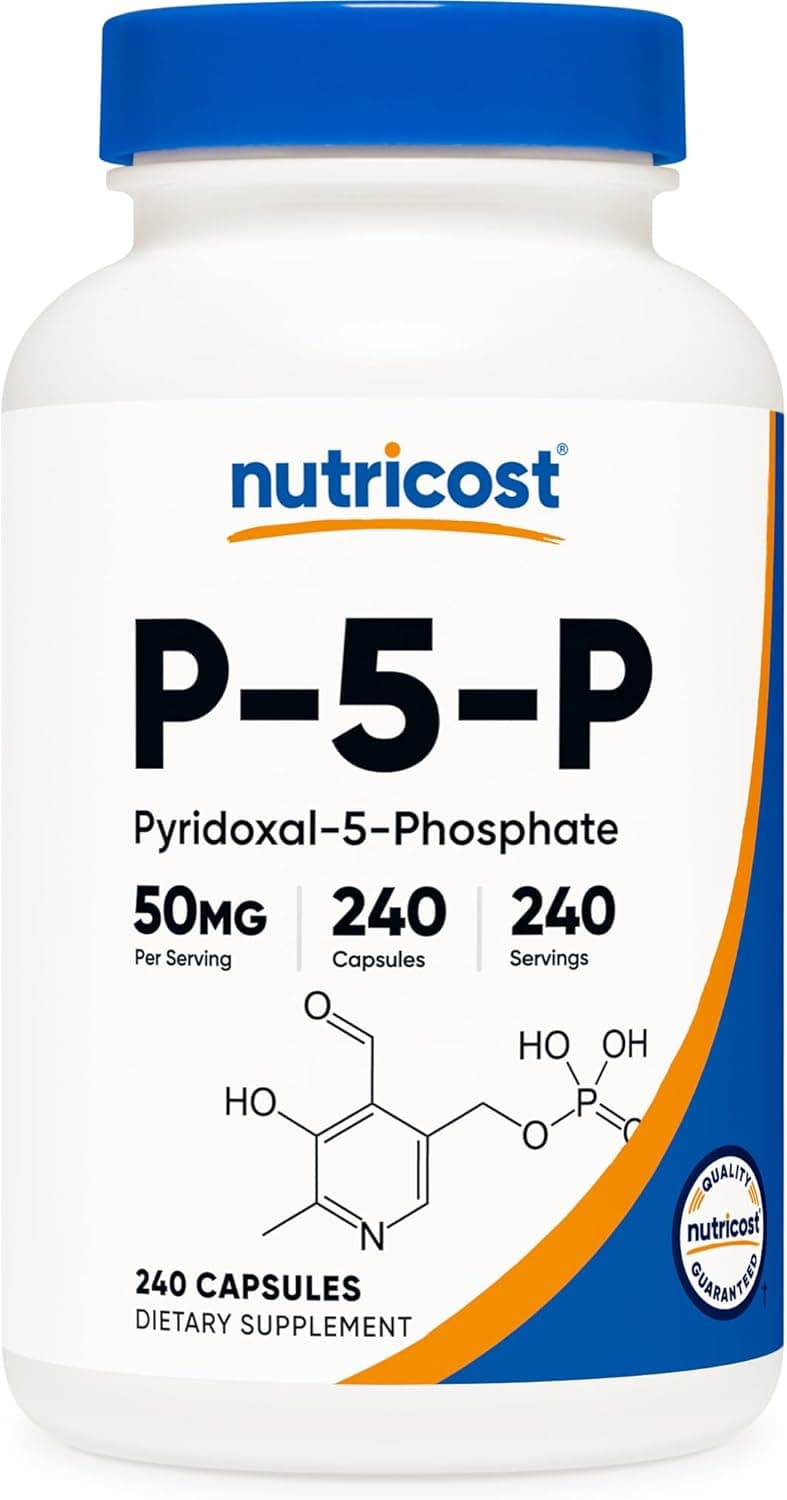
Suppliers
Vendors carrying Pyridoxal-5-Phosphate, with live product details and codes. Links are affiliate links that support the wiki at no cost to you.
Amazon
Pyridoxal-5-Phosphate
Research
- 1967first citedPyridoxal phosphate.
- 2017most active year3 papers
- 2024most recentEffect of Methylfolate, Pyridoxal-5'-Phosphate, and Methylcobalamin (Soloways(TM)) Supplementat…
- 1.Vitamin B6 in Health and Disease.
- 2.Pyridoxal 5'-Phosphate-Dependent Enzymes at the Crossroads of Host-Microbe Tryptophan Metabolism.
- 3.Pyridoxal phosphate.
- 4.Consensus guideline for the diagnosis and treatment of aromatic l-amino acid decarboxylase (AADC) deficiency.
- 5.Pyridoxine or pyridoxal-5-phosphate treatment for seizures in glycosylphosphatidylinositol deficiency: A cohort study.
- 6.Pyridoxal 5 phosphate for neuroleptic-induced tardive dyskinesia.
- 7.Effect of Methylfolate, Pyridoxal-5'-Phosphate, and Methylcobalamin (Soloways(TM)) Supplementation on Homocysteine and Low-Density Lipoprotein Cholesterol Levels in Patients with Methylenetetrahydrofolate Reductase, Methionine Synthase, and Methionine Synthase Reductase Polymorphisms: A Randomized Controlled Trial.
- 8.Systemic Manifestations in Pyridox(am)ine 5'-Phosphate Oxidase Deficiency.
- 9.Revisiting the evidence for neuropathy caused by pyridoxine deficiency and excess.
- 10.Preventing Vitamin B6-Related Neurotoxicity.
- 11.Inborn errors in the vitamin B6 salvage enzymes associated with neonatal epileptic encephalopathy and other pathologies.
- 12.B6-responsive disorders: a model of vitamin dependency.
20 listed here; entry last updated August 2026
Reviews
My notesprivate to this device
FAQ
How is P5P different from regular B6?
P5P is the already-active coenzyme form, so it skips the liver conversion that pyridoxine needs.
Why use it for mood?
B6 is a required cofactor for making serotonin, dopamine, and GABA, all central to mood.
Can I take a lot of it?
No; chronically high B6 can cause reversible nerve tingling, so keep doses moderate.
Does it help sleep?
By supporting serotonin and GABA it can indirectly help, and some report more vivid dreams.
Is it good for PMS?
B6 has some of the better evidence among supplements for easing PMS symptoms.
Adverse effects
- Very high, prolonged intakes of vitamin B6 have been associated with reversible sensory nerve symptoms
Notes and cautions
- As a natural vitamin form, pyridoxal-5-phosphate is generally well tolerated at nutritional intakes
- Deficiency, rather than excess, is the more common concern and can affect the nerves, skin, and blood
- It is regulated as a nutrient and supplement ingredient rather than as a medicine