
spec sheet13 rows
Dehydroepiandrosterone (DHEA) is an endogenous androstane neurosteroid and the most abundant circulating steroid hormone in humans, secreted chiefly by the adrenal cortex and also synthesized de novo within the central nervous system. It functions primarily as a precursor to androgens and estrogens, yet exerts direct actions on the brain by acting as an agonist at the sigma-1 receptor (an endoplasmic reticulum chaperone protein that shapes calcium and neurotrophic signaling), as a positive modulator of NMDA receptor (the principal excitatory glutamate ion channel involved in learning) signaling, and, chiefly as its sulfate ester DHEAS, as a negative allosteric modulator of the GABA-A receptor (the brain's main inhibitory ion channel). DHEA additionally behaves as a functional anti-glucocorticoid, buffering the neurotoxic effects of cortisol, and shows neuroprotective and mood-related activity in preclinical and clinical studies. Circulating concentrations peak in early adulthood and decline markedly with age, a phenomenon termed adrenopause that has driven its widespread use as an over-the-counter supplement.
- The body’s most abundant steroid hormone; it falls with age
- FDA approved as vaginal prasterone for painful sex
- Lifts mood and vitality in older adults with genuinely low levels
- Buffers the wear of chronic cortisol on the brain
- A neurosteroid too, sigma 1 agonist, not merely a precursor
- Restores wellbeing and sexual function in adrenal insufficiency
- Androgenic effects such as acne or oily skin
- Facial hair growth or scalp hair thinning
- Hormonal effects in estrogen-sensitive or androgen-sensitive conditions
Overview
Dehydroepiandrosterone is a C19 steroid that ranks among the most plentiful steroids in human circulation. Most of it travels in the bloodstream as its sulfated ester, DHEA-S, which is present at far higher concentrations than free DHEA and acts as a slowly released reservoir that prolongs the compound's biological presence [1]. The two forms interconvert, and clinicians often measure DHEA-S as a marker of adrenal androgen output.
The hormone is synthesized mainly in the zona reticularis of the adrenal cortex, with additional production in the gonads and in the brain [1]. Rather than acting strongly on its own, DHEA functions largely as an intracrine precursor: peripheral tissues take it up and use their own enzymes to convert it into active androgens and estrogens that then work locally, an arrangement that lets different tissues tune their own hormone exposure [1][2]. Circulating levels rise through puberty, peak around the third decade of life, and then decline gradually, reaching low, prepubertal-like values in advanced age; this age-related fall is what first drew attention to DHEA as a possible anti-aging agent [1][3].
Because of that decline, DHEA has been marketed as a supplement aimed at improving wellbeing, libido, mood, and body composition, although reviews of controlled trials in otherwise healthy postmenopausal women describe inconsistent results and limited safety data [3]. The strongest signal for benefit appears in people with adrenal insufficiency, whose own production is impaired [3]. DHEA has also been studied in reproductive medicine as an androgen precursor that may support ovarian follicle development in women with diminished ovarian reserve [4], and it has been examined for effects on bone, immune function, endothelial function, and insulin sensitivity, though its overall clinical value remains unsettled [1].
In the United States, DHEA is sold over the counter as a dietary supplement, while a purified form, prasterone, is available by prescription, including an intravaginal preparation used for painful intercourse associated with vaginal atrophy. Regulatory treatment differs by country, with some jurisdictions classifying it as a prescription or controlled substance, and the World Anti-Doping Agency prohibits it in competitive sport because of its conversion to testosterone. It is supplied as oral capsules and tablets, as intravaginal inserts, and in topical formulations.

- DHEAS is the single most abundant steroid hormone in the human bloodstream, yet DHEA has no confirmed dedicated nuclear receptor of its own.
- The word neurosteroid was coined largely because DHEAS was found to remain in the brain after the adrenal glands and gonads were removed, proving the brain makes it in situ.
- Blood DHEA peaks in the third decade of life and falls by roughly 70 to 80 percent by old age, a decline nicknamed adrenopause.
- DHEA is exempt from United States anabolic-steroid control under the 1994 supplement law, but it is nonetheless banned in competitive sport by the World Anti-Doping Agency.
Mechanism
DHEA is biosynthesized from cholesterol, which is first converted to pregnenolone by the cholesterol side-chain cleavage enzyme (CYP11A1, also called P450scc); pregnenolone is then hydroxylated and cleaved by CYP17A1 (which carries both 17-alpha-hydroxylase and 17,20-lyase activities) to yield DHEA. DHEA is reversibly sulfated to DHEAS by the sulfotransferase SULT2A1 and regenerated by steroid sulfatase (STS), and it serves as the obligate intracrine precursor to androstenedione, testosterone, and, via aromatase, estradiol in peripheral tissues.
The brain expresses the enzymatic machinery to make DHEA and DHEAS locally, independent of adrenal and gonadal supply, which is the defining criterion of a neurosteroid. At the receptor level DHEA has no confirmed classical nuclear receptor; instead it acts through several membrane and signaling targets. It is an at the sigma-1 receptor, an endoplasmic-reticulum chaperone that potentiates -evoked neuronal excitation and noradrenaline release in the .
Its sulfate ester DHEAS is a non-competitive negative modulator (functional ) of the -A receptor, reducing inhibitory chloride currents, and both DHEA and DHEAS -receptor-mediated signaling, giving the pair a net pro-excitatory, pro-plasticity profile. DHEA binds the neurotrophin receptors TrkA and p75 (the high-affinity and low-affinity nerve growth factor receptors), activating pro-survival kinase cascades and suppressing apoptosis, and it engages a specific plasma-membrane receptor coupled to Gi proteins (Galpha i2 and i3) that activates endothelial synthase.
Functionally it opposes glucocorticoid signaling, protecting neurons from -associated toxicity, and it increases both tonic and phasic release in the striatum. Ring-hydroxylated metabolites such as 7-hydroxy-DHEA are formed in brain and contribute to its neuroprotective and immunomodulatory actions.
receptor fingerprint
Androgen synthesis (testosterone)precursor
synthesisprecursor
Adrenal androgen axissupplements
Sigma-1 receptorDHEA and DHEA-sulfate act as sigma-1 agonists (a neurosteroid action distinct from the hormone-precursor role)
TrkA (high-affinity receptor)Agonist
Glucocorticoid signalingFunctional antagonist (anti-glucocorticoid)
Neurosteroid signalingmodulates
Bone and skin metabolisminfluences
-A / receptors (as DHEA-sulfate)the sulfate is a GABA-A negative modulator and NMDA positive modulator, giving DHEA-S an excitatory, anti-'calming' neurosteroid profile
-A receptorNegative allosteric modulator (functional antagonist), chiefly as DHEAS
Positive modulator
p75 neurotrophin receptorLigand and modulator
Membrane Gi-coupled receptor (endothelial)Agonist
Androgen and receptors (via metabolites)Precursor
Dosingtypical ranges, not medical advice
interested in protocols and clinical dosages? make an account to see them! ^_^
Safetyrisks and cautions, not medical advice
DHEA is generally well tolerated at supplemental doses, but because it is a direct precursor to potent androgens and estrogens its adverse effects are largely hormonal. Reported side effects include acne, oily skin, facial hair growth and scalp hair thinning, and, in women, mild virilizing effects; in men, elevated estradiol and, theoretically, effects on prostate tissue are of concern.
It may lower HDL cholesterol in women and can, in principle, promote hormone-sensitive cancers, so it is contraindicated in people with a history of breast, ovarian, uterine, or prostate cancer. DHEA can also disturb sleep, provoke irritability or, uncommonly, mania in susceptible individuals, and it may interact with antidepressants, hormone therapies, and drugs metabolized by the liver. Long-term safety data are limited, and the quality of over-the-counter products varies widely; it is banned in competitive sport by the World Anti-Doping Agency.
History
DHEA was first isolated in 1934 by the German biochemist Adolf Butenandt and his colleague Kurt Tscherning, who crystallized it from male urine; the compound was long regarded as an inert adrenal by-product. Interest shifted to the brain in 1981, when Corpechot, Robel, Baulieu and colleagues demonstrated that DHEAS is present in rat brain at concentrations far exceeding plasma and persists after removal of the adrenals and gonads, proving local synthesis; on this basis Etienne-Emile Baulieu coined the term neurosteroid.
Passage of the Dietary Supplement Health and Education Act in 1994 left DHEA available over the counter in the United States even as related anabolic steroids were restricted, fueling its popularity as an anti-aging supplement. Large trials followed, including the French DHEAge study in 2000 and the DHEA depression trials of Wolkowitz and Schmidt, which established modest antidepressant signals while tempering broader anti-aging claims.
Reputation
DHEA occupies an unusual position between endocrinology and the supplement market. Within neuropharmacology it is respected as a foundational neurosteroid whose study helped define the field, and it carries reasonably credible evidence for antidepressant and pro-cognitive effects, particularly in midlife depression, adrenal insufficiency, and stress resilience. In the wider wellness culture it is often marketed with exaggerated anti-aging, libido, and body-composition claims that clinical trials only partially support. Serious commentators treat it as a genuine hormone rather than a benign vitamin, cautioning that its precursor status makes self-dosing less trivial than typical nootropics; it remains one of the most widely used yet most debated over-the-counter neuroactive steroids.
Subjective profileweighing the evidence above
Can help older adults with genuinely low levels, but it's a real hormone precursor; test, start low, and don't take it casually if you're young.
Where to buy
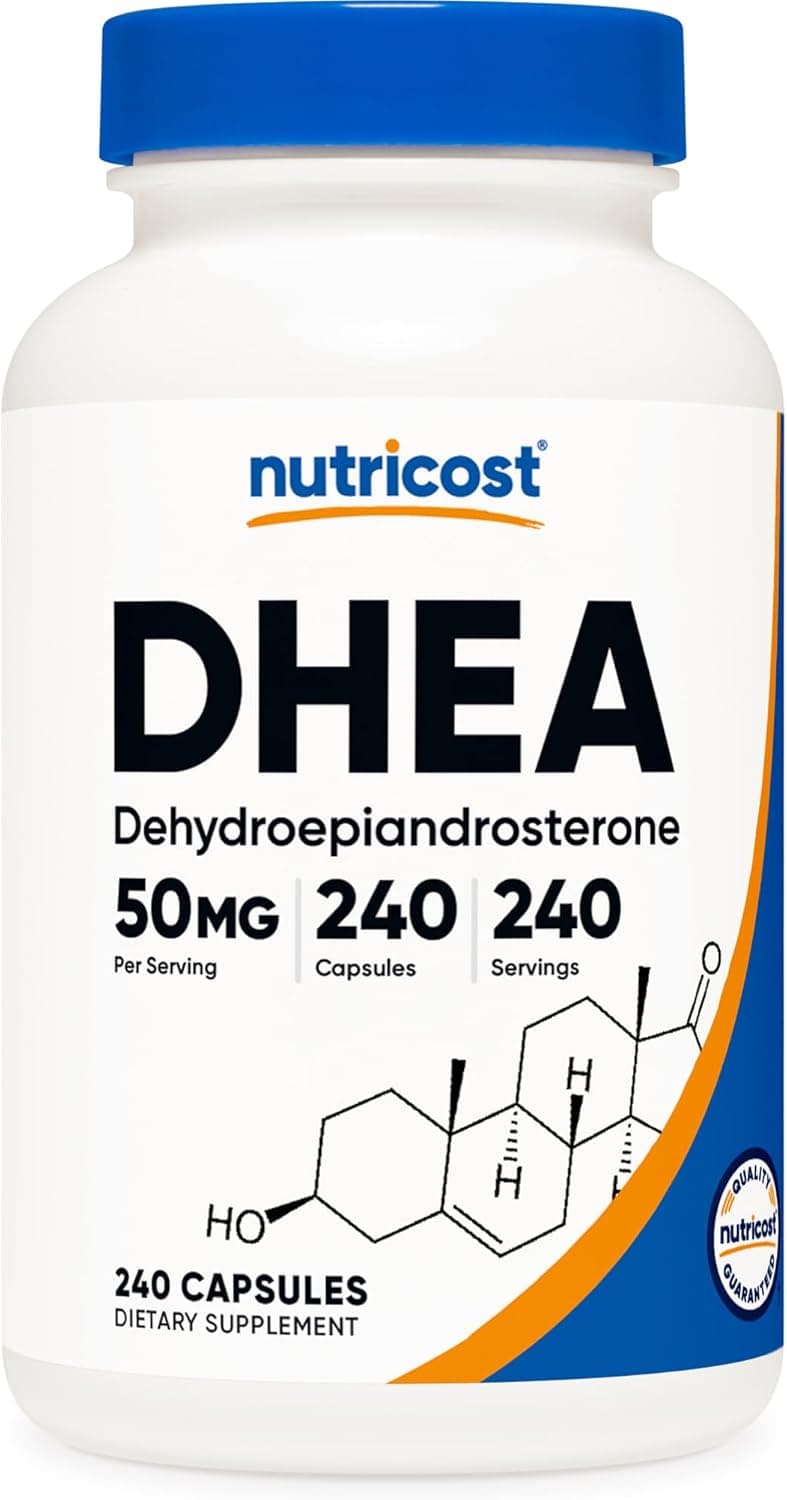
2 other outlets

Suppliers
Vendors carrying DHEA, with live product details and codes. Links are affiliate links that support the wiki at no cost to you.
Amazon
DHEA

iHerb
DHEA
iHerb
DHEA
Research
- 1981first citedCharacterization and measurement of dehydroepiandrosterone sulfate in rat brain.
- 1998most active year3 papers
- 1999controlled trialDouble-blind treatment of major depression with dehydroepiandrosterone.
- 2025most recentThe Sex Hormone Precursors Dehydroepiandrosterone (DHEA) and Its Sulfate Ester Form (DHEAS): Mo…
- 1.Dehydroepiandrosterone (DHEA): a precursor steroid or an active hormone in human physiology
- 2.Novel mechanisms for DHEA action
- 3.DHEA therapy for women: effect on sexual function and wellbeing
- 4.Reduced quality and accelerated follicle loss with female reproductive aging - does decline in theca dehydroepiandrosterone (DHEA) underlie the problem?
- 5.Dehydroepiandrosterone (DHEA): Pharmacological Effects and Potential Therapeutic Application.
- 6.The Sex Hormone Precursors Dehydroepiandrosterone (DHEA) and Its Sulfate Ester Form (DHEAS): Molecular Mechanisms and Actions on Human Body.
- 7.Neurobiological and neuropsychiatric effects of dehydroepiandrosterone (DHEA) and DHEA sulfate (DHEAS).
- 8.Is there a receptor for dehydroepiandrosterone or dehydroepiandrosterone sulfate?
- 9.Dehydroepiandrosterone metabolism.
- 10.Anti-glucocorticoid effects of dehydroepiandrosterone (DHEA).
- 11.Dehydroepiandrosterone (DHEA): hypes and hopes.
- 12.Dehydroepiandrosterone replacement therapy.
30 listed here; entry last updated August 2026
Reviews
My notesprivate to this device
FAQ
Should I test my levels first?
yes, ideally. DHEA and its sulfate (DHEA-S) are easy to measure, and supplementing blindly can push already-normal levels too high, especially in younger people who do not need it. the strongest rationale is age-related decline or documented adrenal insufficiency.
Is it safe for young people?
generally it is unnecessary and not advised for young, healthy people; their levels are already near lifetime peaks, and adding DHEA mainly risks raising androgens/estrogens (acne, hair changes, cycle changes) without benefit.
Does it help libido and mood?
there is modest evidence for mood and sexual wellbeing in older adults and in adrenal insufficiency, and vaginal prasterone (Intrarosa) is FDA-approved for painful sex from vaginal atrophy. general 'anti-aging' and athletic claims are weakly supported.
Is it a hormone or a neurosteroid?
both. systemically it is a precursor the body turns into testosterone and estrogens. in the brain DHEA and DHEA-sulfate are neurosteroids too, acting as sigma-1 agonists and (as the sulfate) modulating GABA-A and NMDA receptors, which is the basis for interest in mood and cognition.
What is DHEA-S and is it different?
DHEA-S is the sulfated storage form of DHEA; the two interconvert and DHEA-S is what most blood tests measure because it is more stable. as a neurosteroid the sulfate is the more directly-acting, excitatory form.
Is it allowed in sports?
no; DHEA is on the WADA prohibited list as an anabolic/androgenic agent at all times, because it raises testosterone. athletes subject to testing should avoid it.
Can it interfere with hormone-sensitive conditions?
yes; because it converts to estrogens and androgens, it can be a problem in hormone-sensitive cancers (breast, prostate), PCOS, and for people on hormone therapy. check with a clinician first.
Is DHEA a steroid or a supplement?
Both. DHEA is a genuine endogenous steroid hormone made by the adrenal glands, gonads, and brain, but under United States law it is sold over the counter as a dietary supplement. It is best treated as a hormone, not an inert nutrient.
How does DHEA differ from pregnenolone?
Both are upstream neurosteroids, but pregnenolone sits earlier in the pathway and is the parent of many steroids, whereas DHEA lies further downstream and is committed toward androgens and estrogens. DHEA is a sigma-1 agonist and, as DHEAS, a GABA-A negative modulator, giving it a more pro-excitatory and androgenic profile than pregnenolone.
Does DHEA actually work for depression?
Controlled trials, notably those by Wolkowitz and Schmidt, found modest but real antidepressant effects in midlife depression, and it improved symptoms in schizophrenia and adrenal insufficiency. The effect is meaningful but not a substitute for standard antidepressants in severe illness.
Why do DHEA levels matter as we age?
DHEA and DHEAS decline to a fraction of their youthful peak by old age, and lower levels have been associated with reduced well-being and cognitive resilience, which is the rationale behind supplementation; however, replacing the hormone does not reliably reverse aging.
Is DHEA safe to take every day?
At 25 to 50 mg it is generally well tolerated in the short term, but because it converts into potent sex hormones it can cause androgenic side effects and is not advised for people with hormone-sensitive cancers; periodic monitoring of hormone levels is prudent for long-term use.
Adverse effects
- Androgenic effects such as acne or oily skin
- Facial hair growth or scalp hair thinning
- Hormonal effects in estrogen-sensitive or androgen-sensitive conditions
- Acne and oily skin
- Unwanted facial or body hair growth and scalp hair thinning
- Virilizing effects in women, including voice changes and menstrual irregularity
- Raised estradiol and potential effects on hormone-sensitive tissue in men
- Insomnia or disrupted sleep, particularly with evening dosing
- Irritability, agitation, or rarely mania in susceptible individuals
- Possible lowering of HDL cholesterol in women
Notes and cautions
- Prohibited in competitive sport