
spec sheet16 rows
Pregnenolone (3β-hydroxypregn-5-en-20-one) is an endogenous neurosteroid and the first steroid synthesized from cholesterol, making it the obligatory precursor of every other steroid hormone, including progesterone, dehydroepiandrosterone (DHEA), cortisol, the sex steroids, and the neuroactive metabolites allopregnanolone and pregnenolone sulfate. Once regarded as a metabolically inert intermediate, it is now recognized as a signaling molecule in its own right, most notably as an endogenous negative allosteric modulator of the type-1 cannabinoid receptor (CB1, the principal brain receptor for THC) and as a ligand for microtubule-associated protein 2 (MAP2, a neuronal cytoskeletal scaffolding protein), through which it promotes microtubule assembly and neurite outgrowth. Synthesized de novo in the brain by neurons and glia, it is investigated as an adjunctive treatment for schizophrenia, mood disorders, and cannabis-related conditions, and is sold over the counter as a nootropic and hormonal supplement.
- The mother hormone; every steroid starts here
- Backed for memory and learning
- Supports steady mood and stress resilience
- Feeds DHEA and the calming neurosteroids
- Doubles as the brain's CB1 dimmer switch
- Neuroprotective signaling in preclinical models
- Headache or drowsiness reported by some users
- The metabolite pregnenolone sulfate is excitatory (NMDA-potentiating and GABA-A-inhibiting), which may translate into overstimulation, anxiety, or insomnia in sensitive users
- Headache and irritability reported in some clinical trials
Overview
Pregnenolone occupies a foundational position in steroid biology. It is the first steroid the body makes from cholesterol, formed when the mitochondrial enzyme P450scc removes part of the cholesterol side chain, and it serves as the precursor from which progestogens, androgens, estrogens, glucocorticoids and mineralocorticoids are all synthesized [1]. Chemically it is 3-beta-hydroxypregn-5-en-20-one; it is fat-soluble and crosses the blood-brain barrier readily, whereas its water-soluble sulfate ester, pregnenolone sulfate, does not [1].
Beyond being a hormone precursor, pregnenolone is an active neurosteroid produced within the brain, where it is found at relatively high concentrations in some regions [1]. It affects the working of synapses, has neuroprotective effects, and promotes myelination and the outgrowth of nerve fibres. One well-characterised molecular action is its binding to microtubule-associated protein 2 (MAP2), which stimulates the assembly of microtubules and supports neurite growth [4]. Notably, pregnenolone itself has little direct hormonal activity of the progestogenic, androgenic or estrogenic type; much of its influence comes through its downstream metabolites [1].
Interest in pregnenolone as a supplement dates back to mid-20th-century studies, and it is now marketed for memory, mood and stress. The research picture is mixed but active. In animal studies pregnenolone and its sulfate ester improve learning and memory, particularly in aged rodents, though human findings have been inconsistent [3]. It has drawn particular attention in psychiatry: as an adjunctive treatment in schizophrenia, early controlled trials reported improvements in negative symptoms and some cognitive measures, prompting its description as a promising but unproven therapeutic candidate [2].
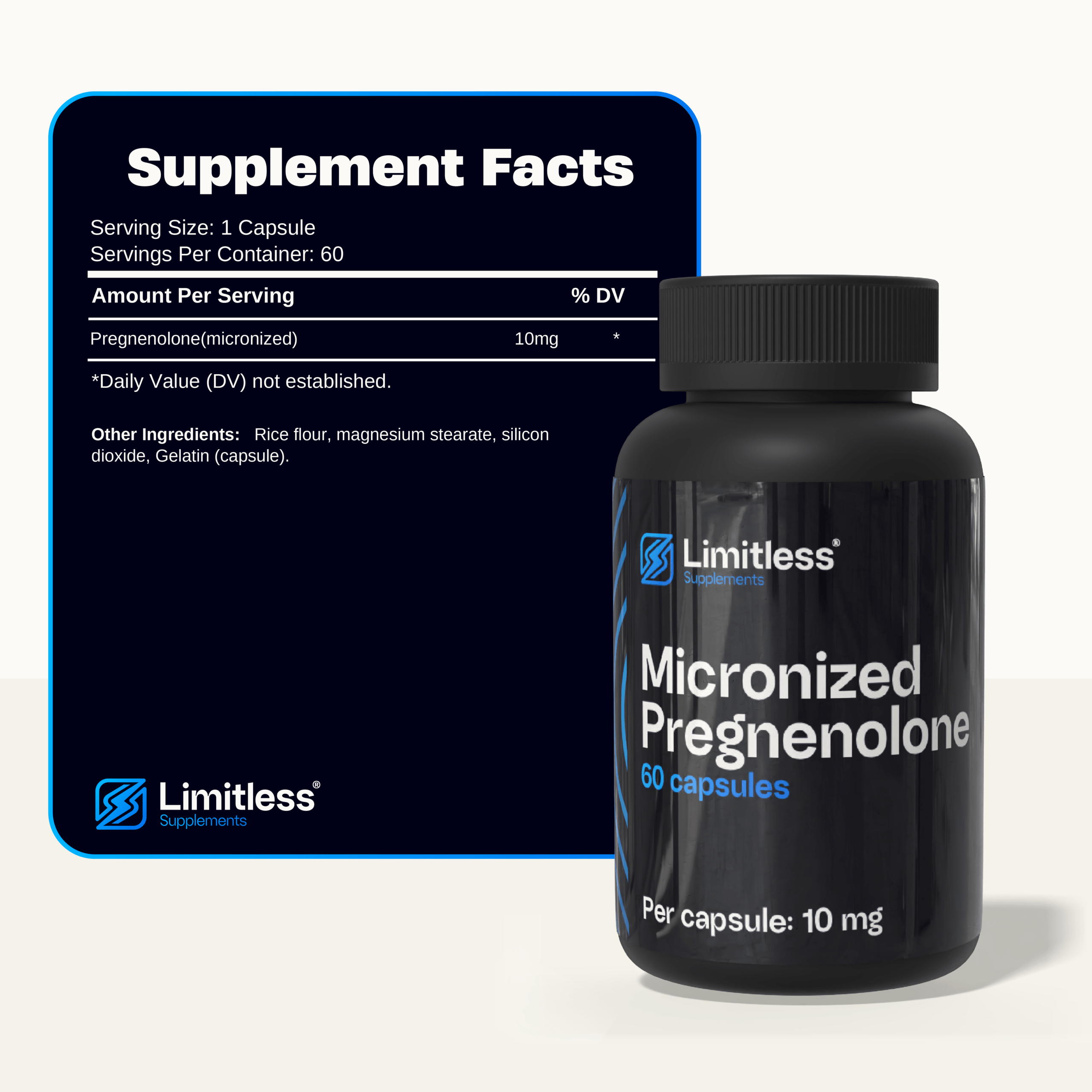
In the United States pregnenolone is sold as a dietary supplement rather than an approved medicine, and is available in capsule and tablet form. Because it sits upstream of so many hormones, its long-term effects and safety are not well characterised, and its use as a supplement is not backed by the kind of evidence required for approved drugs [1][2].

- Pregnenolone is the first steroid the body makes from cholesterol, and every other steroid hormone, from cortisol to testosterone to estrogen, is built downstream of it.
- It was studied as a treatment for fatigue and arthritis in the 1940s before cortisone stole the spotlight.
- In a 2014 randomized trial in schizophrenia, adjunctive pregnenolone significantly improved patients' functional capacity even though it did not move the main cognitive score.
- THC does not merely activate the brain's cannabinoid system; it drives the brain to sharply increase its own pregnenolone synthesis, which then acts as a built-in negative feedback signal that quiets the very CB1 receptor THC is stimulating.
- Pregnenolone's own receptor is not a classical membrane receptor but MAP2, a structural protein of the neuronal cytoskeleton; binding there stabilizes and extends microtubules, whereas the closely related steroid progesterone occupies the same site but blocks the effect.
- The sulfated metabolite pregnenolone sulfate is the most potent known endogenous agonist of the TRPM3 channel, a calcium-permeable ion channel also involved in heat sensing and pancreatic insulin release.
- A close relative, 7α-hydroxypregnenolone, is a locomotor-activating neurosteroid that in amphibians and birds drives daily movement rhythms through the dopamine system, making pregnenolone the parent of a natural motor stimulant.
Mechanism
Pregnenolone occupies the apex of steroidogenesis. It is generated in the inner membrane when the cytochrome P450 side-chain cleavage enzyme (CYP11A1, also called P450scc) removes six carbons from the cholesterol side chain; delivery of cholesterol to this enzyme is the rate-limiting step and is governed by the steroidogenic acute regulatory protein (StAR) and the 18 kDa translocator protein (TSPO), both expressed in brain.
Because this reaction is the committed first step of the pathway, pregnenolone is the obligatory precursor of progesterone (via 3β-hydroxysteroid dehydrogenase), 17-hydroxypregnenolone, DHEA, and thence all glucocorticoids, mineralocorticoids, androgens, estrogens, and the neurosteroid allopregnanolone. In the central nervous system it is additionally synthesized de novo as a neurosteroid, independent of the peripheral endocrine glands.
Pregnenolone itself has low affinity for classical neurotransmitter receptors; its direct actions are instead mediated by two non-canonical targets. First, it binds microtubule-associated protein 2 (MAP2) with high affinity (dissociation constant near 30 to 50 nM), promoting tubulin polymerization, microtubule stability, and neurite outgrowth; RNA interference against MAP2 abolishes this effect, defining MAP2 as a bona fide neurosteroid receptor, and notably progesterone binds the same site yet blocks rather than promotes assembly.
Second, it acts as an endogenous negative modulator and signaling-specific inhibitor of the CB1 cannabinoid receptor; CB1 overactivation by THC sharply raises brain pregnenolone, which then selectively dampens CB1-driven and MAPK signaling in a negative feedback loop.
Much of pregnenolone's remaining neuroactivity is exerted through its metabolites: pregnenolone sulfate (formed by sulfotransferase SULT2B1) is a positive modulator of GluN2A- and GluN2B-containing receptors yet an inhibitor of GluN2C/GluN2D subtypes, a negative allosteric modulator of -A receptors, an of the sigma-1 chaperone receptor, and the most potent endogenous agonist of the TRPM3 calcium-permeable cation channel; conversion to allopregnanolone yields a powerful positive modulator of GABA-A receptors; and 7α-hydroxylation yields 7α-hydroxypregnenolone, a locomotor-activating neurosteroid acting through dopaminergic pathways.
receptor fingerprint
Steroidogenesis (precursor pool)the parent steroid; converted to progesterone, DHEA, allopregnanolone and downstream sex/adrenal steroids
MAP2 (microtubule-associated protein 2)High-affinity ligand that promotes microtubule assembly
TRPM3 cation channel (via pregnenolone sulfate)Agonist; most potent known endogenous agonist
(via its sulfate , pregnenolone sulfate)the sulfated metabolite is a positive modulator; parent pregnenolone is largely a precursor here
-A receptor (via allopregnanolone )downstream conversion to allopregnanolone modulates GABAergic tone
CB1 cannabinoid receptorNegative allosteric modulator and signaling-specific inhibitor
(via pregnenolone sulfate)Positive allosteric modulator of GluN2A/GluN2B subtypes
-A receptor (via pregnenolone sulfate)Negative allosteric modulator
Sigma-1 receptor (via pregnenolone sulfate)the sulfate metabolite is a sigma-1 agonist
Microtubule / structure (pregnenolone itself)binds microtubule-associated protein MAP2; a proposed direct, non-genomic role in neurite growth
Pregnane X receptor (PXR)Weak agonist
Dosingtypical ranges, not medical advice
interested in protocols and clinical dosages? make an account to see them! ^_^
Safetyrisks and cautions, not medical advice
Pregnenolone is generally reported to be well tolerated in short-term clinical trials, including studies using doses far above supplement levels; reported adverse effects are usually mild and include headache, irritability, insomnia, and gastrointestinal upset. Its principal theoretical risk stems from its position at the head of the steroidogenic pathway: supplementation raises the substrate pool for androgens, estrogens, and glucocorticoids, so effects on hormone-sensitive tissues and on the hypothalamic-pituitary-adrenal axis are plausible but poorly quantified.
The excitatory metabolite pregnenolone sulfate, which potentiates NMDA receptors and inhibits GABA-A receptors, is a theoretical proconvulsant and may aggravate anxiety or insomnia. Long-term safety data in healthy adults are lacking, and interactions with hormonal therapies, antipsychotics, and drugs handled by enzymes under pregnane X receptor control have not been well studied; individuals with hormone-sensitive cancers or seizure disorders should be cautious.
History
Pregnenolone was isolated and characterized in the 1930s and 1940s during the intensive effort to identify the active principles of the adrenal cortex. In the 1940s it drew attention as a low-toxicity agent for rheumatoid arthritis and was studied for stress resistance and fatigue, including in workers and aviators, before interest collapsed after 1949 when cortisone proved far more potent as an anti-inflammatory and redirected industry toward the corticosteroids that pregnenolone gives rise to. The molecule was also central to the mid-century industrial production of steroids, being manufactured from the plant sapogenin diosgenin via the Marker degradation.
The modern neurosteroid era began in the 1980s, when Etienne-Emile Baulieu and colleagues showed that pregnenolone and its sulfate persist in the brain after removal of the peripheral steroidogenic glands, establishing that the nervous system makes steroids de novo; Baulieu coined the term neurosteroid. Later landmark findings reframed the once-inert precursor as a bioactive molecule: identification of MAP2 as its high-affinity target between 2000 and 2006, and the 2014 discovery that it is an endogenous inhibitor of CB1 signaling. This last finding launched a clinical program around synthetic signaling-specific CB1 inhibitors derived from pregnenolone, such as AEF0117, tested in cannabis use disorder.
Reputation
Within the nootropics and biohacking community, pregnenolone is marketed as a "master hormone" or "mother of all steroids" and is taken for memory, focus, mood, and stress resilience, often on the rationale that it replenishes an age-related decline in neurosteroid production. This reputation outpaces the clinical evidence: controlled trials are concentrated in psychiatric populations rather than healthy users, and results are mixed, with the most consistent signal being a modest reduction in the negative symptoms of schizophrenia.
Among neuroscientists, pregnenolone's scientific standing has risen sharply since 2014, less as a supplement than as the parent of the entire neurosteroid system and as the template for a novel class of signaling-specific CB1 inhibitors. Skeptics note that oral pregnenolone is extensively and unpredictably converted into dozens of downstream steroids, making its net effect in any given person hard to predict, and that a robust nootropic benefit in healthy adults remains unproven.
Subjective profileweighing the evidence above
A reasonable, cheap experiment for memory and mood, with genuine if modest evidence and a decent short-term tolerability record. Two things to watch: it feeds the whole steroid pathway, so hormone-sensitive situations warrant caution, and its sulfate metabolite is excitatory, so take it in the morning and stop if anxiety or insomnia show up.
Where to buy
3 other outlets

Suppliers
Vendors carrying Pregnenolone, with live product details and codes. Links are affiliate links that support the wiki at no cost to you.
Amazon
Pregnenolone
Limitless Biochem🌐
Pregnenolone

iHerb
Pregnenolone
iHerb
Pregnenolone
Research
- 1993first citedPregnenolone sulfate potentiation of N-methyl-D-aspartate receptor channels in hippocampal neur…
- 2014most active year4 papers
- 2023most recentSignaling-specific inhibition of the CB(1) receptor for cannabis use disorder: phase 1 and phas…
- 1.Neurosteroids and potential therapeutics: Focus on pregnenolone
- 2.Pregnenolone as a novel therapeutic candidate in schizophrenia: emerging preclinical and clinical evidence
- 3.Role of pregnenolone, dehydroepiandrosterone and their sulfate esters on learning and memory in cognitive aging
- 4.Microtubule-associated protein 2 (MAP2) is a neurosteroid receptor
- 5.Proof-of-concept randomized controlled trial of pregnenolone in schizophrenia
- 6.Pregnenolone can protect the brain from cannabis intoxication.
- 7.Pregnenolone blocks cannabinoid-induced acute psychotic-like states in mice.
- 8.New perspectives on the role of the neurosteroid pregnenolone as an endogenous regulator of type-1 cannabinoid receptor (CB1R) activity and function.
- 9.Pregnenolone does not interfere with the effects of cannabinoids on synaptic transmission in the cerebellum and the nucleus accumbens.
- 10.Signaling-specific inhibition of the CB(1) receptor for cannabis use disorder: phase 1 and phase 2a randomized trials.
- 11.Pregnenolone binds to microtubule-associated protein 2 and stimulates microtubule assembly.
- 12.MAPREG: toward a novel approach of neuroprotection and treatment of Alzheimer's disease.
30 listed here; entry last updated August 2026
Reviews
- i’m a fan
i like this. amazing to supplement with when on testosterone; insanely beneficial for mood, cognition, and aids in reducing za-induced anxiety and paranoia. amazingly calming too. love it
0 - honestly a must if on TRT
exogenous AAS shuts down your natural pregnanolone production, this and DHEA are musts while on gear IMO.
0
My notesprivate to this device
FAQ
Is pregnenolone a hormone?
it is the master precursor from which the body builds most steroid hormones (progesterone, DHEA, cortisol, testosterone, estrogens) and the neurosteroids. by itself it has fairly modest direct receptor activity; a lot of what it 'does' is really done by what it gets turned into.
Why take it in the morning?
because it feeds pathways that include activating/androgenic steroids and, via its sulfate, excitatory neurosteroid signaling; morning dosing is the common convention to avoid any activation interfering with sleep. this is practical convention more than hard trial data.
What does the human research actually show?
the most studied uses are as an add-on in schizophrenia and bipolar disorder (some signals for negative symptoms and cognition) and in cannabis use disorder. results are mixed and generally modest; it is investigational for these, not an established treatment, and the over-the-counter memory claims are weakly supported.
How is it different from pregnenolone sulfate?
pregnenolone is the neutral precursor; pregnenolone sulfate is its sulfated, directly-acting form that turns up NMDA receptors and turns down GABA-A. much of pregnenolone's proposed cognitive effect is attributed to conversion into the sulfate.
Who should be careful with it?
because it can feed sex-hormone and cortisol pathways, anyone with a hormone-sensitive condition (certain cancers, PCOS, hormone disorders) or on hormone therapy should be cautious and talk to a clinician. it can in principle shift downstream estrogen/testosterone/cortisol.
Does it help memory in healthy people?
the animal and mechanistic story is interesting (via the sulfate and NMDA/sigma-1 signaling), but solid human data for memory enhancement in healthy adults are lacking. treat bold cognitive claims skeptically.
Is it a neurosteroid or just a supplement?
both, sort of. it is genuinely made in the brain and is upstream of the active neurosteroids, but as a sold supplement its direct benefits are modest and its main role is as a precursor feeding the system.
Is pregnenolone a hormone or a nootropic?
Both, in effect. Pregnenolone is the endogenous precursor from which every steroid hormone is built, so it is fundamentally a hormonal molecule; it is also synthesized independently in the brain as a neurosteroid and is sold as a nootropic supplement for memory and mood. Its direct brain actions, on MAP2 and CB1, are distinct from its role as a hormone precursor.
What is the difference between pregnenolone and pregnenolone sulfate?
Pregnenolone sulfate is the sulfated metabolite, formed by attaching a sulfate group. The two behave very differently: pregnenolone itself binds MAP2 and inhibits CB1 signaling, whereas pregnenolone sulfate is an excitatory neuromodulator that potentiates NMDA receptors, inhibits GABA-A receptors, and activates sigma-1 and TRPM3, and is associated with memory enhancement but also with arousal and insomnia.
Does pregnenolone help with cannabis intoxication?
In animal models, yes; pregnenolone blocks many effects of THC by inhibiting CB1 signaling, and this discovery led to a synthetic pregnenolone-derived drug, AEF0117, which reduced the subjective effects of cannabis and cannabis self-administration in early human trials. Whether taking oral pregnenolone as a supplement meaningfully counters intoxication in people is not established.
Why is pregnenolone usually taken in the morning?
Because a portion is converted to pregnenolone sulfate, an arousing metabolite that potentiates NMDA receptors and blocks GABA-A receptors; taken late in the day it may interfere with sleep. Morning dosing also aligns with the body's natural steroidogenic rhythm.
Is pregnenolone proven to improve memory in healthy people?
No. The strongest cognitive data come from aged rodents, where low hippocampal pregnenolone sulfate tracks with poor memory and supplementation transiently restores performance, and from psychiatric trials in schizophrenia. Robust evidence for a nootropic benefit in healthy adults is lacking.
Limitations of the evidence
- Limited human safety data
- Long-term safety and effects on the hypothalamic-pituitary-adrenal axis are not well characterized in healthy adults
Adverse effects
- Headache or drowsiness reported by some users
- The metabolite pregnenolone sulfate is excitatory (NMDA-potentiating and GABA-A-inhibiting), which may translate into overstimulation, anxiety, or insomnia in sensitive users
- Headache and irritability reported in some clinical trials
Notes and cautions
- Possible hormone-related effects such as changes in mood or menstrual cycle
- Long-term use not well characterised
- Can be converted into androgens and estrogens, so higher doses may produce hormonal effects such as acne, irritability, or menstrual changes
- Sleep disturbance and vivid dreams reported anecdotally, plausibly linked to the arousing sulfated metabolite
- Theoretical concern for hormone-sensitive conditions given its position upstream of all steroid hormones