
spec sheet13 rows
Vitamin B6 (Pyridoxine) Vitamin B6 is a water-soluble essential nutrient that exists as several interconvertible forms; pyridoxine is the stable form used in most supplements and food fortification. In the body it is converted to pyridoxal-5-phosphate (PLP), the active coenzyme that drives well over a hundred distinct enzyme reactions, most of them in amino acid metabolism and in the synthesis of neurotransmitters such as serotonin, dopamine, and GABA. Because of that reach it is tied to mood, energy metabolism, and the clearing of homocysteine, and it is a first-line remedy for the nausea of early pregnancy and a popular one for premenstrual symptoms. It is cheap and generally safe, but chronic high doses are the one real catch, since they can cause a slowly reversible sensory nerve injury.
- Powers over a hundred enzyme reactions as active PLP
- Raw material for serotonin, dopamine and GABA
- First line remedy for the nausea of early pregnancy
- A popular, cheap answer to premenstrual symptoms
- Helps keep homocysteine in check
- Essential nutrient; low doses are cheap and dependable
- Prolonged high-dose pyridoxine can cause sensory nerve symptoms such as numbness and tingling
Overview
Vitamin B6 is not a single substance but a family of closely related compounds, the main dietary forms being pyridoxine, pyridoxal, and pyridoxamine along with their phosphorylated versions [1]. The body interconverts these forms and converts them to pyridoxal 5'-phosphate, abbreviated PLP, which is the metabolically active coenzyme; this activation step itself depends on riboflavin-derived cofactors [1]. Pyridoxine, the most chemically stable form, is the version most often used in supplements and food fortification [1].
As the coenzyme PLP, vitamin B6 assists well over a hundred enzyme reactions, the majority of them in amino acid metabolism [1]. It is required by the transaminase and decarboxylase enzymes that build and interconvert amino acids and by pathways that produce neurotransmitters including serotonin, dopamine, and gamma-aminobutyric acid [1]. PLP also participates in glycogen breakdown, the synthesis of heme for hemoglobin, and aspects of lipid metabolism, giving the vitamin a broad reach across physiology [1].
Deficiency of vitamin B6 is relatively uncommon in isolation and often accompanies shortfalls of other B vitamins [1]. When it occurs it can cause a scaling skin rash, cracking at the corners of the mouth, inflammation of the tongue, a weakened immune response, and, in more severe cases, confusion, depression, and, in infants, irritability and seizures [1]. Certain medications, notably the tuberculosis drug isoniazid, can interfere with vitamin B6 and provoke deficiency, which is why supplemental B6 is often given alongside such treatment [1].
Beyond correcting deficiency, vitamin B6 is used to prevent the neuropathy caused by isoniazid and has been studied for a range of conditions including nausea in pregnancy and premenstrual symptoms [1]. Evidence for broader claims is limited; observational associations between higher B6 intake and lower risk of some diseases have generally not been confirmed in randomized trials, and no clear benefit has been established for cognition or dementia [1]. Its role has also been examined in metabolic and cardiovascular disease through its influence on homocysteine [1].
Unusually for a water-soluble vitamin, vitamin B6 can be harmful in excess, and prolonged intake of high-dose pyridoxine supplements is a recognized cause of a sensory peripheral neuropathy that produces numbness, tingling, and unsteadiness [2][3]. The nerve injury preferentially affects sensory neurons and is thought to involve disturbance of the enzyme pyridoxal kinase and of gamma-aminobutyric acid signaling, and symptoms tend to improve after the supplement is stopped [2]. Because of this risk, several authorities have set upper limits on daily intake, and some jurisdictions require warning labels on higher-strength products [2][3].
Vitamin B6 was discovered in the 1930s as a dietary factor that cured a skin condition in rats, and its structure was determined and the vitamin synthesized before the end of that decade [1]. It is regulated as a food and dietary supplement, is added to fortified flour in a number of countries, and is sold both within multivitamins and as higher-dose single-nutrient products, the latter of which can exceed recommended safety limits [1][3].

Mechanism
Vitamin B6 is essentially a for its active coenzyme. Pyridoxine (along with the other B6 forms) is absorbed, then phosphorylated and oxidized in the liver to pyridoxal-5-phosphate (PLP), which is the form that actually catalyzes reactions [2]. PLP works by latching the amino group of amino acids onto a reactive aldehyde, a trick that lets it power an unusually wide set of enzymes; a genomic overview counted PLP-dependent enzymes among a few percent of all known enzyme activities [1].
Practically, that means B6 is the required cofactor for the aminotransferases and decarboxylases of amino acid metabolism, including aromatic L-amino acid decarboxylase (which makes and ) and decarboxylase (which makes the calming neurotransmitter ), as well as for cystathionine beta-synthase in the homocysteine-clearing transsulfuration pathway, delta-aminolevulinate synthase in heme production, and glycogen phosphorylase in releasing stored sugar [1][2]. The neurotransmitter and homocysteine roles are the biochemical basis for its mood, pregnancy-nausea, and cardiovascular associations, though as the outcome trials show, the biochemistry does not always translate into a clinical payoff [6].
receptor fingerprint
Aromatic amino acid decarboxylasecofactor
decarboxylasecofactor
Transaminase enzymescofactor
Pyridoxal-5-phosphate (PLP) coenzyme poolconverts to
Aromatic L-amino acid decarboxylasecofactor
Homocysteine metabolismcofactor
decarboxylase (GAD)cofactor
Cystathionine beta-synthasecofactor
Delta-aminolevulinate synthase (heme)cofactor
Dosingtypical ranges, not medical advice
interested in protocols and clinical dosages? make an account to see them! ^_^
Safetyrisks and cautions, not medical advice
As a water-soluble vitamin, excess is largely excreted and short-term use is very safe. The one real hazard is chronic high-dose pyridoxine, which can cause a sensory peripheral neuropathy (numbness, tingling, and clumsiness from nerve damage) that was first documented in people taking grams per day but has been reported at lower long-term doses as well [3]; it usually improves after stopping, though recovery can be slow. The tolerable upper intake is 100 mg a day. B6 can also blunt the effect of levodopa when that Parkinson's drug is taken without a decarboxylase inhibitor, and it may modestly lower blood levels of some antiepileptic drugs, so check with a clinician if those apply.
Interactionsdocumented pairs only, not exhaustive
Pyridoxine's most consequential interaction is with levodopa given without a decarboxylase inhibitor. Vitamin B6 is the cofactor for aromatic L-amino acid decarboxylase, so supplementing it accelerates conversion of levodopa to dopamine in the periphery, where dopamine cannot cross into the brain, and the antiparkinsonian effect is lost. Modern carbidopa and benserazide combinations block that peripheral pathway and are largely protected.
Several drugs run the other way and deplete B6. Isoniazid, cycloserine, hydralazine and penicillamine form hydrazone or carbonyl complexes with pyridoxal phosphate, which is why isoniazid causes a peripheral neuropathy that pyridoxine prevents. High-dose pyridoxine has in turn been reported to lower serum phenytoin and phenobarbital concentrations, which can cost seizure control.
In oncology, pyridoxine given alongside altretamine reduced tumour response in ovarian cancer trials, so the two are not usually paired.
Checking a whole stack? Run it through interactions + stacks.
History
Vitamin B6 was identified in the 1930s as the dietary factor that cured a scaly skin condition (acrodynia) in rats, and pyridoxine was first isolated and crystallized in 1938 by several groups working independently, including Samuel Lepkovsky. Its structure was determined and it was synthesized shortly after, and the microbiologist Esmond Snell later worked out the interconversions among the B6 forms and established pyridoxal phosphate as the active coenzyme. The name pyridoxine reflects its pyridine-ring chemistry.
Reputation
Vitamin B6 sits in the comfortable middle of the supplement world: a genuinely essential nutrient with a rock-solid biochemical role, a couple of legitimately useful clinical uses in pregnancy nausea and premenstrual symptoms, and a long tail of hopeful claims around energy, mood, and heart health that outrun the evidence. It is cheap, widely available in B-complex and prenatal formulas, and generally trusted. The one blemish on its reputation is the well-documented risk of sensory neuropathy from chronic high doses, which led regulators to cap the upper intake and has prompted scrutiny of the mega-dose B6 found in some energy and PMS products.
Subjective profileweighing the evidence above
An essential nutrient that is genuinely useful for pregnancy nausea and probably PMS; just do not megadose it, because chronic high pyridoxine can numb your nerves. Low-dose and boring is the right way to take B6.
Where to buy
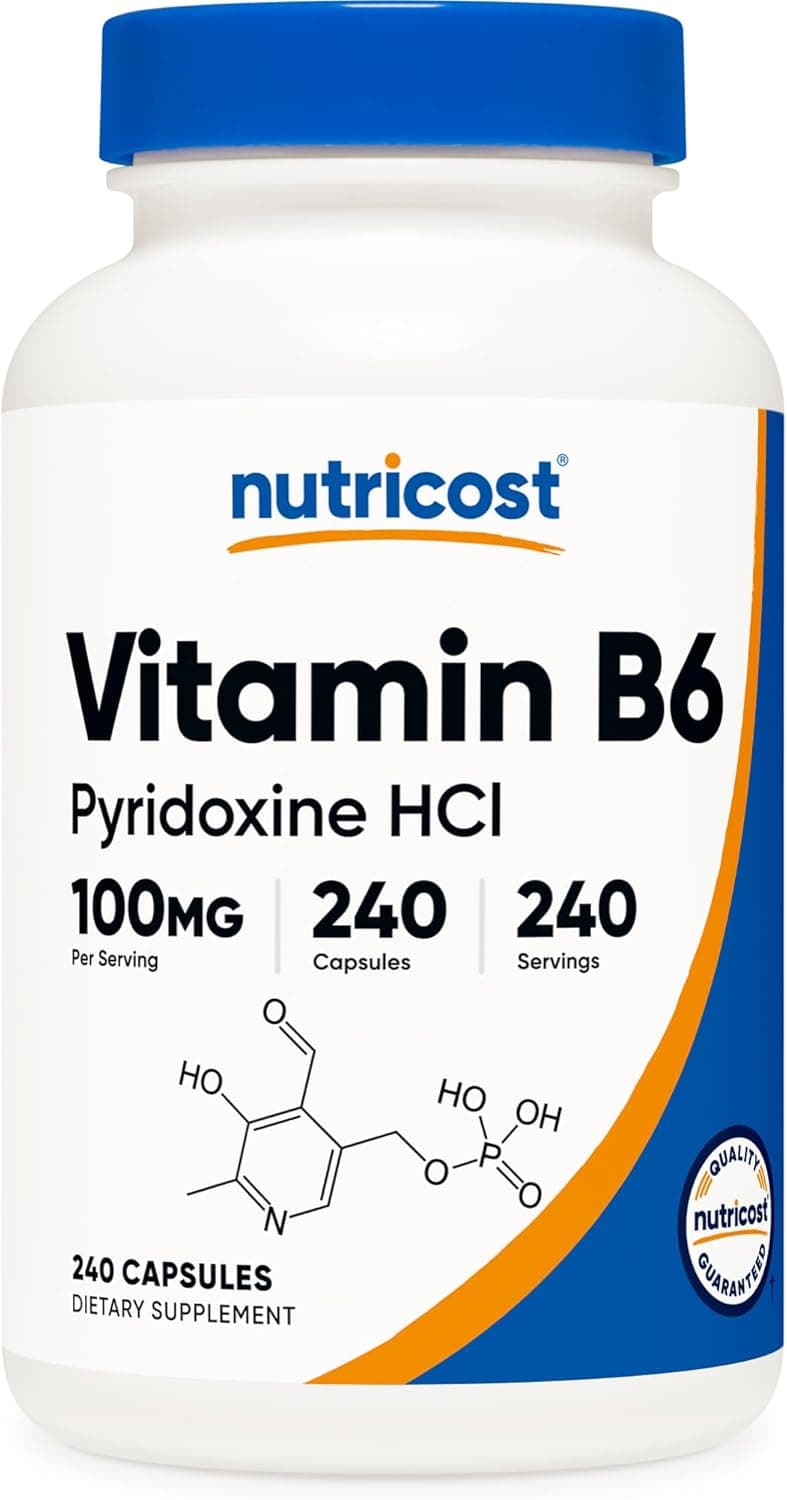
Suppliers
Vendors carrying Vitamin B6 (Pyridoxine), with live product details and codes. Links are affiliate links that support the wiki at no cost to you.
Amazon
Vitamin B6
Research
- 1983first citedSensory neuropathy from pyridoxine abuse. A new megavitamin syndrome
- 2010meta-analysisEffects of lowering homocysteine levels with B vitamins on cardiovascular disease, cancer, and…
- 2023most recentThe Role of Vitamin B6 in Peripheral Neuropathy: A Systematic Review
- 1.Vitamin B6 in Health and Disease
- 2.Vitamin B-6-Induced Neuropathy: Exploring the Mechanisms of Pyridoxine Toxicity
- 3.The Role of Vitamin B6 in Peripheral Neuropathy: A Systematic Review
- 4.A genomic overview of pyridoxal-phosphate-dependent enzymes
- 5.Vitamin B₆ and Its Role in Cell Metabolism and Physiology.
- 6.Sensory neuropathy from pyridoxine abuse. A new megavitamin syndrome
- 7.Efficacy of vitamin B-6 in the treatment of premenstrual syndrome: systematic review
- 8.Vitamin B6 is effective therapy for nausea and vomiting of pregnancy: a randomized, double-blind placebo-controlled study
- 9.Effects of lowering homocysteine levels with B vitamins on cardiovascular disease, cancer, and cause-specific mortality: Meta-analysis of 8 randomized trials involving 37 485 individuals
9 listed here; entry last updated August 2026
Reviews
My notesprivate to this device
FAQ
What is P5P?
Pyridoxal-5-phosphate, the active coenzyme form of B6 that skips a conversion step.
Can B6 improve mood?
It is essential for making mood neurotransmitters, so correcting a shortfall can help; it is not a standalone antidepressant.
Is high-dose B6 dangerous?
Yes, chronic high doses can cause reversible nerve damage. Keep long-term intake modest.
Does B6 help with PMS?
There is reasonable evidence it can ease some PMS symptoms at moderate doses.
Adverse effects
- Prolonged high-dose pyridoxine can cause sensory nerve symptoms such as numbness and tingling
Notes and cautions
- Nerve symptoms usually improve after stopping the supplement
- Ordinary dietary and low supplemental amounts are considered safe