
data + articles · 5 listed
newest 2024spec sheet12 rows
N-Acetyl Glucosamine (GlcNAc) is an acetylated derivative of the amino sugar glucosamine and a fundamental building block in biology, forming part of chitin, glycosaminoglycans, hyaluronan, and the glycans attached to many proteins. It occurs naturally in the body and in the exoskeletons of insects and crustaceans, and it is sold as a dietary supplement that is chemically distinct from ordinary glucosamine. Research has examined it in inflammatory bowel disease and, more recently, as an oral modulator of immune glycosylation in multiple sclerosis, although human evidence remains modest.
- A raw building block for cartilage and connective tissue
- Feeds hyaluronan, the molecule that holds water in skin
- Chemically distinct from ordinary glucosamine, not the same supplement
- Studied for gut lining support and immune glycosylation
- Hydrates skin when used topically
- Safe, well tolerated, and cheap to try
- Mild gastrointestinal upset
Overview
N-Acetyl Glucosamine is a monosaccharide formed when an acetyl group is joined to glucosamine, giving a molecule that the body uses widely in structural and signaling roles [4]. It is the repeating unit of chitin, the polymer that makes up the exoskeletons of arthropods, and it alternates with N-acetylmuramic acid in the peptidoglycan of bacterial cell walls [4]. Within human tissue it is incorporated into glycosaminoglycans and hyaluronan, and it serves as the first sugar attached to asparagine residues during N-linked glycosylation of proteins [4]. A related modification, O-GlcNAcylation, adds a single GlcNAc unit to serine or threonine residues and acts as a reversible regulatory switch broadly comparable to phosphorylation [4].
Because glycosaminoglycan turnover is disrupted at inflamed mucosal surfaces, N-Acetyl Glucosamine has been explored as a substrate for tissue repair. A pilot study in children with treatment-resistant inflammatory bowel disease reported histological and clinical improvement when the sugar was given orally or rectally as an adjunct, alongside increased tissue glycosaminoglycan content [1]. A separate line of work connects GlcNAc to immune regulation; by feeding the hexosamine pathway it promotes branching of N-linked glycans on T cells, which dampens pro-inflammatory T-helper 1 and T-helper 17 responses [2]. Oral GlcNAc reduced disease severity in an animal model of multiple sclerosis [2], and a small open-label mechanistic trial in people with multiple sclerosis found that it raised serum GlcNAc, altered lymphocyte glycosylation, and lowered inflammatory and neurodegeneration markers [3].
N-Acetyl Glucosamine is generally regarded as a nontoxic nutritional agent and is marketed as a supplement in capsule or powder form; some material is derived from shellfish, which is relevant to people with shellfish sensitivities [1]. It is chemically and functionally distinct from glucosamine sulfate and glucosamine hydrochloride, the forms more commonly studied for joint health. Because the free sugar enters cells relatively inefficiently, researchers have investigated acetylated pro-drug variants, such as a 6-acetate form, that cross membranes more readily [5]. Overall the human evidence remains limited and largely preliminary, and controlled trials have been called for to establish where it is genuinely useful [1][3].

Mechanism
N-Acetyl Glucosamine acts largely by supplying the hexosamine biosynthetic pathway, which produces UDP-GlcNAc, the donor sugar used to build and branch N-linked glycans and to carry out O-GlcNAcylation [4][5]. In immune cells, greater N-glycan branching increases the surface residence of inhibitory receptors and raises the activation threshold of T cells, shifting the balance away from inflammatory T-helper 1 and T-helper 17 differentiation and toward regulatory phenotypes [2].
In the gut, the same sugar is incorporated into the glycosaminoglycans and glycoproteins of the mucosal barrier, providing raw material for repair at sites where inflammation accelerates their breakdown [1]. Activated T cells normally divert glucose and glutamine away from this pathway, so supplying GlcNAc directly can restore branching, an effect that acetylated derivatives enhance by improving cellular uptake [5].
receptor fingerprint
Glycosaminoglycan synthesisprovides substrate
Protein N-glycosylationsupports
Gut mucosal liningsupports
Hyaluronic acid productionsupports
Dosingtypical ranges, not medical advice
interested in protocols and clinical dosages? make an account to see them! ^_^
Safetyrisks and cautions, not medical advice
NAG is generally well tolerated, with occasional mild GI symptoms. Unlike some glucosamine salts, it is not bound to sodium or potassium. People with shellfish allergy should check the source, though reactions are uncommon. Long-term high-dose data is limited.
Subjective profileweighing the evidence above
A safe amino-sugar supplement with plausible joint, gut, and immune roles but only modest evidence; low risk to try.
Where to buy
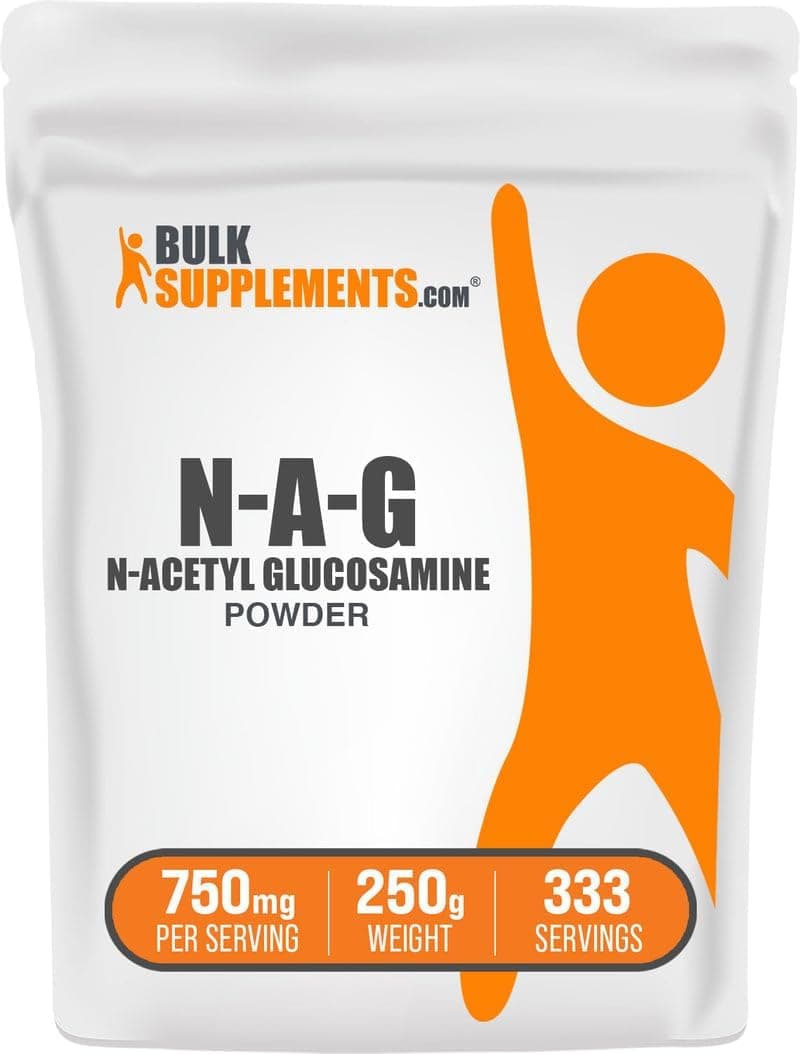
Suppliers
Vendors carrying N-Acetyl Glucosamine, with live product details and codes. Links are affiliate links that support the wiki at no cost to you.
Amazon
N-Acetyl Glucosamine
Research
- 2000first citedA pilot study of N-acetyl glucosamine, a nutritional substrate for glycosaminoglycan synthesis,…
- 2024most recentGlycosylation: mechanisms, biological functions and clinical implications
- 1.A pilot study of N-acetyl glucosamine, a nutritional substrate for glycosaminoglycan synthesis, in paediatric chronic inflammatory bowel disease
- 2.N-acetylglucosamine inhibits T-helper 1 (Th1)/T-helper 17 (Th17) cell responses and treats experimental autoimmune encephalomyelitis
- 3.N-acetylglucosamine inhibits inflammation and neurodegeneration markers in multiple sclerosis: a mechanistic trial
- 4.Increasing cell permeability of N-acetylglucosamine via 6-acetylation enhances capacity to suppress T-helper 1 (TH1)/TH17 responses and autoimmunity
- 5.Glycosylation: mechanisms, biological functions and clinical implications
5 listed here; entry last updated August 2026
Reviews
My notesprivate to this device
FAQ
How is NAG different from glucosamine sulfate?
NAG is the acetylated sugar and isn't bound to a salt; it feeds into slightly different downstream molecules and may have broader glycosylation roles.
Is it good for joints?
It supplies connective-tissue building blocks, but joint evidence is modest and mixed, similar to glucosamine overall.
Can it help gut issues?
There's early interest in inflammatory bowel disease due to gut-lining support, but the data is limited.
Is it safe with a shellfish allergy?
Many products are shellfish-derived; look for a plant or fermentation source if you're concerned.
Does it help skin?
Topically it may support hyaluronic acid and even skin tone, but effects are modest.
Limitations of the evidence
- Human evidence modest and mostly preliminary
- Limited long-term safety data
Adverse effects
- Mild gastrointestinal upset
Notes and cautions
- May be shellfish-derived, relevant for allergies