
spec sheet14 rows
Prednisolone is a synthetic corticosteroid (a glucocorticoid) with strong anti-inflammatory and immune-suppressing effects. It is used across a wide range of conditions, including allergies, asthma, rheumatoid arthritis and other autoimmune and inflammatory diseases, and it is the active form into which the related drug prednisone is converted in the body. Listed by the World Health Organization as an essential medicine, it is widely available as an inexpensive generic in oral, injectable and eye-drop forms.
- Fast, powerful relief when inflammation is out of control
- Often the only thing that settles a severe flare
- Works across allergies, asthma, and rheumatoid arthritis
- Calms an overactive immune system across many organ systems
- World Health Organization essential medicine, cheap generic
- Comes as tablets, injections, and eye drops
- Increased appetite and weight gain
- Difficulty sleeping and mood changes
- Raised blood sugar
Overview
Prednisolone is a synthetic glucocorticoid, a steroid of the pregnane family closely related to the body's own stress hormone cortisol; it is prized for its potent anti-inflammatory and immunosuppressive actions [1]. Chemically it differs only slightly from prednisone, and the two are closely linked in use.
The drug was developed in the mid-1950s as part of the effort to produce more active corticosteroids than natural cortisone. An important relationship is that prednisone itself is a prodrug: it is inactive until the liver converts it into prednisolone, which is the compound that actually acts on tissues, so in practice the two are largely interchangeable [2]. Prednisolone appears on the World Health Organization's List of Essential Medicines and is available generically worldwide.
Prednisolone is used very broadly. It treats inflammatory and autoimmune diseases such as rheumatoid arthritis, lupus and inflammatory bowel disease, and it forms part of standard therapy for conditions like autoimmune hepatitis, typically combined with an immunosuppressant [4]. It is also used in asthma and allergic reactions, in eye inflammation as ophthalmic drops, in nephrotic syndrome, and as replacement therapy in adrenal insufficiency, among many other roles [1]. Its versatility makes it one of the more commonly prescribed medicines.
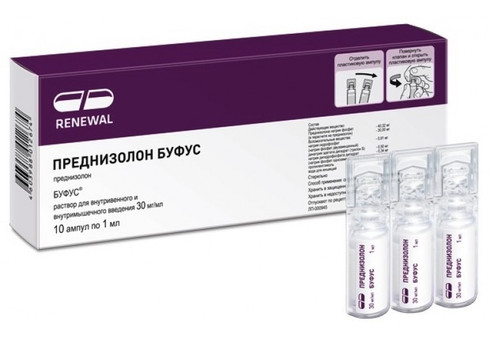
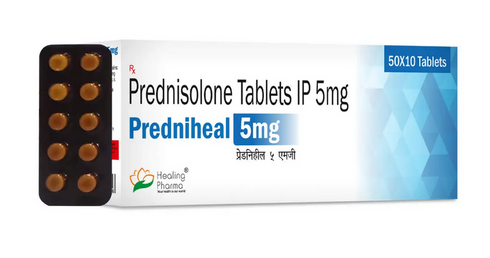
It is a prescription medicine supplied as tablets, oral solutions and orally disintegrating tablets, as well as injectable and ophthalmic preparations. Short-term effects can include increased appetite, difficulty sleeping and mood changes, while prolonged use carries more serious risks such as bone loss and steroid-induced osteoporosis [3], raised blood sugar, greater susceptibility to infection, skin thinning and suppression of the body's own steroid production; for this reason long courses are tapered rather than stopped abruptly [1][3].

- Prednisone is essentially inactive until the liver converts it into prednisolone, so the two drugs behave almost interchangeably in the body.
- It was created by adding a single double bond to the natural steroid hydrocortisone, which boosted anti-inflammatory potency while reducing salt-retaining effects.
- It is one of the few medicines available as a tablet, an injection, and an eye drop, and it appears on the World Health Organization's essential medicines list.
Mechanism
Prednisolone acts much like the body's own by binding to glucocorticoid receptors inside cells [1]. Being fat-soluble, it passes through the cell membrane, attaches to its receptor in the cytoplasm, and the resulting complex then moves into the nucleus, where it switches many genes on or off [1]. Through this it reduces the production of numerous inflammatory signalling molecules and dampens the activity of immune cells, which underlies its powerful anti-inflammatory and immunosuppressive effects [1][4]. The related drug prednisone is inactive until the liver converts it into prednisolone, so the two behave almost interchangeably [2]. This same wide-ranging effect on gene activity, and on glucose, bone and immune function, also explains the broad set of side effects that accompany prolonged treatment, including loss of bone density [3].
receptor fingerprint
Glucocorticoid receptoragonist
NF-kappaB signalinginhibits
AP-1 transcription factorinhibits
Phospholipase A2 (via annexin A1)inhibits
Mineralocorticoid receptoragonist
Dosingtypical ranges, not medical advice
interested in protocols and clinical dosages? make an account to see them! ^_^
Safetyrisks and cautions, not medical advice
Prednisolone is prescription only. Short courses are usually well tolerated apart from appetite, mood, sleep, and blood sugar changes. Longer or higher-dose use brings the familiar steroid burden; weight gain and a Cushingoid appearance, thinning bones, muscle weakness, high blood sugar, raised blood pressure, cataracts and glaucoma, thin fragile skin, and greater vulnerability to infection. It suppresses the body's own cortisol production, so after more than a couple of weeks it must be tapered rather than stopped abruptly to avoid an adrenal crisis. It raises ulcer and bleeding risk when combined with NSAIDs, can weaken the response to vaccines, and interacts with drugs cleared by CYP3A4.
Interactionsdocumented pairs only, not exhaustive
Prednisolone is metabolized by CYP3A4, so the enzyme interactions run in both directions. Rifampin, carbamazepine, phenytoin, phenobarbital and St John's wort induce its clearance and can blunt the corticosteroid effect enough to allow a disease flare or, in adrenal replacement, an adrenal crisis. Strong inhibitors including ketoconazole, itraconazole, clarithromycin, ritonavir and cobicistat do the opposite and raise exposure; ritonavir combined with corticosteroids has produced iatrogenic Cushing syndrome.
The pharmacodynamic interactions do more day to day harm. With NSAIDs, the risk of gastrointestinal ulceration and bleeding rises well above either drug alone. With loop or thiazide diuretics and with amphotericin B, potassium loss is additive, which in turn sensitizes the heart to digoxin. Corticosteroids raise blood glucose and work against insulin and oral hypoglycemics, and they move the INR unpredictably in people on warfarin.
Live vaccines given during meaningful immunosuppression can cause disseminated infection, and the response to inactivated vaccines is reduced.
Checking a whole stack? Run it through interactions + stacks.
History
Prednisolone is a synthetic glucocorticoid that emerged in the mid-1950s as part of the intensive effort to improve upon cortisone and hydrocortisone, the natural adrenal steroids whose anti-inflammatory power had been dramatically demonstrated in rheumatoid arthritis at the end of the 1940s. Chemists introduced a double bond into the steroid ring of hydrocortisone to create prednisolone and its prodrug prednisone, yielding compounds with substantially greater anti-inflammatory potency and relatively less salt-retaining mineralocorticoid activity.
Prednisolone quickly became a workhorse across allergy, asthma, rheumatology, and a wide range of autoimmune and inflammatory diseases, and it is the active form into which the liver converts prednisone. Available in oral, injectable, and ophthalmic formulations, it has been marketed under many names including Prelone, Orapred, and Millipred. Its long clinical history and low cost have secured its place on the World Health Organization's List of Essential Medicines as a fundamental anti-inflammatory and immunosuppressive medicine.
Reputation
Prednisolone is one of the most trusted and broadly useful anti-inflammatory drugs in medicine, a fast-acting and inexpensive glucocorticoid that can bring dramatic relief across an enormous range of conditions, from asthma flares and severe allergies to rheumatoid arthritis and other autoimmune diseases. Its reliability, low cost, and availability in oral, injectable, and eye-drop forms have made it a genuine essential medicine used worldwide.
Because it acts by switching many genes on and off, its benefits are powerful and wide-ranging; that same breadth, however, is why prolonged or high-dose use carries well-recognized costs, including loss of bone density, elevated blood sugar, and susceptibility to infection. Modern practice reflects this balance, favoring the lowest effective dose and careful tapering, as seen in contemporary rheumatology regimens where a short course is used and then withdrawn. Handled with appropriate respect, prednisolone remains an indispensable and highly effective therapy.
Subjective profileweighing the evidence above
Fast, powerful and often the only thing that settles a severe autoimmune or allergic flare, which makes a short course a fair trade. The longer it runs the higher the bill: bone thinning, weight gain, high blood sugar, cataracts, infection risk, and suppressed cortisol that has to be tapered rather than stopped.
Where to buy


Suppliers
Vendors carrying Prednisolone, with live product details and codes. Links are affiliate links that support the wiki at no cost to you.
PCT.Zone
Prednisolone
RUPharma🌐
Prednisolone

RUPharma🌐
Prednisolone
Research
- 1979first citedClinical pharmacokinetics of prednisone and prednisolone
- 2023most recentCertolizumab pegol, abatacept, tocilizumab or active conventional treatment in early rheumatoid…
- 1.Pharmacology and pharmacogenetics of prednisone and prednisolone in patients with nephrotic syndrome
- 2.Clinical pharmacokinetics of prednisone and prednisolone
- 3.Glucocorticoid-induced osteoporosis
- 4.Pathogenesis of Autoimmune Hepatitis: Cellular and Molecular Mechanisms
- 5.Certolizumab pegol, abatacept, tocilizumab or active conventional treatment in early rheumatoid arthritis: 48-week clinical and radiographic results of the investigator-initiated randomised controlled NORD-STAR trial
5 listed here; entry last updated August 2026
Reviews
My notesprivate to this device
FAQ
What is the difference between prednisone and prednisolone?
Prednisone is inactive until the liver turns it into prednisolone, so prednisolone is often chosen when liver conversion may be limited.
Why can't I just stop it?
After more than a week or two it suppresses your own cortisol, so a sudden stop can leave you dangerously low; doses are tapered instead.
Will it weaken my bones?
Long-term use does thin bones, so doctors often add calcium, vitamin D, and sometimes bone-protecting drugs for extended courses.
Can I take ibuprofen with it?
Combining it with NSAIDs raises the risk of stomach ulcers and bleeding, so use caution and ask your doctor.
Does it work right away?
Anti-inflammatory relief often begins within hours to a day, though full benefit for some conditions takes longer.
Adverse effects
- Increased appetite and weight gain
- Difficulty sleeping and mood changes
- Raised blood sugar
- Higher risk of infections
- Bone thinning with long-term use
Notes and cautions
- Should be tapered, not stopped suddenly, after long courses