
spec sheet7 rows
Clobetasol propionate is the most potent class of topical corticosteroid, used in short courses for psoriasis, lichen planus and severe eczema.
- The strongest class of topical corticosteroid there is
- Short courses for stubborn psoriasis plaques
- Works where weaker steroids have already failed
- High skin retention from the propionate ester
- Used in lichen planus and severe eczema
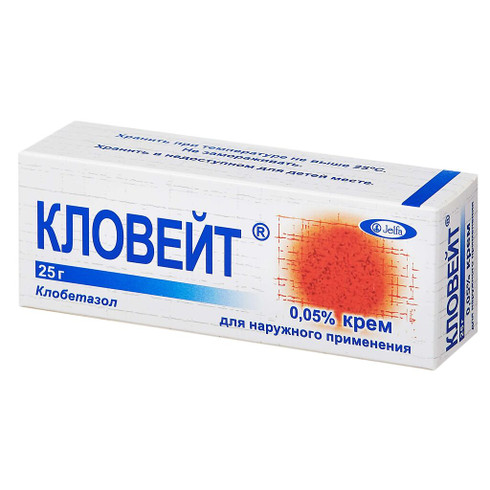
- Clobetasol propionate is the most potent topical steroid available, acting via glucocorticoid receptor agonism with anti-inflammatory, immunosuppressive and antimitotic effects [1].
- In 81 patients with biopsy-proven vulvar lichen sclerosus, 0.05% cream gave complete symptom remission in 77% and improved clinical appearance in 47% [3].
- In scalp psoriasis, 74% on 0.05% foam were clear or almost clear at 2 weeks versus 10% on placebo foam [2].
- Foam 7 g/day for 2 weeks caused reversible HPA-axis suppression in 3 of 13 patients [2].
- In a double-blind RCT in oral lichen planus, 0.05% gel cut burning-sensation scores by 93-97% over 45 days [4].
Mechanism
It binds the cytoplasmic glucocorticoid receptor, which then acts on transcription in two directions: it induces anti-inflammatory proteins such as lipocortin-1 and it represses NF-kB driven genes. The halogenation and the propionate ester are what push its potency and skin retention to the top of the class, and the same properties are why systemic absorption becomes real over large areas or under occlusion.
receptor fingerprint
Glucocorticoid receptor (NR3C1)High-affinity agonist; transrepresses NF-kB and AP-1 driven cytokine transcription in skin
Hypothalamic-pituitary-adrenal axisPercutaneously absorbed drug suppresses endogenous cortisol; reversible on withdrawal
Keratinocyte and fibroblast mitosisAntimitotic; inhibits growth, differentiation and function of epidermal and dermal cells
Cutaneous productionBroad inhibition of pro-inflammatory cytokine output by resident and infiltrating immune cells
Safetyrisks and cautions, not medical advice
A class I super-potent topical corticosteroid; unsupervised use thins skin, causes striae and telangiectasia, and over enough surface area it suppresses the adrenal axis.
Subjective profileweighing the evidence above
Potency is the whole point and also the whole problem. Nothing on the topical ladder is stronger, and for a stubborn plaque of psoriasis or lichen planus that has shrugged off weaker steroids it is the right tool; past a short course, over large areas or under occlusion it thins skin permanently, produces striae and telangiectasia, and can reach far enough to suppress the adrenal axis. The worst use is on an undiagnosed rash, because a fungal or herpetic lesion improves for a week and then gets considerably worse underneath. Face, groin and armpit skin is thin enough that all of that arrives faster there.
Where to buy
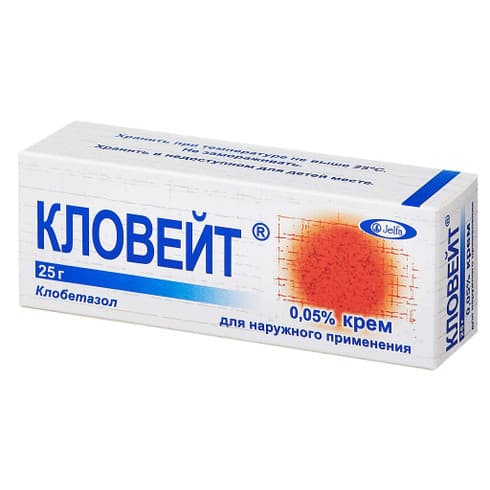
Suppliers
Vendors carrying Clobetasol propionate, with live product details and codes. Links are affiliate links that support the wiki at no cost to you.
RUPharma🌐
Clobetasol propionate
Research
- 1998first citedLichen sclerosus. Therapy with clobetasol propionate.
- 2022controlled trialComparative evaluation of the efficacy of Nigella sativa (75% v/v) cream and clobetasol propion…
- 2023most recentBimatoprost versus Clobetasol Propionate in Scalp Alopecia Areata: A Prospective Non-Randomized…
- 1.Clobetasol propionate--where, when, why?
- 2.Clobetasol propionate foam, 0.05%.
- 3.Lichen sclerosus. Therapy with clobetasol propionate.
- 4.Comparative evaluation of the efficacy of Nigella sativa (75% v/v) cream and clobetasol propionate (0.05% w/w) gel in oral lichen planus-a double-blinded randomized control trial.
- 5.Bimatoprost versus Clobetasol Propionate in Scalp Alopecia Areata: A Prospective Non-Randomized Open-Label Clinical Trial.
5 listed here; entry last updated August 2026
Reviews
My notesprivate to this device
Notes and cautions
- No boxed warning, but US labelling caps clobetasol 0.05% at 50 g or 50 mL per week and 2 consecutive weeks, because reversible HPA-axis suppression occurs at ordinary doses [2].
- Prolonged, occluded or large-area use causes skin atrophy, striae, telangiectasia and perioral dermatitis; avoid the face, groin and axillae, and periocular use risks glaucoma and cataract.
- Children absorb proportionally more per unit body surface and are at higher risk of iatrogenic Cushing syndrome and growth suppression.