
spec sheet13 rows
L-Carnitine is a naturally occurring quaternary ammonium compound that the body builds from the amino acids lysine and methionine. It plays a central part in energy metabolism by ferrying long-chain fatty acids across the inner mitochondrial membrane, where they are broken down to release energy. Present in the highest amounts in red meat and other animal foods and also made internally, it is used medically to treat carnitine deficiency and is widely sold as a dietary supplement for heart, metabolic, and exercise-related purposes.
- Shuttles fat straight into mitochondria for fuel
- Core engine of fat metabolism
- Speeds recovery between hard sessions
- Aimed at less muscle fatigue
- Powers cellular energy production
- Naturally made in the body, found in red meat
- Nausea
- Stomach upset or cramps
- Diarrhea at high intakes
Overview
L-Carnitine is a water-soluble quaternary ammonium compound found in nearly all mammalian tissue, where it is essential for normal fat metabolism [1]. The body synthesizes it from the amino acids lysine and methionine through a series of enzymatic steps that require vitamin C, iron, and other cofactors, and it is also obtained from food; red meats such as beef and lamb are the richest sources, with smaller amounts in fish, poultry, and dairy, so people following plant-based diets take in comparatively little [1][2]. Only the L-isomer is biologically active in humans, whereas the D-form can interfere with it [1].
Its best-established function is the movement of long-chain fatty acids from the cytoplasm into the mitochondria, the step that allows those fats to be oxidized for energy; carnitine also helps buffer the cell's pool of acyl groups and assists in clearing certain metabolic byproducts [1][2]. Because of this central metabolic role, the compound has been studied across a range of conditions [2].
Supplemental L-carnitine is clearly helpful in primary carnitine deficiency, an inherited disorder that can cause cardiomyopathy, muscle weakness, and low blood sugar, and in secondary deficiencies that arise from kidney disease, certain medications, or malabsorption [2]. Beyond genuine deficiency the evidence is more mixed; reviews report possible benefit for the symptoms of heart failure and angina and for recovery and reduced muscle soreness after exercise, while findings for general athletic performance, weight loss, and fatigue are inconsistent and often modest [1][2][3]. Commonly sold forms include plain L-carnitine, acetyl-L-carnitine, and propionyl-L-carnitine, which differ somewhat in how they distribute in tissue and in their intended uses [2].
Levocarnitine is an approved prescription drug for carnitine deficiency, while the carnitine sold over the counter is regulated as a dietary supplement; it is generally well tolerated, with high intakes sometimes causing nausea, stomach upset, or a fishy body odor [1][2].

- L-Carnitine takes its name from the Latin carnis, meaning flesh, because it was first isolated from muscle and is most concentrated in red meat.
- It was once labeled 'vitamin BT,' but the designation was dropped once scientists realized the human body synthesizes carnitine from the amino acids lysine and methionine, so it is not a true dietary vitamin.
Mechanism
The primary action of L-carnitine is to enable the import of long-chain fatty acids, which cannot cross the inner mitochondrial membrane on their own [1]. In this carnitine shuttle the enzyme carnitine palmitoyltransferase I attaches a fatty acyl group to carnitine to form acylcarnitine, a translocase carries it across the membrane, and carnitine palmitoyltransferase II releases the fatty acid inside the mitochondrion so that beta-oxidation and energy production can proceed [1][2].
By continually regenerating free coenzyme A and forming acylcarnitine esters, carnitine also helps maintain a favorable balance of acyl groups within the cell and aids in exporting excess or potentially harmful acyl compounds [1][2]. The acetylated form, acetyl-L-carnitine, crosses into the brain more readily than plain carnitine and has been studied for actions within the nervous system [2]. Its antioxidant and membrane-stabilizing effects have also been proposed to underlie some of the tissue-protective results reported in heart and muscle studies [2][3].
receptor fingerprint
Carnitine shuttle (CPT1)enables fatty acid transport
fatty acid oxidationboosts
Exercise recoverysupports
Dosingtypical ranges, not medical advice
interested in protocols and clinical dosages? make an account to see them! ^_^
Safetyrisks and cautions, not medical advice
L-carnitine is generally well tolerated, with the usual complaints being GI upset, nausea, and a fishy body odor at high intake. The bigger question is cardiovascular: gut bacteria convert L-carnitine to TMAO, a metabolite that reliably predicts arterial disease. Genetic (Mendelian randomization) work found no cardiovascular benefit from L-carnitine and instead linked genetically higher levels to greater coronary artery disease risk overall and in men, with a null association in women, and to more heart failure; the same held for acetyl-carnitine. It is an association rather than settled causation, but heart-conscious users may want to be thoughtful, especially at high chronic doses. Not medical advice.
History
L-Carnitine was first isolated from muscle tissue in 1905 by the Russian scientists Wladimir Gulewitsch and Rudolf Krimberg, and its name derives from the Latin carnis, meaning flesh, reflecting its abundance in meat. Its chemical structure was determined in 1927, and for a time it was informally referred to as vitamin BT. The compound's central biological role became clear during the 1950s and 1960s, when Irving Fritz and others elucidated the carnitine shuttle, showing how carnitine ferries long-chain fatty acids into mitochondria for energy production. It has since become an established treatment for primary and secondary carnitine deficiency and a widely used dietary supplement for heart, metabolic, and exercise-related purposes.
Reputation
L-Carnitine is among the best-established compounds in this catalog, with a genuine medical role in treating carnitine deficiency and a long track record as a metabolic and exercise supplement. Sports-science discussion is generally favorable but measured: research supports its role in fatty-acid metabolism and points to modest benefits for exercise recovery and reduced muscle soreness, while acknowledging that effects on fat loss and performance in healthy people are variable. Acetyl-L-carnitine has additionally drawn interest for cognitive and neurological applications because it crosses into the brain more readily than plain carnitine. Overall it is viewed as a safe, well-tolerated supplement with a solid mechanistic foundation.
Subjective profileweighing the evidence above
Modest at best for most people, and the TMAO question is not nothing; Mendelian randomisation work found no cardiovascular benefit and linked genetically higher levels to more coronary disease. Worth it mainly if you are actually deficient, and it is not the fat-loss supplement it gets sold as.
Where to buy




Suppliers
Vendors carrying L-Carnitine, with live product details and codes. Links are affiliate links that support the wiki at no cost to you.
| supplier | size | price | $/mg |
|---|---|---|---|
| Exceed Enhancementlowest | 600mg | $40.00 | $0.067/mg |
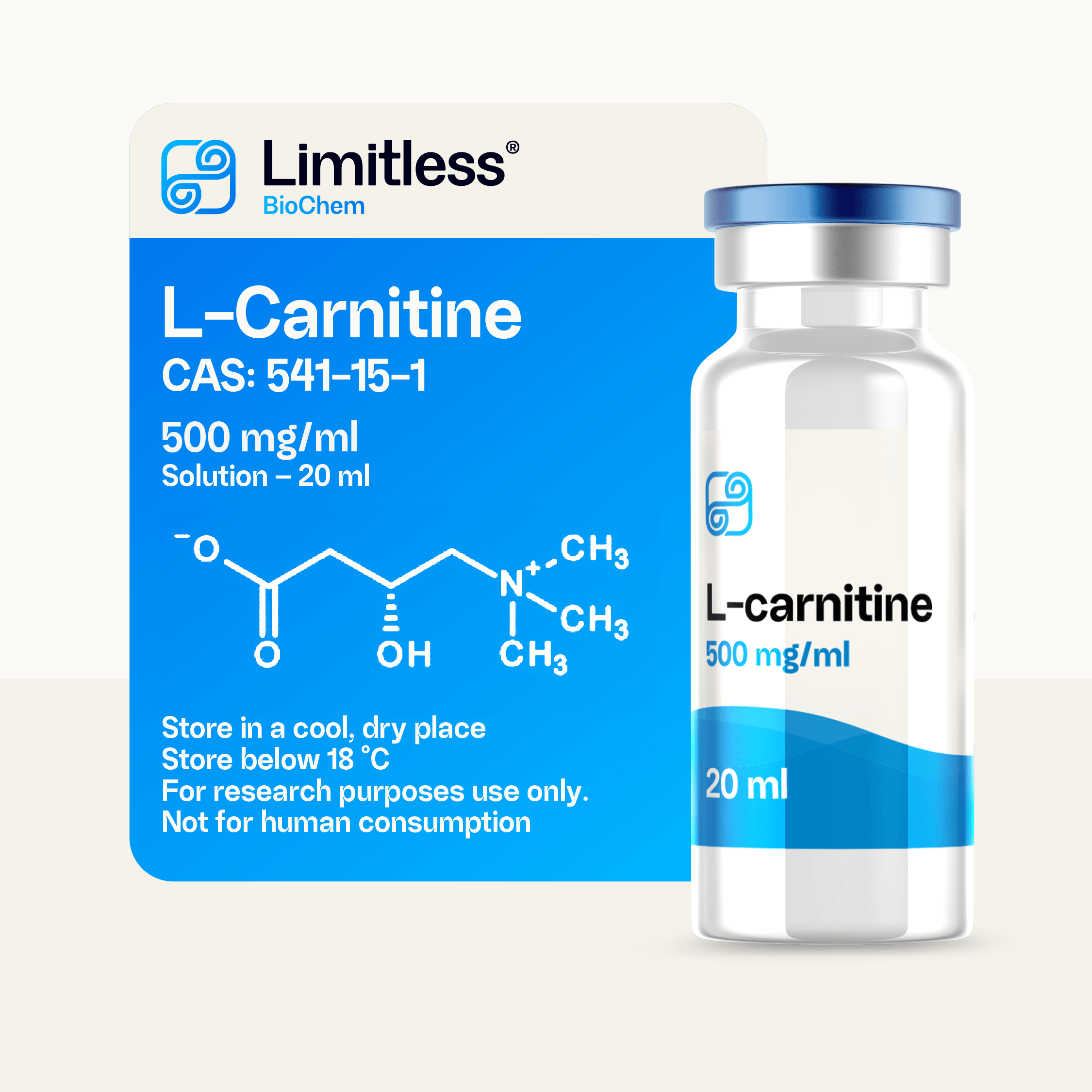
| Limitless Biochem | 500 mg | $45.99 | $0.092/mg |
Exceed Enhancement
L-Carnitine
Amazon
L-Carnitine
Limitless Biochem🌐
L-Carnitine
Peptira
L-CARNITINE
Kimera Chems
L-Carnitine
iHerb
L-Carnitine
Research
- 2011first citedL-carnitine: metabolic functions and meaning in humans life.
- 2023most recentl-carnitine: Nutrition, pathology, and health benefits.
- 1.L-carnitine: metabolic functions and meaning in humans life.
- 2.l-carnitine: Nutrition, pathology, and health benefits.
- 3.l-Carnitine Supplementation in Recovery after Exercise.
3 listed here; entry last updated August 2026
Reviews
My notesprivate to this device
FAQ
How does it help burn fat?
It transports long-chain fatty acids into mitochondria, where they're used for energy. This is its central metabolic role.
Why is injectable form popular?
Oral absorption can be limited, so some prefer injectable forms for higher availability. Absorption is a common discussion point.
Is it made in the body?
Yes, the body synthesizes carnitine and also obtains it from foods like meat. Supplemental forms add to this.
What causes the fishy odor?
High intakes can produce a metabolite (TMA) associated with a fishy smell. It's a known but harmless-seeming effect for most.
Adverse effects
- Nausea
- Stomach upset or cramps
- Diarrhea at high intakes
Notes and cautions
- Fishy body odor at high intakes
- Generally well tolerated