
spec sheet12 rows
Ibuprofen is a propionic acid nonsteroidal anti-inflammatory drug that relieves pain, fever, and inflammation by reversibly and competitively inhibiting both cyclooxygenase isoforms, COX-1 and COX-2, thereby reducing synthesis of prostaglandins from arachidonic acid. Marketed as a racemate, it undergoes a distinctive unidirectional metabolic inversion in which the inactive R-enantiomer is converted in vivo to the pharmacologically active S-form. Because it competes for the same catalytic site as aspirin on platelet COX-1, ibuprofen can transiently blunt aspirin's irreversible antiplatelet effect, a clinically relevant interaction in patients taking low-dose aspirin for cardioprotection. Large randomized evidence from the PRECISION trial found ibuprofen non-inferior in cardiovascular safety to naproxen and celecoxib, though with comparatively higher gastrointestinal and renal event rates; it remains one of the most widely used over-the-counter medicines worldwide.
- everyday pain relief that works and costs almost nothing
- pulls a fever down fast and keeps it down
- one of the best options there is for menstrual cramps
- calms swelling and inflammation, not just the pain signal
- matched naproxen and celecoxib on heart safety in PRECISION
- over the counter in essentially every country on earth
- Stomach upset, heartburn or indigestion
- Risk of ulcers and gastrointestinal bleeding with heavy or prolonged use
- Kidney strain and fluid retention
Overview
Ibuprofen is a propionic acid derivative and one of the most widely used nonsteroidal anti-inflammatory drugs (NSAIDs), with the molecular formula C13H18O2. It was discovered in the early 1960s in Nottingham, England, by Stewart Adams and John Nicholson working at the Boots company, during a search for a better-tolerated alternative to aspirin; it reached the British market in 1969 and later became the first non-aspirin NSAID sold over the counter in the United Kingdom and United States [1]. The propionic-acid NSAIDs emerged during the same 1960s wave of drug development that produced related agents such as naproxen and ketoprofen [3]. Today ibuprofen is a generic medicine found worldwide and appears on the World Health Organization's List of Essential Medicines.
Ibuprofen is used for everyday complaints such as headache, dental and menstrual pain, muscle and joint aches, and fever, and at higher prescription strengths for rheumatic and other musculoskeletal conditions like osteoarthritis and rheumatoid arthritis [1]. A lysine salt is given intravenously and, in premature infants, to help close a persistent patent ductus arteriosus. Extensive clinical experience, including large trials in which ibuprofen served as the comparator for newer COX-2 selective drugs, shows it to be as effective as other NSAIDs, and in children it is an effective and generally safe treatment for pain and fever, probably working better than paracetamol as a fever reducer [1]. Its safety profile at nonprescription doses is favorable, with relatively low rates of serious stomach, liver and kidney problems compared with some other NSAIDs, helped by its short stay in the body [1].
Because it blocks prostaglandin production throughout the body, ibuprofen shares the class risks of NSAIDs. It can irritate the stomach lining and, with heavy or prolonged use, cause ulcers and gastrointestinal bleeding, strain the kidneys, raise blood pressure and modestly increase cardiovascular risk at higher doses [1][2]. It is generally advised against in the later stages of pregnancy. Ibuprofen is available in many forms, including tablets, capsules, liquid suspensions for children, topical gels and an intravenous preparation, and it is sold both over the counter for short-term use and on prescription at higher strengths.
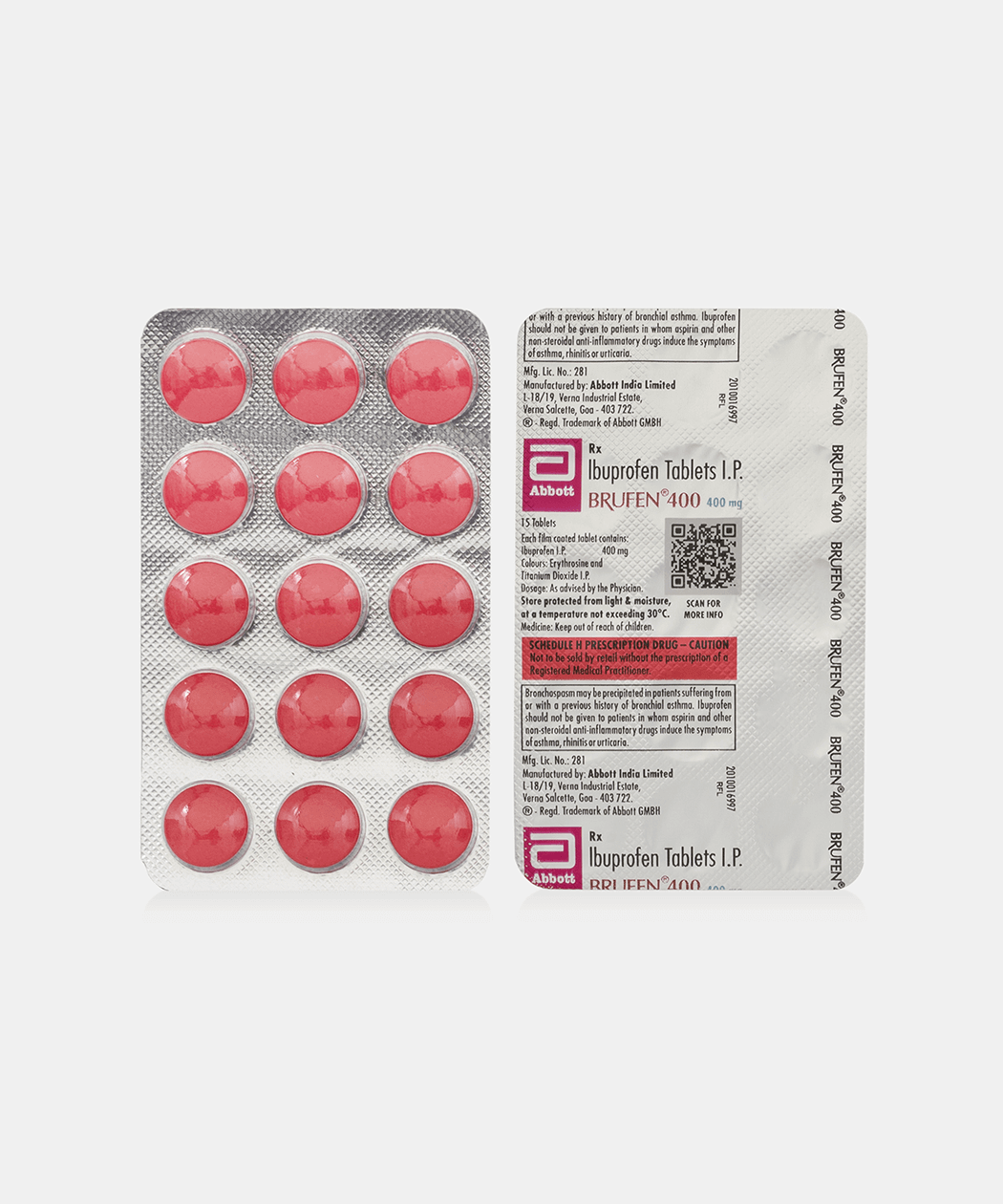

- Its inventor, Stewart Adams, tested an early dose on his own hangover headache before giving a speech, an informal trial he later recounted with amusement.
- Ibuprofen is sold as a 50:50 mix of two mirror-image molecules, but only one, the S-form, blocks the target enzymes; the body helpfully converts much of the inactive form into the active one.
- Because it competes with aspirin for the same spot on platelets, taking ibuprofen alongside low-dose aspirin can undercut aspirin's protection of the heart.
Mechanism
Ibuprofen relieves pain, fever and inflammation by inhibiting the cyclooxygenase enzymes COX-1 and COX-2, which convert arachidonic acid into prostaglandins and related mediators. It is a non-selective, reversible, competitive inhibitor of both enzymes, so it lowers prostaglandin production broadly rather than selectively [1][2].
Like other NSAIDs it readily enters tissues and, to a limited extent, the central nervous system, where reduced prostaglandin synthesis adds to its pain-relieving and fever-lowering action [3]. Prostaglandins sensitize nerve endings to pain and orchestrate the redness, heat and swelling of inflammation, and prostaglandin E2 acting in the raises the body's temperature set point during fever; by cutting their synthesis, ibuprofen eases pain and inflammation and lets the fever set point fall [1].
Because COX-1 also makes the prostaglandins that protect the stomach lining and the thromboxane that helps platelets clump, blocking it explains ibuprofen's gastrointestinal irritation and its mild, reversible interference with blood clotting; this platelet effect can also blunt the heart-protective action of low-dose aspirin if the two are taken together [1][2]. Ibuprofen is sold as a mixture of two mirror-image forms, but only the S- inhibits COX; the body converts much of the inactive R-form into the active S-form after it is taken.
receptor fingerprint
COX-1 (PTGS1)inhibits
COX-2 (PTGS2)inhibits
Prostaglandin E2 synthesisinhibits
Hypothalamic temperature set pointmodulates
Platelet thromboxane A2inhibits
Dosingtypical ranges, not medical advice
interested in protocols and clinical dosages? make an account to see them! ^_^
Safetyrisks and cautions, not medical advice
Ibuprofen is available over the counter and by prescription. The most common problems are stomach upset and heartburn, and with heavier or longer use it can cause ulcers and gastrointestinal bleeding, especially in older adults or people also taking steroids or blood thinners. It can strain the kidneys, raise blood pressure, and cause fluid retention, and at high doses over long periods it carries a small increase in heart attack and stroke risk. It should be avoided in the third trimester of pregnancy, in active peptic ulcer disease, severe heart failure, and advanced kidney disease. It can blunt the heart-protective effect of low-dose aspirin, adds to bleeding risk with anticoagulants, and can raise levels of lithium and methotrexate.
Interactionsdocumented pairs only, not exhaustive
Ibuprofen increases the risk of gastrointestinal bleeding when combined with warfarin and other oral anticoagulants; this is a pharmacodynamic interaction where both agents impair hemostasis through different mechanisms. NSAIDs inhibit platelet aggregation and can irritate the gastric mucosa, while anticoagulants reduce clotting factor synthesis, and the effects are additive. The interaction has been documented in populations prescribed both drugs simultaneously [14]. What remains unstudied are the specific risk levels with direct oral anticoagulants (dabigatran, rivaroxaban), the effect of shorter ibuprofen courses (under 2 weeks) versus chronic use, and safe dosing intervals if both drugs must be used together.
Checking a whole stack? Run it through interactions + stacks.
History
Ibuprofen was discovered in the 1960s by a research team at the Boots Company in Nottingham, England, led by the pharmacologist Stewart Adams together with chemist John Nicholson, who were hunting for an anti-inflammatory as effective as aspirin but gentler on the stomach. After screening many candidates, they settled on 2-(4-isobutylphenyl)propionic acid, which was patented in 1962; Adams famously took an early dose to quiet a hangover headache before a conference speech.
The drug launched as the prescription anti-inflammatory Brufen in 1969 for rheumatoid arthritis, and its strong safety record led to over-the-counter approval in the United Kingdom in 1983 and in the United States, as Advil and Motrin, shortly after. It went on to become one of the most widely consumed medicines in the world and appears on the World Health Organization's list of essential medicines. Adams was later honored for the discovery, and ibuprofen remains a defining example of a successful, patient-driven pharmaceutical.
Reputation
Ibuprofen is among the most trusted and familiar medicines on earth, a household staple relied on for headaches, muscle and menstrual pain, fever and inflammation. Its reputation rests on fast, dependable relief, low cost and an extensive safety record that earned it over-the-counter status in most countries. Large randomized evidence, including the PRECISION trial, has helped characterize its cardiovascular safety relative to other anti-inflammatories, while also confirming that it carries comparatively higher gastrointestinal and kidney risks, a candid reminder that no NSAID is risk-free.
Clinicians note practical caveats: it can blunt the heart-protective effect of low-dose aspirin if taken together, and it should be used at the lowest effective dose for the shortest time in those with ulcers, kidney disease or cardiovascular risk. Used sensibly, it remains a benchmark analgesic that newer options are measured against.
Subjective profileweighing the evidence above
Hard to beat for everyday pain, fever and cramps; cheap, available everywhere, and it does exactly what it claims. The risks are about dose and duration rather than the occasional tablet, since stomach bleeding, kidney strain and raised blood pressure come from heavy or prolonged use.
Where to buy

1 other outlet
Suppliers
Vendors carrying Ibuprofen, with live product details and codes. Links are affiliate links that support the wiki at no cost to you.
| supplier | size | price | $/mg |
|---|---|---|---|
| PCT.Zonelowest | 400MG | $0.46 | $0.001/mg |
| PCT.Zone | 600MG | $0.87 | $0.001/mg |
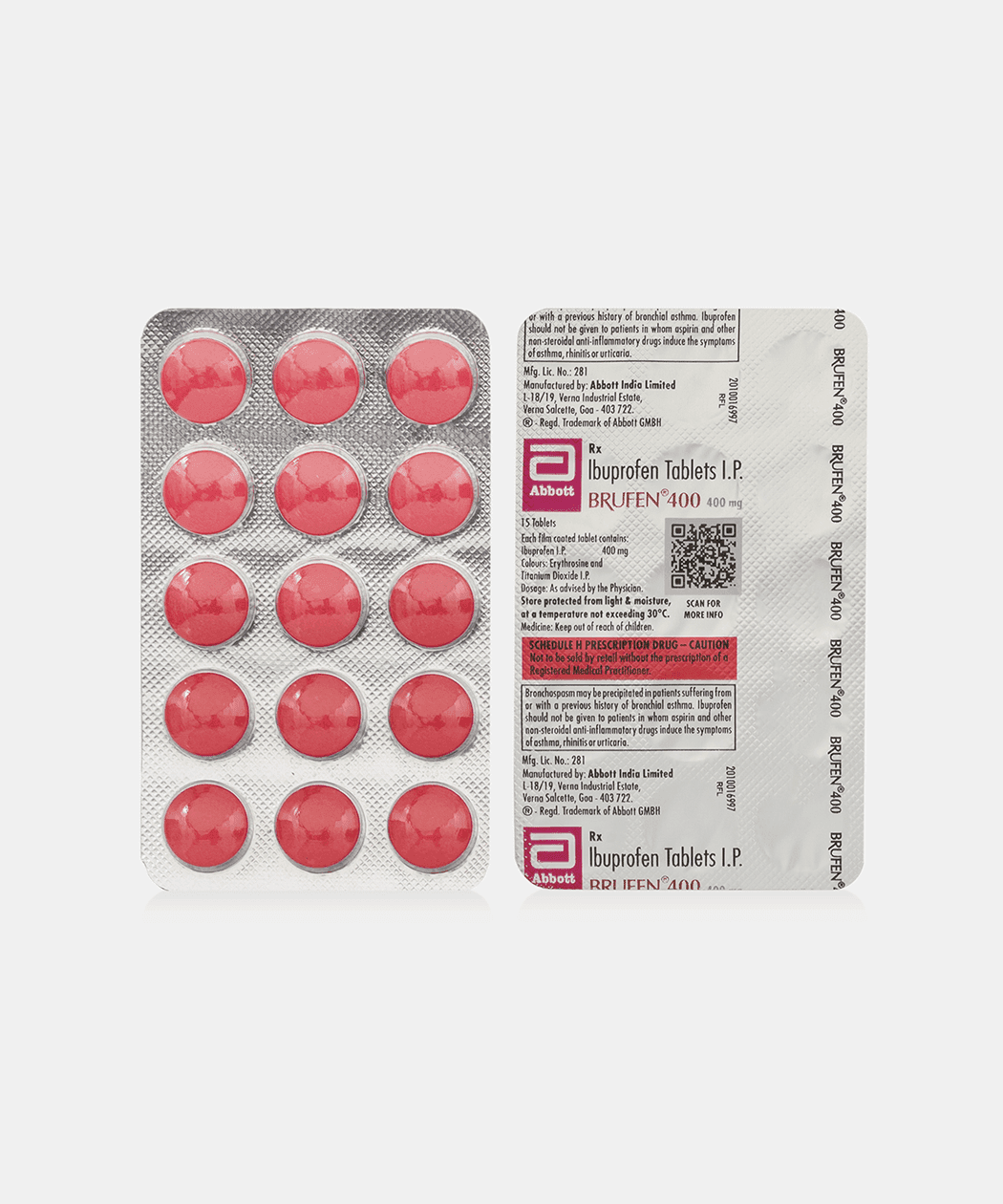
PCT.Zone
Ibuprofen
PCT.Zone
Ibuprofen
Research
- 1998first citedCyclooxygenase-1 and cyclooxygenase-2 selectivity of widely used nonsteroidal anti-inflammatory…
- 2024meta-analysisMeta-analysis of the global distribution of clinically relevant CYP2C8 alleles and their inferr…
- 2026most recentA Descriptive Analysis of Potential Warfarin-NSAID Interactions in Dental Prescribing in Minas…
- 1.Ibuprofen: pharmacology, efficacy and safety
- 2.COX-1 and COX-2 inhibitors
- 3.The Pharmacology of Indomethacin.
- 4.Cardiovascular Safety of Celecoxib, Naproxen, or Ibuprofen for Arthritis.
- 5.Cyclooxygenase inhibitors and the antiplatelet effects of aspirin.
- 6.Cardiorenal risk of celecoxib compared with naproxen or ibuprofen in arthritis patients: insights from the PRECISION trial.
- 7.Benefits and Risks of Nonsteroidal Anti-inflammatory Drugs: Methodologic Limitations Lead to Clinical Uncertainties.
- 8.Gastrointestinal and cardiovascular adverse events associated with NSAIDs.
- 9.Limitations of drug concentrations used in cell culture studies for understanding clinical responses of NSAIDs.
- 10.Limitation of the in vitro whole blood assay for predicting the COX selectivity of NSAIDs in clinical use.
- 11.Cyclooxygenase-1 and cyclooxygenase-2 selectivity of widely used nonsteroidal anti-inflammatory drugs.
- 12.A Multi-Center Evaluation of the Pharmacokinetics and Safety of Intravenous Ibuprofen in Infants 1-6 Months of Age.
14 listed here; entry last updated August 2026
Reviews
My notesprivate to this device
FAQ
What is the difference between ibuprofen and acetaminophen?
Ibuprofen reduces inflammation but is harder on the stomach and kidneys, while acetaminophen eases pain and fever without anti-inflammatory action and is gentler on the gut but limited by liver safety.
Should I take ibuprofen on an empty stomach?
It is better taken with food or milk, which lowers the chance of stomach irritation.
Is ibuprofen safe during pregnancy?
It is best avoided, especially in the third trimester, when it can harm the baby's circulation and reduce the fluid around the baby.
Can ibuprofen raise blood pressure?
Yes; it can cause fluid retention and nudge blood pressure up, which matters most for people who already have hypertension or heart problems.
Can I take ibuprofen with aspirin?
Ibuprofen can blunt the heart-protective effect of low-dose aspirin, so if you need both, ask your doctor about spacing the doses.
Adverse effects
- Stomach upset, heartburn or indigestion
- Risk of ulcers and gastrointestinal bleeding with heavy or prolonged use
- Kidney strain and fluid retention
- Raised blood pressure
- Slightly higher cardiovascular risk at high doses, and it can blunt low-dose aspirin