
spec sheet6 rows
Piroxicam is a long acting oxicam NSAID for rheumatoid arthritis, osteoarthritis and ankylosing spondylitis, now restricted in the EU to second line use because of gastrointestinal and skin toxicity.
- Long acting oxicam NSAID for chronic inflammatory arthritis
- Steady all day analgesia from a single daily tablet
- Blocks both cyclooxygenase enzymes, not just one
- Long half life keeps levels steady between doses
- Still has a place for rheumatoid arthritis and ankylosing spondylitis
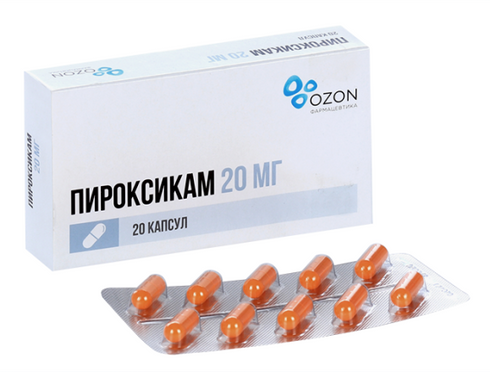
- Piroxicam has an unusually long elimination half-life for an NSAID (roughly 50 hours), which allows once-daily dosing but also means toxicity accumulates and does not resolve quickly on withdrawal.
- In the SOS meta-analysis of 28 observational studies, piroxicam had the highest upper-GI complication risk of any commonly used NSAID except ketorolac and azapropazone: RR 7.43 (95% CI 5.19-10.63) versus non-use [1].
- The SELECT trial randomised 8,656 osteoarthritis patients and found equivalent efficacy but significantly more GI adverse events with piroxicam 20 mg than meloxicam 7.5 mg (15.4% vs 10.3%, p<0.001), with 16 versus 7 perforations/ulcers/bleeds [2].
- Topically, the picture inverts: in a network meta-analysis of 36 RCTs in osteoarthritis, piroxicam was the most effective topical NSAID for functional improvement (SMD -1.04, 95% CI -1.60 to -0.48) with no excess local or systemic adverse events [3].
- The EMA restricted systemic piroxicam in 2007 to second-line use only, maximum 20 mg/day, initiated by a physician experienced in NSAID safety, with concomitant gastroprotection, and removed the acute pain and dysmenorrhoea indications.
Mechanism
It is a non-selective cyclooxygenase inhibitor whose defining property is pharmacokinetic rather than mechanistic: a half life near fifty hours gives steady state analgesia from one daily tablet and gives an adverse reaction days to resolve.
receptor fingerprint
Prostaglandin G/H synthase 1 (COX-1, PTGS1)Non-selective, reversible inhibitor
Prostaglandin G/H synthase 2 (COX-2, PTGS2)Non-selective inhibitor
Gastroduodenal mucosal prostaglandin E2 synthesisSuppression (downstream of COX-1 inhibition)
Safetyrisks and cautions, not medical advice
the EU restricted piroxicam in 2007 to second line use at 20 mg a day with gastroprotection, and barred it from acute pain, after it was linked to more gastrointestinal bleeding and more severe skin reactions including Stevens-Johnson syndrome than other NSAIDs; a half life of about two days means an adverse effect is slow to clear
Subjective profileweighing the evidence above
Piroxicam's long half life is sold as convenience and is really the liability, because an adverse reaction that would fade overnight on a short acting NSAID takes days to clear here. The EU pushed it to second line use after it was linked to more gastrointestinal bleeding and more severe skin reactions, including Stevens-Johnson syndrome, than the alternatives, and barred it from acute pain outright. For a sprain or a headache it is simply the wrong drug; for chronic inflammatory arthritis in someone who has already failed the safer options it still has a place, with gastric protection treated as assumed rather than optional.
Where to buy
Suppliers
Vendors carrying Piroxicam, with live product details and codes. Links are affiliate links that support the wiki at no cost to you.
RUPharma🌐
Piroxicam
Research
- 1998first citedImprovement in gastrointestinal tolerability of the selective cyclooxygenase (COX)-2 inhibitor,…
- 2012meta-analysisIndividual NSAIDs and upper gastrointestinal complications: a systematic review and meta-analys…
- 2022most recentComparison of prilocaine/lidocaine cream with piroxicam gel for reducing pain during cannulatio…
- 1.Individual NSAIDs and upper gastrointestinal complications: a systematic review and meta-analysis of observational studies (the SOS project)
- 2.Improvement in gastrointestinal tolerability of the selective cyclooxygenase (COX)-2 inhibitor, meloxicam, compared with piroxicam: results of the Safety and Efficacy Large-scale Evaluation of COX-inhibiting Therapies (SELECT) trial in osteoarthritis
- 3.Relative efficacy and safety of topical non-steroidal anti-inflammatory drugs for osteoarthritis: a systematic review and network meta-analysis of randomised controlled trials and observational studies
- 4.Comparison of prilocaine/lidocaine cream with piroxicam gel for reducing pain during cannulation of arteriovenous fistula for adults undergoing haemodialysis: A randomized crossover clinical trial
4 listed here; entry last updated August 2026
Reviews
My notesprivate to this device
Notes and cautions
- There is no boxed warning specific to piroxicam beyond the NSAID class boxed warnings carried in the USA for cardiovascular thrombotic events and for serious gastrointestinal bleeding, ulceration and perforation.
- Piroxicam sits at the top of the NSAID gastrointestinal risk ranking [1], and the EMA additionally restricted it because of serious cutaneous adverse reactions including Stevens-Johnson syndrome and toxic epidermal necrolysis, to which the oxicam class is disproportionately linked.
- It should not be used first-line, should not be used for short-term acute pain, and requires co-prescribed gastroprotection.
- Topical piroxicam does not carry the same systemic risk and is a reasonable alternative for localised osteoarthritis pain [3].