
spec sheet6 rows
Pentalgin is the Russian five ingredient painkiller, combining paracetamol, naproxen, caffeine, an antispasmodic and a first generation antihistamine in one tablet for headache, dental, muscular and period pain.
- Five actives in one tablet for everyday pain
- Two analgesics working through different mechanisms
- Drotaverine covers the cramping component
- Caffeine raises the effect of both analgesics
- One tablet for headache, dental, muscular and period pain

- Pentalgin is a Russian/CIS over-the-counter combination analgesic, not a single molecule; the MeSH indexing of the only pharmacology paper that studies it confirms the classic formulation as paracetamol + metamizole (dipyrone) + caffeine + codeine + phenobarbital [1].
- There is no indexed randomised controlled trial of Pentalgin for any indication; PubMed returns only four records mentioning it in any field, none of them an efficacy trial.
- The only on-topic pharmacology study is a rat experiment showing Pentalgin potentiates the analgesic action of mexidol without altering its antistress effect [1].
- Codeine-containing Pentalgin is documented in the surgical literature as one of the household codeine sources used to synthesise the street drug 'krokodil' (desomorphine) in the former USSR [2].
- Current Russian-marketed Pentalgin formulations have been reformulated away from codeine and phenobarbital; the exact current excipient set is a manufacturer/regulatory fact, not a PubMed-indexed one, and should be sourced from the Russian State Register of Medicines rather than from literature.
Mechanism
Two analgesics with different mechanisms are stacked, paracetamol acting centrally and naproxen inhibiting cyclooxygenase peripherally, with caffeine raising the effect of both. Drotaverine relaxes smooth muscle for the cramping component and pheniramine adds sedation and a mild antihistamine effect that the label frames as potentiation.
receptor fingerprint
Cyclooxygenase (COX-1/COX-2) via the metamizole/paracetamol componentInhibition
Mu-opioid receptor via the codeine component (older formulations)Agonist (via morphine after CYP2D6 O-demethylation)
-A receptor via the phenobarbital component (older formulations)Positive allosteric modulator
A1/A2A receptors via the caffeine componentAntagonist
Safetyrisks and cautions, not medical advice
Pentalgin is a fixed combination product in the analgesic class. A full adverse effect profile has not been compiled for this entry yet, so nothing here should be read as evidence that it is well tolerated; the absence is missing work rather than a finding. What is documented is what the compound is and what it is used for.
Subjective profileweighing the evidence above
Five active ingredients for a headache is four more than the problem needs. Two analgesics, a stimulant, an antispasmodic and a sedating antihistamine in one tablet means every administration carries drugs the particular pain never called for, and when a reaction happens there is no way to tell which component caused it. Fixed combinations also make accidental paracetamol duplication easy, since someone treating a cold at the same time rarely reads both boxes. A single agent chosen for the actual pain is the better instrument.
Where to buy
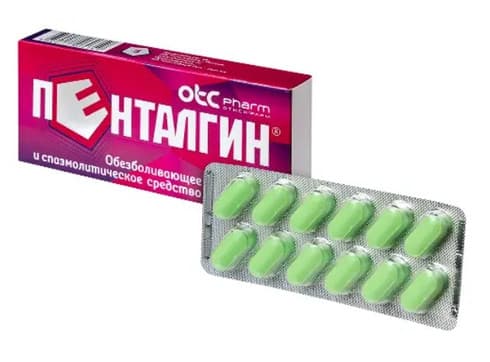
Suppliers
Vendors carrying Pentalgin, with live product details and codes. Links are affiliate links that support the wiki at no cost to you.
RUPharma🌐
Pentalgin
Research
- 1.[Combined action of mexidol and non-narcotic analgesics on pain thresholds and emotional stress behavior in animals]
- 2.Surgical treatment of jaw osteonecrosis in "Krokodil" drug addicted patients
2 listed here; entry last updated August 2026
Reviews
My notesprivate to this device
Notes and cautions
- The safety profile is the additive profile of its parts and is worse than any single agent.
- Metamizole (dipyrone) carries a well-established risk of agranulocytosis and is banned in the USA, Sweden, Japan and elsewhere; phenobarbital adds sedation, enzyme induction and physical dependence; codeine adds respiratory depression, particularly in CYP2D6 ultra-rapid metabolisers and in children.
- Chronic use of combination analgesics of this class is a documented cause of medication-overuse headache, and the codeine content made the product an abuse and diversion target [2].
- No formulation is FDA- or EMA-approved.