
spec sheet7 rows
Flupirtine is a non-opioid painkiller that worked through a mechanism nothing else uses, and it was pulled from the European market in 2018 because it damaged livers.
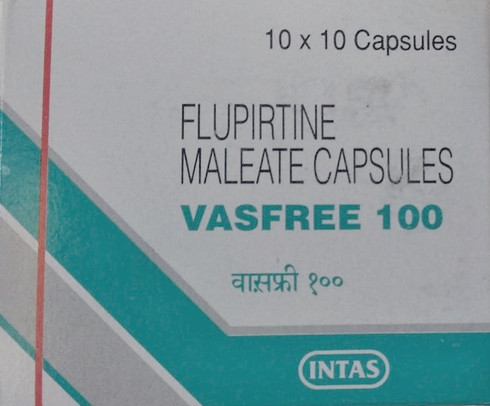
- Flupirtine is a centrally acting non-opioid, non-NSAID analgesic that works by opening neuronal Kv7/KCNQ M-channels, a mechanism shared with retigabine and unique among marketed analgesics.
- The EMA's Pharmacovigilance Risk Assessment Committee recommended withdrawal of all flupirtine marketing authorisations across the European Union in 2018 because of hepatotoxicity, after a 2013 restriction to a maximum of two weeks' use had failed to control the risk.
- In the phase 4 SUPREME trial, flupirtine modified release 400 mg once daily gave 30%/50% pain relief in 59.6%/37.6% of patients versus 46.4%/24.6% on placebo, with efficacy comparable to tramadol ER 200 mg and significantly fewer treatment-emergent adverse events than tramadol (21.0% versus 34.5%) [1].
- A 2012 controlled study found the frequency of hepatotoxicity far higher than three decades of marketing had suggested [2], and a 2025 systematic review confirmed the liver signal was already detectable within randomized trial data [3].
- The proposed hepatotoxic mechanism is metabolic bioactivation via carboxylesterase 2 to a reactive quinone-diimine, with slow NAT2 acetylator status increasing exposure [7].
Mechanism
It opens neuronal Kv7 potassium channels, hyperpolarising the neuron so that the magnesium block on the is never lifted; the antagonism is therefore indirect, which is why it was called a selective neuronal potassium channel opener. The same class of drug relaxes muscle and does not cause dependence, which is why its loss left a genuine gap in non-opioid analgesia.
receptor fingerprint
Kv7.2/Kv7.3 (KCNQ2/KCNQ3) neuronal M-type potassium channelsSelective neuronal potassium channel opener; shifts the voltage-dependence of activation to more negative potentials, hyperpolarising the neuron and damping repetitive firing
Carboxylesterase 2 (CES2) and N-acetyltransferase 2 (NAT2) mediated bioactivationMetabolism generates a reactive quinone-diimine intermediate; slow NAT2 acetylators accumulate the precursor
-A receptorWeak positive modulation reported at higher concentrations
(indirect, functional antagonism)Not a direct channel blocker; the Kv7-mediated hyperpolarisation maintains the physiological Mg2+ block of the NMDA channel
Safetyrisks and cautions, not medical advice
withdrawn across the European Union in 2018 after restrictions to two weeks with weekly liver testing failed to prevent severe and sometimes fatal liver injury; no EU marketing authorisation remains, and the monitoring the drug required is impossible to run from an import purchase
Subjective profileweighing the evidence above
Withdrawn across the European Union in 2018, and the sequence is the point: regulators first tried to save it by limiting courses to two weeks with weekly liver testing, and severe and sometimes fatal liver injury happened anyway. A restriction that failed under medical supervision has no chance on an import purchase where nobody is checking anything. The loss is real, because a non-opioid analgesic working through Kv7 channels, relaxing muscle and causing no dependence filled a genuine gap and nothing has replaced it. Regret about that gap is still not a reason to take it.
Resources
No suppliers are provided for compounds like this. This entry is here for reference.
Research
- 2011first citedEfficacy and tolerability of flupirtine in subacute/chronic musculoskeletal pain; results of a…
- 2025most recentSignals from randomized clinical trials predicting hepatotoxicity of flupirtine: systematic rev…
- 1.Efficacy and safety of flupirtine modified release for the management of moderate to severe chronic low back pain: results of SUPREME, a prospective randomized, double-blind, placebo- and active-controlled parallel-group phase IV study
- 2.Unexpected frequent hepatotoxicity of a prescription drug, flupirtine, marketed for about 30 years
- 3.Signals from randomized clinical trials predicting hepatotoxicity of flupirtine: systematic review
- 4.Flupirtine-induced liver injury; seven cases from the Berlin Case-control Surveillance Study and review of the German spontaneous adverse drug reaction reporting database
- 5.Efficacy and tolerability of flupirtine in subacute/chronic musculoskeletal pain; results of a patient level, pooled re-analysis of randomized, double-blind, controlled trials
- 6.Efficacy of flupirtine for postoperative pain: A systematic review and meta-analysis
- 7.In vitro approach to elucidate the relevance of carboxylesterase 2 and N-acetyltransferase 2 to flupirtine-induced liver injury
7 listed here; entry last updated August 2026
Reviews
My notesprivate to this device
Notes and cautions
- Flupirtine has been withdrawn from the European market since 2018 for hepatotoxicity, and it should not be presented as a currently available analgesic in Europe.
- The liver injury is idiosyncratic and can be severe: cases of acute liver failure requiring transplantation and deaths were reported, and the risk rises steeply beyond two weeks of continuous use.
- Green discoloration of the urine is a harmless but characteristic effect that patients should be warned about.
- Where the drug remains available in other jurisdictions, use should be limited to short courses with baseline and weekly liver enzyme monitoring, and it must be avoided in anyone with pre-existing liver disease or alcohol dependence.