
spec sheet13 rows
Phenazopyridine is an azo dye used as a urinary tract analgesic, providing symptomatic relief of the pain, burning, and urgency that come with irritation of the lower urinary tract. It is commonly taken for a short time alongside antibiotics during a urinary tract infection or after urologic procedures, but it is not an antibiotic and does not treat the underlying infection. A well-known feature of the drug is that it turns the urine a bright orange or red color.
- Fast relief from urinary pain, burning, and urgency
- Covers the day or two before antibiotics kick in
- Available over the counter without a prescription
- A urinary analgesic that targets the bladder lining
- Simple oral dosing for short term use
- Helpful after urologic procedures too
- Methemoglobinemia, which impairs the blood's ability to carry oxygen, can occur, particularly with overdose, prolonged use, or reduced kidney function
- Hemolytic anemia can occur, especially in people with glucose-6-phosphate dehydrogenase (G6PD) deficiency
- Headache, dizziness, or stomach upset are reported, and large overdoses have caused kidney and liver injury
Overview
Phenazopyridine is an azo dye that acts as a local analgesic on the urinary tract, and it is used purely for symptom relief rather than to cure any infection [1][2]. It is sold both over-the-counter and by prescription under brand names such as Pyridium, AZO, and Uristat, and it is among the more commonly used urinary analgesics [2][3].
Its role is to ease the discomfort of the lower urinary tract, including the painful, burning urination (dysuria), urgency, and frequency that accompany urinary tract infections and cystitis, or the irritation that follows procedures such as catheterization or cystoscopy [2][3]. Because it does nothing to eliminate bacteria, it is typically taken for only a day or two at the start of antibiotic treatment for a urinary tract infection, after which the antibiotic addresses the underlying cause [2].
The drug is taken by mouth, and a large fraction of a dose is excreted unchanged into the urine, which is where it produces its soothing effect on the mucosal lining [1][4]. A hallmark of its use is a vivid orange-to-red discoloration of the urine; this is harmless in itself but can stain clothing, can permanently discolor soft contact lenses, and can interfere with the interpretation of urine dipstick and laboratory tests [1][4].
Although widely available and generally used safely for short courses, phenazopyridine carries important risks, mostly linked to overdose, prolonged use, or reduced kidney function [1][2]. The most serious are methemoglobinemia, in which the blood's ability to carry oxygen is impaired, and hemolytic anemia, the breakdown of red blood cells; the latter is a particular concern in people with glucose-6-phosphate dehydrogenase (G6PD) deficiency [2][3]. Case reports have documented life-threatening methemoglobinemia even at label doses taken for a couple of weeks, as well as acute kidney failure and jaundice after large overdoses [3][4]. It is generally avoided in significant kidney impairment, and animal studies have raised questions about potential carcinogenicity. It is supplied as an oral tablet [1].

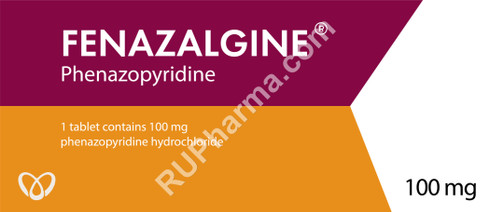
- It reliably turns urine bright orange or red, a harmless but startling effect that can also stain contact lenses and clothing.
- It has no antibacterial action at all; it numbs the urinary tract lining rather than killing bacteria.
- Because it is an azo dye, laboratory urine dipstick readings for glucose, ketones, and other analytes can be thrown off while a person is taking it.
Mechanism
The precise way phenazopyridine relieves urinary discomfort is not fully established [1][2]. After it is absorbed, a substantial portion is excreted unchanged into the urine, where it is thought to exert a direct topical, or local anesthetic, effect on the mucous membrane lining the urinary tract, blunting the sensations of pain, burning, and urgency; it has no antibacterial activity of its own [1]. As an azo compound, phenazopyridine can be chemically reduced in the body to aniline-type metabolites, and this property is believed to underlie its capacity to oxidize the iron in hemoglobin to form methemoglobin and to damage red blood cells in susceptible individuals, which accounts for its characteristic adverse effects [1][2].
receptor fingerprint
Urinary tract mucosamodulates
Local sensory nerve endingsblocks
Bladder urgency signalingmodulates
Micturition frequencymodulates
Dosingtypical ranges, not medical advice
interested in protocols and clinical dosages? make an account to see them! ^_^
Safetyrisks and cautions, not medical advice
Phenazopyridine is available over the counter and by prescription, but it is meant only for short-term use, generally no more than two days, and only alongside proper treatment of the underlying problem. Its harmless but startling effect is bright orange-red urine, which can permanently stain contact lenses and clothing. More serious, though uncommon, are methemoglobinemia, a condition where the blood cannot carry oxygen properly and the skin looks bluish, and hemolytic anemia, especially in people with G6PD deficiency or with overuse. It can also stress the kidneys and liver, so it is avoided in kidney or liver impairment. It should not be used to mask symptoms while skipping the antibiotics an infection actually needs.
Interactionsdocumented pairs only, not exhaustive
Phenazopyridine is an azo dye that acts locally in the urinary tract, and its interactions come from two properties: it is an oxidant, and it is intensely colored.
The oxidant side is the dangerous one. Phenazopyridine oxidizes hemoglobin iron to the ferric state, and case reports document methemoglobinemia at ordinary doses, presenting as unexplained hypoxia that does not correct with supplemental oxygen. Taken alongside other methemoglobin-forming agents such as dapsone, benzocaine and related local anesthetics, nitrates or sulfonamides, the oxidant load adds up. G6PD deficiency shifts the same chemistry toward hemolysis instead, and impaired renal function slows clearance and raises both risks.
The color causes a different kind of trouble. Orange-red urine masks the colorimetric pads on a dipstick, so glucose, ketone, bilirubin and protein readings become unreliable while the drug is in use, and it can obscure the visual endpoint of other urine-based assays. Any laboratory result from urine collected during treatment deserves that caveat.
Checking a whole stack? Run it through interactions + stacks.
History
Phenazopyridine is an azo dye that entered medical use in the early twentieth century, one of a number of synthetic dyes whose biological effects were explored during the golden age of German and Swiss dye chemistry. It was among the products associated with the Swiss chemist Bernhard Joos, whose small pharmaceutical enterprise later grew into the company Cilag, and it came to be marketed most famously under the brand name Pyridium.
From the outset its role was symptomatic rather than curative: it was recognized that a portion of an oral dose is excreted unchanged into the urine, where it exerts a soothing, local anesthetic-like effect on the inflamed lining of the urinary tract. Over the ensuing century it became a familiar adjunct during urinary tract infections and after urologic procedures, and in many countries low-dose forms such as Azo became available without prescription. Its long history has also clarified its boundaries; because it is an aniline-type azo compound it can, uncommonly, provoke methemoglobinemia or hemolysis, so its use is deliberately kept brief.
Reputation
Phenazopyridine holds a well-deserved reputation as a fast and reliable reliever of the burning, urgency, and discomfort that make urinary tract infections so miserable, often easing symptoms within hours while antibiotics get to work on the underlying cause. Its long availability, low cost, and over-the-counter status in many places have made it one of the most familiar names in urinary self-care, and patients frequently describe the relief it brings as substantial.
It is important to be clear about what it is not: it has no antibacterial activity and does not treat the infection itself, so it is meant to accompany, never replace, proper diagnosis and therapy. It is used only for a few days, both because prolonged relief of symptoms could mask a worsening infection and because rare blood effects can occur with excessive or extended dosing. Within those sensible limits, it remains a genuinely valued comfort medicine.
Subjective profileweighing the evidence above
Genuinely useful for the day or two it takes an antibiotic to start working, and the relief is fast. It treats nothing, so it must never stand in for the antibiotic, and the two-day limit matters: overuse can cause methemoglobinemia and hemolysis.
Where to buy
1 other outlet

Suppliers
Vendors carrying Phenazopyridine, with live product details and codes. Links are affiliate links that support the wiki at no cost to you.
PCT.Zone
Phenazopyridine
RUPharma🌐
Phenazopyridine
Research
- 2014first citedAcute Renal Failure and Jaundice without Methemoglobinemia in a Patient with Phenazopyridine Ov…
- 2023most recentPhenazopyridine-Induced Methemoglobinemia in a Jehovah's Witness Treated with High-Dose Ascorbi…
- 1.Phenazopyridine-Induced Methemoglobinemia in a Jehovah's Witness Treated with High-Dose Ascorbic Acid Due to Methylene Blue Contradictions: A Case Report and Review of the Literature.
- 2.Phenazopyridine-Induced Methaemoglobinaemia: The Aftermath of Dysuria Treatment.
- 3.A Case of Severe Hypoxia Caused by Phenazopyridine-Induced Methemoglobinemia: A near Fatal Event from Over-the-Counter Medication Use.
- 4.Acute Renal Failure and Jaundice without Methemoglobinemia in a Patient with Phenazopyridine Overdose: Case Report and Review of the Literature.
4 listed here; entry last updated August 2026
Reviews
My notesprivate to this device
FAQ
Does phenazopyridine cure a UTI?
No; it only relieves the burning and urgency, so you still need an antibiotic to actually clear the infection.
Why did my urine turn bright orange?
That is the expected effect of this azo dye passing through your urine; it is harmless but can stain contact lenses and fabric.
How long can I take it?
Only for a short time, usually up to two days, since longer use raises the risk of blood and organ side effects without treating the cause.
Should I avoid it with G6PD deficiency?
Yes; people with G6PD deficiency are at higher risk of red blood cell breakdown, so it is generally avoided in them.
Can I wear contacts while taking it?
It is best to switch to glasses, because the dye can permanently discolor soft contact lenses.
Adverse effects
- Methemoglobinemia, which impairs the blood's ability to carry oxygen, can occur, particularly with overdose, prolonged use, or reduced kidney function
- Hemolytic anemia can occur, especially in people with glucose-6-phosphate dehydrogenase (G6PD) deficiency
- Headache, dizziness, or stomach upset are reported, and large overdoses have caused kidney and liver injury
Notes and cautions
- It harmlessly turns urine bright orange or red, can stain clothing, and can permanently discolor soft contact lenses
- The color can interfere with the reading of some urine laboratory tests