
spec sheet13 rows
Meloxicam is a nonsteroidal anti-inflammatory drug (NSAID) of the oxicam class, used to relieve pain and inflammation, most commonly in arthritis. It preferentially inhibits the cyclooxygenase-2 (COX-2) enzyme over COX-1, a selectivity that is greatest at lower doses and is associated with somewhat better gastrointestinal tolerability than older, non-selective NSAIDs [1][3]. Sold under brand names such as Mobic, it is a widely prescribed medicine for osteoarthritis and rheumatoid arthritis [2].
- Relieves arthritis pain and inflammation with one daily tablet
- Easier on the stomach than older NSAIDs at lower doses
- Prefers COX-2 over COX-1, most strongly at lower doses
- Widely prescribed for osteoarthritis and rheumatoid arthritis
- Long duration of action, so mornings start easier
- Cuts joint stiffness as well as pain
- Stomach upset, and risk of ulcers or gastrointestinal bleeding
- Increased cardiovascular risk, such as heart attack and stroke, as with NSAIDs generally
- Kidney effects, especially with dehydration or existing kidney disease
Overview
Meloxicam is a synthetic NSAID belonging to the enolic acid, or oxicam, family, chemically related to piroxicam. It is used to treat the pain and inflammation of osteoarthritis, rheumatoid arthritis, ankylosing spondylitis, and juvenile arthritis, and it is taken by mouth as tablets or suspension, given rectally, or, in newer formulations, by injection [2]. It is a very commonly prescribed drug; in the United States it has ranked among the most frequently dispensed medications [2].
Meloxicam's defining pharmacological feature is its relative selectivity for cyclooxygenase-2. NSAIDs relieve pain and inflammation by blocking cyclooxygenase enzymes, which make prostaglandins; the COX-2 form is switched on at sites of inflammation, whereas COX-1 maintains protective functions such as the stomach lining and normal platelet activity [1]. By inhibiting COX-2 more than COX-1, especially at lower doses, meloxicam aims to keep anti-inflammatory efficacy while reducing the gastric injury linked to COX-1 blockade [1][3]. Studies including the large MELISSA trial found meloxicam as effective as comparator NSAIDs such as diclofenac and piroxicam, with fewer gastrointestinal complaints, although this relative selectivity lessens at higher doses [1].
In clinical use, meloxicam provides analgesic and anti-inflammatory benefit comparable to other NSAIDs for arthritic conditions [1][3]. Its gastrointestinal tolerability appears somewhat better than that of non-selective agents, but it is not free of risk: like all NSAIDs it can cause stomach irritation, ulcers, and bleeding, along with kidney effects and, as a class, an increased risk of cardiovascular events such as heart attack and stroke [2]. These class risks mean it is generally used at the lowest effective dose for the shortest necessary time [2].
Meloxicam is a prescription medicine in most countries, available as a low-cost generic and under brand names including Mobic, with an intravenous form marketed for acute pain [2]. It is also widely used in veterinary medicine. As an established NSAID it carries the standard cautions of the class, including warnings about gastrointestinal bleeding and cardiovascular risk, and it is used carefully in older adults and in people with kidney, heart, or ulcer disease [2].

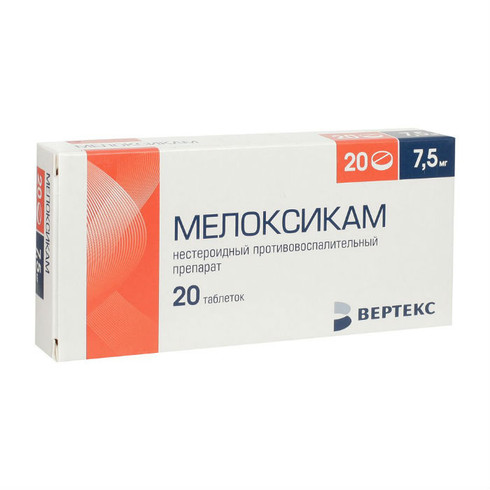
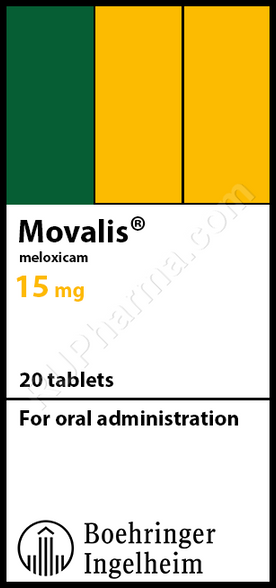
- Meloxicam's stomach-friendly reputation depends on staying at lower doses; its COX-2 preference weakens as the dose climbs, so it starts to behave more like an older NSAID.
- A systematic review found that among common NSAIDs, meloxicam carried one of the lower overall cardiovascular and renal risk profiles, with the small extra risk being mainly vascular.
- It belongs to the oxicam class, a chemically distinct family of NSAIDs whose structure lets meloxicam fit the slightly larger COX-2 active site.
Mechanism
Meloxicam works by inhibiting cyclooxygenase, the enzyme that converts arachidonic acid into prostaglandin H2, the precursor of the prostaglandins that mediate pain, fever, and inflammation [1][2]. Cyclooxygenase exists in two main forms with different roles: COX-1 is present constantly in many tissues and supports housekeeping functions such as protecting the stomach lining and enabling normal platelet clotting, while COX-2 is induced at sites of injury and inflammation and generates the prostaglandins responsible for inflammatory pain and swelling [1].
Meloxicam preferentially blocks COX-2, and this bias is the basis for its therapeutic profile: suppressing COX-2 reduces inflammation and pain, while relatively sparing COX-1 is intended to lessen the stomach and bleeding problems typical of non-selective NSAIDs [1][3]. Its molecular structure allows it to fit the slightly larger COX-2 active site, contributing to this preference [2]. The selectivity is dose-dependent, however, so at higher doses meloxicam inhibits COX-1 as well, and reducing the protective, COX-2-derived prostaglandins in blood vessels and kidneys is thought to underlie the cardiovascular and renal risks shared by the NSAID class [1][2].
receptor fingerprint
Cyclooxygenase-2 (COX-2)inhibits
Prostaglandin E2 synthesisblocks
Cyclooxygenase-1 (COX-1)inhibits
Prostaglandin-driven fever pathwayblocks
Thromboxane A2 (platelets)inhibits
Dosingtypical ranges, not medical advice
interested in protocols and clinical dosages? make an account to see them! ^_^
Safetyrisks and cautions, not medical advice
Meloxicam is prescription only and carries the class risks of NSAIDs. It can upset the stomach and, more seriously, cause ulcers or gastrointestinal bleeding, especially with alcohol, older age, or blood thinners. It can strain the kidneys, particularly when someone is dehydrated or also taking ACE inhibitors, ARBs, or diuretics, and it can raise blood pressure and cause fluid retention. Long-term or high-dose use increases the risk of heart attack and stroke. It should be avoided in the third trimester of pregnancy and in severe heart failure, and the lowest effective dose for the shortest time is the goal.
Interactionsdocumented pairs only, not exhaustive
Meloxicam interacts with lithium and requires periodic monitoring of serum lithium levels; NSAIDs are known to inhibit prostaglandin-mediated renal perfusion, potentially affecting glomerular filtration of lithium [6]. Lithium dose reduction is often necessary when combined with meloxicam. Meloxicam also increases blood pressure and reduces antihypertensive efficacy of ACE inhibitors and diuretics through shared renal and vascular mechanisms, though this class effect is documented less rigorously for meloxicam alone than for older NSAIDs. Pairings rarely if ever studied include meloxicam with triple-therapy regimens (NSAIDs plus ACE inhibitors plus diuretics), with selective serotonin reuptake inhibitors above standard doses (increased GI bleeding risk), and with warfarin at high intensity (additive anticoagulant effects and GI toxicity).
Checking a whole stack? Run it through interactions + stacks.
History
Meloxicam was developed by the German pharmaceutical company Boehringer Ingelheim as a member of the oxicam, or enolic acid, class of nonsteroidal anti-inflammatory drugs. It was introduced in Europe in the mid-1990s and gained United States Food and Drug Administration approval around 2000 under the brand name Mobic, arriving as interest in cyclooxygenase selectivity was reshaping the NSAID field. Its design gave it a preference for the inflammation-associated COX-2 enzyme over the housekeeping COX-1, a bias most pronounced at lower doses, which was expected to improve stomach tolerability relative to older, non-selective agents.
Clinical trials in osteoarthritis found it as effective as established NSAIDs such as piroxicam, diclofenac, and naproxen, while showing fewer gastrointestinal symptoms and complications in meta-analysis. It became a widely prescribed treatment for osteoarthritis and rheumatoid arthritis, and a lower-dose formulation, Vivlodex, was later introduced. Today meloxicam is a common, inexpensive generic anti-inflammatory.
Reputation
Meloxicam holds a favorable reputation as a convenient, once-daily anti-inflammatory that balances effectiveness against arthritis pain with a somewhat gentler gastrointestinal profile than older NSAIDs. Much of its appeal comes from its COX-2 preference at therapeutic doses, which aims to preserve the enzyme's anti-inflammatory suppression while sparing more of the protective COX-1 in the stomach lining; clinical experience in osteoarthritis and rheumatoid arthritis has borne out this practical advantage.
A systematic review of its cardiovascular and renal safety was reassuring relative to several other NSAIDs, finding only a low, mainly vascular increase in risk and no meaningful rise in heart or kidney events. It is fair to stress that meloxicam still belongs to the NSAID family, so its selectivity fades at higher doses and it shares the class cautions around cardiovascular, kidney, and gastrointestinal effects; used at the lowest effective dose it remains a trusted choice for chronic joint pain.
Subjective profileweighing the evidence above
A good once-daily option for arthritis pain, and easier on the stomach than older NSAIDs at lower doses thanks to its COX-2 preference. It is still an NSAID: ulcers and bleeding, kidney strain and cardiovascular risk all scale with dose and duration, so lowest effective dose for the shortest time.
Where to buy


Suppliers
Vendors carrying Meloxicam, with live product details and codes. Links are affiliate links that support the wiki at no cost to you.
PCT.Zone
Meloxicam
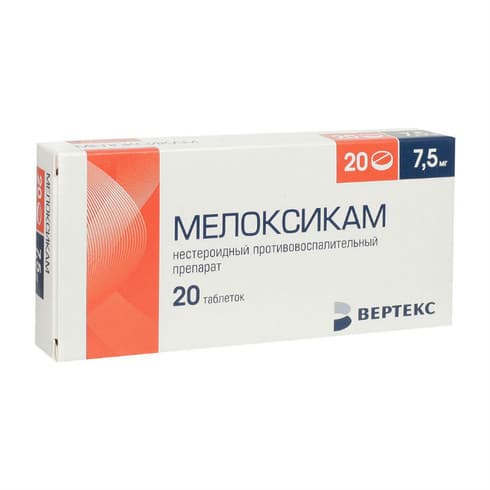
RUPharma🌐
Meloxicam
RUPharma🌐
Meloxicam (Movalis)
Research
- 1997first citedMeloxicam: selective COX-2 inhibition in clinical practice
- 2020most recentMeloxicam (Profiles of Drug Substances, Excipients, and Related Methodology)
- 1.Meloxicam: selective COX-2 inhibition in clinical practice
- 2.Meloxicam (Profiles of Drug Substances, Excipients, and Related Methodology)
- 3.[Meloxicam].
- 4.The effect of COX-2-selective meloxicam on the myocardial, vascular and renal risks: a systematic review
- 5.Meloxicam (Expert Opinion on Pharmacotherapy review)
- 6.Meloxicam: a reappraisal of pharmacokinetics, efficacy and safety.
6 listed here; entry last updated August 2026
Reviews
My notesprivate to this device
FAQ
Is meloxicam easier on the stomach?
Its COX-2 preference helps at low doses, but the risk of ulcers and bleeding is still real.
How is it different from ibuprofen?
It is longer acting, taken once daily, and more selective for COX-2.
Can I take it with blood thinners?
Use caution; combining them raises the risk of bleeding, so check with your doctor.
How long until it helps my arthritis?
It gives steady relief within a few days of regular use.
Can it harm my kidneys?
Yes, especially if you are dehydrated or also take certain blood-pressure medicines.
Adverse effects
- Stomach upset, and risk of ulcers or gastrointestinal bleeding
- Increased cardiovascular risk, such as heart attack and stroke, as with NSAIDs generally
- Kidney effects, especially with dehydration or existing kidney disease
- Fluid retention and raised blood pressure