
spec sheet11 rows
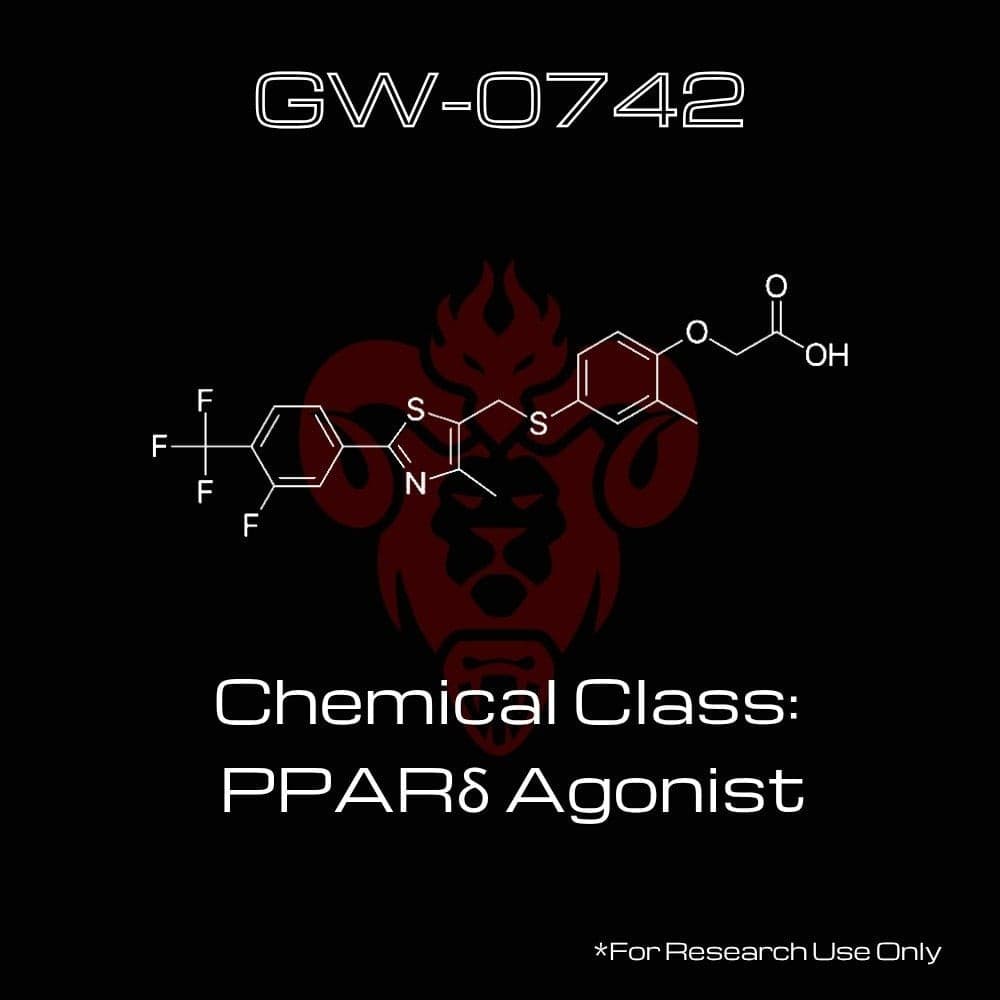
GW-0742 is a potent PPAR-delta agonist and a close cousin of Cardarine, sitting right at the center of the "exercise in a bottle" conversation in metabolic research. By switching on the genes for fat burning and mitochondrial fuel use, it makes muscle lean on fat and spare glycogen, and in rodents the endurance and fat-loss numbers are genuinely eye-catching. As a proof of concept for activating the body's fat-burning machinery, GW-0742 is a fascinating and closely watched research compound.
- Exercise in a bottle, the research version
- Trained mice ran dramatically longer
- Flips muscle toward fat, sparing glycogen
- Cuts visceral fat in obese mice
- Builds mitochondrial horsepower inside muscle
- Anti-inflammatory and protective across injury models
Overview
GW-0742 is a synthetic, high-affinity agonist of the peroxisome proliferator-activated receptor beta/delta (PPAR-beta/delta), a nuclear receptor that acts as a master regulator of fat metabolism and mitochondrial function. It is a close structural and pharmacological analogue of GW-501516 (Cardarine) and is studied primarily as an exercise mimetic [1].
PPAR-delta is highly expressed in skeletal muscle, where it governs the transcriptional program for fatty-acid oxidation and oxidative metabolism; agonists such as GW-0742 were developed to engage this program pharmacologically, which is the origin of the exercise-in-a-bottle framing [1]. The compound is a research chemical rather than a therapeutic.
Its research applications span endurance, metabolism, and inflammation. Combined with the AMPK activator AICAR in trained mice, GW-0742 markedly potentiated running performance and shifted fuel use toward fat while sparing glycogen [1]. In diet-induced obese female mice it complemented exercise, reducing visceral fat, improving insulin sensitivity, raising skeletal-muscle oxidative capacity, and lowering muscle inflammatory markers [2]. Across injury models it shows anti-inflammatory and tissue-protective effects; as a high-affinity PPAR-beta/delta agonist it inhibited acute lung injury in mice by suppressing neutrophil infiltration, lipid peroxidation, and inflammatory cytokines [3].
GW-0742 has no approved human use and no human safety data; every result to date comes from animal and cell studies. The PPAR-delta agonist class carries carcinogenicity concerns, and the related analogue GW-501516 promoted tumors in long-term rodent studies, which ended its development. GW-0742 is banned in sport as a metabolic modulator and is sold only on the gray market, where purity and long-term effects are unknown.
- In trained mice, pairing GW-0742 with AICAR increased running time by roughly 138 to 179 percent over exercised controls and about 355 percent over sedentary controls.
- GW-0742 is an exceptionally potent PPAR-delta agonist, activating the receptor at low-nanomolar concentrations.
Mechanism
GW-0742 is compelling as a concept; flip on one metabolic master switch and muscle starts behaving as if it has been training, leaning on fat for fuel, sparing glycogen, and building oxidative capacity. In rodents this translates into large endurance gains, less visceral fat, and better sensitivity, which is why it anchors so much exercise-mimetic research.
The core mechanism is agonism of PPAR-beta/delta. Activating this nuclear receptor up-regulates the genes for fatty-acid oxidation and fuel use, shifting substrate preference toward fat, and it drives mitochondrial biogenesis through the master regulator PGC-1alpha and related NRF-1 signaling [1][2]. GW-0742 also exerts anti-inflammatory effects by restraining the NF-kB pathway, suppressing inducible synthase and cytokines such as TNF-alpha, IL-1beta, and IL-6 across tissue-injury models [3].
The animal numbers are the eye-catching part. In trained mice, combining GW-0742 with the activator AICAR increased running time by roughly 138 to 179 percent relative to exercised controls and by about 355 percent relative to non-exercised controls, accompanied by a clear metabolic shift toward fat oxidation, elevated muscle non-esterified fatty acids, glycogen sparing, and up-regulation of Pgc1a, Pdk4, Cd36, and Lpl in muscle [1]. In diet-induced obese mice, GW-0742 complemented exercise to cut visceral adipose mass, improve sensitivity, and raise skeletal-muscle oxidative capacity while lowering inflammatory expression [2]. The unavoidable caveats are that all of this is preclinical, that the compound has no human safety data, and that its PPAR-delta class, including the closely related GW-501516, has been linked to tumor formation in long-term rodent studies, so it remains a research-only compound [3].
⚠️ A NOTE ON WHICH COMPOUND THE COLON-CANCER WARNING BELONGS TO, because it has been migrating between two molecules for twenty years. Every published result showing a PPAR-delta accelerating intestinal tumour growth used GW501516, sold as Cardarine [5]. There is no published study in which GW-0742 increased intestinal tumour burden, and there is one in which it ATTENUATED chemically induced colon carcinogenesis in mice [6]. The two compounds differ by a single fluorine and 18 daltons, and doping-control methods have to separate them by mass spectrometry precisely because they are otherwise so easily confused [4]. That does not make GW-0742 safe; it means the specific tumour finding people cite for it was generated with a different molecule, and citing it here would be the same error in the opposite direction.
Its own muscle pharmacology is real but thinner than the famous endurance headline suggests, which also belongs to GW501516. GW-0742 raised the number of oxidative fibres 1.63-fold and capillaries 1.55-fold within two days in mouse muscle, an effect that depends on calcineurin [7]. In primary human muscle cells from diabetic and healthy donors it increased fatty-acid oxidation in both, but did NOT restore -stimulated glycogen synthesis [8]; those are human cells in a dish rather than dosed people. In the one endurance experiment, the large gains came from GW-0742 combined with AICAR, and no isolated GW-0742 endurance figure was reported [1].
It also carries at least one off-target worth naming: it antagonises the thyroid hormone receptor with an IC50 of 4.9 micromolar and blocked T3-driven of rat arteries at 10 micromolar [9].
Its liver effects run in both directions depending on dose, and the entry should say both. At pharmacological doses it lowered liver enzymes and inflammatory signalling in a chemical injury model, in wild-type but not receptor-null mice [11]. At toxicological doses the hepatic picture reverses, through cross-activation of a different PPAR isoform.
⚠️ Two negatives are firm. No human has ever received GW-0742 in any trial; the two records that surface in a clinical-trial search gave humans telmisartan and fibrates respectively, with GW-0742 used only on cells. And no pharmacokinetic study exists in any species, so any , peak concentration or figure circulating for this compound is unsourced.
receptor fingerprint
PPAR-delta (PPAR-beta/delta)Selective high-affinity agonist driving fat-oxidation genes
PGC-1a / NRF-1 signalingUpregulates mitochondrial biogenesis programs
NF-kB inflammatory pathwaySuppresses iNOS, TNF-a, IL-1b, and IL-6
Thyroid hormone receptor (TRalpha / TRbeta)Antagonist
Dosingtypical ranges, not medical advice
interested in protocols and clinical dosages? make an account to see them! ^_^
Safetyrisks and cautions, not medical advice
GW-0742 is a PPAR-delta agonist sold as a research chemical with essentially no human safety data. Its close analog GW501516 (cardarine) had development halted after animal studies showed cancers at multiple organ sites with prolonged exposure, a class concern that cannot be dismissed for GW-0742. Given the absence of human data and the carcinogenicity signal associated with PPAR-delta agonists, it should be regarded as experimental and potentially hazardous with chronic use.
History
GW-0742 was developed by GlaxoSmithKline as a selective, high-affinity agonist of the nuclear receptor PPAR-beta/delta, and it is closely related to the better-known research compound GW-501516 (Cardarine). It emerged from medicinal-chemistry programs in the early 2000s aimed at exploring PPAR-delta biology and its role in lipid and mitochondrial metabolism. It has been used almost exclusively as a pharmacological tool in laboratory research rather than as a therapeutic candidate. Interest intensified when PPAR-delta agonists were characterized as exercise mimetics capable of reprogramming muscle metabolism in rodents. No human clinical development of GW-0742 has been reported.
Reputation
GW-0742 occupies a prominent place in metabolic and "exercise in a bottle" research, admired as a clean pharmacological probe for switching on the body's fat-burning gene programs. Published rodent work is genuinely striking; combined with the AMPK activator AICAR it more than doubled running endurance in trained mice, and it complemented exercise to reduce visceral fat and improve insulin sensitivity. Researchers value it as a proof of concept that mitochondrial and fat-oxidation pathways can be engaged pharmacologically. In fairness, all of the evidence is preclinical, there is no human safety data, and the closely related PPAR-delta class has raised cancer concerns in long-term rodent studies, so it remains strictly a research chemical.
Subjective profileweighing the evidence above
Not worth it, for a specific reason. Its close analogue GW501516 had development halted after long-term rodent studies produced cancers at multiple organ sites, and nothing rules that out for this one. Every impressive endurance number here is from mice, with no human data to weigh against the risk.
Where to buy
1 other outlet
Suppliers
Vendors carrying GW-0742, with live product details and codes. Links are affiliate links that support the wiki at no cost to you.
Kimera Chems
GW-0742
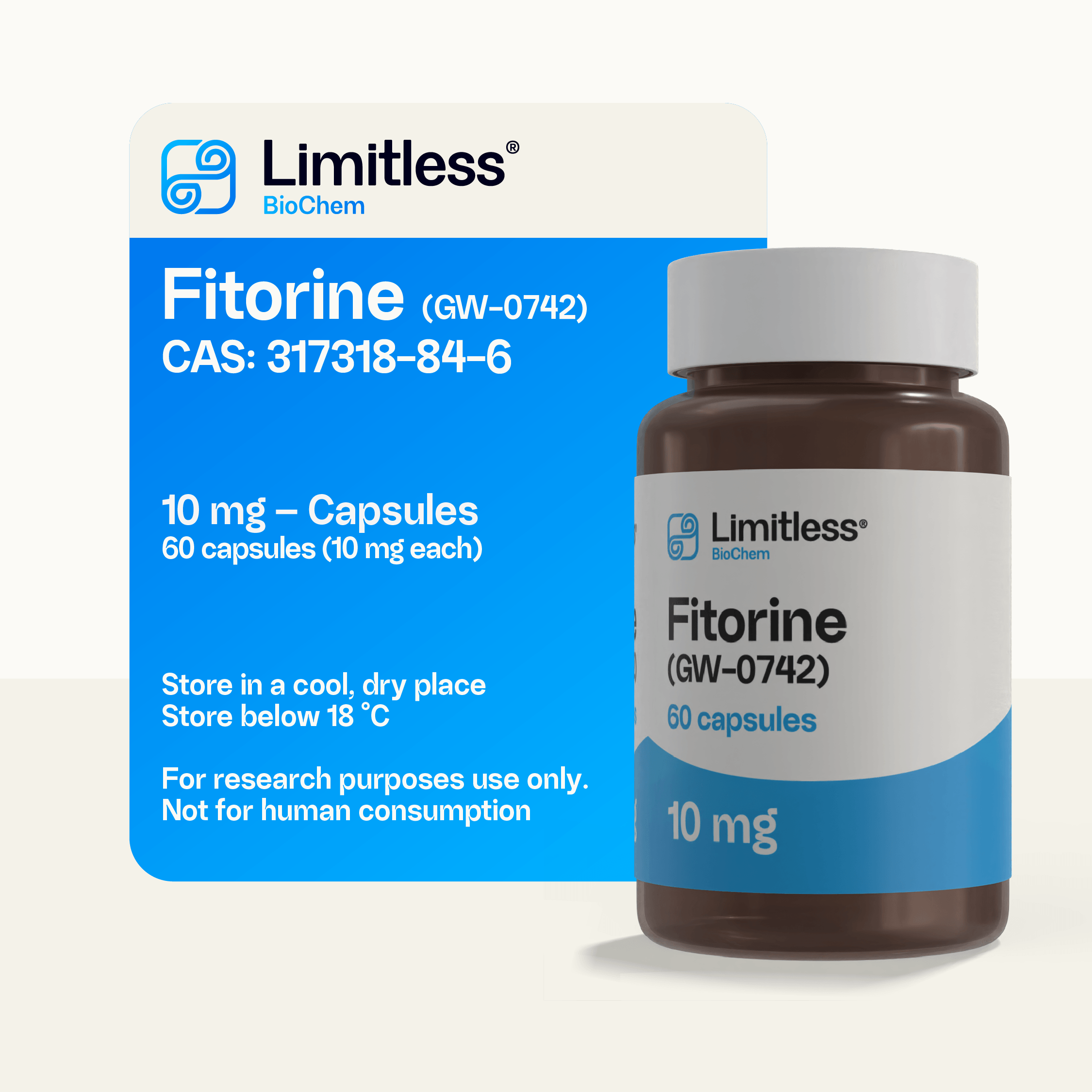
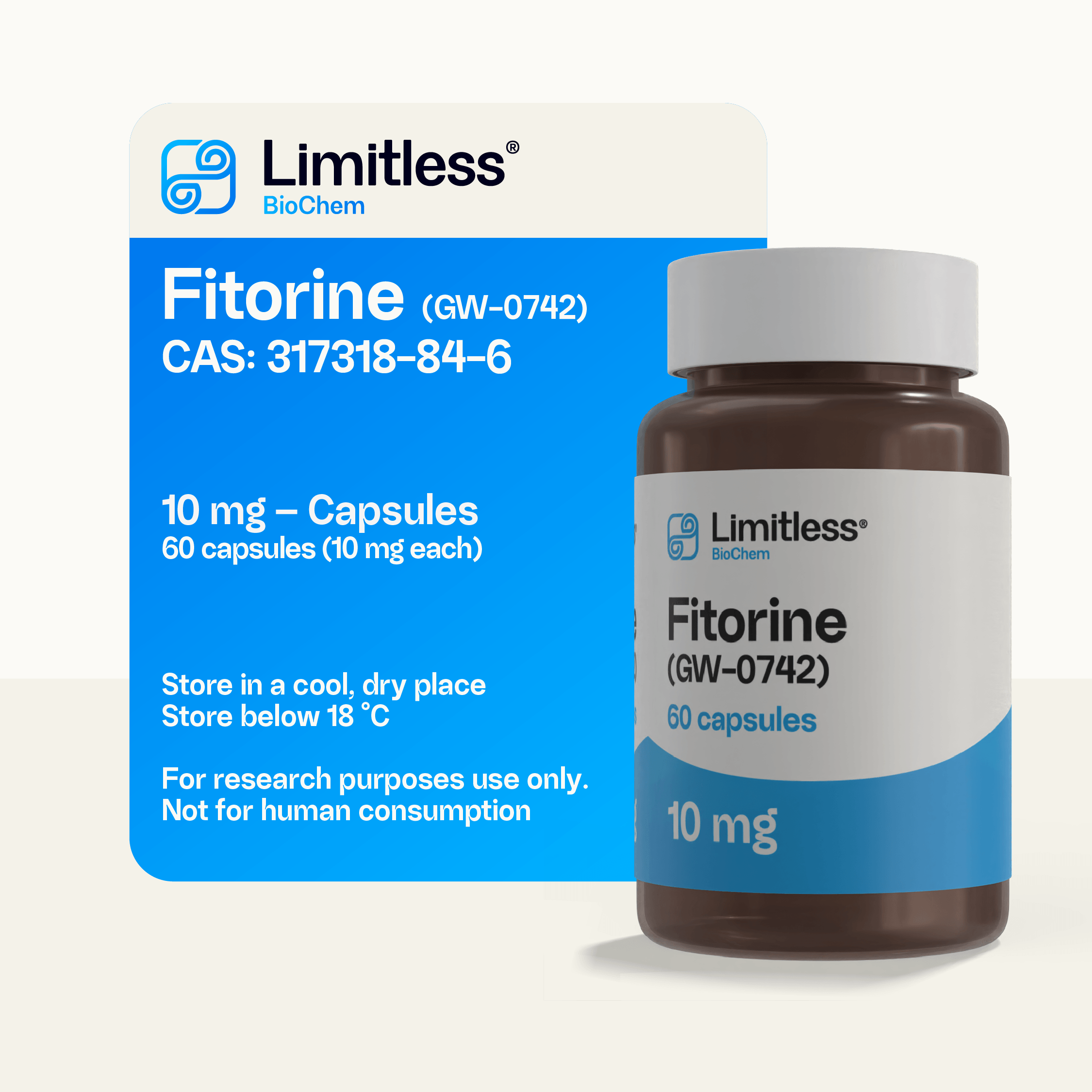
Limitless Biochem🌐
GW-0742
Research
- 2004first citedActivation of nuclear hormone receptor peroxisome proliferator-activated receptor-delta acceler…
- 2008most active year4 papers
- 2019most recentComplementary Immunometabolic Effects of Exercise and PPARβ/δ Agonist in the Context of Diet-In…
- 1.Combined pharmacological activation of AMPK and PPARδ potentiates the effects of exercise in trained mice.
- 2.Complementary Immunometabolic Effects of Exercise and PPARβ/δ Agonist in the Context of Diet-Induced Weight Loss in Obese Female Mice.
- 3.GW0742, a high-affinity PPAR-beta/delta agonist, inhibits acute lung injury in mice
- 4.Bioactivity screening and mass spectrometric confirmation for the detection of PPARδ agonists that increase type 1 muscle fibres.
- 5.Activation of nuclear hormone receptor peroxisome proliferator-activated receptor-delta accelerates intestinal adenoma growth
- 6.Ligand activation of peroxisome proliferator-activated receptor-beta/delta (PPARbeta/delta) and inhibition of cyclooxygenase 2 (COX2) attenuate colon carcinogenesis through independent signaling mechanisms.
- 7.Pharmacological activation of PPARbeta promotes rapid and calcineurin-dependent fiber remodeling and angiogenesis in mouse skeletal muscle.
- 8.Short-term activation of peroxysome proliferator-activated receptor beta/delta increases fatty acid oxidation but does not restore insulin action in muscle cells from type 2 diabetic patients.
- 9.In silico modelling of prostacyclin and other lipid mediators to nuclear receptors reveal novel thyroid hormone receptor antagonist properties.
- 10.PPARdelta-mediated antiinflammatory mechanisms inhibit angiotensin II-accelerated atherosclerosis.
- 11.Ligand activation of peroxisome proliferator-activated receptor beta/delta (PPARbeta/delta) attenuates carbon tetrachloride hepatotoxicity by downregulating proinflammatory gene expression.
11 listed here; entry last updated August 2026
Reviews
My notesprivate to this device
FAQ
How is GW-0742 different from Cardarine?
Both are PPAR-delta agonists; GW-0742 is usually described as more potent and selective in lab tests. They share the same class and the same cancer concerns.
Is the cancer risk settled?
No. The related GW501516 caused tumors in rodents, and GW-0742 promoted colon carcinogenesis in some studies. The literature is mixed but the concern is not resolved.
Has it been tested in people?
No. Every benefit comes from animal or cell studies, so human safety and effectiveness are unknown.
Is it a steroid or SARM?
No; it is a PPAR-delta agonist, a metabolic compound that does not act on androgen receptors.
Limitations of the evidence
- Routinely confused with GW501516/Cardarine, which is 18 daltons heavier and the actual subject of every intestinal tumour-promotion study
- No human has ever received it in a trial
- No pharmacokinetic data exists in any species, so any half-life or bioavailability figure in circulation is unsourced
- The famous endurance result belongs to GW501516; the one GW-0742 endurance experiment used it combined with AICAR and reported no isolated figure
- Antagonises the thyroid hormone receptor at 4.9 micromolar
Notes and cautions
- Banned in sport as a metabolic modulator
- Gray-market purity and long-term effects unknown