
spec sheet12 rows
SAM-e is a molecule the body already makes from the amino acid methionine; it is the chemical the body uses to hand a methyl group to hundreds of enzymes, which is how it reaches DNA, brain chemicals such as dopamine, and liver metabolism. It is sold as a dietary supplement in the United States and as a prescription drug called ademetionine in Italy, Germany and Russia, mostly for depression, joint pain and liver problems. The evidence is real but genuinely mixed; the Cochrane review of eight trials found the quality too low to draw a conclusion, the largest United States trial found SAM-e no better than placebo, and two separate 2024 meta-analyses of much the same studies reached opposite answers. It is usually well tolerated apart from stomach upset, but it can trigger mania in people with bipolar disorder and should not be combined casually with antidepressants.
- The body's universal methyl donor
- Supports a steady, balanced mood
- Backs liver and bile function
- Feeds dopamine and other neurotransmitter production
- May ease aching joints
- Well tolerated over the long haul
- Nausea
- Digestive upset or diarrhea
- Insomnia if taken late in the day
Overview
S-Adenosylmethionine is a physiological molecule present in all tissues, most abundantly in the liver, and it functions as a cosubstrate in a wide range of enzyme reactions [4]. It is made inside cells from the essential amino acid methionine and adenosine triphosphate through the enzyme methionine adenosyltransferase, a reaction that gives the molecule a reactive sulfonium center [4]. That reactive center is what allows it to hand off a methyl group to other molecules, which is its central role in metabolism [1].
The compound sits at the crossroads of three major biochemical pathways. As the principal methyl donor it supplies the chemical tags added to DNA, RNA, proteins, and lipids in a process called transmethylation; through aminopropylation it contributes to the synthesis of polyamines; and through transsulfuration it feeds into the production of the antioxidant glutathione [1]. Because methylation touches so many processes, from gene regulation to the making of neurotransmitters, the level of S-adenosylmethionine is tightly controlled, and abnormal levels are linked to liver disease and other conditions [4].
As a supplement and medicine, S-adenosylmethionine has been examined most closely in three areas: depression, osteoarthritis, and liver disorders [1]. Reviews of clinical trials suggest it may have antidepressant effects, performing better than placebo in several studies and showing results broadly comparable to standard antidepressants, although the evidence is limited and the trials are often small [2][3]. Its role in liver health has been studied extensively in the laboratory, where keeping normal levels appears important for protecting the organ from injury [4]. Evidence for osteoarthritis and other proposed uses remains less conclusive [1].
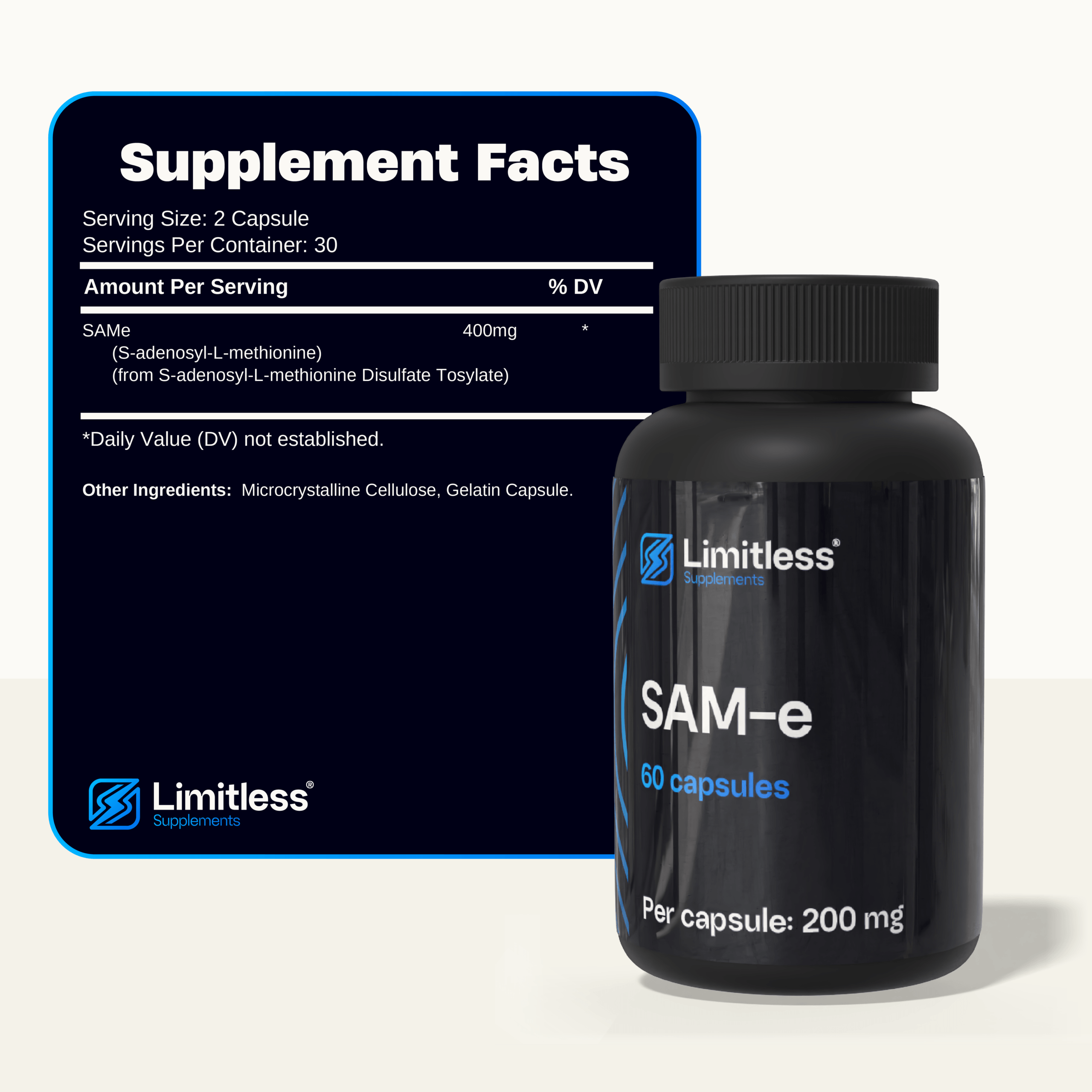
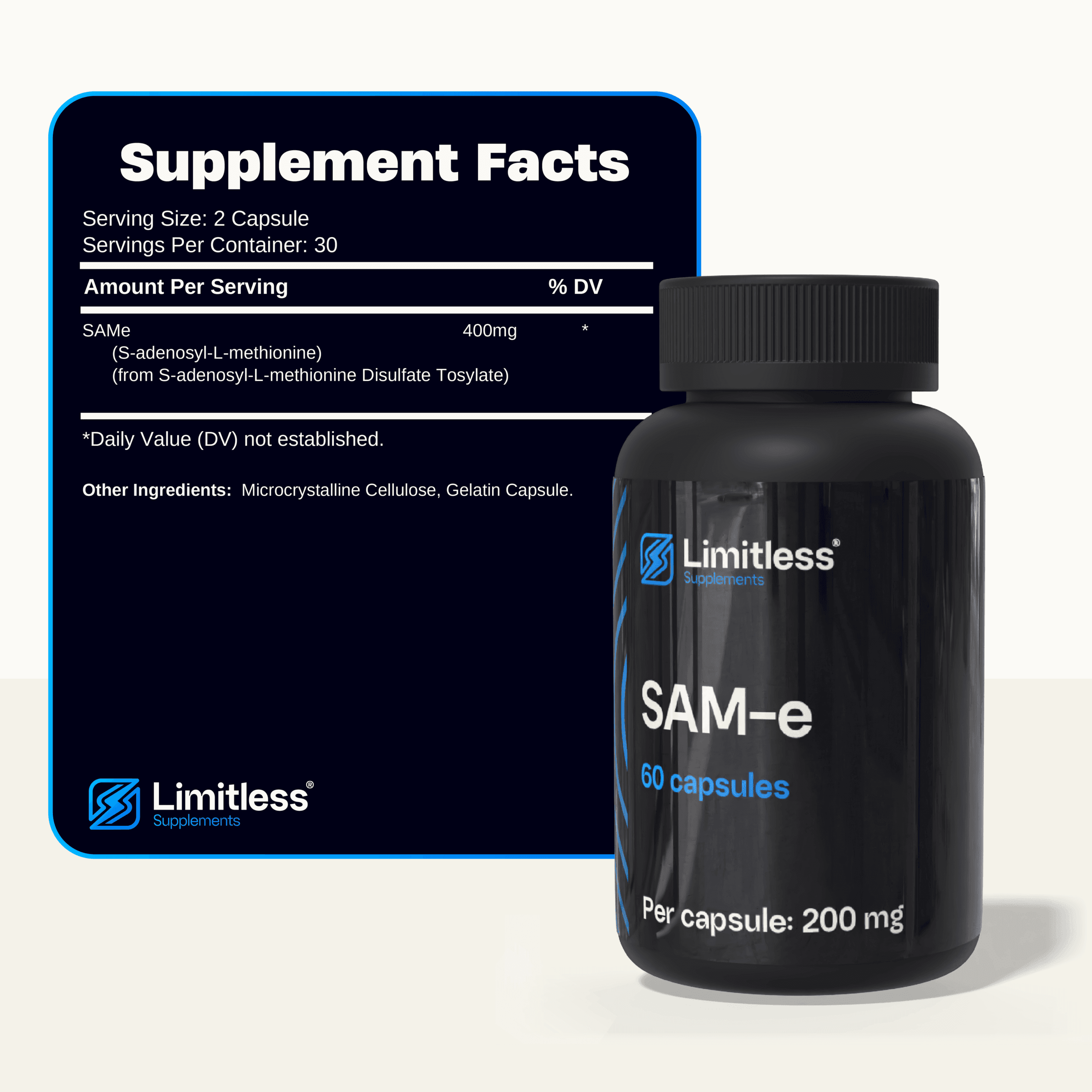
Regulatory treatment of the compound varies by country. In the United States, Canada, and the United Kingdom it is available over the counter as a dietary supplement, becoming widely sold in the United States around the turn of the century, whereas in a number of European and other countries it is a prescription drug [1]. It is supplied in oral tablet form, usually enteric-coated to survive the stomach, and as an injectable preparation in some medical settings.

- It was discovered in 1952 by Giulio Cantoni, who unmasked it as the long-sought 'active methionine.'
- It is present in essentially every living cell and is the body's principal donor of methyl groups.
- In some countries it is a prescription drug, while in the United States the very same compound is sold as an over-the-counter supplement.
Mechanism
S-Adenosylmethionine works chiefly as a methyl group donor. Its high-energy sulfonium bond makes the attached methyl group easy to transfer, and enzymes called methyltransferases use it to add methyl groups to DNA, proteins, phospholipids, and small molecules, after which it becomes S-adenosylhomocysteine [1]. Through these transmethylation reactions it influences gene activity and the synthesis and breakdown of neurotransmitters, which is one proposed basis for its effects on mood [1]. It also serves as a starting point for making polyamines and, by way of the transsulfuration pathway, for producing cysteine and the antioxidant glutathione, linking it to the cell's defense against [4]. In the liver in particular, adequate S-adenosylmethionine is needed to maintain normal function, and disturbances in its metabolism promote injury [4].
receptor fingerprint
Methylation cycleServes as the primary methyl donor for numerous enzymatic reactions
Monoamine neurotransmittersSupports synthesis of serotonin, dopamine, and norepinephrine
Cartilage and jointsSupports proteoglycan production in joint tissue
Methyltransferase enzyme family (COMT, PEMT, DNMT1/3A/3B, GNMT and roughly 200 others)Methyl-group donor and co-substrate, not a receptor ligand; SAM-e supplies the methyl group these enzymes transfer and is consumed into S-adenosylhomocysteine in the process
Cystathionine beta-synthase (CBS)Allosteric activator; binds the C-terminal regulatory domain, relieves intrasteric inhibition and roughly doubles activity, pushing homocysteine down the transsulfuration route toward cysteine and glutathione
Methylenetetrahydrofolate reductase (MTHFR)Allosteric end-product inhibitor; binds a eukaryote-only SAM-binding regulatory domain, and phosphorylation of the MTHFR N-terminus increases sensitivity to that inhibition. This is the feedback brake linking the folate and methionine cycles
Methionine adenosyltransferase (MAT1A hepatic, MAT2A extrahepatic)Product and feedback regulator rather than a drug target; MAT synthesises SAM-e from methionine plus ATP, and both MAT1A activity and hepatic SAM-e fall in chronic liver disease, which is the rationale for the European hepatology indication
Human DNA methylome (measured genome-wide in vivo)Oral dosing shifted methylation at 66 differentially methylated regions over 12 weeks, with no consistent epigenetic-clock change and no clinical benefit; plasma SAM-e did not rise
Polyamine synthesis (via decarboxylated SAM-e, AMD1 route)Aminopropyl-group donor for spermidine and spermine, a second consumption route for SAM-e that is entirely separate from methylation and from transsulfuration
Dosingtypical ranges, not medical advice
interested in protocols and clinical dosages? make an account to see them! ^_^
Safetyrisks and cautions, not medical advice
COMMON AND MILD, GASTROINTESTINAL. In the largest placebo-controlled trial, 19% reported stomach discomfort and 20% diarrhoea (PMID 24500245). Nausea and loose stools dominate adverse-event tables throughout the literature.
MANIA AND HYPOMANIA IS THE ONE SERIOUS SIGNAL. The Cochrane review counted 2 mania/hypomania events among 441 participants in SAM-e arms and told future trialists that induction of mania is of particular interest (PMID 27727432). NIH NCCIH advises that people with bipolar disorder should not take SAM-e for depressive symptoms except under clinician supervision, because it may worsen mania. A published case describes mania with psychotic features on SAM-e taken alongside an SSRI (PMID 29950497). A 2016 review states plainly that SAM-e is contraindicated in bipolar disorder (PMID 27594595).
SEROTONERGIC INTERACTION. One case of serotonin-syndrome-like symptoms occurred in the adjunctive trial (PMID 30115553), and NCCIH warns against combining SAM-e with drugs or supplements that raise serotonin. LEVODOPA: SAM-e may reduce its effect, since COMT methylates levodopa and SAM-e supplies the methyl group; relevant to anyone with Parkinson's disease.
HOMOCYSTEINE. A theoretical concern that chronic dosing raises homocysteine, and with it cardiovascular risk, is raised repeatedly (PMID 27594595) but was not borne out in the trial that actually measured it (PMID 30115553). Unresolved; folate and B12 status plausibly modify it.
PREGNANCY. Ademetionine is used clinically for intrahepatic cholestasis of pregnancy, but the 2020 Cochrane review of 26 trials and 2007 women concluded there is insufficient evidence that SAM-e is effective for it, with ursodeoxycholic acid the better-supported option (PMID 32716060). NCCIH states that safety in pregnancy has not been established. NCCIH also flags a theoretical concern for immunocompromised people including those who are HIV positive. Long-term safety data are limited.
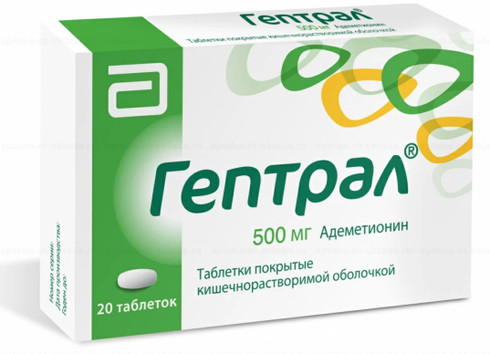
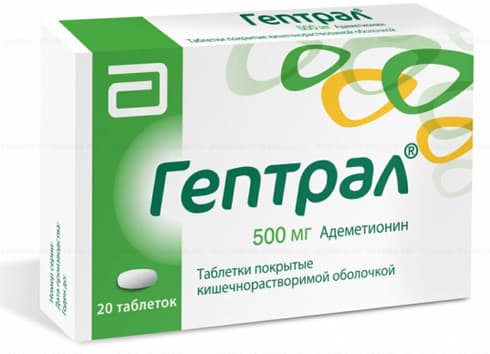
REGULATORY. United States: dietary supplement under DSHEA, with no FDA approval for any indication and no requirement to prove efficacy. Italy, Germany and Russia: prescription drug, ademetionine, sold as Transmetil, Samyr, Heptral and Gumbaral, chiefly for intrahepatic cholestasis and chronic liver disease. ATC code A16AA02; ChEMBL CHEMBL1088977 at max clinical phase 3. Not a controlled or scheduled substance in any jurisdiction found. Not approved in the UK for depression.
WADA. SAM-e is not named on the Prohibited List and does not fall within any prohibited class (S0 to S9, P1, M1 to M3), so it should be permitted in and out of competition. Stated with a caveat: direct text search of the 2026 Prohibited List PDF could not be completed here (both fetches returned empty), and Global DRO does not index dietary supplements at all, so an athlete should confirm with their own anti-doping organisation. Ordinary supplement contamination risk applies regardless.
History
S-Adenosylmethionine was discovered in 1952 by the Italian-born biochemist Giulio Cantoni, working in the United States, who identified the elusive 'active methionine' and showed it to be the compound formed from methionine and ATP that serves as the cell's universal methyl donor. This finding established S-adenosylmethionine at the center of biological transmethylation and opened decades of research into its many roles. From the 1970s onward it was developed pharmaceutically, particularly in Europe, and studied for depression, osteoarthritis, and liver disease. It is sold as a prescription medicine in several countries, including Italy and Germany, and as an over-the-counter dietary supplement in the United States. Its metabolism is now understood to sit at the junction of transmethylation, transsulfuration toward glutathione, and polyamine synthesis.
Reputation
SAM-e occupies an interesting middle ground between nutrient and medicine, being a molecule the body makes naturally that also shows genuine therapeutic promise. The accumulated evidence is encouraging for major depression, both as a stand-alone treatment and as an add-on to conventional antidepressants, and it has been studied with favorable results in osteoarthritis, where it has performed comparably to nonsteroidal anti-inflammatory drugs in some trials, as well as in certain liver conditions. Honesty requires noting that the trial literature, while promising, has limitations in size and consistency. Caution is also warranted in people with bipolar disorder, since its mood-elevating effect could in principle provoke a switch toward mania. On balance it is regarded as a well-tolerated option with a plausible biochemical rationale.
Subjective profileweighing the evidence above
One of the better-supported mood supplements and worth a genuine trial for low mood or joint discomfort, starting around 400 mg in the morning. Two cautions matter: it can tip susceptible people toward mania, so bipolar disorder is a real contraindication, and pairing it with SSRIs needs a clinician.
Where to buy

Suppliers
Vendors carrying SAM-e, with live product details and codes. Links are affiliate links that support the wiki at no cost to you.
RUPharma🌐
SAM-e
Amazon
SAMe
Limitless Biochem🌐
SAM-e
iHerb
SAMe
Research
- 1987first citedDouble-blind clinical trial of S-adenosylmethionine versus ibuprofen in the treatment of osteoa…
- 2002most active year4 papers
- 2016meta-analysisS-adenosyl methionine (SAMe) for depression in adults.
- 2026most recentS-adenosylmethionine as an epigenetic treatment of depression in adults with childhood trauma.
- 1.S-Adenosyl-L-methionine (SAMe): from the bench to the bedside, molecular basis of a pleiotrophic molecule.
- 2.S-Adenosylmethionine (SAMe) in major depressive disorder (MDD): a clinician-oriented systematic review.
- 3.S-adenosyl methionine (SAMe) for depression in adults.
- 4.S-adenosylmethionine in liver health, injury, and cancer.
- 5.S-adenosylmethionine and proliferation: new pathways, new targets
- 6.Intestinal metabolism of sulfur amino acids
- 7.Glycine N-methyltransferase deletion in mice diverts carbon flux from gluconeogenesis to pathways that utilize excess methionine cycle intermediates.
- 8.S-adenosyl methionine (SAMe) augmentation of serotonin reuptake inhibitors for antidepressant nonresponders with major depressive disorder: a double-blind, randomized clinical trial
- 9.Effects of S-adenosylmethionine augmentation of serotonin-reuptake inhibitor antidepressants on cognitive symptoms of major depressive disorder
- 10.SAMe and sexual functioning
- 11.S-Adenosyl Methionine in the Therapy of Depression and Other Psychiatric Disorders
- 12.The switch mechanism and the bipolar/unipolar dichotomy
28 listed here; entry last updated August 2026
Reviews
My notesprivate to this device
FAQ
Why take it on an empty stomach?
Absorption tends to be better away from food, and the enteric coating helps it survive stomach acid; taking it earlier also avoids sleep interference.
Can I combine it with an antidepressant?
This is a medical decision; because both act on serotonin pathways, talk with a clinician before pairing them.
Why does it feel stimulating?
Its influence on dopamine and norepinephrine synthesis can feel energizing for some people, which is why morning dosing is preferred.
Does it help joints too?
Some people use it for joint comfort; the mechanism ties into cartilage support and its mild anti-inflammatory action.
Adverse effects
- Nausea
- Digestive upset or diarrhea
- Insomnia if taken late in the day
- Headache
- Anxiety or restlessness
- Possible mania in people with bipolar disorder