
spec sheet11 rows
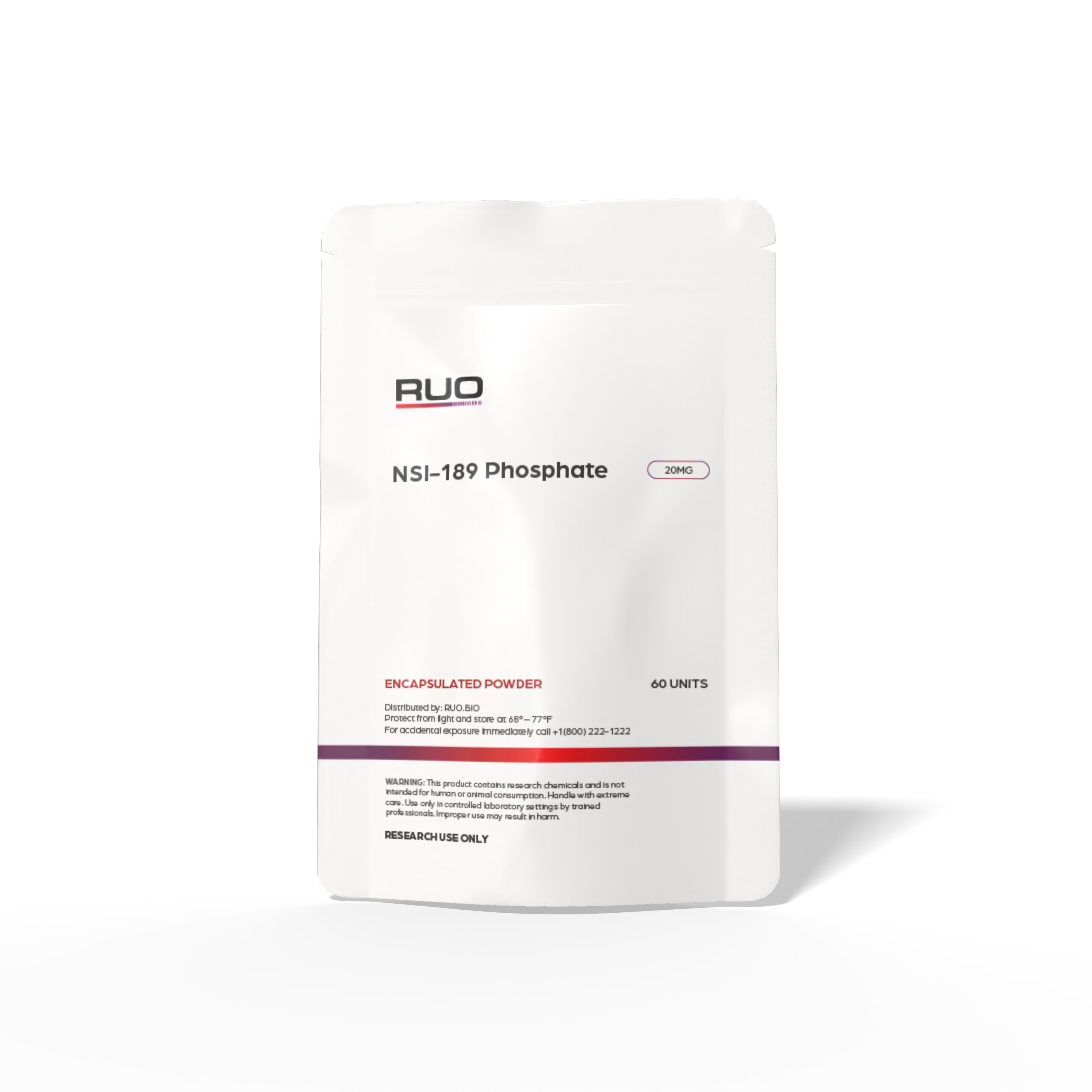
NSI-189 is a first-in-class neurogenic compound built on a genuinely novel premise; rather than manipulating monoamines like conventional antidepressants, it stimulates the birth of new neurons in the hippocampus. This small, orally active molecule promotes neurogenesis of human hippocampus-derived neural stem cells and, in clinical testing for major depressive disorder, produced encouraging antidepressant and pro-cognitive signals [1][3]. Its dual mood and cognition profile makes it one of the more distinctive investigational compounds in the space.
- Built to grow new hippocampal neurons
- First-in-class neurogenic compound
- Encouraging mood signals in clinical testing
- Pro-cognitive alongside the mood lift
- Explored for neuroprotection and BDNF plasticity
- Occasional headache
- Mild dizziness
- Trouble sleeping if taken late
Overview
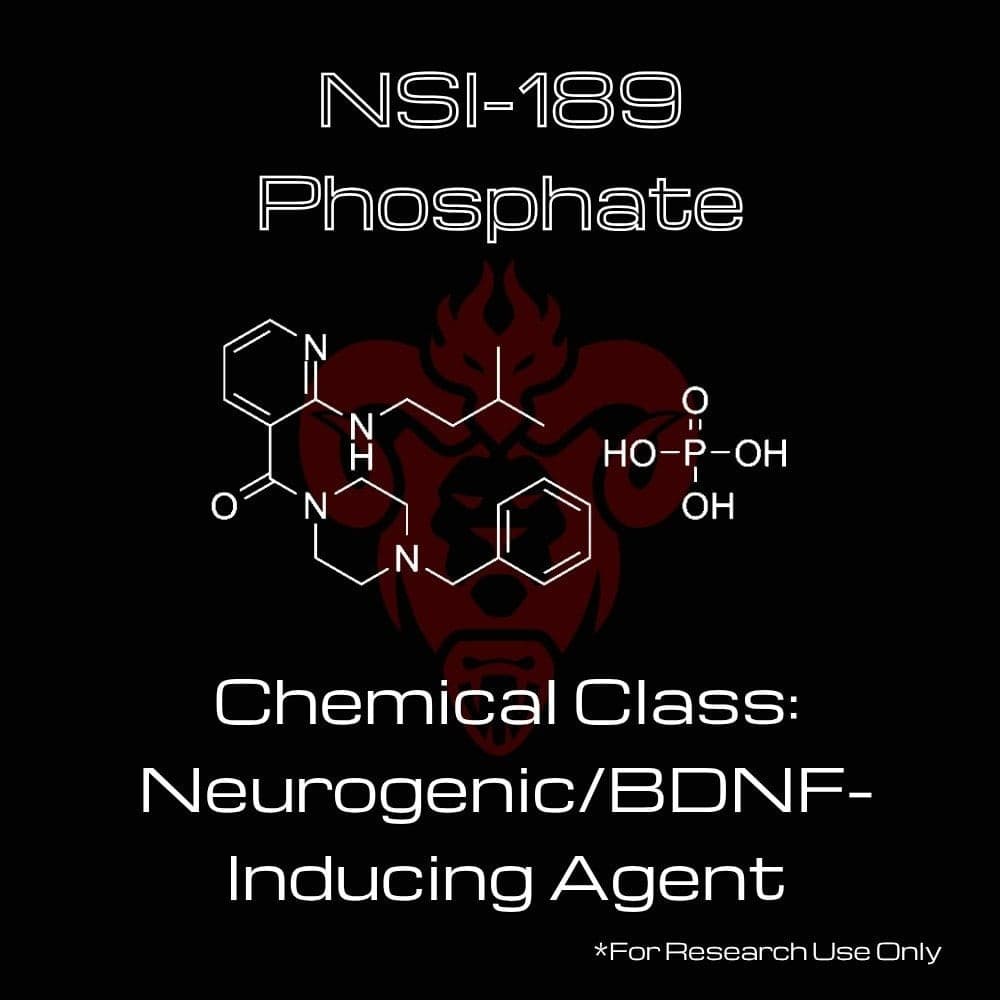
NSI-189 is a novel small-molecule neurogenic compound, chemically a benzylpiperazine-aminopyridine with a molecular weight of about 366, originally developed by Neuralstem. It represents a new chemical entity and a mechanistically distinct approach to mood and cognitive disorders; it stimulates neurogenesis of human hippocampus-derived neural stem cells in vitro and increases hippocampal neurogenesis in mice in vivo, and its antidepressant activity is independent of the monoamine reuptake pathways targeted by conventional antidepressants [1].
Preclinical studies established both its neurogenic and neuroprotective character. In a rat model of ischemic stroke, orally administered NSI-189 improved motor and neurological deficits and promoted neurite outgrowth and brain remodeling, with upregulation of neurotrophic factors such as BDNF and stem cell factor [2]. Reviews have framed it as a multi-domain agent with potential across depressive and cognitive symptom clusters, reflecting its action on neurogenic and neurotrophic processes rather than a single neurotransmitter system [1].
Clinical development advanced through controlled trials in major depressive disorder. A Phase 1B randomized, double-blind, placebo-controlled multiple-dose study in 24 depressed patients found NSI-189 well tolerated with a half-life of roughly 17 to 20 hours and showed promising reductions in depressive and cognitive symptoms, with significant improvement on patient-rated measures [3]. A larger Phase 2 study in 220 outpatients did not reach significance on the clinician-rated MADRS primary outcome, but the 40 mg dose showed significant benefits on several secondary measures of depressive symptoms and cognitive functioning [4]. A subsequent post-hoc analysis suggested the antidepressant and pro-cognitive benefits were most pronounced in patients with moderate rather than severe depression [5].
NSI-189 is an investigational compound and is not an approved medication; it is encountered as a research chemical. Its evidence base is notable for including human trial data alongside preclinical neurogenesis work, marking it as one of the better-characterized experimental neurogenic agents.
- In its Phase 1B trial, some cognitive and mood improvements persisted into the follow-up period after dosing had stopped, an unusual pattern for an antidepressant.
- Preclinical work found that NSI-189 stimulates neurogenesis and neurite outgrowth entirely independently of monoamine reuptake, the mechanism behind SSRIs.
Mechanism
NSI-189 is compelling because it targets the machinery of brain plasticity directly, aiming to rebuild rather than merely rebalance. Its defining action is the stimulation of ; it promotes proliferation of human -derived neural stem cells in vitro and increases neurogenesis in the murine hippocampus in vivo, with regionally specific effects, and it does so through neurogenic and neurotrophic signaling that is independent of monoamine reuptake [1]. This separates it mechanistically from SSRIs and related antidepressants.
The downstream biology involves neurotrophic support and structural remodeling. In ischemic stroke rats, oral NSI-189 increased neurite outgrowth, reflected by MAP2 immunoreactivity in and , and in vitro it protected hippocampal cells from oxygen-glucose deprivation while increasing the proliferation marker Ki67 and upregulating and stem cell factor [2]. These findings indicate that NSI-189 actively stimulates remodeling of injured brain tissue, consistent with a plasticity-driven rather than symptom-masking mechanism.
Human data give the profile clinical grounding. In the Phase 1B trial, NSI-189 exhibited dose-proportional exposure and a of about 17.4 to 20.5 hours, was well tolerated with no serious adverse effects, and produced significant improvement on the Symptoms of Depression Questionnaire and the cognitive and physical functioning questionnaire, with medium to large effect sizes that persisted into follow-up [3]. The Phase 2 study did not separate from placebo on the MADRS but showed significant secondary benefits at 40 mg on self-rated depression and cognition measures and on several objective cognitive tasks [4], and a post-hoc analysis found the clearest antidepressant and pro-cognitive effects in moderately depressed patients [5].
Users and investigators are drawn to NSI-189 for this combination of mood and cognitive support built on . Reported subjective effects emphasize gradual improvements in mood and mental clarity, in keeping with a mechanism that works by fostering new neurons and neurotrophic signaling over time [1][3].
receptor fingerprint
TLX / NR2E1 nuclear receptorpotent agonist
Hippocampal stimulates
upregulates
//activates
transporter (NET, h)weak inhibitor
5-HT3 receptorweak inhibitor
5-HT7 receptor (h)weak inhibitor
Opioid δ1 receptorweak binder
(, h)weak inhibitor
Opioid μ receptor (h)weak binder
transporter (SERT, h)negligible binding
Dosingtypical ranges, not medical advice
interested in protocols and clinical dosages? make an account to see them! ^_^
Safetyrisks and cautions, not medical advice
NSI-189 is an unscheduled research chemical with no approval anywhere; it's research-use-only worldwide. It's actually been through Phase 1b and Phase 2 trials for major depression, where it tolerated well up to 80 mg a day. The common side effects in trials were headache, fatigue, and vivid dreams, and no serious events were pinned on it at clinical doses. Be cautious combining it with other serotonergic, dopaminergic, or neurotrophin-affecting compounds, since the interaction picture is unknown. It's not approved for human use, and it only comes from research chemical vendors with hit-or-miss purity.
History
NSI-189 was discovered by Neuralstem, Inc., a Maryland biotechnology company, where chief scientific officer Karl Johe led a program aimed at small molecules that stimulate hippocampal neurogenesis. It emerged from screening for compounds that promote proliferation of human hippocampus-derived neural stem cells, a genuinely novel target for an antidepressant. The molecule advanced into human testing, with an encouraging Phase 1B study in major depressive disorder followed by a larger Phase 2 trial reported by Maurizio Fava and colleagues in 2017. That Phase 2 study did not separate from placebo on its primary MADRS endpoint, though secondary and post-hoc analyses pointed to benefits in moderately depressed patients, and the compound has since been explored for other indications.
Reputation
NSI-189 is regarded as one of the more distinctive investigational mood and cognition compounds precisely because it works through neurogenesis rather than monoamine reuptake, setting it apart from conventional antidepressants. It is well liked in research and self-experimentation circles for a reported profile of gradual improvements in mood and mental clarity, and it was well tolerated in trials with no serious adverse effects and a favorable half-life. Honesty requires noting that its pivotal Phase 2 trial missed its primary endpoint, so its antidepressant efficacy in humans is suggestive rather than established. The persistence of benefits into follow-up and the strength of the preclinical neurogenesis data keep it an actively discussed frontier compound.
Subjective profileweighing the evidence above
One of the more legitimate research nootropics; it went through Phase 1b and Phase 2 in depression, tolerated well up to 80 mg a day, with headache, fatigue and vivid dreams the usual complaints. It remains unapproved and research-use-only, and the neurogenesis story is still more compelling than the effect sizes.
Where to buy

1 other outlet
Suppliers
Vendors carrying NSI-189, with live product details and codes. Links are affiliate links that support the wiki at no cost to you.
RUO
NSI-189
Kimera Chems
NSI-189
Research
- 2016first citedA Phase 1B, randomized, double blind, placebo controlled, multiple-dose escalation study of NSI…
- 2022most recentEnhancement of Mitochondrial Function by the Neurogenic Molecule NSI-189 Accompanies Reversal o…
- 1.A Phase 1B, randomized, double blind, placebo controlled, multiple-dose escalation study of NSI-189 phosphate, a neurogenic compound, in depressed patients
- 2.A phase 2, double-blind, placebo-controlled study of NSI-189 phosphate, a neurogenic compound, among outpatients with major depressive disorder
- 3.NSI-189 phosphate, a novel neurogenic compound, selectively benefits moderately depressed patients: A post-hoc analysis of a phase 2 study of major depressive disorder
- 4.The neurogenic compound, NSI-189 phosphate: a novel multi-domain treatment capable of pro-cognitive and antidepressant effects
- 5.NSI-189, a small molecule with neurogenic properties, exerts behavioral, and neurostructural benefits in stroke rats
- 6.Enhancement of synaptic plasticity and reversal of impairments in motor and cognitive functions in a mouse model of Angelman Syndrome by a small neurogenic molecule, NSI-189.
- 7.Amelioration of Both Central and Peripheral Neuropathy in Mouse Models of Type 1 and Type 2 Diabetes by the Neurogenic Molecule NSI-189.
- 8.Enhancement of Mitochondrial Function by the Neurogenic Molecule NSI-189 Accompanies Reversal of Peripheral Neuropathy and Memory Impairment in a Rat Model of Type 2 Diabetes.
- 9.Remediation of Radiation-Induced Cognitive Dysfunction through Oral Administration of the Neuroprotective Compound NSI-189.
- 10.NSI-189 receptor binding + neurogenesis profile; Neuralstem corporate presentation (SEC EDGAR, Mar 2016)
10 listed here; entry last updated August 2026
Reviews
- cool for memory
slightly stimulating, amazing though, i felt clear thinking like 3 days in
0 - goated for sensory + visuals
super fun, made everything feel "childlike" again, was extremely nice and was fairly stimulating. 40mgs is plenty imo
0
My notesprivate to this device
FAQ
What is NSI-189 studied for?
It has been investigated for growing new neurons in the hippocampus and for lifting mood.
Is it an approved antidepressant?
No, it remains investigational and is not an approved medication.
What is neurogenesis?
It is the formation of new neurons; NSI-189 has been studied for its potential to promote this in the hippocampus.
How strong is the human evidence?
Early trials have shown mixed results, so its effects in people are still uncertain.
Limitations of the evidence
- Human data still limited
Adverse effects
- Occasional headache
- Mild dizziness
- Trouble sleeping if taken late