
spec sheet13 rows
Oseltamivir is an antiviral medication of the neuraminidase inhibitor class, used to treat and to help prevent influenza caused by type A and type B viruses. Taken by mouth as a prodrug, it is converted in the body to its active form, oseltamivir carboxylate, which blocks the influenza enzyme neuraminidase and so hinders the release and spread of new virus particles. Marketed under the brand name Tamiflu and approved in 1999, it is most useful when started within the first day or two of symptoms, and the size of its benefit, particularly for otherwise healthy people, has been the subject of considerable debate.
- Shortens flu by roughly a day when started early
- Blocks neuraminidase so new virus particles cannot spread
- The underrated use is prevention after a known exposure
- May cut complications in people at real risk
- Covers both influenza A and influenza B
- Simple oral course, with a liquid for children
- Nausea and vomiting are the most common effects and are more likely than with placebo, often eased by taking it with food
- Headache is also reported
- Uncommon reports of confusion, agitation, or unusual behavior, mainly in children and adolescents, have appeared after marketing, without a proven causal link
Overview
Oseltamivir is an orally active antiviral drug that belongs to the neuraminidase inhibitor class, a group of medicines designed specifically to act against influenza viruses [1][2]. It is given as a prodrug, oseltamivir phosphate, which the liver converts into the active compound oseltamivir carboxylate [1]. It was the first neuraminidase inhibitor available in pill form, in contrast to the inhaled drug zanamivir, and is among the antivirals stockpiled by many governments for influenza preparedness.
The drug was discovered by scientists at Gilead Sciences, who built the molecule starting from shikimic acid, a compound originally obtained from Chinese star anise; Gilead licensed it to Roche, which brought it to market as Tamiflu [1]. It received United States approval in 1999, and a generic version followed in 2016. Interest in oseltamivir surged during influenza pandemic scares, which drove large government purchases.
Oseltamivir is used to treat influenza and to prevent it in people who have been exposed, and treatment guidance emphasizes starting it early, generally within about 48 hours of symptom onset, and prioritizing patients at higher risk of complications [1][2]. Its effectiveness has been genuinely contested. Systematic reviews and network meta-analyses find that oseltamivir and the other neuraminidase inhibitors shorten the duration of influenza symptoms by roughly half a day to a day, an effect comparable to other drugs in the class [2][3]. More disputed is whether it meaningfully reduces hospitalizations and complications in otherwise healthy adults; an influential review concluded the evidence for such benefits was weak, while its role in high-risk and hospitalized patients continues to be debated [1].
Oseltamivir is a prescription medicine available as capsules and as an oral suspension for children and others who cannot swallow capsules [1]. It is generally used as a short course. The most common side effects are gastrointestinal, chiefly nausea and vomiting, which occur more often than with placebo [1]. Uncommon reports of neuropsychiatric events, such as confusion or unusual behavior, most often noted in children and adolescents, have been described after marketing, although a clear causal link has not been established [1].

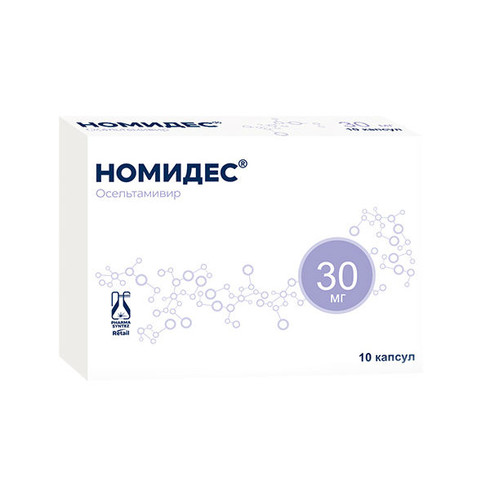
- Oseltamivir was originally synthesized from shikimic acid extracted from Chinese star anise, and pandemic-era demand for that starting material once raised supply concerns.
- It is an inactive prodrug that the liver converts into its active form, oseltamivir carboxylate.
- The debate over how well it works helped drive a broader movement for open access to full clinical trial data.
Mechanism
Oseltamivir works by blocking neuraminidase, an enzyme on the surface of the influenza virus that is essential for the virus to spread [1]. After a flu virus replicates inside a host cell, newly made viral particles remain tethered to the cell surface by sugar molecules; neuraminidase cuts these tethers, freeing the new virus to go on and infect other cells [1][2]. The active form of the drug, oseltamivir carboxylate, resembles the natural target of the enzyme and binds in its active site, competitively inhibiting it so that the fresh virus particles cannot be released and their spread through the respiratory tract is curtailed [1]. Because the drug interrupts viral spread rather than killing virus already present, it is most effective when started early, before the infection has propagated widely, which is why prompt treatment is emphasized [2].
receptor fingerprint
Influenza A neuraminidaseinhibits
Viral sialidase activityblocks
Progeny virion releaseblocks
Influenza B neuraminidaseinhibits
Spread through respiratory mucusmodulates
Dosingtypical ranges, not medical advice
interested in protocols and clinical dosages? make an account to see them! ^_^
Safetyrisks and cautions, not medical advice
Oseltamivir is prescription only. The most common side effects are nausea and vomiting, eased by taking it with food, along with headache. Neuropsychiatric events such as confusion or abnormal behavior have been reported, mostly in children and adolescents, so caregivers are advised to watch for unusual behavior. It is otherwise well tolerated, needs a lower dose in significant kidney impairment, and is not a substitute for the yearly flu vaccine. Resistance can emerge but stays uncommon in most circulating strains.
Interactionsdocumented pairs only, not exhaustive
Oseltamivir carboxylate, the active metabolite, is a substrate of the organic anion transporter OAT3 in the kidney. Probenecid, which inhibits OAT3, increases oseltamivir carboxylate exposure by approximately 154% through reduced renal clearance; this is a pharmacokinetic interaction where probenecid changes oseltamivir's elimination [6] [7]. Oseltamivir may also slightly increase warfarin's INR in patients on chronic warfarin therapy; a retrospective study of over 1,000 patients found a mean increase from 2.39 to 2.52 with 7 to 10 days of oseltamivir prophylaxis, with the greatest effect in patients with reduced renal clearance [8].
Antacids containing magnesium, aluminum, or calcium do not impair oseltamivir absorption or its conversion to the active carboxylate metabolite; this is a documented lack of interaction confirmed in a crossover study [9]. What has not been adequately studied is oseltamivir's interaction with other organic anion transporter inhibitors beyond probenecid, and whether the warfarin interaction extends to novel anticoagulants.
Checking a whole stack? Run it through interactions + stacks.
History
Oseltamivir was discovered by scientists at Gilead Sciences in California in the mid-1990s, in a structure-based program that designed inhibitors to fit the active site of the influenza neuraminidase enzyme; the medicinal chemistry, led by researchers including Choung U. Kim and Norbert Bischofberger, built the molecule from the plant-derived starting material shikimic acid. Gilead licensed the compound to Hoffmann-La Roche, which carried it through clinical development and manufacturing.
Marketed as Tamiflu, it received United States Food and Drug Administration approval in 1999 as the first orally active neuraminidase inhibitor, offering a pill alternative to the inhaled agent zanamivir. In the 2000s, concern over avian and pandemic influenza led governments worldwide to stockpile oseltamivir, greatly expanding its use and prominence. The true magnitude of its clinical benefit later became the subject of a prolonged and well-publicized debate, driven in part by Cochrane reviewers who sought and eventually obtained full clinical study reports from the manufacturer.
Reputation
Oseltamivir is the most widely used antiviral for influenza and a fixture of pandemic-preparedness plans, valued for being orally active, generally well tolerated, and effective against both influenza A and B when started early. Evidence supports meaningful benefits in specific settings: an individual-patient-data meta-analysis of randomized trials in children found that treatment significantly shortened illness and lowered the risk of otitis media, and comparative work continues to benchmark it against newer agents such as baloxavir.
It remains on the World Health Organization list of essential medicines and is a practical first-line choice, particularly for higher-risk patients and those seen within the first day or two of symptoms. Its reputation is appropriately nuanced; in otherwise healthy adults the average benefit is a modest shortening of symptom duration, and its impact on serious complications has been genuinely contested. Understood as an early-treatment tool rather than a cure, it retains a solid and enduring place in influenza care.
Subjective profileweighing the evidence above
Worth it if you start within the first day or two and you are at real risk of complications; roughly a day off the illness is a modest return otherwise. The post-exposure prevention use is the underrated one. Nausea and vomiting are common and ease if you take it with food.
Where to buy

1 other outlet

Suppliers
Vendors carrying Oseltamivir, with live product details and codes. Links are affiliate links that support the wiki at no cost to you.
PCT.Zone
Oseltamivir
RUPharma🌐
Oseltamivir
Research
- 2002first citedLack of pharmacokinetic interaction between the oral anti-influenza neuraminidase inhibitor pro…
- 2024most recentComparison of clinical efficacy and safety of baloxavir marboxil versus oseltamivir as the trea…
- 1.Neuraminidase inhibitors for preventing and treating influenza in healthy adults: systematic review and meta-analysis.
- 2.Comparison of Antiviral Agents for Seasonal Influenza Outcomes in Healthy Adults and Children: A Systematic Review and Network Meta-analysis.
- 3.Comparative effectiveness of neuraminidase inhibitors in patients with influenza: A systematic review and network meta-analysis.
- 4.Efficacy and Safety of Oseltamivir in Children: Systematic Review and Individual Patient Data Meta-analysis of Randomized Controlled Trials
- 5.Comparison of clinical efficacy and safety of baloxavir marboxil versus oseltamivir as the treatment for influenza virus infections: A systematic review and meta-analysis
- 6.Pharmacokinetics of high-dose oseltamivir in healthy volunteers.
- 7.Quantitative Prediction of Human Renal Clearance and Drug-Drug Interactions of Organic Anion Transporter Substrates Using In Vitro Transport Data: A Relative Activity Factor Approach.
- 8.Impact of prophylactic oseltamivir on INR in patients on stable warfarin therapy.
- 9.Lack of pharmacokinetic interaction between the oral anti-influenza neuraminidase inhibitor prodrug oseltamivir and antacids.
9 listed here; entry last updated August 2026
Reviews
My notesprivate to this device
FAQ
How soon should I start it?
As early as possible, ideally within the first 48 hours of symptoms, because it blocks new virus rather than clearing what is already made.
Does it cure the flu?
No; it shortens the illness by about a day and can reduce complications, but rest, fluids, and time still do most of the work.
Why does it make me nauseous?
Nausea and vomiting are its most common effects; taking each dose with food usually settles the stomach.
Can I take it to prevent flu?
Yes, a once-daily course can lower your chance of getting sick after a close exposure, though it does not replace the vaccine.
Is it safe for children?
It is used in children with weight-based dosing, but caregivers should watch for any unusual or confused behavior and report it.
Adverse effects
- Nausea and vomiting are the most common effects and are more likely than with placebo, often eased by taking it with food
- Headache is also reported
- Uncommon reports of confusion, agitation, or unusual behavior, mainly in children and adolescents, have appeared after marketing, without a proven causal link
- Rarely, allergic or skin reactions
Notes and cautions
- Most useful when started within the first day or two of flu symptoms