
spec sheet7 rows
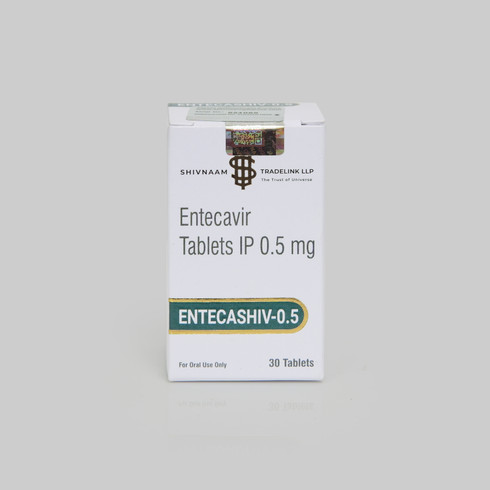
Entecavir is a guanosine nucleoside analogue that suppresses hepatitis B virus replication; it controls the infection for as long as it is taken and does not cure it.
- High potency suppression of hepatitis B replication
- Controls the infection for as long as it is taken
- Resistance stays rare in people never given lamivudine
- Blocks all three viral polymerase functions
- Good tolerability alongside that high potency
- Among the best drugs on this whole list
- In 715 nucleoside-naive HBeAg-positive patients, entecavir 0.5 mg gave histologic improvement in 72% versus 62% for lamivudine and undetectable HBV DNA in 67% versus 36%, with no resistance detected at 48 weeks [1].
- In 648 HBeAg-negative patients, entecavir achieved undetectable HBV DNA in 90% versus 72% [2].
- Resistance stays near zero in nucleoside-naive patients but reaches roughly 15% at 3 years after prior lamivudine resistance [3].
- A 31-study, 119,053-patient meta-analysis found no significant difference in HCC incidence between entecavir and tenofovir once propensity-matched (adjusted HR 0.88, 95% CI 0.73-1.07) [5].
- Residual HCC risk persists on treatment: 5-year cumulative incidence 0.5-6.9% without cirrhosis, 4.5-21.6% compensated, 36.3-46.5% decompensated [6].
Mechanism
Phosphorylated to the triphosphate, it competes with dGTP at the hepatitis B polymerase and blocks all three of its functions: priming, reverse transcription of the negative strand and synthesis of the positive strand. Its potency is high enough that resistance in treatment naive patients is rare, but it rises sharply in people previously exposed to lamivudine.
receptor fingerprint
Hepatitis B virus polymerase / reverse transcriptase (P protein)Entecavir triphosphate competes with dGTP and inhibits base priming, reverse transcription of the negative strand, and positive-strand DNA synthesis
HBV rtL180M/rtM204V-mutant polymeraseRetains activity but with a much lower genetic barrier, so one further substitution confers resistance in lamivudine-experienced virus
HIV-1 reverse transcriptasePartial antiretroviral activity sufficient to select the M184V substitution as effective monotherapy in unrecognised HIV co-infection
Human DNA polymerase gamma and polymerases alpha/betaWeak inhibition typical of the nucleoside analogue class
Safetyrisks and cautions, not medical advice
stopping hepatitis B therapy abruptly can cause a severe acute flare and hepatic decompensation, and unrecognised HIV coinfection risks selecting resistance; it needs a diagnosis and monitoring, not self starting and self stopping
Subjective profileweighing the evidence above
Entecavir is among the best drugs on this list and among the worst to run without a doctor. Potency is high, tolerability is good and resistance stays rare in people never exposed to lamivudine, but hepatitis B is a lifelong relationship with a virus and this suppresses rather than cures; stopping abruptly can set off a severe flare and hepatic decompensation, which makes an interrupted supply a hazard in itself. Undiagnosed HIV coinfection is the other trap, because there is enough anti-HIV activity to select resistance while achieving nothing else. Prior lamivudine exposure changes the whole calculation and needs a prescriber who knows the resistance pattern.
Where to buy
Suppliers
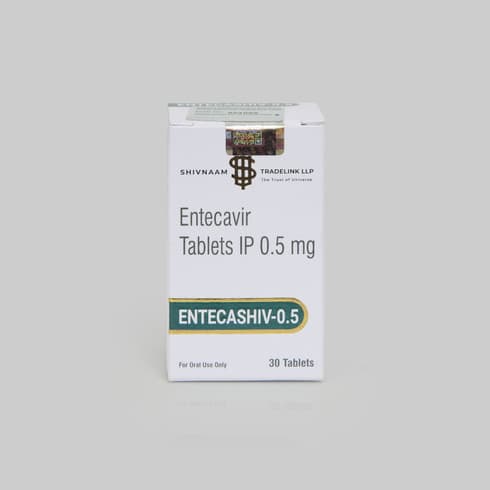
Vendors carrying Entecavir, with live product details and codes. Links are affiliate links that support the wiki at no cost to you.
RUPharma🌐
Entecavir
Research
- 2006first citedA comparison of entecavir and lamivudine for HBeAg-positive chronic hepatitis B.
- 2020most recentHepatocellular carcinoma incidence with tenofovir versus entecavir in chronic hepatitis B: a sy…
- 1.A comparison of entecavir and lamivudine for HBeAg-positive chronic hepatitis B.
- 2.Entecavir versus lamivudine for patients with HBeAg-negative chronic hepatitis B.
- 3.[Entecavir].
- 4.Entecavir: a potent antiviral with minimal long-term resistance in nucleoside-naive chronic hepatitis B patients.
- 5.Hepatocellular carcinoma incidence with tenofovir versus entecavir in chronic hepatitis B: a systematic review and meta-analysis.
- 6.Magnitude of and prediction for risk of hepatocellular carcinoma in patients with chronic hepatitis B taking entecavir or tenofovir therapy: A systematic review.
6 listed here; entry last updated August 2026
Reviews
My notesprivate to this device
Notes and cautions
- Entecavir carries a three-part US boxed warning: severe acute exacerbation of hepatitis B on discontinuation, requiring hepatic monitoring for at least several months after stopping; lactic acidosis and severe hepatomegaly with steatosis, including fatal cases; and emergence of HIV resistance (M184V) if given to a patient with unrecognised HIV co-infection, so HIV testing is mandatory before starting.
- Dose must be reduced for creatinine clearance below 50 mL/min.
- Prior lamivudine resistance raises entecavir resistance to roughly 15% at 3 years and calls for a different agent rather than dose escalation [3].