
spec sheet13 rows
Aciclovir, also spelled acyclovir, is a synthetic guanosine nucleoside analogue used as an antiviral medication against herpesviruses. It is prescribed chiefly for infections caused by herpes simplex virus and varicella zoster virus, including cold sores, genital herpes, chickenpox, and shingles. The selective way it is activated inside virus-infected cells helped earn its developers a share of the 1988 Nobel Prize in Physiology or Medicine, and it remains on the World Health Organization's List of Essential Medicines.
- The standard answer for cold sores and genital herpes
- Works on shingles and chickenpox too, same cheap tablet
- Works as daily suppression, not just outbreak by outbreak
- Nobel Prize chemistry: it switches on inside infected cells
- On the WHO List of Essential Medicines
- Cheap, reliable, and about as well understood as antivirals get
- Local irritation, dryness, or stinging can occur with topical use
- High intravenous doses can stress the kidneys, so good hydration is advised
- Neurological effects such as confusion are uncommon and mainly seen with reduced kidney function
Overview
Aciclovir is an acyclic nucleoside analogue that mimics the natural building block guanosine; chemically it is a guanine base joined to a truncated, open side chain rather than the complete sugar ring found in ordinary nucleosides [1]. This unusual structure is central to its selectivity, because the molecule can be assembled into a chain-terminating form only where a viral enzyme is present to begin its activation [1]. It belongs to the broader family of antiherpetic nucleoside analogues and shares its mode of action with related agents such as penciclovir [3].
The compound emerged from research at Burroughs Wellcome, where investigators building on nucleoside chemistry, inspired in part by unusual sugars isolated from a Caribbean sea sponge, identified the acyclic guanosine derivative as a potent and unusually selective inhibitor of herpes simplex virus [1]. It was patented in the 1970s and reached medical use in the early 1980s. The underlying research contributed to the award of the 1988 Nobel Prize in Physiology or Medicine to Gertrude Elion and George Hitchings, recognizing the rational, target-directed style of drug design that the molecule exemplified [1].
Clinically, aciclovir is used to treat and suppress infections caused by herpes simplex virus types 1 and 2, such as cold sores, genital herpes, and herpes encephalitis, and by varicella zoster virus, the cause of chickenpox and shingles [3]. Prodrug strategies were later devised to improve its modest oral absorption; valaciclovir, the valine ester of aciclovir, is converted to the parent drug within the body and delivers far more of it into the circulation [2]. Antiviral agents of this class have also been examined as adjuncts in severe Epstein-Barr virus disease, though that evidence rests largely on case reports and remains uncertain [4].
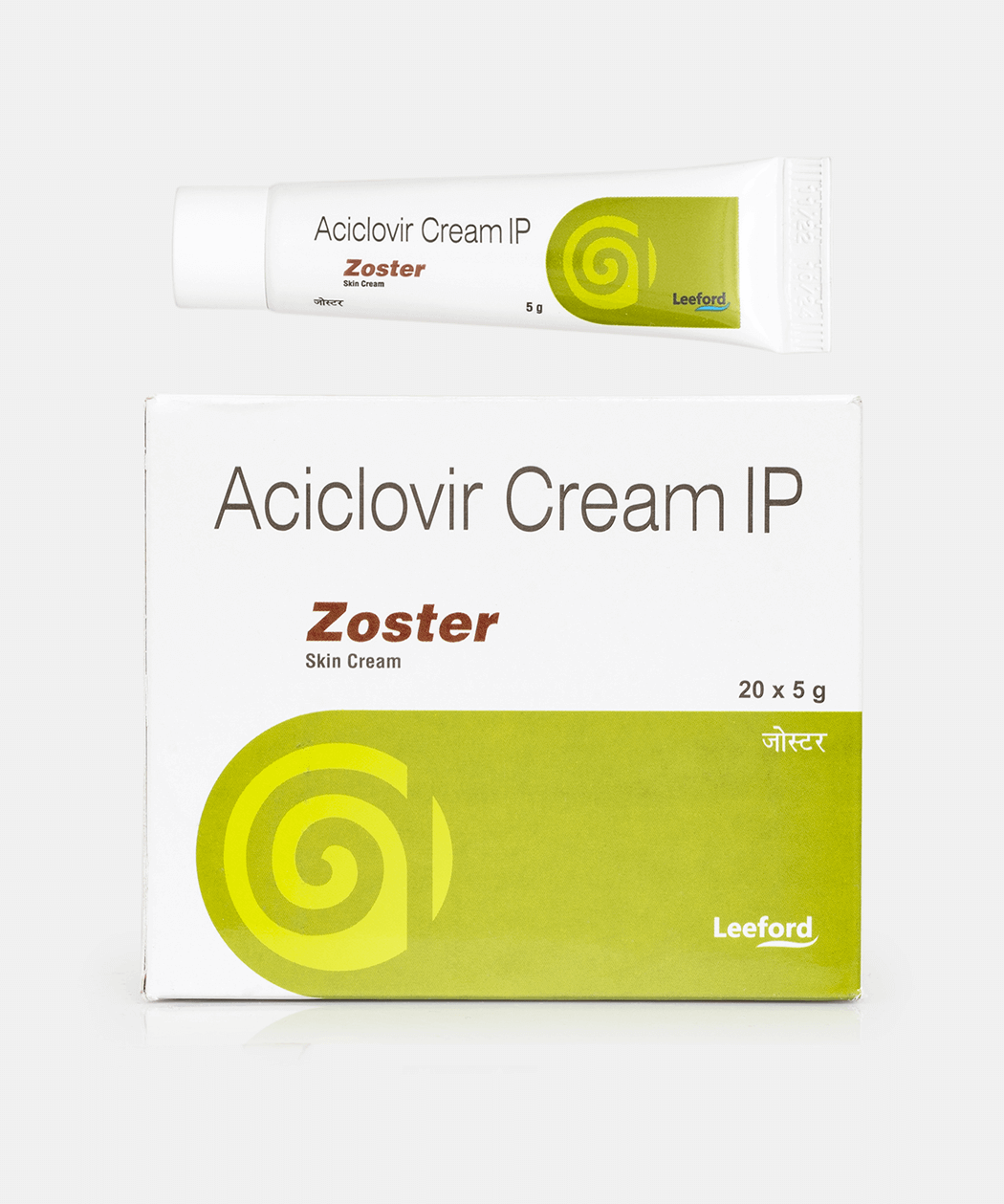
Aciclovir is formulated for several routes, including oral tablets and suspensions, topical creams and eye ointments, and intravenous preparations for serious infections [3]. It is available generically under many trade names, the original being Zovirax, and is generally a prescription medicine in countries such as the United States and the United Kingdom [2]. Resistance can develop, most often in people with weakened immune systems, usually through mutations that disable the viral thymidine kinase, and such cases may call for alternative antivirals [3].
- The selective activation of aciclovir helped earn its developers Gertrude Elion and George Hitchings a share of the 1988 Nobel Prize in Physiology or Medicine.
- Aciclovir is a prodrug that stays largely inert in healthy cells; it depends on a virus-made enzyme, thymidine kinase, to switch it on, which is why it acts mainly where a herpesvirus is replicating.
Mechanism
Aciclovir is a that must be chemically activated before it can act, and that activation happens preferentially inside cells infected by a herpesvirus. The first and rate-limiting step is carried out by a virus-encoded thymidine kinase, which adds a phosphate group to aciclovir to form aciclovir monophosphate; uninfected host cells perform this step very inefficiently, so the active drug accumulates mainly where the virus is replicating [1]. Host cell kinases then attach two further phosphates to yield aciclovir triphosphate, the pharmacologically active species [1].
Aciclovir triphosphate blocks viral replication in two complementary ways. It competes with the natural nucleotide deoxyguanosine triphosphate for the viral DNA polymerase, inhibiting that enzyme far more strongly than it inhibits the host cell's own DNA polymerase [1]. When it is incorporated into a growing viral DNA strand in place of the normal nucleotide, its missing sugar hydroxyl leaves no attachment point for the next building block, so elongation halts and the chain is terminated [1][3]. The requirement for viral thymidine kinase to begin the process is the basis of the drug's selectivity, and it also explains a common route of resistance, since viruses that lose or alter this enzyme can escape activation [3]. Because oral absorption of the parent drug is limited, ester prodrugs such as valaciclovir were designed to deliver more aciclovir into the bloodstream after an oral dose [2].
receptor fingerprint
Viral thymidine kinaseactivates
Viral DNA polymeraseinhibits
Viral DNA chain elongationblocks
Herpes simplex virus replicationblocks
Varicella-zoster virusinhibits
Dosingtypical ranges, not medical advice
interested in protocols and clinical dosages? make an account to see them! ^_^
Safetyrisks and cautions, not medical advice
Oral and intravenous aciclovir are prescription; some topical forms are sold over the counter. It is usually well tolerated, with headache, nausea, and diarrhea the common oral complaints. The biggest cautions apply to the intravenous form and to people who are dehydrated or have kidney disease, because the drug can crystallize in the kidneys and injure them; good hydration and dose adjustment lower that risk. High levels, mostly in kidney impairment, can cause confusion, agitation, or tremor. Staying well hydrated and cutting the dose in renal impairment are the key precautions.
Interactionsdocumented pairs only, not exhaustive
Aciclovir is filtered by the kidney as an organic anion substrate for OAT2 and OAT3 transporters; probenecid competitively inhibits this renal secretion and increases plasma levels [7]. This is a pharmacokinetic interaction; the clinical consequence is higher aciclovir exposure and potential accumulation, which can increase nephrotoxicity risk. The interaction is dose-dependent and clinically significant in renally impaired patients or those receiving high-dose intravenous aciclovir.
Aciclovir itself carries inherent nephrotoxicity risk independent of drug interactions, particularly in neonates and critically ill patients with underlying renal compromise [8]. Co-administration with other nephrotoxic agents such as NSAIDs, amphotericin B, or vancomycin increases the risk of acute kidney injury through additive tubular damage. This is a pharmacodynamic (toxic effects) rather than pharmacokinetic interaction, and the mechanism involves crystal-induced nephropathy. Electrolyte abnormalities and dehydration increase aciclovir nephrotoxicity; most drug-drug interactions with aciclovir remain poorly studied outside of the probenecid interaction and general renal risk factors.
Checking a whole stack? Run it through interactions + stacks.
History
Aciclovir was developed in the 1970s at Burroughs Wellcome by a team including Gertrude Elion and George Hitchings, pioneers of rational, mechanism-based drug design. It emerged from their systematic work on nucleoside analogues and proved to be a landmark antiviral because of the elegant way it is activated preferentially inside cells infected by a herpesvirus. Its selective mechanism, requiring a virus-encoded thymidine kinase to switch it on, contributed to the body of work that earned Elion and Hitchings a share of the 1988 Nobel Prize in Physiology or Medicine. Decades later, aciclovir remains a first-line antiviral against herpes simplex and varicella zoster viruses and is listed on the World Health Organization's List of Essential Medicines.
Reputation
Aciclovir is one of the most trusted and thoroughly validated antivirals in medicine, widely regarded as a textbook example of selective drug design done right. Clinicians value it for its long safety record and its clever, self-targeting activation, which concentrates the active drug where the virus is actually replicating and largely spares healthy cells. Its reputation is strong enough that it remains a global essential medicine used for everything from cold sores and genital herpes to chickenpox and shingles. The honest limits are modest and well understood; oral absorption of the parent drug is limited, which is precisely why ester prodrugs such as valaciclovir were later designed, and rare resistance can arise in viruses that alter the activating enzyme.
Subjective profileweighing the evidence above
Cheap, reliable and about as well understood as antivirals get; for cold sores, genital herpes, shingles or chickenpox it is the standard answer and it works, including as daily suppression. Topical forms sting, and high intravenous doses need good hydration to spare the kidneys.
Where to buy
1 other outlet
Suppliers
Vendors carrying Aciclovir, with live product details and codes. Links are affiliate links that support the wiki at no cost to you.
PCT.Zone
Aciclovir
RUPharma🌐
Aciclovir
Research
- 1977first citedSelectivity of action of an antiherpetic agent, 9-(2-hydroxyethoxymethyl) guanine
- 2020most recentNephrotoxic medications and acute kidney injury risk factors in the neonatal intensive care uni…
- 1.Selectivity of action of an antiherpetic agent, 9-(2-hydroxyethoxymethyl) guanine
- 2.Antiviral prodrugs: the development of successful prodrug strategies for antiviral chemotherapy
- 3.Resistance of herpes simplex viruses to nucleoside analogues: mechanisms, prevalence, and management
- 4.Antiviral treatment for severe EBV infections in apparently immunocompetent patients
- 5.The biochemistry and mechanism of action of acyclovir
- 6.Mechanism of action and selectivity of acyclovir
- 7.Quantitative Prediction of Human Renal Clearance and Drug-Drug Interactions of Organic Anion Transporter Substrates Using In Vitro Transport Data: A Relative Activity Factor Approach.
- 8.Nephrotoxic medications and acute kidney injury risk factors in the neonatal intensive care unit: clinical challenges for neonatologists and nephrologists.
8 listed here; entry last updated August 2026
Reviews
My notesprivate to this device
FAQ
Does aciclovir cure herpes?
No; it does not clear the virus from the body, but it shortens outbreaks and, taken daily, can prevent many of them.
When should I start it for a cold sore?
As early as possible, ideally at the first tingle before the blister forms, since it works best on virus that is actively multiplying.
Why do I need to drink lots of water on it?
Good hydration keeps the drug from crystallizing in the kidneys, which is the main safety concern with higher and intravenous doses.
How is it different from valaciclovir?
Valaciclovir is a prodrug of aciclovir that absorbs better, so it can be taken fewer times a day for the same effect.
Can I take it during pregnancy?
It has a long track record and is often used when needed in pregnancy, but that call should be made with your doctor.
Adverse effects
- Local irritation, dryness, or stinging can occur with topical use
- High intravenous doses can stress the kidneys, so good hydration is advised
- Neurological effects such as confusion are uncommon and mainly seen with reduced kidney function
Notes and cautions
- Generally well tolerated in its topical and oral forms
- Nausea, headache, or diarrhea are among the more common oral effects